Restaurant Roofing in Hesperia, CA
A kitchen exhaust fan and its curb can create a roof detail that is hard to inspect from the dining room. In Hesperia, CA, a restaurant roof must still protect kitchen and dining operations while service access remains clear. We begin at the reported leak or visible failure, then trace the surrounding membrane, exhaust curb, nearby seams, and drain path. The goal is to identify which roof detail needs repair and how the restaurant can keep safe access below. A commercial roof inspection records the assembly and the conditions that shape the first scope.
Inspect Exhaust and Service Penetrations
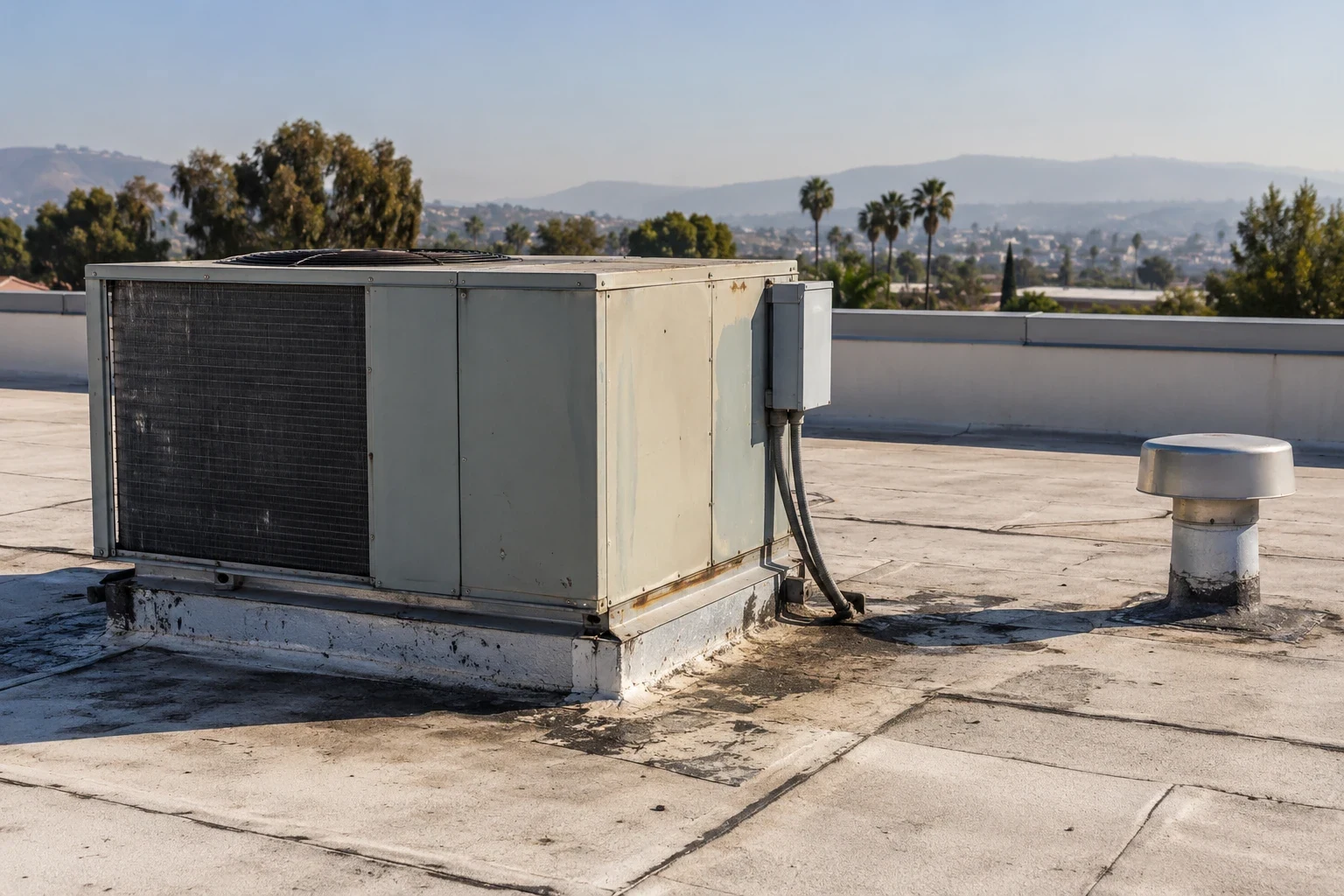
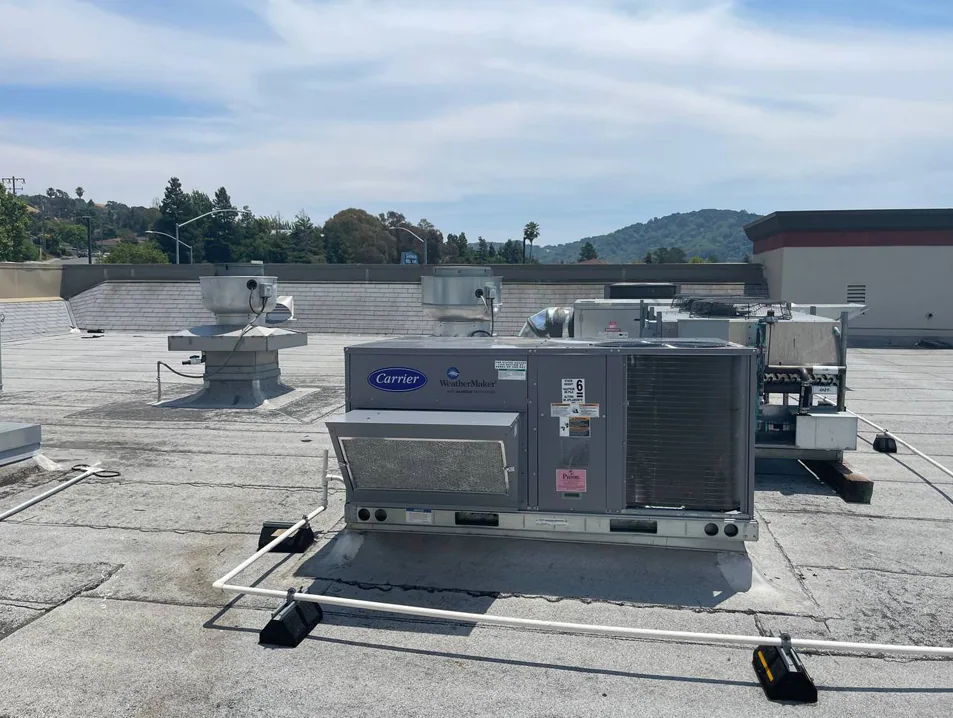
Exhaust equipment, duct curbs, refrigeration lines, gas piping, and conduit all meet or cross the roof. We check whether flashing remains bonded, fasteners are secure, and grease or service residue has affected the surface. A kitchen's exhaust system may need cleaning or service by another trade; the roofer's scope is the roof transition and the membrane around it. If equipment must move, the owner identifies the mechanical contractor and approves the work before removal begins.
Several small penetrations can sit close together around a kitchen. We map each one, note where patches overlap, and look for a seam or drain that may be contributing to the same report. A repair should not bury an adjacent access point or restrict the route a technician needs. The curb and support detail review addresses bases and attachments, while the roof plan keeps exhaust, refrigeration, and membrane repair in separate scope lines where needed.
Protect Dining and Prep Areas
A roof opening above a kitchen, dining area, or storage room needs a defined work window and protection plan. We ask the restaurant contact which areas must remain in use, how deliveries and staff move through the building, and when noise or vibration can be tolerated. If the reported ceiling stain sits below a roof penetration, we trace the water path before creating an opening. Water may travel beneath a membrane or along a deck before reaching the visible spot.
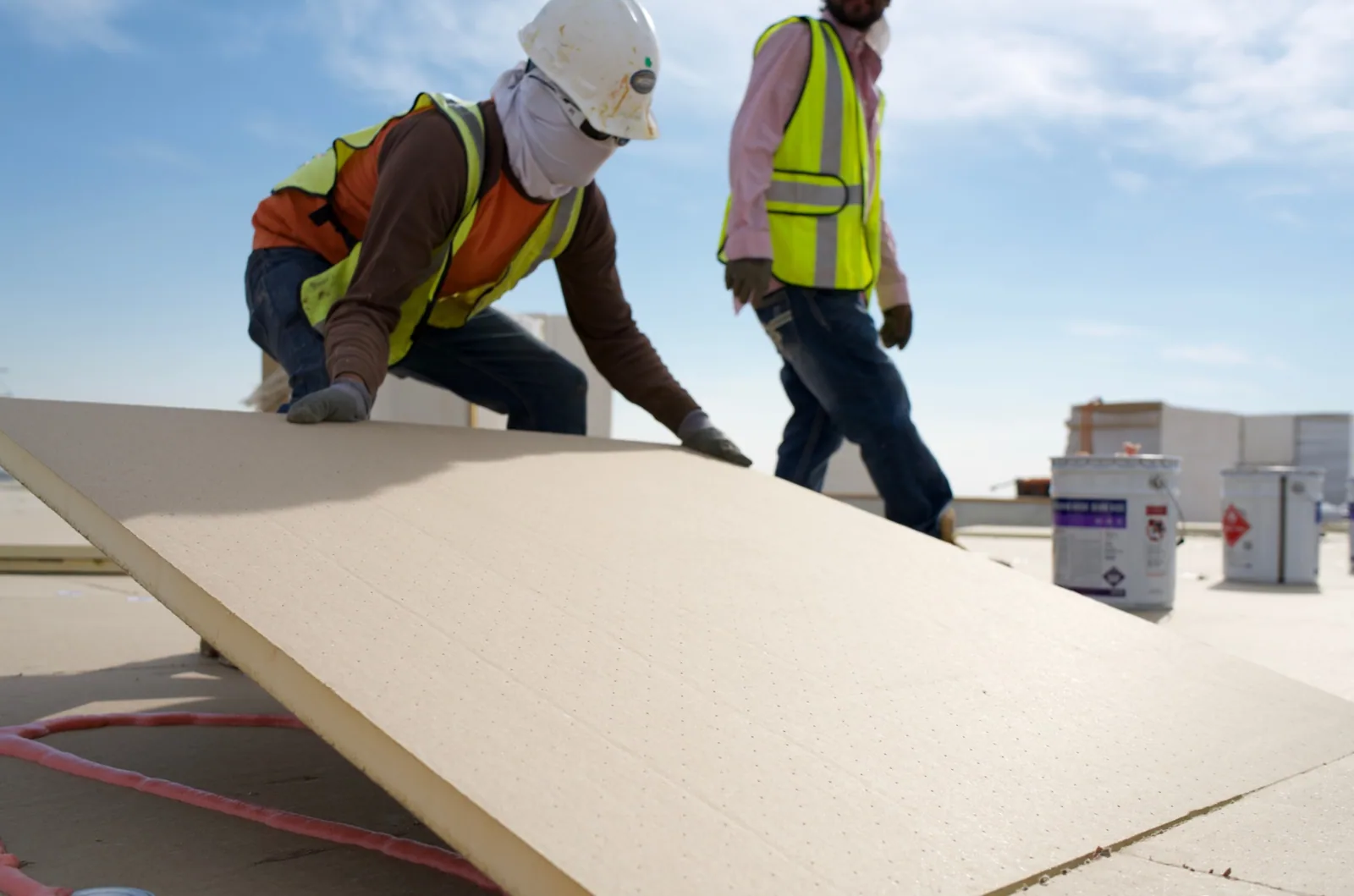
Any test opening needs approval, a mapped location, and a close-in plan. If the substrate is wet or deteriorated, we document the boundary and show the owner what additional removal would confirm. The restaurant can then make a clear decision without an open assembly extending beyond the agreed area. A roof insulation review helps distinguish a surface repair from a condition that has reached the layers below the membrane.
Keep Water Moving Past the Kitchen
Grease exhaust, rooftop screens, and service walkways can collect debris around low spots. We inspect drain bowls, strainers, scuppers, overflow points, and nearby seams before selecting a repair. A clogged drain requires cleaning, while a loose drain flange or settled roof section may need a separate detail. We record the visible cause and flag any condition that needs testing instead of assuming a coating or patch can correct it.
Material staging also needs a place clear of drains and roof access. A restaurant may receive food and supplies at fixed times, so the ground crew should confirm where roofing material can be unloaded without interrupting the receiving route. The drain and scupper repair can be scoped with membrane work when the water path depends on both. At closeout we verify strainers and water outlets are clear of construction debris.
Fit the Work to Hesperia's Commercial Areas
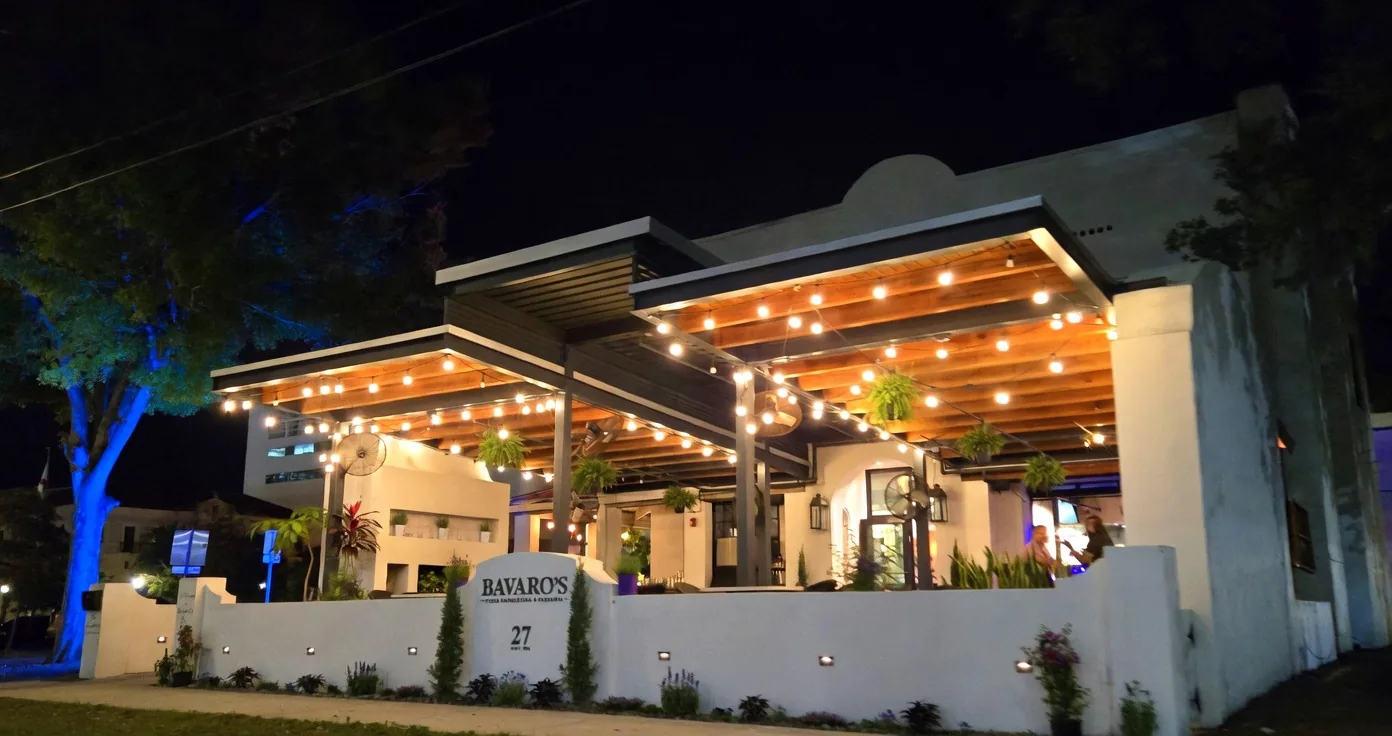
Restaurants may have patio seating, kitchen exhaust, delivery windows, and shared storefront access. Confirm each with the operator before a lift or material delivery is scheduled. Hesperia's Freeway North District includes business-park and regional-commercial uses; the building's own entrance and hours still set the work boundary. A Freeway North District roof review gives a broad geographic reference. For a restaurant in a multi-tenant row, locate shared walls, canopies, rooftop ducts, and service doors on the plan so a tie-in or debris path does not cross a neighboring tenant's space. Keep guest routes and emergency access open as agreed.
Separate a Detail Repair From Renewal
A localized leak around one curb can support a repair if the surrounding membrane and flashing remain sound. Multiple open seams, failing edges, wet insulation, or brittle material across the roof may point to a larger restoration or replacement. We compare the pattern of failure and identify which areas are confirmed, which need a test, and what can remain in service.
System selection follows the existing assembly and roof use. A coating may be considered only where the surface can be prepared and the seams can be reinforced. A new membrane needs secure terminations and compatible details at exhaust curbs, pipes, walls, and drains. The shopping-center roof assessment addresses shared tenant access, while grocery-store roof planning adds refrigeration and food-storage concerns. Restaurant work has its own kitchen exhaust and dining-area priorities.
Choose a Work Window That Can Close
Roof sections are opened only when the crew can prepare and close the boundary within the approved window. We consider the system, number of penetrations, temperature, access, and forecast conditions when building the daily sequence. Hesperia 2 E's 30-year August normal daily maximum is 97.0°F; technicians still check current roof and application conditions. We check jobsite conditions and follow the selected materials' installation requirements for handling and cure time.
Evening work can reduce interference with diners, but it may change lighting, access control, noise, and the time available to close a phase. The restaurant contact identifies staff coverage and areas that must stay clear. If the roof cannot be sealed before the shift ends, the crew follows the agreed protection plan and communicates the status. A phased occupied-building reroof can organize the sequence when multiple roof sections need work while service continues.
Keep Roof and Kitchen Trades Aligned
Cost and duration depend on access, tear-off depth, number of penetrations, insulation replacement, roof area, and protection needs below. HVAC or exhaust equipment movement can change the sequence and should be priced as a defined handoff. The roofing proposal can identify repair details, material preparation, and any test opening separately from mechanical service or equipment cleaning.
Before work, the restaurant manager should identify who can approve a change if hidden damage appears. We document the finding, protect the opening, and present the additional work before expanding the scope. This keeps the roof repair tied to what is visible and what has been confirmed. Photos of each curb and tie-in help the restaurant maintenance contact track the result after the crew leaves.
If water reaches a kitchen or dining area before planned work, roofing emergency response is available any hour, including holidays. Report the room, current condition, and safe access so the response can be scoped.
Commercial Roofing Questions
Can exhaust equipment stay in place during roof repair?
It can if the curb and flashing are accessible and the failed material can be removed safely. If the unit blocks the detail, the scope identifies HVAC coordination first.
How do you protect an active kitchen?
We identify the roof section, prep or dining space below, work window, and close-in point with the restaurant contact before opening the assembly.
Which Hesperia routes affect material access?
Hesperia's Freeway North District and Main Street-West District are broad geographic references. The restaurant's receiving entrance and scheduled hours determine the final delivery route. Confirm staging and operator requirements before dispatch.
When should a restaurant consider full roof renewal?
Several failing details, widespread seam problems, wet insulation, or recurring leaks may support comparing restoration and replacement with a localized repair.
What should I send before a roof review?
Provide roof plans, leak reports, equipment and exhaust information, hours, delivery limits, and the person who can coordinate rooftop access.