Commercial Roof Repair in Hesperia, CA
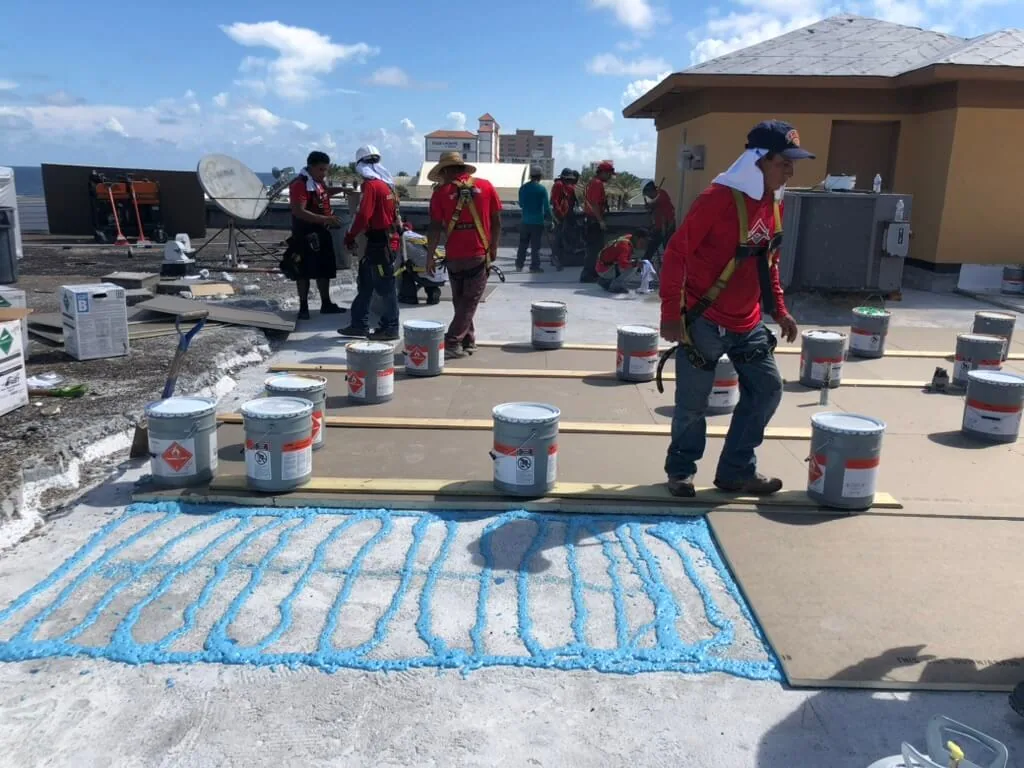
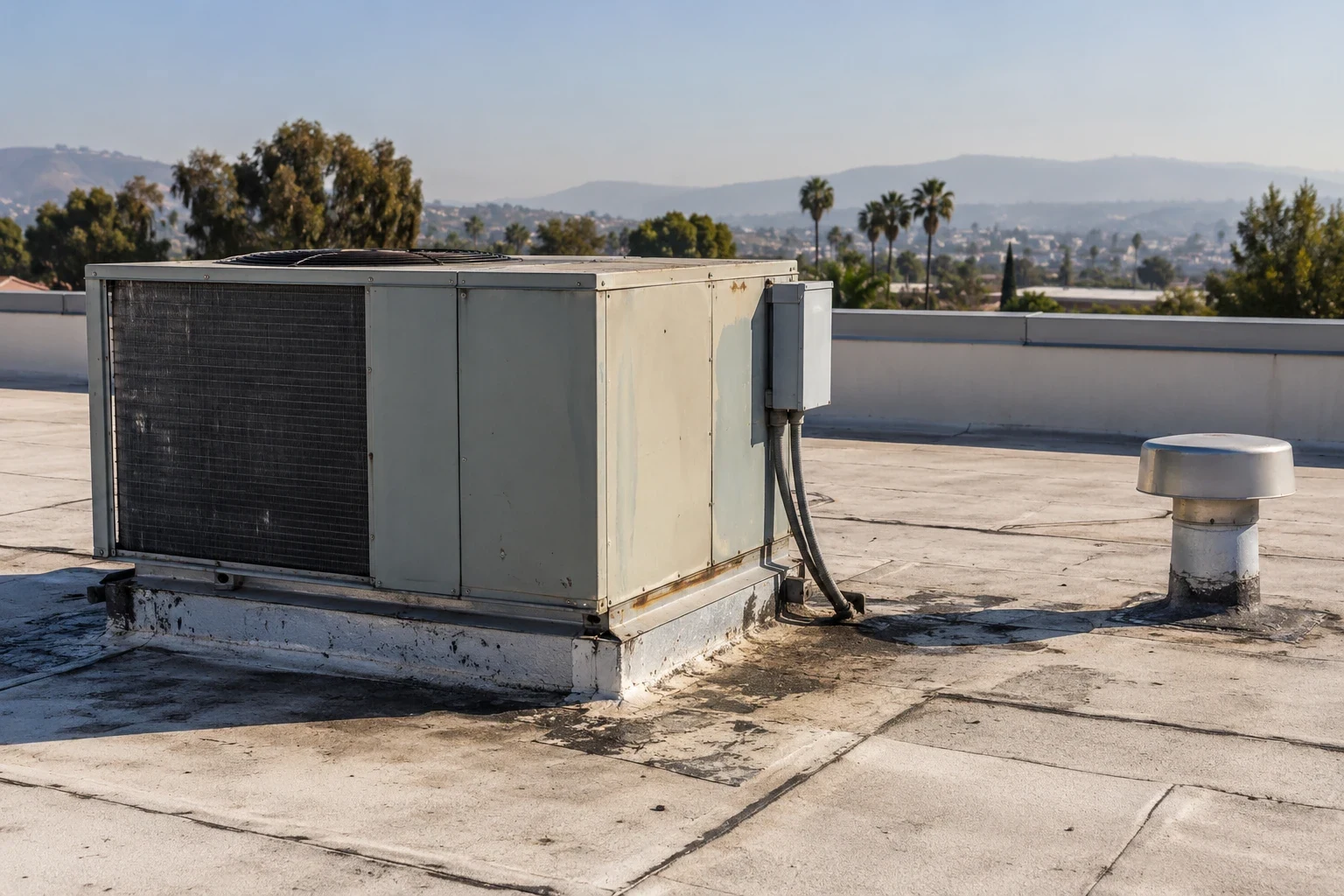
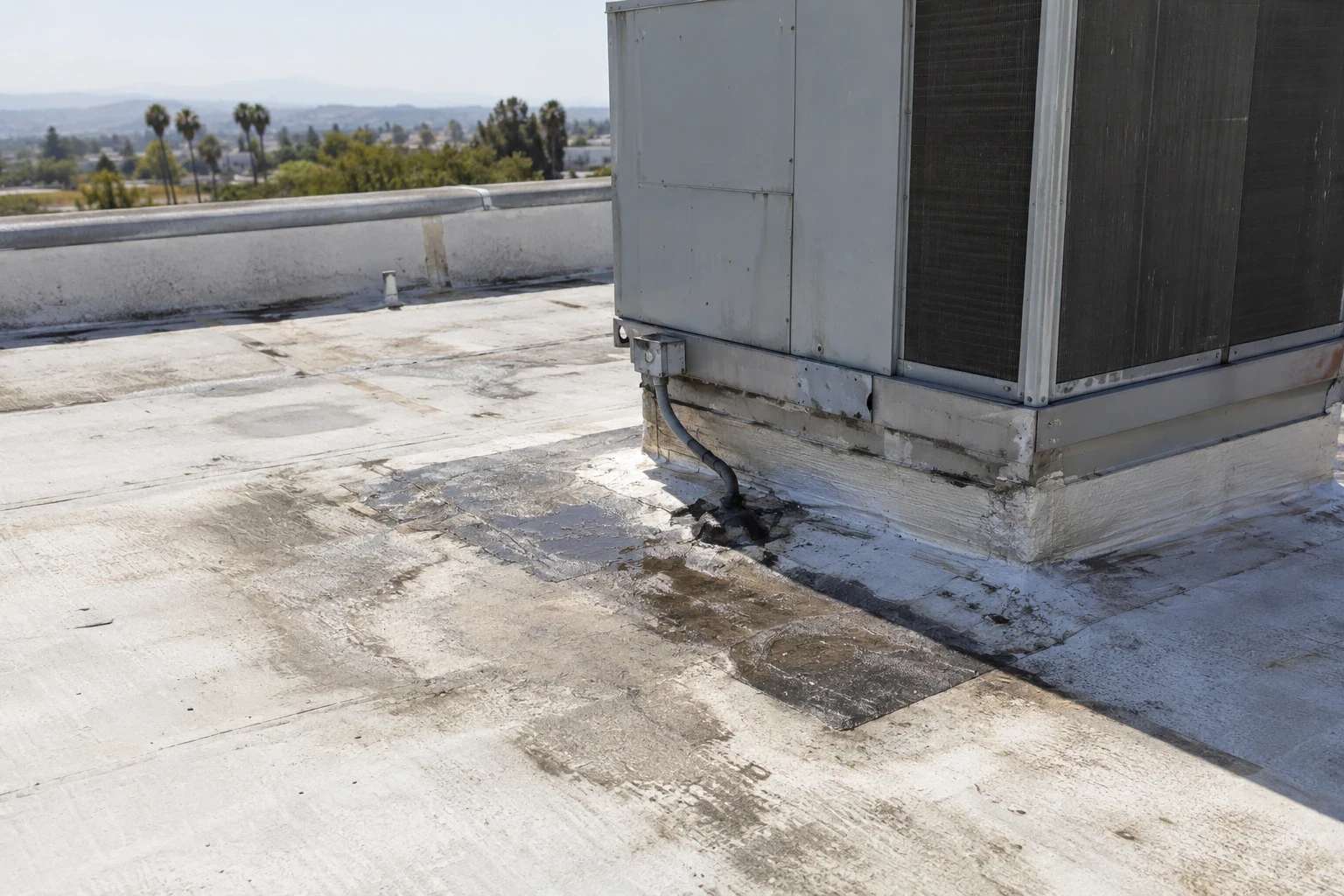
A repair should close the defect without burying its cause. We start at the reported area, then follow seams, penetrations, edges, and drainage paths that could connect the interior mark to the roof. A small split in a membrane may be only the visible part of a larger wet section. A loose counterflashing may point to movement at the wall instead of a field-sheet failure. The repair plan names the material, preparation, and test boundary before work begins. In Hesperia, heat cycles can work on fasteners and transitions, while delivery and staging rules vary between the City Center and the industrial district. A commercial roof inspection records the roof area and checks nearby details. We use that record to keep a repair focused, price any additional opening separately, and show what should be monitored after the close-in.
Trace the Water Path
Interior water can travel along a deck, insulation joint, or structural member before it appears below. We compare the location and timing of the stain with the roof surface above, then look for a seam, curb, wall transition, skylight, or drain that can admit water. If several reports appear after one storm, we mark each location separately rather than assume one opening feeds every area. Designated Hesperia truck routes include Bear Valley Road, portions of Santa Fe Avenue, Lemon Street, Joshua Road, and Phelan Road. That access context can affect a delivery plan, but the roof walk decides the repair. For a reported leak, a leak-tracing repair distinguishes active entry from old staining. If water is entering now, temporary roof protection can be separated from permanent correction.
Prepare Beyond the Opening
A patch bonds only as well as the surface beneath it. We remove loose coating or membrane, expose a stable perimeter, and confirm the deck or cover board is dry and secure enough for the selected detail. Dirt, chalking, old adhesive, or incompatible prior repair material can keep a patch from holding. When the assembly is unclear, we compare markings and records with a small test rather than guess at the product. For a welded TPO seam repair, the membrane must be prepared and welded under suitable conditions. Metal edge work needs a different approach than a field patch. Around a skylight or curb, the flashing transition should tie into sound membrane on each side. We document what was removed, what remained, and any layer we could not reach.
Correct the Detail That Repeats
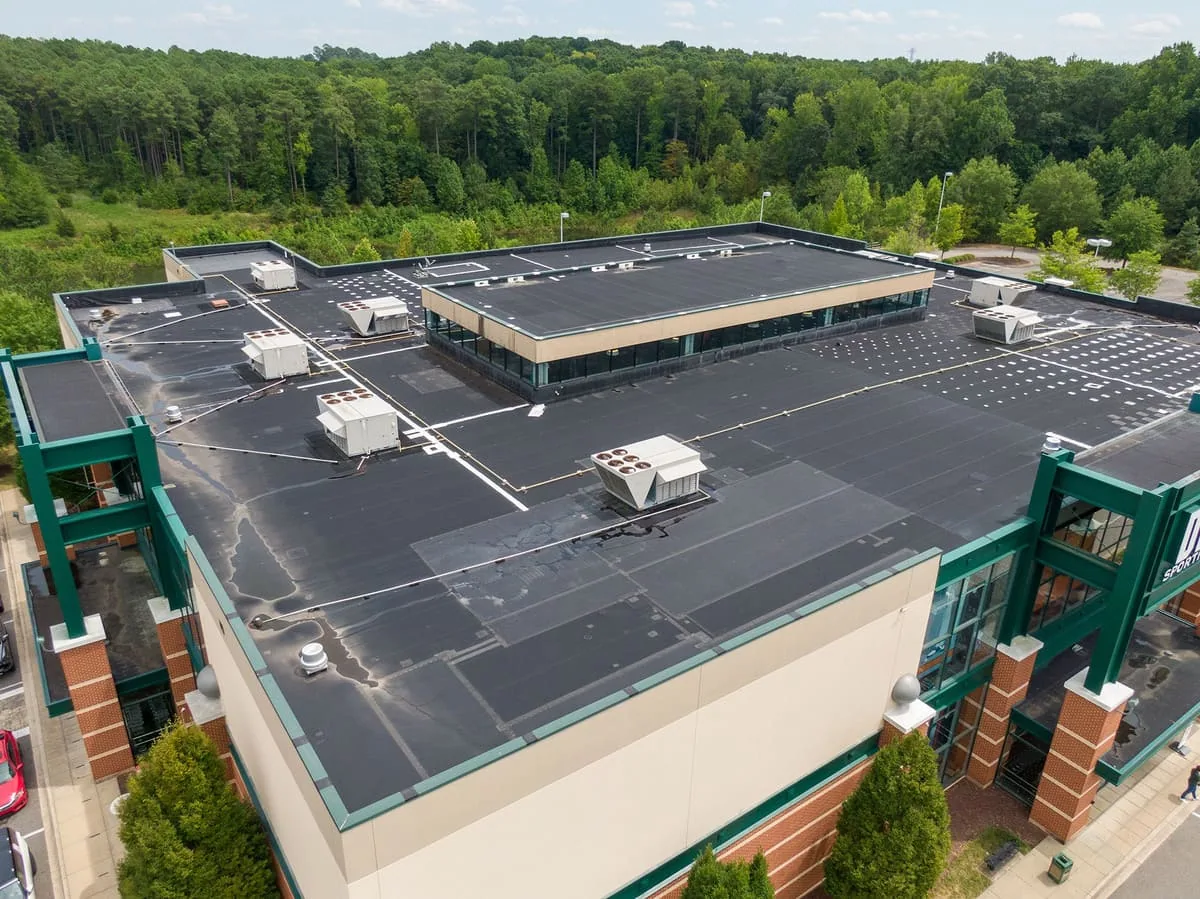
Some leaks return because water still reaches the same failed connection. A blocked drain, low roof area, open scupper seam, or short flashing can keep the repair under stress. We inspect the drainage path and note whether the outlet itself or the slope directs water toward the defect. On a broad low-slope roof, a drain and scupper check can identify the part that needs correction. A roof coating does not fix a loose drain ring or unsupported edge. Nor should new sealant cover a joint that needs metal replacement or membrane reinforcement. The City Center District is planned for civic, mixed-use, and pedestrian-oriented retail. A property there may have different access and public-entry constraints than a warehouse near I-15. In either case, the repair follows the roof detail and building contact's operating rules.
Set a Measured Boundary
The repair scope should identify dimensions, substrate preparation, replacement material, reinforcement, fasteners, and the tested close-in point. If removal exposes wet insulation or damaged deck, we photograph the area and ask for approval before widening the work. A unit price can make that decision faster because the owner knows how added quantities will be measured. We also name adjacent details that are not included, such as another curb or a separate drain bowl, so a limited repair is not mistaken for a complete roof restoration. On a roof near the Highway 395 and I-15 District, staging may need to respect truck movement and industrial operations, but those facts do not tell us what the individual assembly contains. A district roof repair plan still starts with the building's access point, roof map, and approval contact.
Account for Weather and Access
Adhesives, sealants, welds, and coatings each have temperature and surface requirements. Hesperia's normal August daily high is 97 degrees, so exposed surfaces can run hotter than the air and change the safe work window. We follow the selected product's instructions and do not close an assembly over damp or contaminated material. Wind, dust, roof slope, and shade can also affect preparation. The site contact should identify a roof hatch, ladder location, equipment clearance, and the rooms below that need protection. If a weather shift stops work, we secure the opened area and record what remains. A maintenance record can help compare the repaired seam or transition with later roof walks, especially when a building has repeated service history.
Leave a Useful Repair Record
After close-in, we label the repaired roof zone and photograph the finished detail. The record describes the reported condition, material removed, preparation, repair product, limits of access, and any follow-up that remains. If the leak report involved a ceiling mark, we note whether interior confirmation was available and what roof area we inspected. The owner can then compare the next observation with a known repair boundary instead of reopening the entire roof question. Hesperia's corridor plan separates industrial, regional-commercial, civic, and neighborhood districts; each setting can change access coordination, but none tells us whether a specific roof needs a patch or replacement. We show the condition found at that property. Send the address, photos, roof plan if available, prior repair notes, and an access contact. The first decision is the affected area and a safe test boundary.
Commercial Roofing Questions
What if the ceiling stain is away from the roof opening?
We use the interior location as one clue, then inspect uphill and along deck joints, seams, and transitions that could carry water. A drawing can help orient the walk, but a field observation confirms the roof detail. If the path remains uncertain, we mark the tested area and explain what another opening would establish.
Can a repair be limited to one seam?
A seam repair can stay local when the material on both sides is stable, dry, and compatible with the weld or patch. We check nearby intersections, fasteners, and previous repairs before setting the boundary. If the seam pulls from wet insulation or a loose deck, a larger removal area may be needed.
How do you price a repair when the insulation is hidden?
The base scope can cover the visible defect and a defined test area. For concealed wet material, the estimate should state the unit price, removal limit, and owner approval point before the crew expands the work. Photos and measurements tie each added quantity to a roof zone.
Will a coating solve a recurring leak?
Only if the assembly and failed detail are suitable for coating. We check adhesion, moisture, movement, drainage, and the transition where water enters. A coating can protect a prepared surface, but it will not secure loose flashing or rebuild a failed drain connection by itself.
What should we prepare for a Hesperia repair visit?
Share the roof plan if available, leak timing, interior location, earlier repair records, and the name of the person who can release access. Note delivery restrictions or work periods near the site entrance. We can then identify the first roof sections to inspect and what needs protection below.