Commercial Roof Inspection in Hesperia, CA
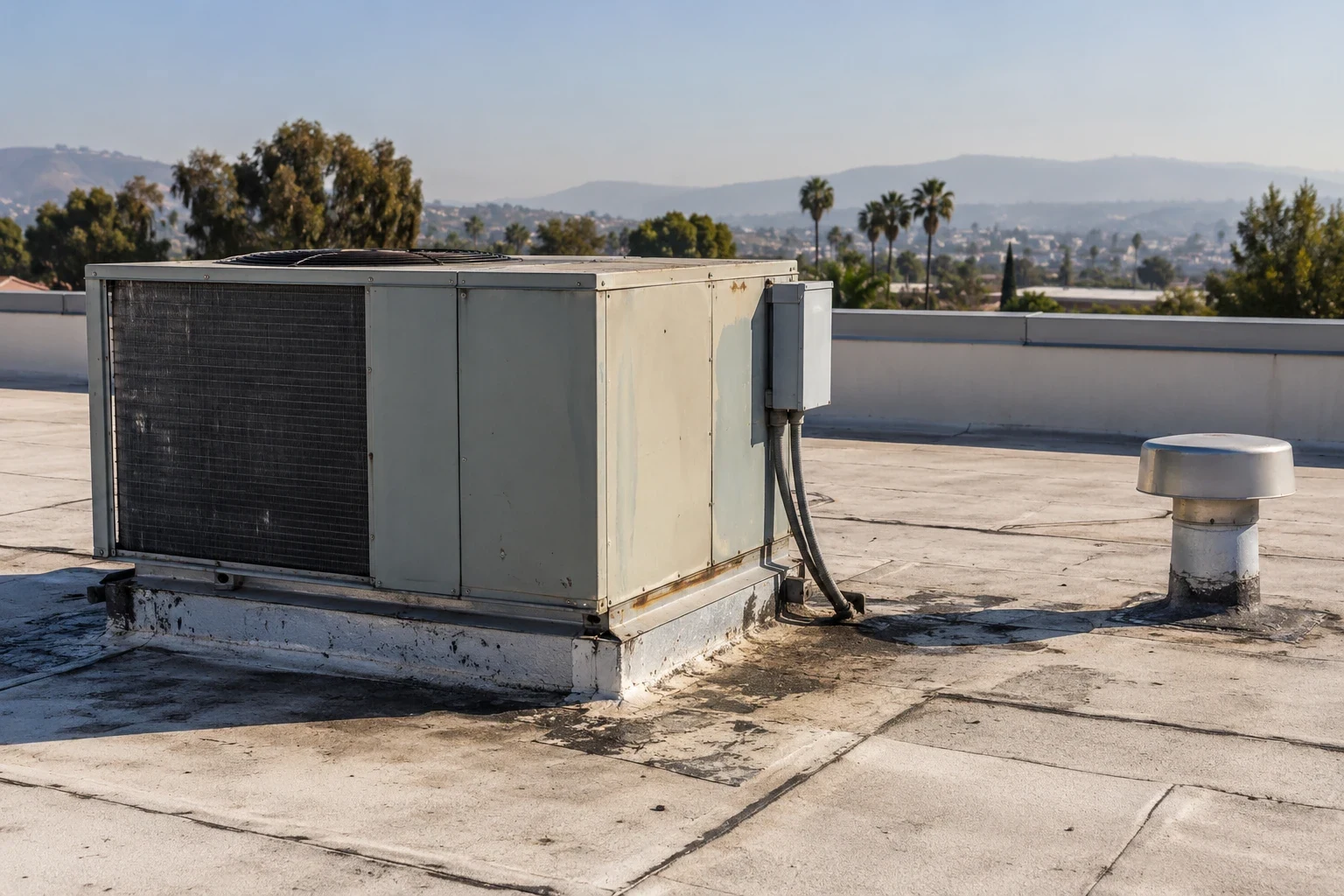
A useful inspection turns scattered leak reports, old repairs, and roof-plan marks into one location-based condition record. Commercial Roofers Hesperia examines the assembly in sections, photographs visible details, and separates confirmed defects from areas that remain concealed. The resulting scope helps an owner decide what to repair now, what to test, and what deserves a later capital review. A roof condition report gives the findings a clear handoff format.
Set the Inspection Question
Choose the question before choosing the test. A buyer may need to understand near-term capital exposure. A facility team may be tracking a recurring leak. A property manager may need a defensible repair list before a tenant turnover. Each purpose needs a different level of opening, measurement, and follow-up. We review available roof plans, prior invoices, warranty files, leak logs, and any restrictions on access. If the site has multiple buildings, label them consistently and keep observations separate. The City Center District is a named area in Hesperia's corridor plan, with civic and mixed-use activity and pedestrian-oriented retail. That describes a broad district, not a particular property. For any building there, we confirm its roof zones and operating schedule with the owner. A City Center District roof review still begins with site-specific records and access.
Read the Assembly in Order
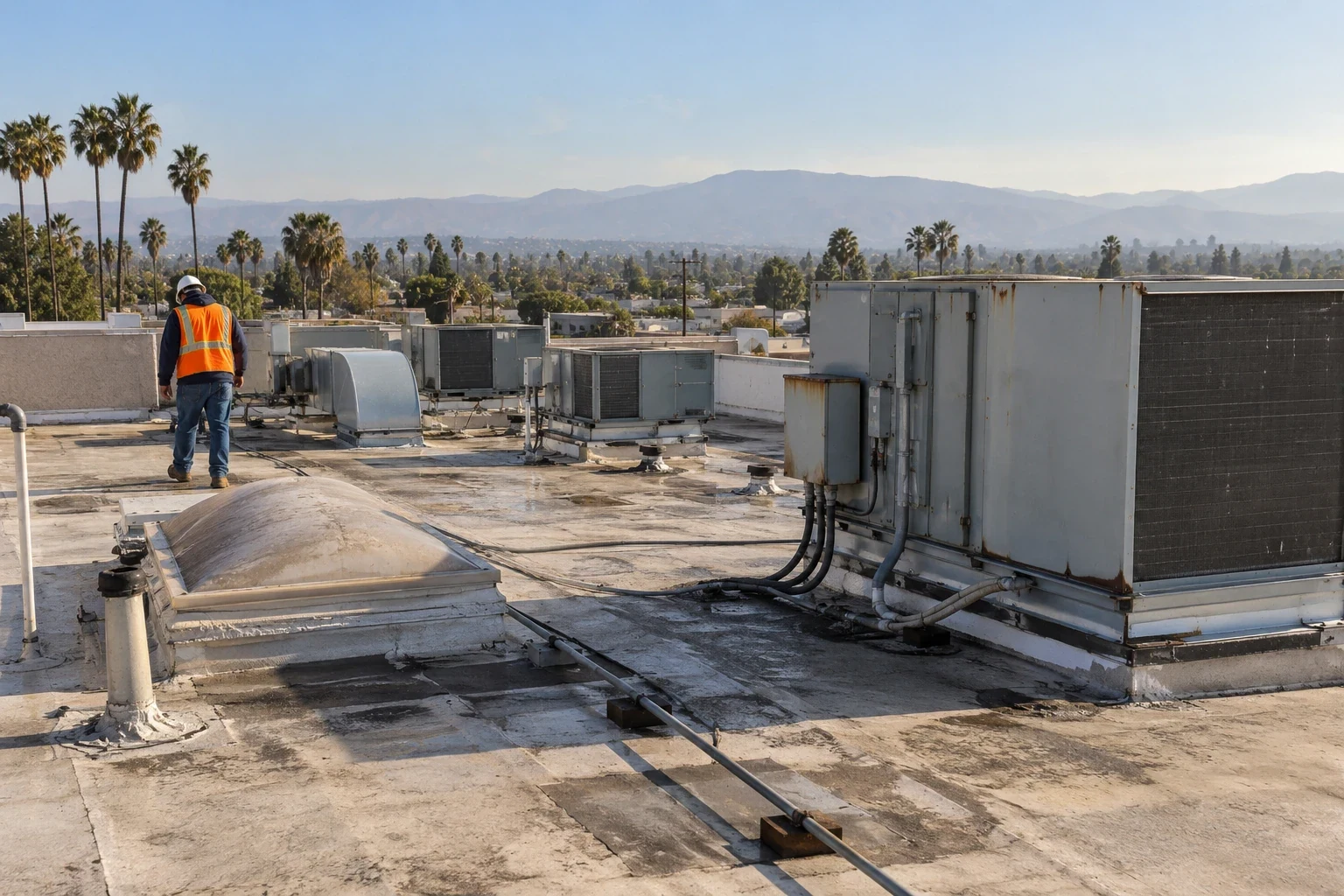
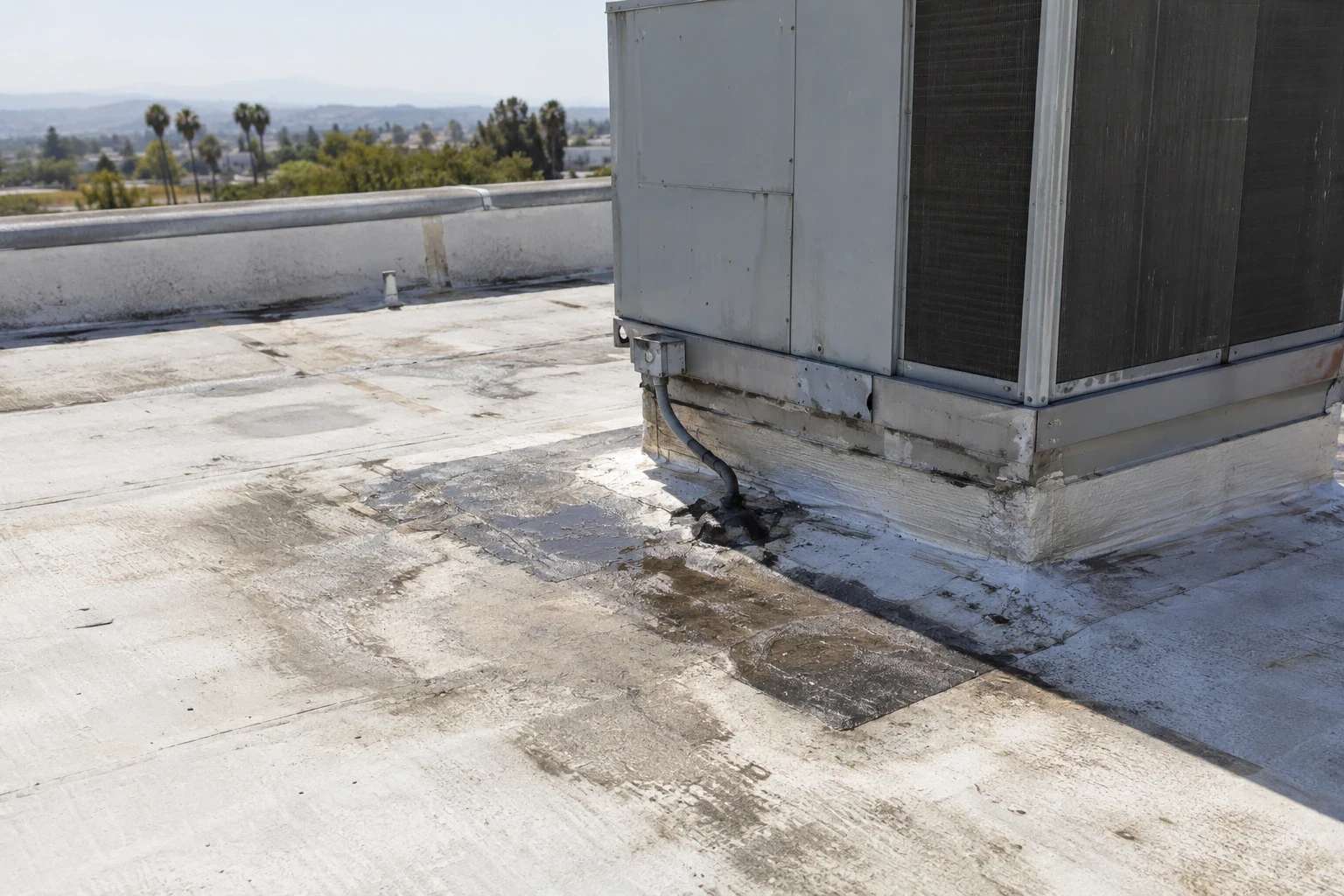
Start at the access point and build a roof map as the walk proceeds. Note the system where it can be identified, the condition of field seams, transitions, penetrations, curbs, edge metal, and drainage. Record ponding only when its extent and persistence can be distinguished from recent rain or cleaning. Look for patch layers, incompatible mastics, exposed fasteners, open laps, loose terminations, and areas where the surface changes. Do not infer a deck defect from a membrane wrinkle. A core or destructive opening needs a defined question, owner authorization, and a plan to close the opening. The report should state what was directly observed, what was measured, and which surfaces were inaccessible. Where a suspected leak is involved, leak tracing connects the interior report to roof conditions instead of assuming the stain sits below the entry. Each observation should point to a next decision or a reason to monitor.
Use Local Context Carefully
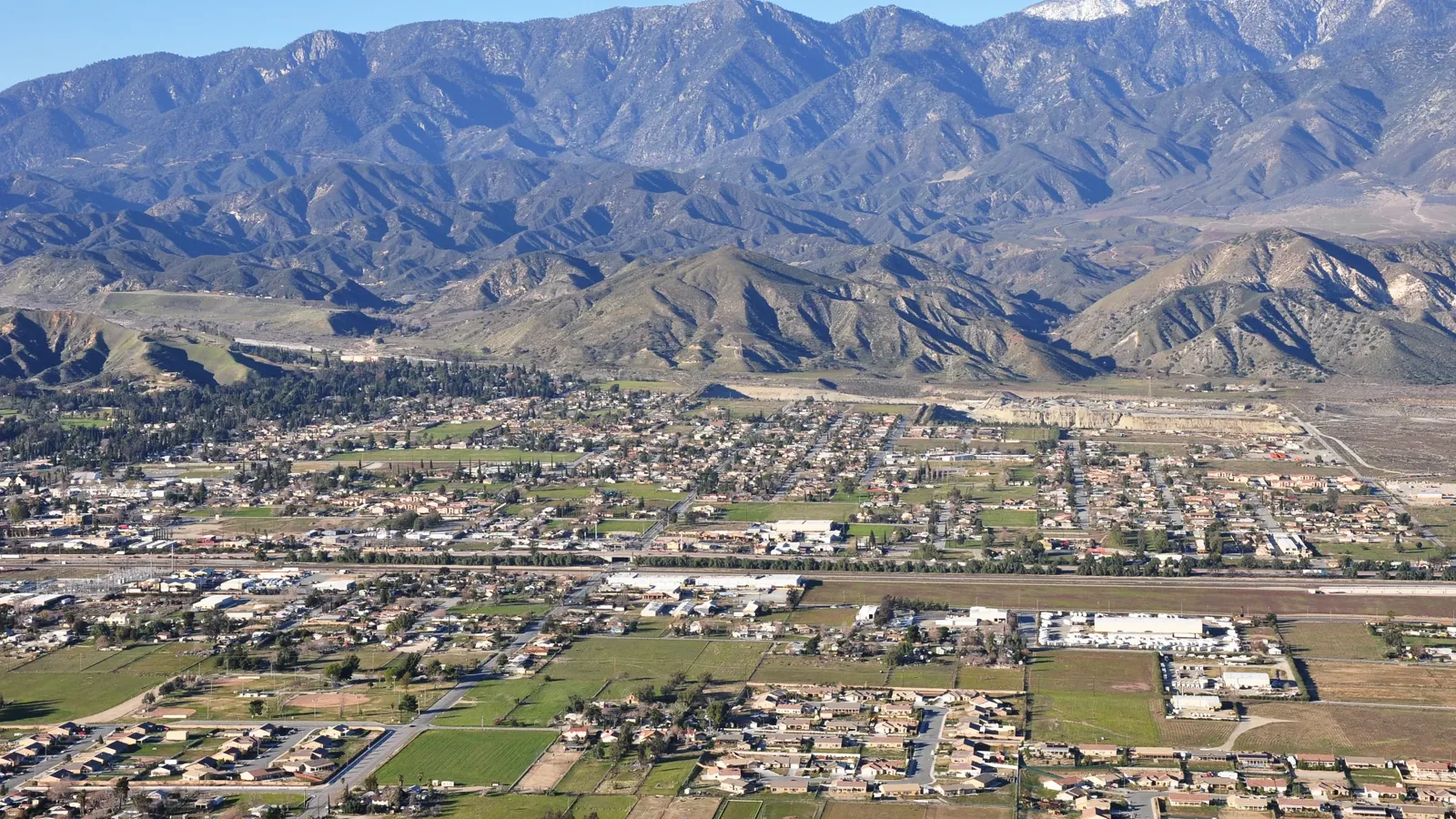
Hesperia’s Main Street and freeway corridor includes industrial, business-park, regional-commercial, civic, and residential districts. Warehouse projects along I-15 and Highway 395 are in entitlement, approval, and construction stages, with access aligned to designated truck routes. Those facts make access coordination and roof-area labeling practical concerns across a growing city, but they do not identify any customer's building, tenant, roof type, or planned project. We confirm actual property use and operating constraints directly. A long-run August daily high of 97.0°F is recorded for the Hesperia 2 E station, while roof temperature depends on the site and time. Heat can influence when a surface is safe to inspect and how a crew plans contact with a membrane; it does not establish a roof failure by itself. We check the surface condition at the time of the visit and document limitations. For roof work around loading activity, confirm gate rules and staging before scheduling material movement.
Turn Findings Into Priorities
A useful report ranks conditions by consequence and urgency. Separate active openings from aging components, drainage concerns, routine maintenance, and items that need more testing. Include a marked roof plan, photos that show both context and detail, approximate dimensions, and a note about how each observation was reached. Give the owner a repair boundary where one can be supported. If moisture is suspected below the membrane, recommend a targeted infrared moisture survey only when conditions and assembly make it useful; scanning cannot identify every wet layer without confirmation. If the roof is stable but needs seasonal attention, a maintenance plan can track drains, penetrations, and prior repairs. For a larger capital decision, compare repair scope with a replacement evaluation that states assumptions and concealed-condition allowances. When a roof uses a thermoplastic membrane, compare the observed details with its TPO roof assembly instead of applying one repair assumption to every system.
Keep the Record Actionable
Before closing, identify the tested areas, methods used, conditions found, exclusions, and records that could not be reviewed. Label photographs by roof section rather than by file sequence alone. If the building contains several roof levels, note which level and access point each image shows. Give the property team a short list of decisions: repair now, authorize an opening, collect missing documents, or monitor a specific condition. A total of four industrial warehouse buildings, roughly 720,000 square feet, fell within three Hesperia entitlement approvals in 2025. That public development context does not substitute for a survey of a particular facility, but it reinforces the value of keeping asset and roof records distinct as portfolios change. Owners can send the address, plans if available, leak history, and access contact. We will define the first inspection area, the information it can provide, and any limitation before scope expands.
Keep the final record accessible to whoever will maintain the building next. A dated plan, labeled photographs, and concise decision list are easier to reuse than notes arranged only by visit order. If the owner declines a test or defers a repair, mark that choice and the area it affects so a later review does not mistake an unresolved question for a completed repair.
Agree on the Next Step
A report is most useful when the owner can act on it without guessing what a note means. We walk through the highest-priority findings, identify what is confirmed, and explain whether additional testing changes the decision. A repair item should identify the roof area and the detail to address. A monitoring item should say what to watch and when it deserves another look. A concealed-condition question should name the proposed test and the approval needed to proceed. If a capital request is being prepared, separate immediate work from longer-range planning so the budget reflects the actual evidence. The person responsible for the building should confirm that the marked roof plan matches current equipment and access restrictions. For a portfolio or ownership change, preserve the report with the roof records for that property instead of combining it with another building's history. That chain from observation to decision is more useful than a broad condition label.
Commercial Roofing Questions
What should a commercial roof inspection deliver?
A marked roof plan, organized observations, context and detail photos, access limits, and a short set of prioritized decisions. The report should distinguish visible findings from suspected concealed conditions and state what testing remains.
Can an inspection certify how many years the roof has left?
An inspection can describe observed condition and identify risks or follow-up needs. Remaining service life depends on concealed layers, maintenance, weather exposure, use, and future repairs. We avoid a precise lifespan unless the evidence supports that level of confidence.
Do you need to cut a core on every roof?
No. A core is useful only when it answers a question that changes the recommendation. We identify the proposed location, obtain authorization, explain how it will be closed, and record the result alongside non-destructive observations.
How do I prepare a Hesperia property for a roof review?
Share the property address, roof plans, prior repair or leak notes, access contact, and any restricted work windows. For multi-building sites, identify the buildings and roof sections in scope. Confirm escorts, ladders, and areas that cannot be entered.
Can you inspect several Hesperia roofs in one visit?
Yes, if the buildings and access arrangements are identified before the scope is set. Each roof needs its own map, observations, and findings so that repairs and budgets remain tied to the correct property. We confirm travel between buildings and any operating restrictions with the site contact.