KEE Roofing in Hesperia, CA
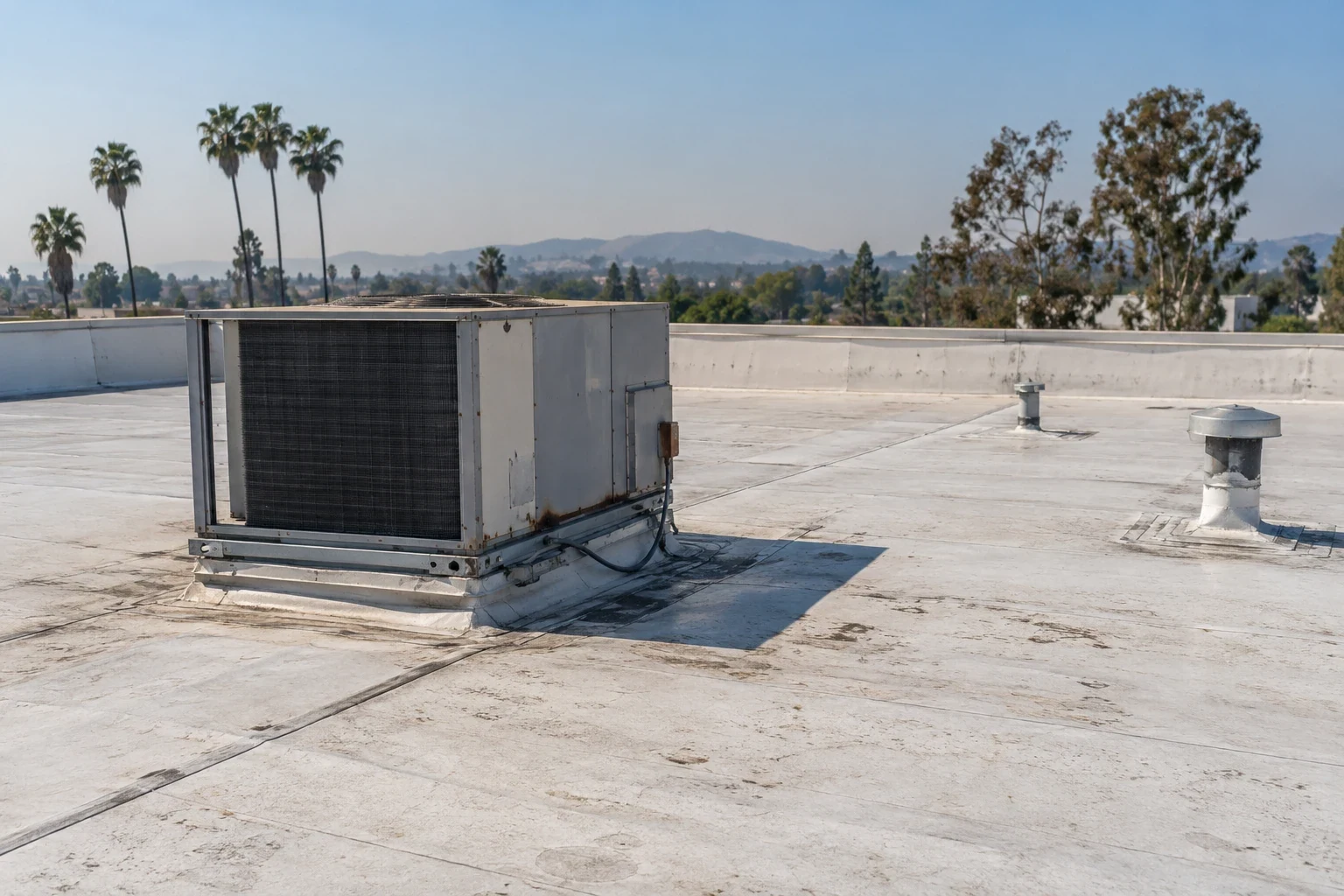
A KEE roof should be identified before anyone selects a patch. In Hesperia, CA, we examine the membrane label or approved roof records, then check the field, seams, flashings and insulation around the reported condition. The August normal daily maximum at Hesperia 2 E is 97.0 degrees Fahrenheit, so heat exposure belongs in the work-window discussion. That normal is not a measurement of today's roof. It is one reason to check actual surface conditions and manufacturer application instructions before bonding or welding. We map what we can confirm, mark what remains untested, and compare repair, recover and replacement only after the assembly is understood.
Identify the Sheet First
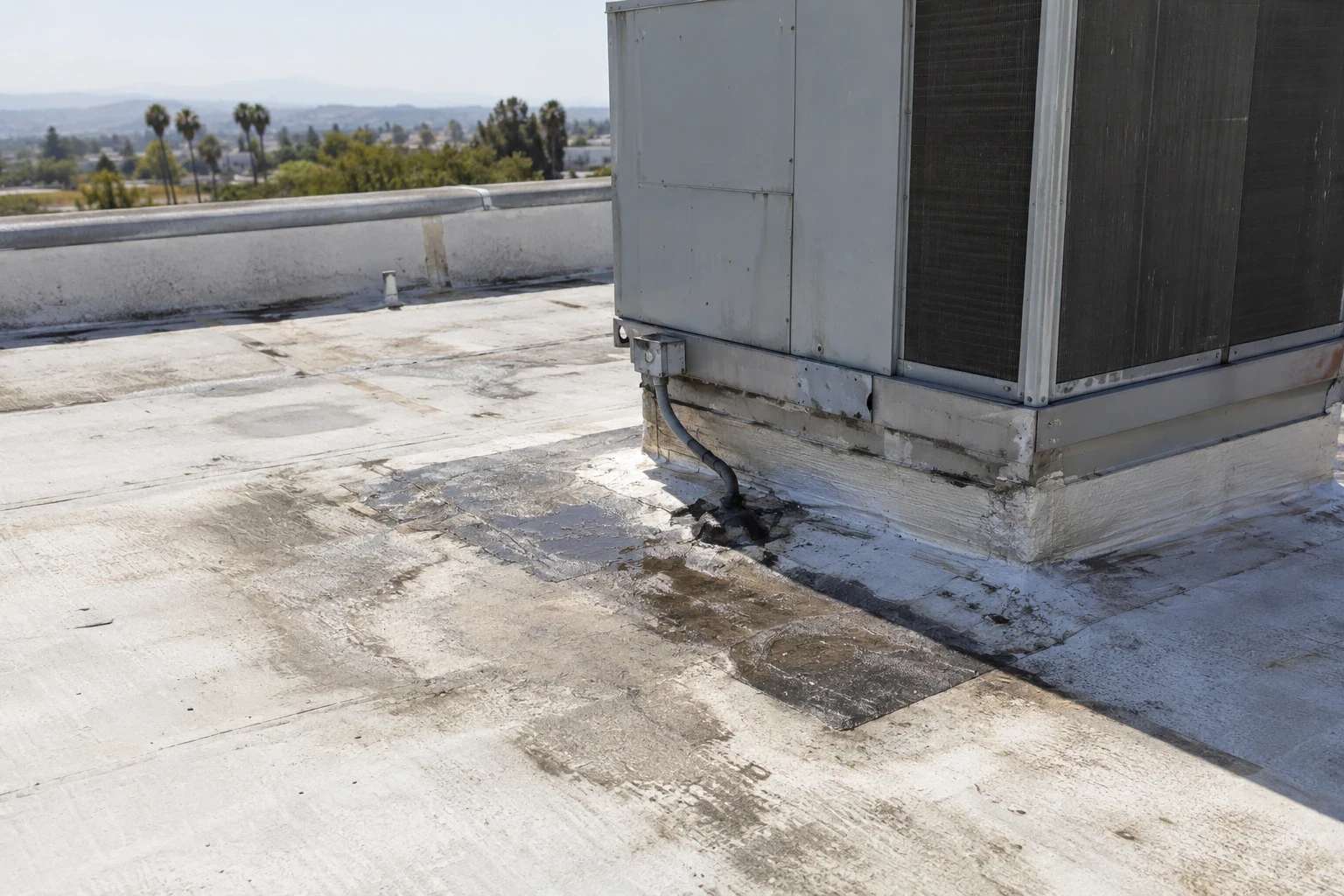
KEE membranes combine a ketone ethylene ester formulation with reinforcement and a thermoplastic sheet. The exact product, age and installed detail still matter. We inspect the surface for abrasion, cracks, exposed scrim, punctures, seam separation and past coating or repair material. At a weld, a probe can reveal a missed or open edge; at a curb, movement can stress the flashing even when the field remains serviceable. We also check fasteners, plates, wall terminations and drain connections. A patch is a candidate only when the substrate around it is sound and the repair can tie into compatible membrane. Label each defect by roof section and note whether it is confirmed or needs testing.
Schedule for the High Desert
A KEE repair should start with the label, submittal or other owner record that identifies the sheet. If that evidence is incomplete, mark the membrane as unconfirmed and test the proposed weld or bond in an approved area. Do not select a patch product from color or surface feel alone. We verify the building's access point, fall protection and staging plan with its operator. A district roof review provides geography; field inspection controls membrane scope.
Test the Repair Interface
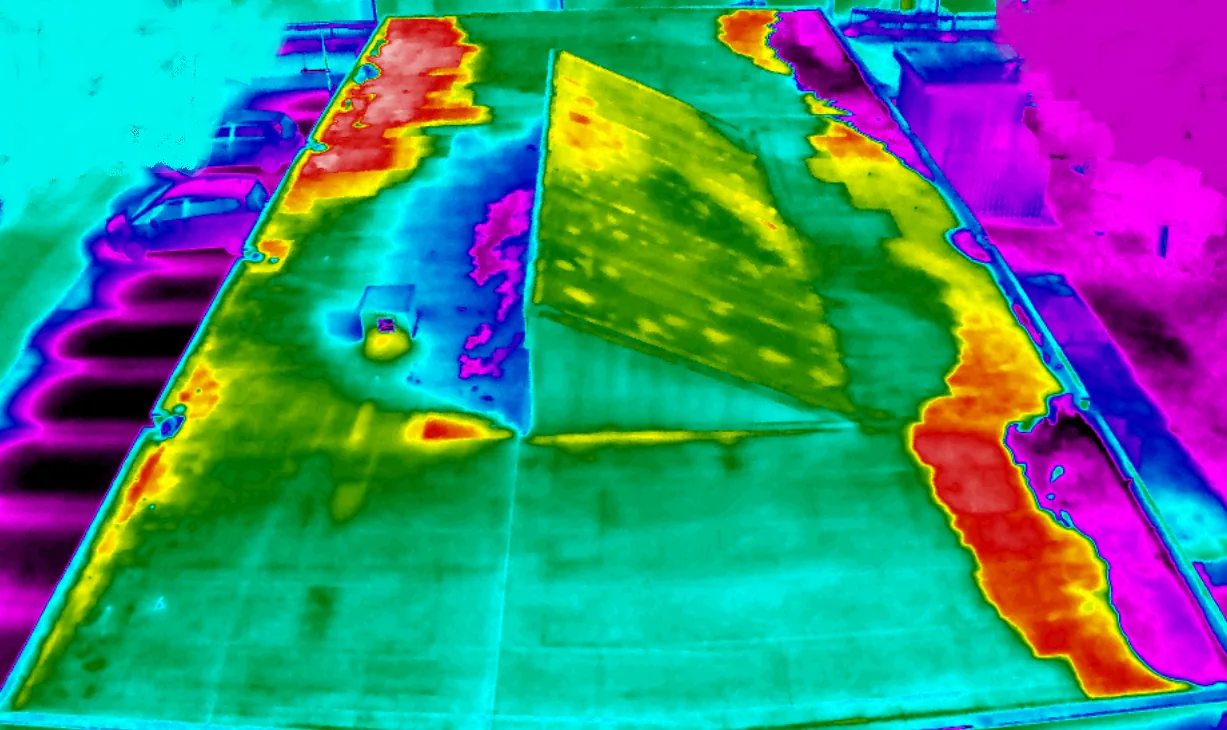
A surface treatment can hide an open seam or an incompatible patch. We clean a small area, inspect the exposed sheet and determine whether the planned repair method can bond or weld to it. If a previous coating obscures the membrane, a test may be needed before estimating a broad repair. We follow moisture beyond the interior stain and check whether the insulation remains dry and firm. Where the assembly is open, we document the layer sequence and deck condition before covering it again. A moisture scan can prioritize locations, while a leak assessment can trace the water route. A test boundary should be clear enough for the owner to understand what is known and what needs authorization.
Keep KEE and TPO Distinct
KEE and TPO are both thermoplastic sheets, but the labels do not make them interchangeable. Identify the existing membrane, reinforcement, attachment and seam geometry before selecting a compatible repair. Review the exact system requirements for flashing, cleaners and weld procedures. If the roof is being replaced, compare the total assembly: deck, insulation, cover board, attachment, perimeter restraint, penetrations and drainage. A TPO alternative or PVC assembly should be evaluated on the property's use, exhaust exposure, roof access and maintenance plan, not a general claim that one sheet is best. We explain the consequences of each option and identify any conditions that still require a test opening.
Close Each Repair Zone
Before the crew starts, confirm roof access, safety tie-off points, material staging and any interior protection. Set a boundary that can be prepared, repaired and closed within the agreed work period. The crew should clean the surface, complete a test weld or bond when required, and inspect the finished transition before covering the next section. At drains, curbs and wall edges, the sequence matters because one unfinished turn can direct water below the sheet. At the field edge, distinguish a loose seam from movement at the perimeter or a change in substrate. Those conditions may look similar from above but call for different preparation, attachment and close-in details. A phased roof sequence helps coordinate work below. Keep a condition record with each completed roof zone and any exclusion.
Separate Known Work From Risk
Repair pricing depends on the area, access, prep, compatible material, flashing details, insulation condition and whether the substrate accepts the repair. Replacement adds tear-off, disposal, attachment, edge work and close-in planning. We measure the confirmed area, state assumptions, and list how concealed wet material or deck damage would change the scope. That prevents a modest seam repair from turning into unapproved removal. Hesperia Main Street-West District pairs multifamily residential and neighborhood-commercial uses. That land-use context does not identify the membrane; confirm each roof's KEE label or approved test before selecting a repair. We confirm deliveries and work hours directly rather than infer them from the district. Compare a replacement scope with localized repairs when several KEE details are failing. A maintenance visit can track retained sections after the repair.
Hesperia Freeway North District is planned for residential, business-park and regional-commercial uses. That planning label does not prove the property has KEE; confirm the sheet through records or an approved test weld before selecting repair material.
Preserve the Assembly Record
Closeout should identify the KEE product where confirmed, repair location, preparation, weld or bond detail, and any area that was not opened. Save before-and-after photographs with a roof map, not as unlabeled images in an email. If the crew found moisture or an attachment concern, record its boundary and the next owner decision. When the site has more than one roof section, label each one so a future repair does not assume identical membrane or construction. Keep each completed zone on the roof sketch. Record the confirmed sheet, repair method, weld or bond check, and any boundary that could not be opened. The next inspection can then return to the same detail instead of treating an old patch as proof that adjacent seams are sound.
For an owner evaluating a repair, the useful comparison is the condition on either side of the defect. Measure how far a seam has separated, whether the membrane still grips the insulation, and whether water has reached the deck. If the exposed sheet carries an old coating, do not assume a new weld will bond without a test. If attachment plates have lifted or the perimeter has shifted, include those findings in the sketch rather than pricing only the visible split. The proposal can then distinguish a known repair from an allowance for material concealed below. Ask us to mark the point where a change in condition would pause the work and require owner approval. That boundary protects the building from unnecessary opening while preserving a clear option if testing changes the facts.
Commercial Roofing Questions
How can we tell whether the roof is KEE?
Check approved submittals, product records or a marked membrane sample. Surface appearance alone may not distinguish KEE from another thermoplastic sheet, so we verify before choosing a repair material.
When can a KEE sheet receive a localized seam repair?
A seam repair is a candidate when the membrane remains secure and a compatible weld can be made. We inspect the seam and test the interface before setting the repair boundary.
Does KEE mean the roof resists every chemical?
No membrane should be selected on a broad assumption. Identify the exposure, system and cleaning practice, then compare the manufacturer's documented compatibility with the actual roof use.
What should be tested before a recover?
Confirm that retained layers are dry, stable and suitable for the new attachment. Moisture, loose material or a weak deck can make covering the existing sheet the wrong choice.
Will a KEE replacement disrupt operations?
The phasing depends on roof access, material staging, open-area size and the building below. We define close-in points and coordinate the work zone with the property contact.