Commercial Roof Leak Repair in Hesperia, CA
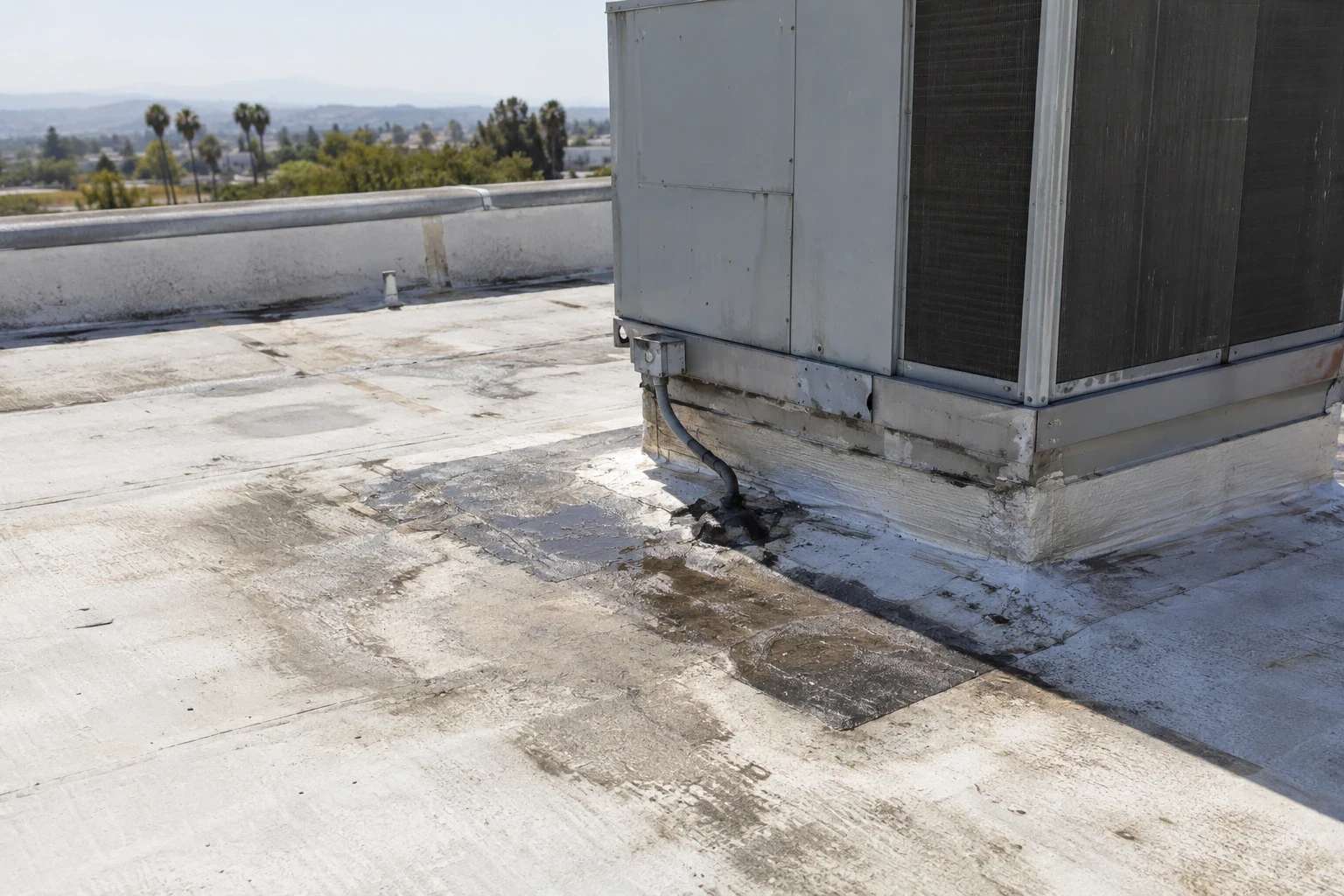
A leak report gives us a room and a time. It does not yet identify the roof entry. We ask what changed, where water first appeared, and whether the stain grew during rain or after it stopped. That timing helps choose where to walk, but the roof detail must confirm the path. We map the interior report to roof zones, then inspect seams, penetrations, curbs, edge transitions, drains, and earlier patches near the likely route. On Hesperia commercial roofs, heat cycles can stress a lap or flashing that already has limited movement. We look for the opening and the material around it before applying a repair. A roof inspection documents the tested area and access limits. The repair boundary follows what we can verify, not only the ceiling mark.
Follow More Than the Stain
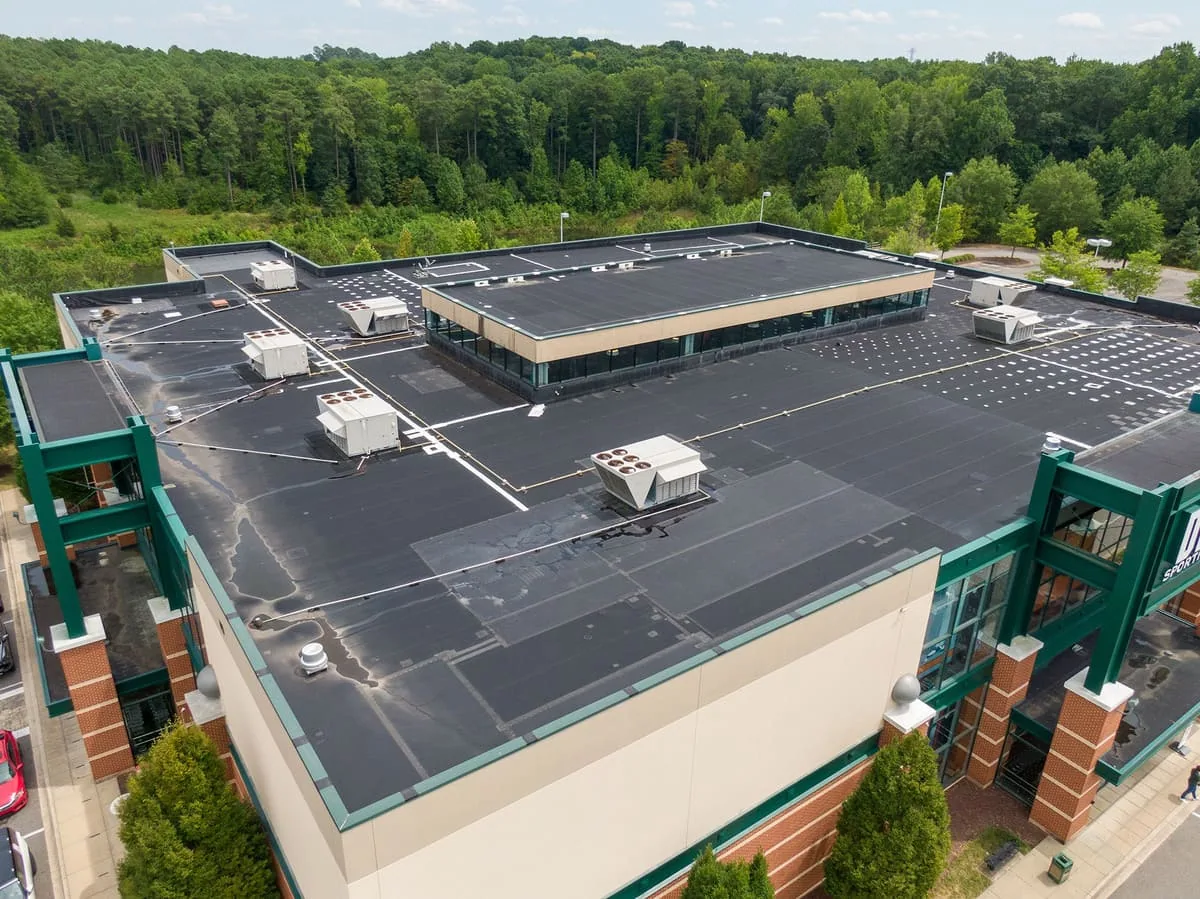
Water can move laterally through insulation or along a deck before reaching a room. A stain below a mechanical curb may trace back to a seam uphill, while a wet wall can point toward a coping joint or termination. We inspect the roof from the nearest plausible entry outward and mark transitions that could redirect the path. If several rooms report water, we keep the records separate until the roof walk connects them. A roof plan helps locate drains and units, but field measurements control the repair. The Main Street-West District is planned for multifamily and neighborhood-commercial uses, while the corridor's Industrial District is planned for general industry. Those are broad land-use contexts, not evidence about any individual roof. For an active opening, the owner may need temporary protection while the source is traced.
Use a Test That Answers a Question
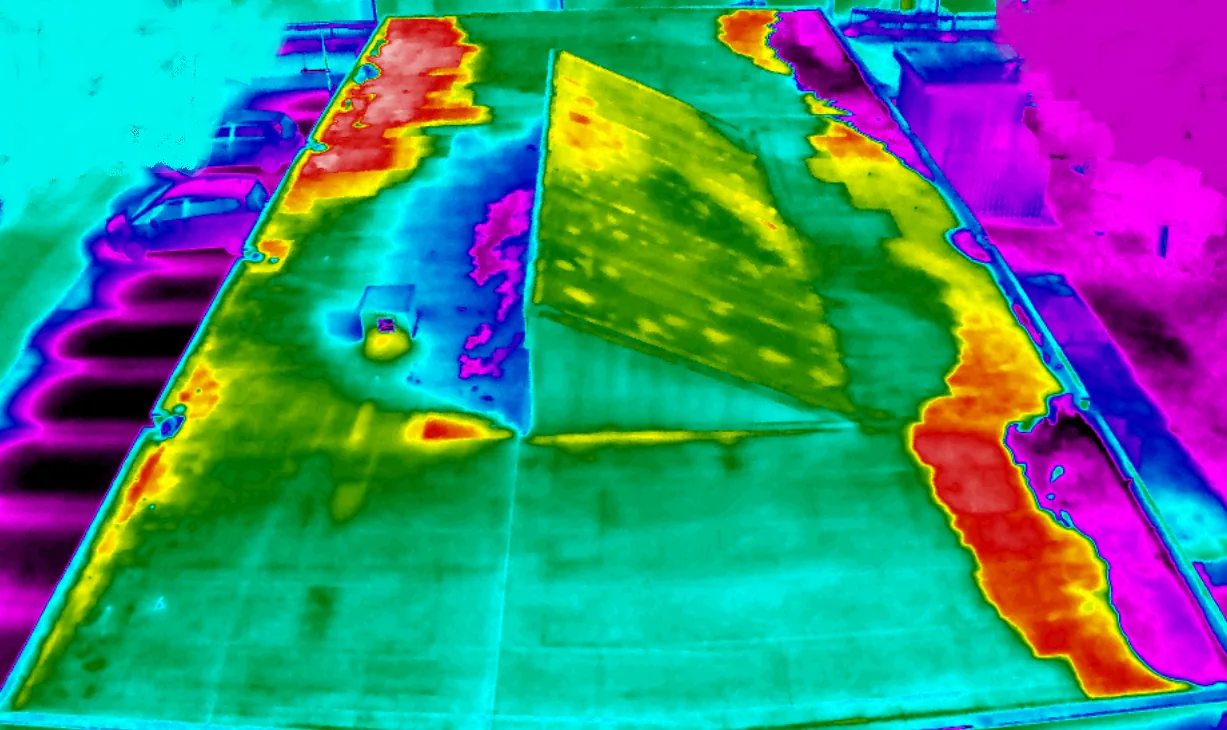
A moisture scan or core is useful only when it resolves a decision. We choose a location to compare the material near a reported entry with an area that appears sound. If the insulation is wet, the test helps set the removal limit. If it is dry, the focus may shift to a seam, curb, drain, or wall transition. We label each opening on the roof sketch and record the assembly that came out. One sample does not establish conditions across the whole roof. A moisture survey can help map areas for follow-up, while selective cores confirm what lies below. We protect test openings and close them with a compatible detail before leaving. The report states which sections were reached and which were blocked by equipment or access restrictions.
Repair the Connection
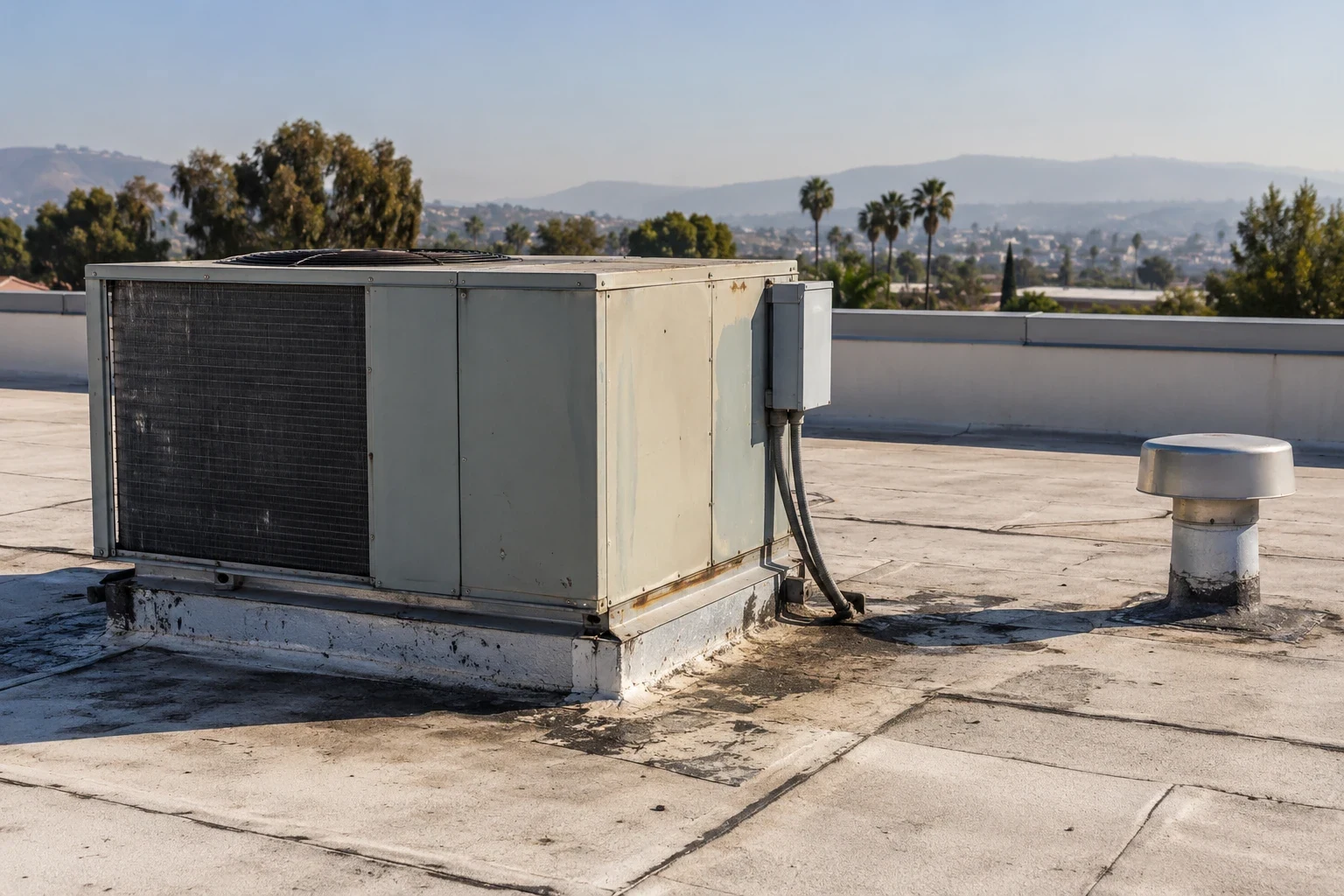
Different roof materials need different repairs. A field membrane split may need cleaning, compatible reinforcement, or a welded patch. A drain leak may involve its bowl, clamping ring, leader, or surrounding membrane. At a skylight or pipe penetration, the flashing must connect to stable roof material and allow the assembly to move without opening a gap. Before closing a repair, we prepare the substrate and confirm that it can accept the selected detail. For a welded TPO membrane, preparation and seam quality matter; for a penetration detail, the curb or boot condition determines the repair. If water collects nearby, a drainage check helps identify a related cause rather than patch the symptom alone.
Price the Confirmed Area
The written scope should identify the roof zone, dimensions, preparation, patch or replacement material, and the point where additional removal requires approval. If opening a seam exposes wet insulation, we photograph the layer and measure the added work before expanding the repair. A unit rate for deck or insulation replacement gives the owner a clear comparison. For Hesperia leak calls, we separate immediate water control from the repair that closes the roof entry. Hesperia’s designated truck routes include portions of Santa Fe Avenue, Bear Valley Road, Joshua Road, I-15, and U. S. 395. We confirm city restrictions and site rules before delivery. That routing does not reveal roof conditions. The property contact confirms where the crew can enter, stage, and move materials. Where the repair is part of a larger deterioration pattern, we compare the patch cost with a replacement scope using the same roof measurements.
Close the Roof Safely
Repair conditions matter. The surface must be dry and prepared, the selected materials must remain within their application limits, and the work area needs a clear close-in point. Hesperia's August climate baseline records a 97.0°F normal high at 2 E; a roof inspection must verify actual movement or damage. We check actual surface conditions before applying repair materials. We check the product instructions and adjust the work sequence for surface conditions, shade, wind, and safe access. If conditions shift, we secure the area and record what remains rather than leave an open assembly. On a building with production, retail, or office activity below, we agree on the room protection and work boundary before moving equipment. The industrial district roof context differs from the Main Street-West mix, but each property still needs a site-specific contact and roof route.
Record the Repair Boundary
At closeout, the owner should be able to find the repaired section later. We label the roof zone, photograph the finished detail, note the material installed, and list any adjacent area not included. If a test opening revealed wet insulation or a second failure, that condition remains a separate item unless the owner approved the extra work. We note whether the interior report was revisited after repair and what remains unknown. A repair record can help compare a future leak report against the old boundary without assuming the original entry returned. Send the address, leak timing, interior location, roof plan if available, and previous work notes. We will identify where the first roof walk should start and what test would help narrow the scope. The next decision is whether the observed defect stays local or extends into another layer.
Commercial Roofing Questions
How do you find a roof opening when the stain is across the room?
We map the stain and inspect roof details uphill and along the likely water path. Deck direction, insulation joints, curbs, and previous patches can carry water away from the entry. A roof sketch helps with orientation, then the field walk confirms which seam or transition needs testing. If the path remains uncertain, we state the limit before recommending more opening.
What can a first Hesperia roof visit realistically resolve?
A first visit can identify an accessible defect, but permanent work depends on the surface, weather, roof system, and safe access. If water is active, temporary protection may be a separate immediate step. We describe what can be done safely and what must wait for dry conditions, compatible material, or owner approval.
Should we replace insulation around every leak?
No. We measure the affected area and use moisture checks or selective openings to set a removal boundary. Dry material may remain if it is stable and the repair can connect to sound layers. A test showing wet insulation leads to a measured replacement scope, not an automatic tear-off of the full roof.
What if water enters near a drain or curb?
We inspect the connection and nearby membrane, then check whether drainage or movement is contributing. A drain ring, curb flashing, and field seam need different repair details. The scope identifies which component failed and what adjacent area was tested. If water still pools against the repair, that drainage condition needs a separate correction.
What information helps us start a Hesperia leak call?
Send the building address, room or equipment area affected, when water appeared, recent photos, roof plan if available, and prior repair notes. Include a contact who can open the roof and confirm interior protection. A location near Main Street or the Highway 395 corridor also benefits from clear delivery and staging directions.