PVC Roofing in Hesperia, CA
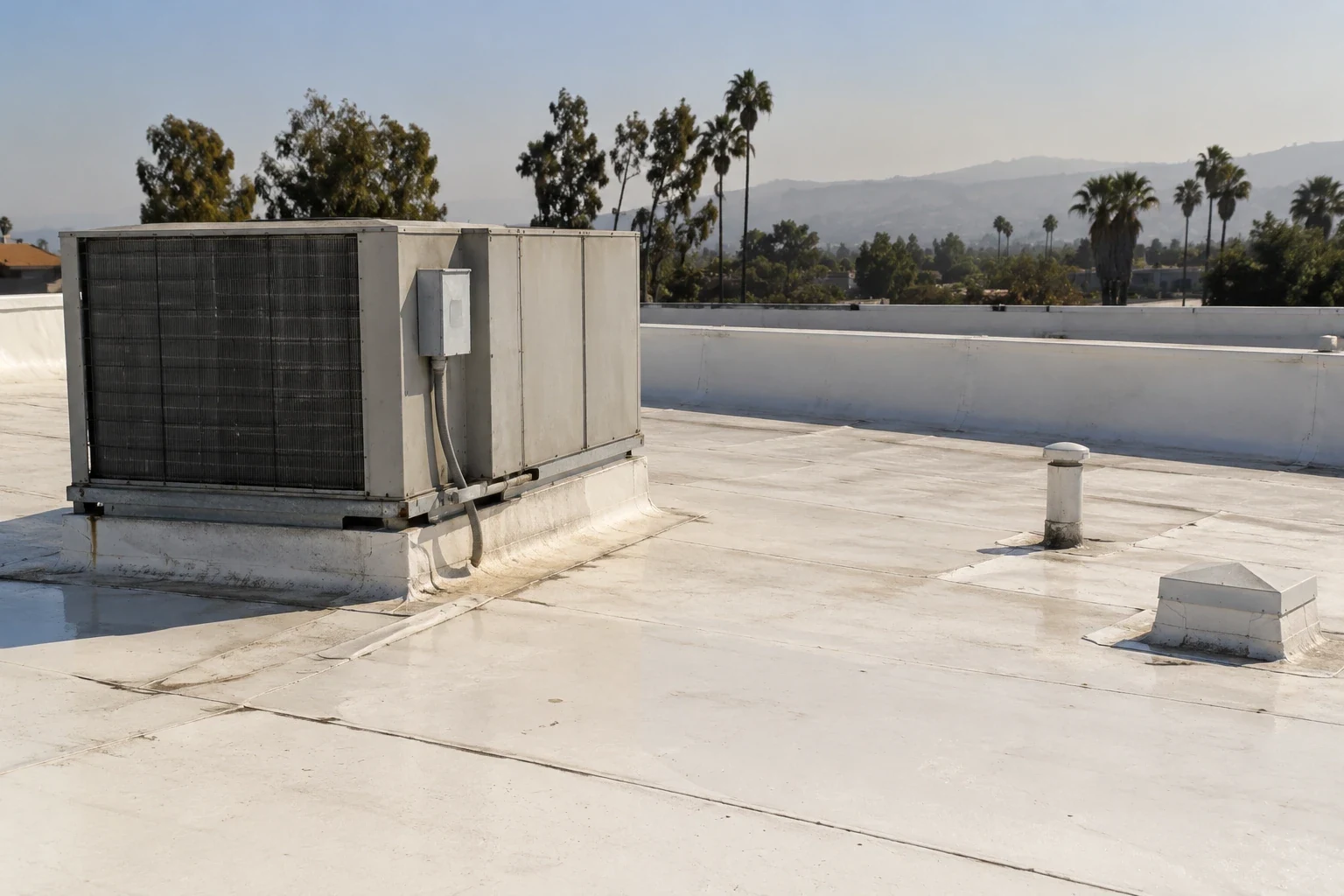
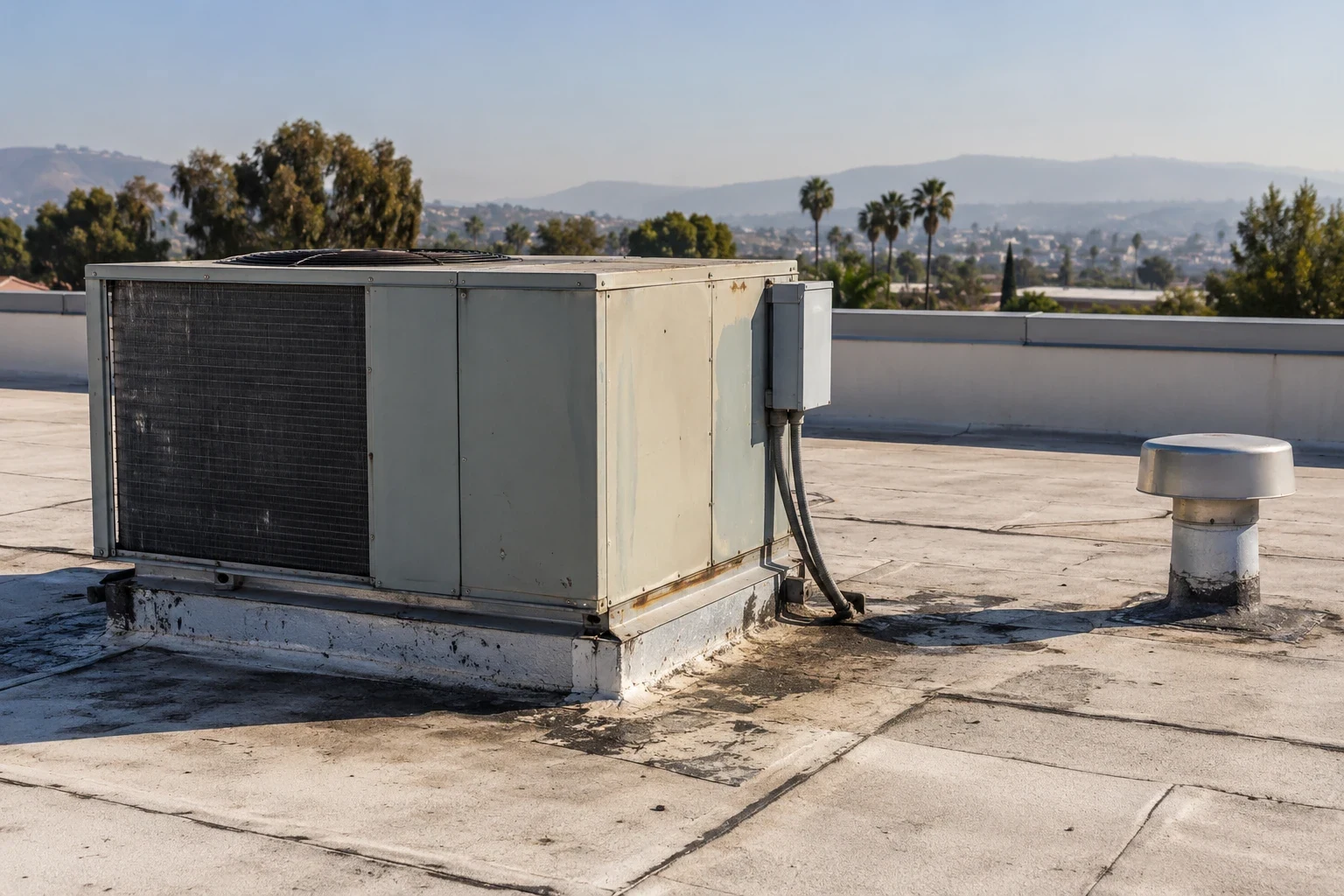
Grease, rooftop equipment, foot traffic and heat can make a PVC roof's details work harder than its open field. In Hesperia, CA, we identify the membrane and the conditions above and below it before recommending a patch or replacement. For Hesperia 2 E, August's normal daily maximum is 97.0°F in the 1991-2020 series; we use actual site conditions to plan work. We check surface temperature and membrane condition before inspection or application. We inspect welds, curb flashings, drains, walkway paths and prior repairs, then mark the tested area on a roof plan. That gives the owner a scope tied to observed conditions, not simply the material name.
Check Welds at the Details
A PVC seam can open at a corner, around a curb or where an earlier patch was added. We probe the weld where it is safe, look for dirt or contamination that interferes with a repair, and check whether the sheet remains attached around the failure. Equipment service paths can abrade the field and concentrate traffic at a few transitions. At drains, the membrane must reach the bowl without a gap or a wrinkle that traps debris. If staining appears below a roof penetration, trace the water before assuming the nearest seam is responsible. We label the detail and the adjoining field separately so the repair proposal says exactly which condition is being corrected.
Account for Heat and Roof Access
Plan a PVC inspection around seam access, roof traffic, and details that connect the field sheet to curbs or drains. The Hesperia 2 E climate record includes a 35.2°F normal December daily minimum and a 97.0°F normal August daily high. Neither value describes a specific work day or membrane surface. Hesperia's Industrial District and Main Street-West include different land-use settings, but a building's gate, escort, and working hours come from its property contact. Inspect welds and exposed edges directly, then verify surface and application conditions before selecting a compatible method. Keep a stable tie-in point available for the repair.
Separate Chemical Exposure From Moisture
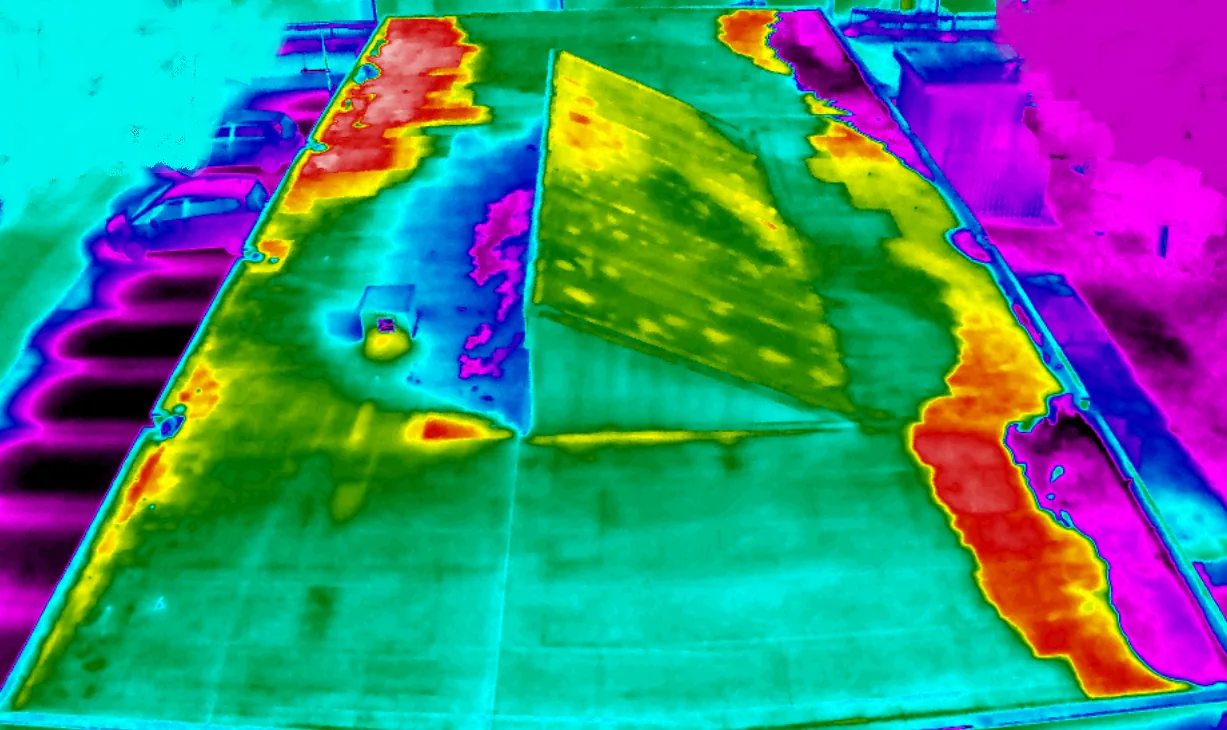
Surface discoloration does not establish that a PVC membrane has been chemically damaged. We look for changes in texture, softening, cracking, seam separation and any repeated spill or exhaust path the operator can identify. A targeted test or sample may be warranted before the owner chooses a repair material. If moisture has moved through insulation, the opening must show the layer condition and repair boundary before new sheet is installed. Keep the observation, test result and proposed correction distinct. An assembly inspection can map the affected zone, while moisture testing may help prioritize verification. No single reading replaces a confirmed opening where concealed layers control the decision.
Match the Membrane to the Use
PVC is heat-welded, so a compatible repair depends on the existing sheet, surface condition and the ability to make a continuous weld. We verify that the proposed patch is appropriate for the installed membrane rather than treating all thermoplastics as interchangeable. Compare thickness, reinforcement, attachment and flashing details as a complete assembly. Where the roof has recurring grease exposure or service traffic, detail protection and maintenance access may matter as much as the field membrane. TPO roofing also uses heat-welded seams but is not automatically a substitute for PVC. A modified bitumen assembly follows a different layer and repair method. The owner should compare each option against roof use, deck, drainage, expected access and the cost of correcting concealed damage.
Protect Open Seams and Work Areas
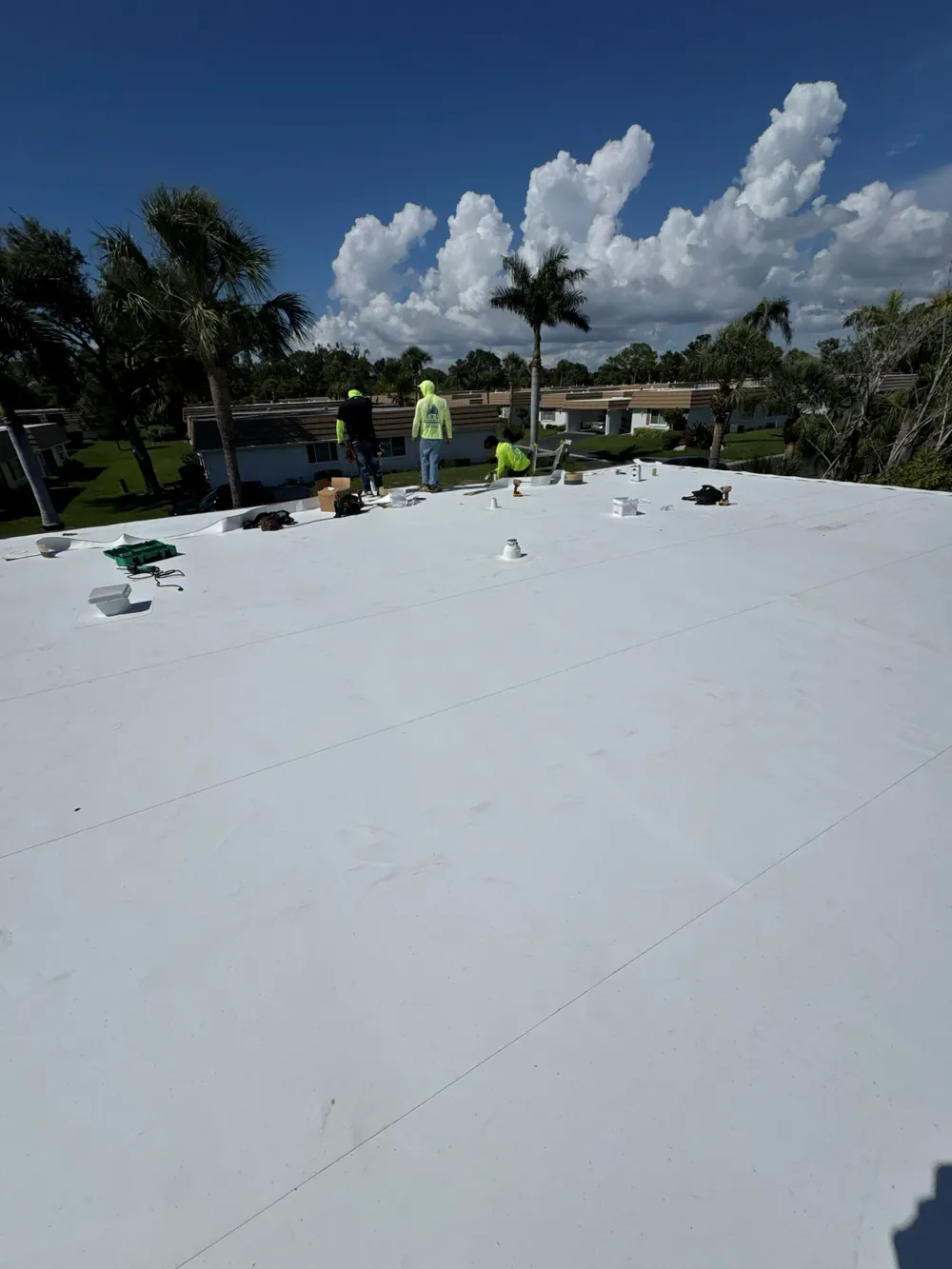
Before installation, we confirm weather conditions, access route, material staging, hot-work controls where applicable, and the areas below the active roof zone. The crew prepares the sheet, verifies the weld setting, and makes a test weld before relying on production seams. A finished lap should be continuous, with corners and penetrations completed in a sequence that does not leave water behind an unfinished edge. We close each section before moving beyond the crew's planned work window. If the substrate is wet or the deck does not accept the specified attachment, we stop and show the owner the condition before expanding removal. For a property in the Highway 395 and I-15 District, we confirm the freight entrance and roof access with the site contact. A phased work plan can keep the building's use in view while the tie-in is completed.
Make the Comparison Specific
Estimate costs change with tear-off, insulation replacement, substrate repair, attachment, curb and drain details, disposal, protection and work phasing. We list those items separately where they can be measured and name any concealed condition that would require approval before continuing. A repair is easier to evaluate when its limits and the adjacent membrane condition are clear. A replacement comparison should include the roof sections, termination details, penetrations and drainage work, not only a field-area quantity. I-15 and U. S. Highway 395 meet near Hesperia’s freeway corridor. The building contact confirms the delivery route and staging area. We can compare PVC with an replacement scope and document the Main Street-West area only as broad local context. The property-specific inspection remains the basis for quantities and timing.
Make a Test Area Useful
A test area should answer a decision, not create another ambiguous patch. Agree on where the test begins and ends, what preparation is allowed, how the weld or repair will be checked, and what conditions would make the test inconclusive. Photograph the membrane before work, label the roof section, then record the material and procedure used. If the test weld peels or the surface remains contaminated, do not extrapolate a successful result to every roof area. Choose another representative location or consider a different repair path. A test should also account for nearby curbs, drains, edge metal and service routes because those transitions experience conditions unlike a broad open field. For an occupied building, keep the test away from sensitive operations when possible and coordinate any odor, noise or temporary protection below. The owner can then compare a narrow repair, a defined replacement area or a broader roof project against evidence that is tied to this PVC assembly. Retain the test record with the property roof file. Note whether the operator observed a spill, exhaust discharge, or repeated foot traffic that may affect the tested location. Tie each note to the sketch.
Before authorizing a larger repair, compare the test area with adjacent seams and the roof plan. Record whether the field weld, curb flashing, or drain connection can be reached without removing unrelated material. A small mock-up can confirm preparation and welding technique when the existing sheet is aged or surface-treated. Keep the accepted test result with the project record so the production detail can be repeated on the same assembly.
Commercial Roofing Questions
Can a PVC seam be welded again?
Often a sound sheet can accept a compatible weld after the area is cleaned and prepared. We check the surrounding membrane, attachment and insulation before deciding whether a patch will hold at that location.
How do we know if grease damaged the roof?
A stain alone is not enough. We inspect the sheet's texture, seams and exposure path, then test or open a defined area if the result could change the repair material or boundary.
Can PVC and TPO use the same repair material?
They are distinct membranes. The installed system and repair product must be identified before the crew prepares a weld or patch; a similar color does not establish compatibility.
What if the insulation below PVC is wet?
Measure the affected area and verify its boundaries. Wet insulation generally needs to be removed or otherwise addressed before a new membrane closes the assembly.
What changes a PVC replacement estimate?
The deck, retained layers, attachment, penetrations, drainage, disposal and access plan all affect scope. We list assumptions so concealed damage does not become an untracked change.