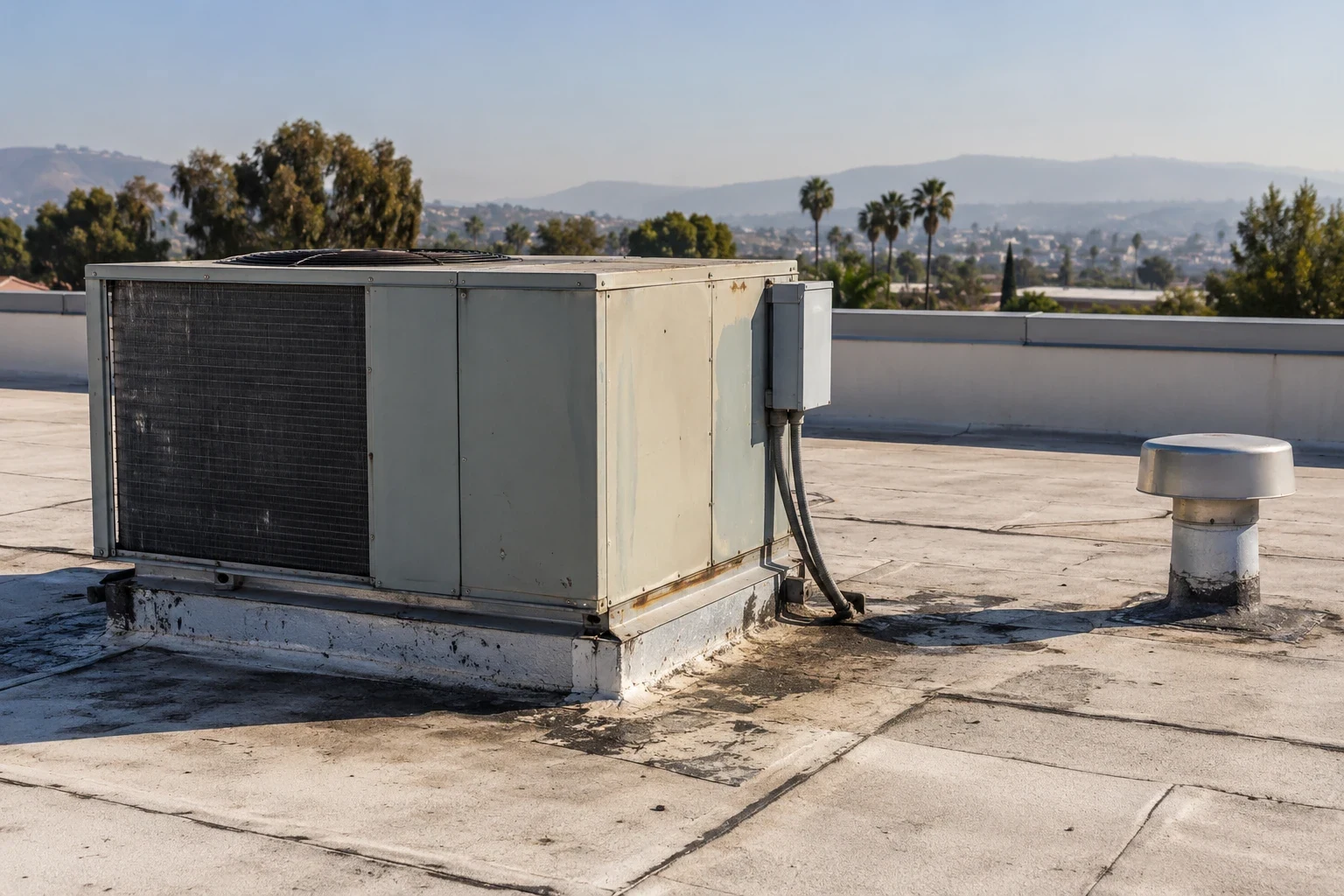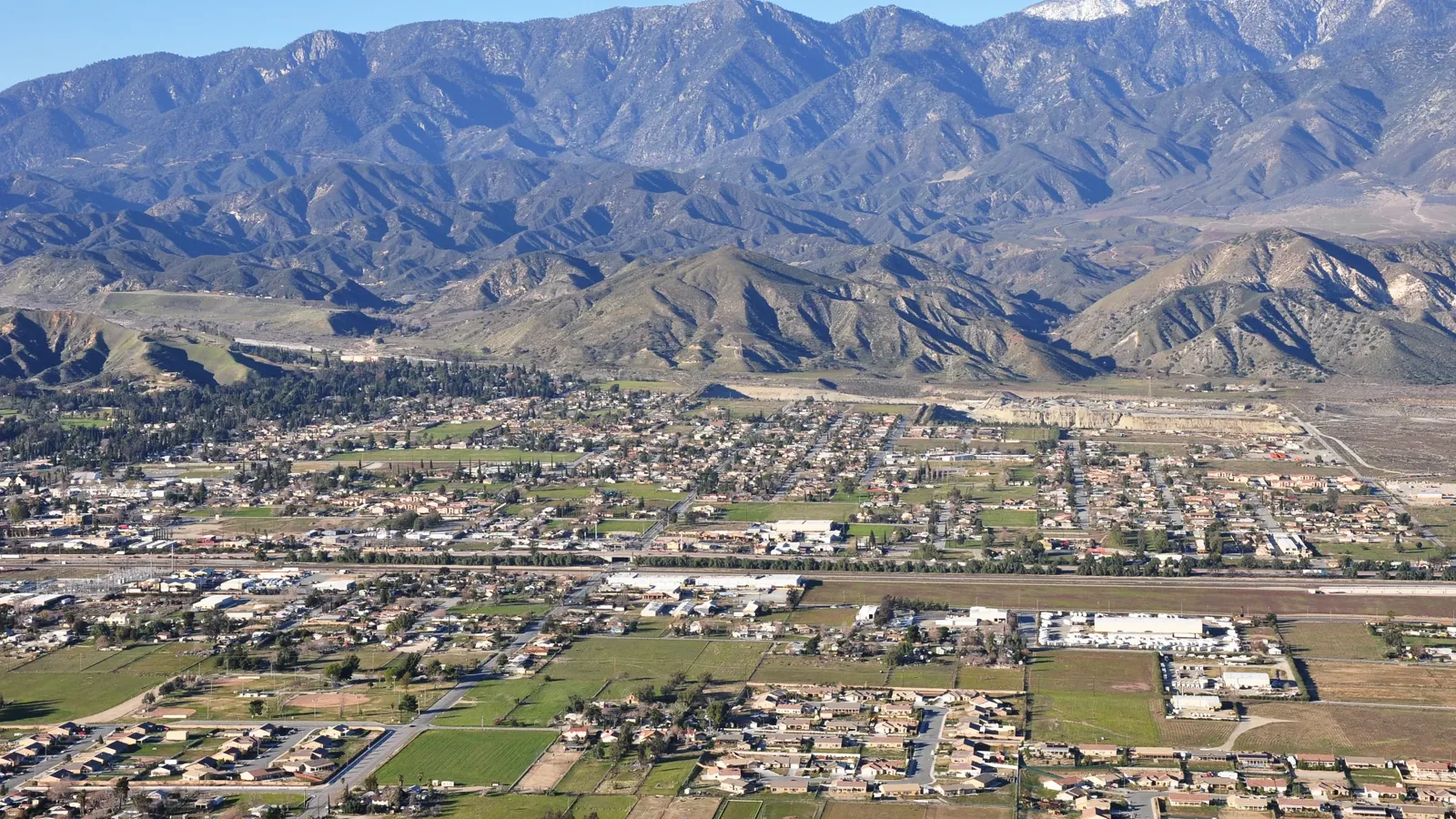
Commercial Roof Maintenance in Hesperia, CA
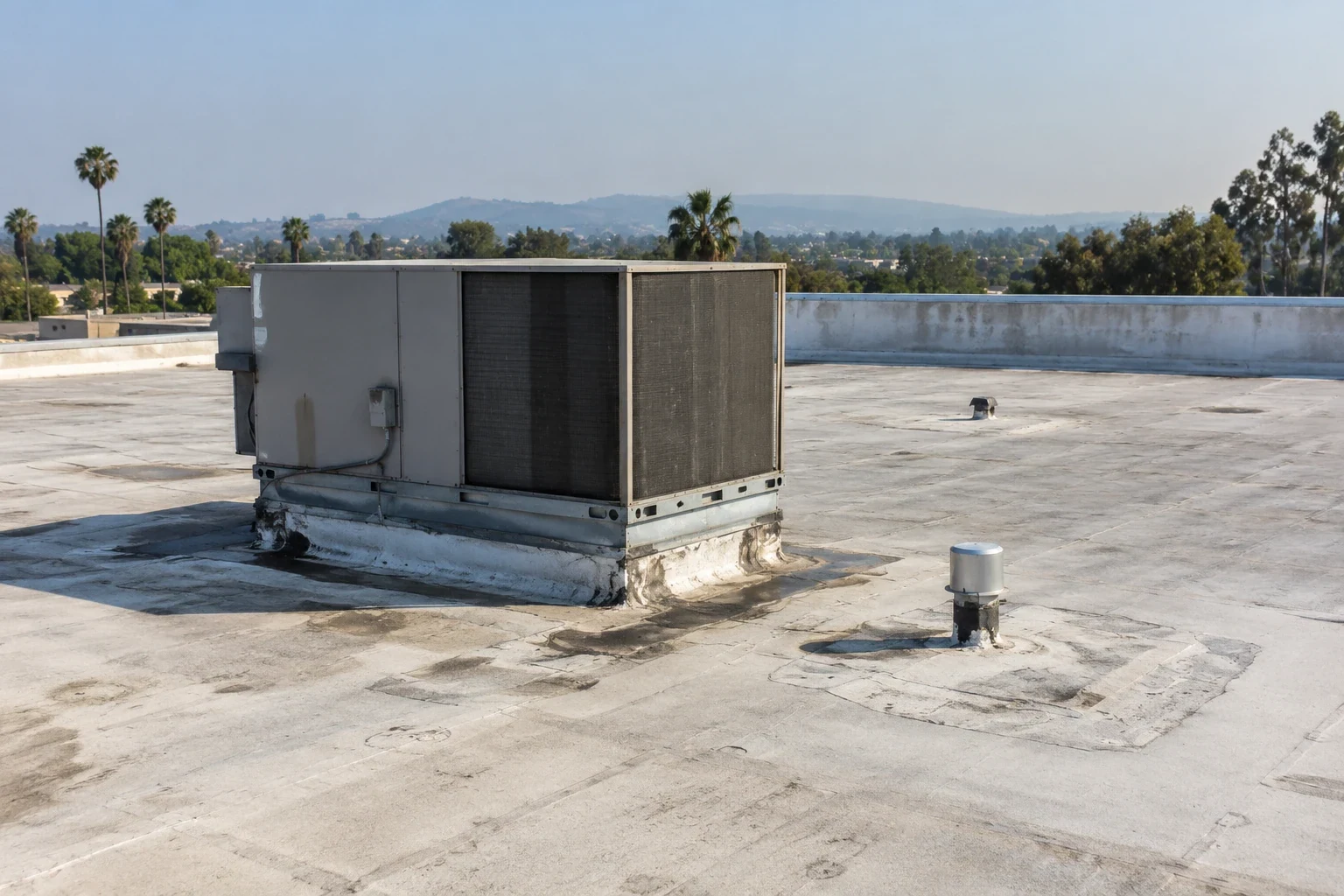
A roof maintenance visit earns its place when it catches a change before that change disrupts an operation. Begin with the last service note, open repair items, and areas that collected water or debris. Then walk each roof section in a repeatable order: access point, perimeter, penetrations, seams, drains, and prior repairs. Hesperia roofs face hot summer surfaces and cool winter nights. A normal August daily maximum of 97.0 degrees Fahrenheit and a December normal minimum of 35.2 degrees at Hesperia 2 E show why the inspection schedule should account for different seasonal stress, not just a calendar reminder. Those normal values do not predict the day’s conditions. A condition inspection can establish a starting record; maintenance then updates it with changes, cleaned components, and repair boundaries.
Set an Interval That Fits the Roof
Frequency depends on roof condition, nearby trees or dust sources, drainage layout, equipment work, and the consequences of a missed leak. A newer assembly may need fewer corrective visits than a roof with patched seams, open penetrations, or recurring ponding. Set a baseline after a full review, then adjust if the building has a storm event, equipment replacement, tenant change, or a new interior report. Hesperia's regional commercial and industrial districts include different operating patterns, from public-facing storefronts to loading-intensive buildings. The inspection plan should reflect the property, not assume all roofs along the same road need the same attention. For a broader Hesperia district, the Industrial District roof plan is still organized building by building. Keep a written interval, named access contact, and list of weather or operating events that trigger an earlier check.
Clear the Drainage Path
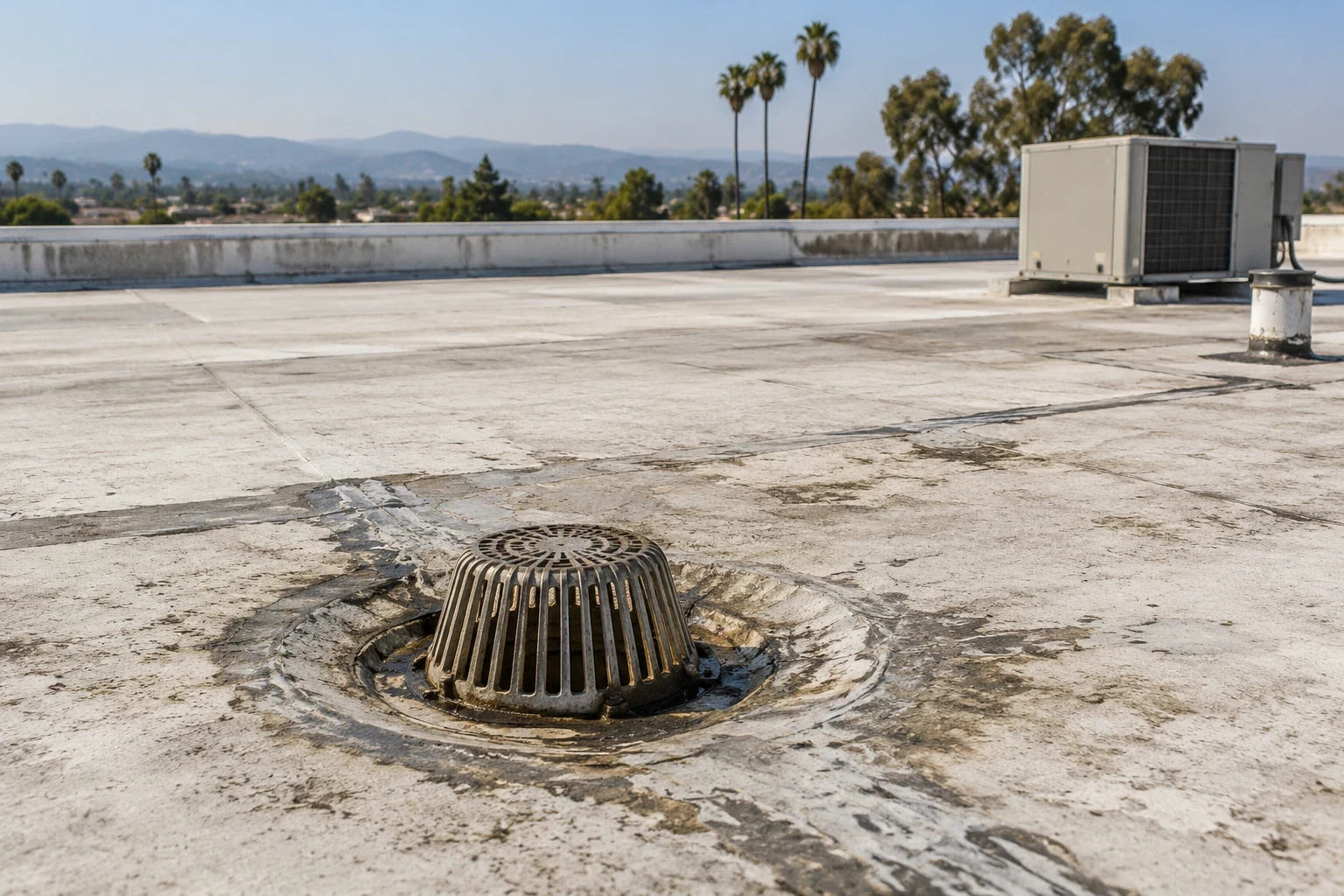
Water needs an uninterrupted route off the roof. Look at the basin, strainer, drain connection, overflow, scupper, and the membrane around each opening. Remove loose debris only when it can be done without pushing material into the outlet or damaging the membrane. Note low areas and measure ponding only when the water remains after ordinary drainage time. Hesperia's normal December precipitation is 1.23 inches, which is modest as a monthly climate figure, but one intense event or a blocked drain can still expose a weak detail. Climate normals should not be used to predict a particular storm. A drain and scupper review should check both the outlet and the path feeding it. If the outlet is clear yet water remains, the next question may be slope, deflection, or a localized obstruction. Record the location and what was checked so the next visit can compare the same point.
Track Seams, Edges, and Penetrations
Small details control how a large roof holds together. Review lap edges, curb corners, pipe boots, equipment supports, skylight perimeters, coping joints, and transitions between different surfaces. Look for loose fasteners, failed sealant, open welds, movement, exposed reinforcement, or a repair that has lifted at its edge. A surface patch may hide a wet layer rather than resolve it. Record material and location before cleaning or applying a compatible repair. For metal coping and perimeter work, a edge detail review should include joints, cleats, terminations, and water direction. When a leak is reported, keep that issue in its own log and connect the interior location to the likely roof path. The leak repair process establishes that path before choosing a permanent patch. A maintenance log makes recurring movement easier to separate from a new defect.
Keep Hesperia Records Property-Specific
In Hesperia, three applications approved in 2025 covered four warehouse buildings and about 720,000 square feet. Keep the roof history attached to the address when facilities change hands or operations expand. Keep one log per address and identify each roof level and access point. I-15 and U.S. 395 meet near Hesperia's freeway corridor. That connection can inform delivery planning, while the property contact confirms the gate and staging procedure. Ask the site contact about loading windows, escorts, roof access, and tenant restrictions before scheduling. If several buildings share a campus or owner, do not combine their repair histories. A Highway 395 and I-15 District service-area review is geographic context only; the maintenance scope must name the actual property.
Close With a Work List
After each visit, give the owner a short list that separates routine cleaning, monitor items, and corrective work. Attach photographs to a marked plan and note the date, weather, area reached, and areas not accessed. Identify whether debris was removed, a strainer was reset, or a sealant repair was made. Record quantities only when they can be measured. A finding such as 'watch the west curb' is not useful without a roof-zone label and a condition to watch for. Use a follow-up date when a repair cannot be completed during the visit, and name who will approve it. If wet insulation or a broad membrane issue is suspected, an infrared moisture survey may help select verification points when conditions suit the method. For stable areas, a tracked maintenance list supports the next budget review without overstating what a single visit established.
Coordinate Around Building Use
Maintenance should not block a loading lane, disrupt a tenant entrance, or leave an open roof detail at the end of a work window. Before the visit, confirm roof keys, escort requirements, ladder locations, and areas where a lift or material cart cannot travel. Identify which tenants need notice and whether production, deliveries, or customer hours limit work below. A regional approach road does not determine a property's approved gate or delivery window. Ask the operator for the approved gate, staging area, and vehicle path. If a building is occupied, separate the roof walk from any work that could create noise, debris, fumes, or interior exposure. Tell the facility contact when a drain needs to remain open or a temporary cover changes roof access. Record an interrupted task with the reason and a return condition so the next crew does not assume the work was finished. On a multi-building property, agree on the order of access and keep findings labeled by structure. A clear work window makes the service visit easier to verify and reduces the chance that a maintenance task interferes with normal operations. Assign one person to receive photos and approve return work. Keep that contact in the log so updates reach the right person.
After the walk, compare the new findings with the prior visit rather than creating a fresh list without context. Note whether a repaired seam, cleared outlet, or replaced component changed condition, and assign an owner for any follow-up. This makes the next service interval responsive to the roof instead of automatic.
Commercial Roofing Questions
When should Hesperia commercial roofs be checked?
Set a baseline and interval around roof condition, drainage, debris exposure, repair history, and the cost of an interruption. Add an earlier check after a major weather event, equipment work, or new leak report. Revisit the interval when conditions change.
What should a routine maintenance visit include?
Inspect drainage paths, seams, edges, penetrations, curbs, prior repairs, and any areas tied to an open work order. Record findings by roof zone with photos, access limits, corrective work, and a next action.
Can maintenance prevent all roof leaks?
No maintenance schedule can remove every risk. A repeatable review can catch visible changes and keep drainage or detail repairs from being forgotten. Concealed conditions and sudden damage may require separate inspection or testing.
Should every repair be handled during a maintenance visit?
Only when the repair is within the agreed scope, safe to perform, and compatible with the roof system. Record work that needs owner approval, special materials, testing, or a separate access plan instead of making an unreviewed change.