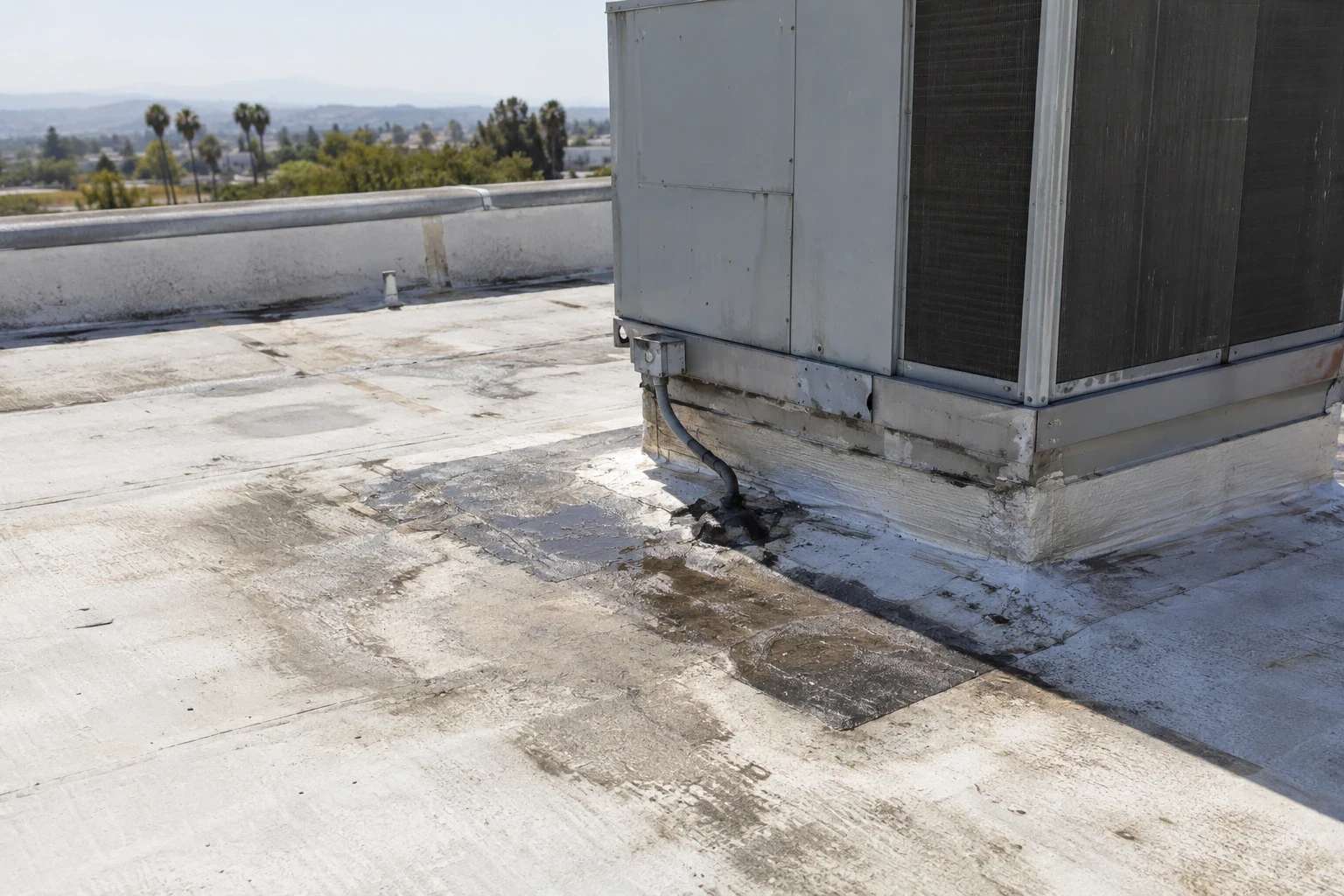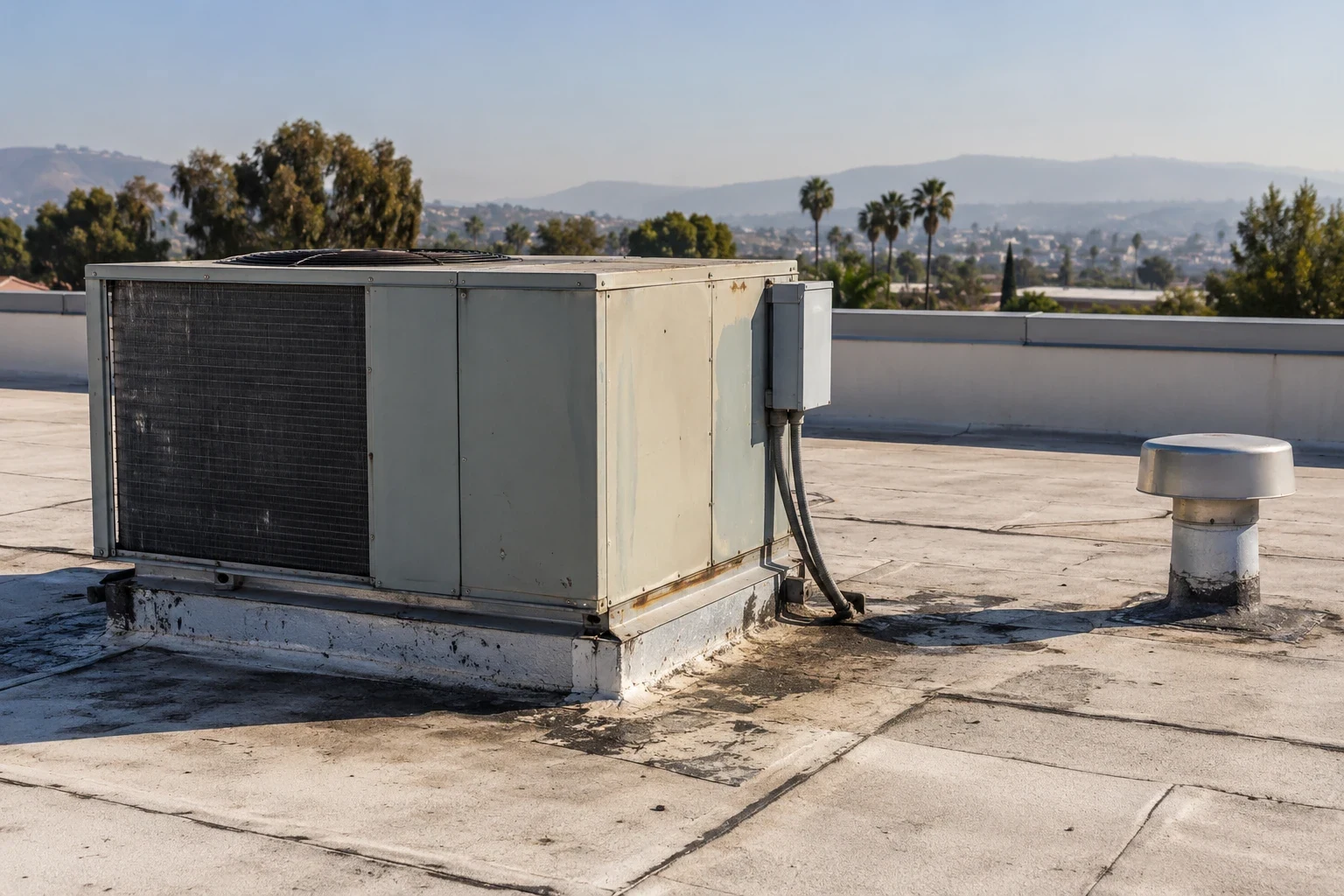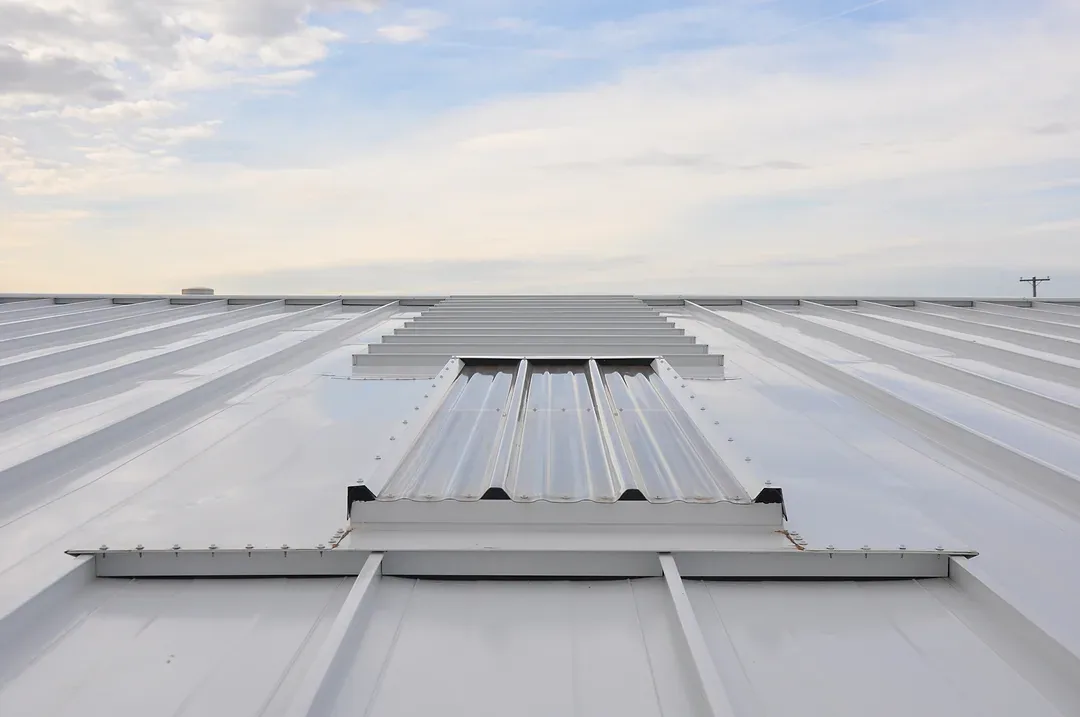
Commercial Roof Edge Metal, Coping, and Gutters in Hesperia, CA
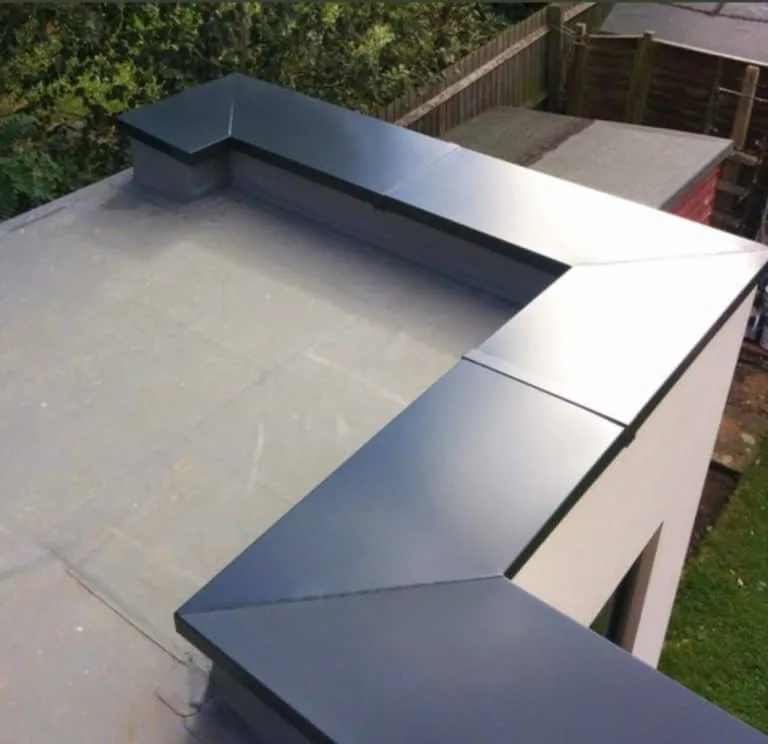
Perimeter joints must hold the roof membrane, flashing, and wall together through repeated exposure. The repair starts by tracing how the edge is built: membrane termination, cleat or fastener, metal joint, gutter, downspout, and wall transition. Look for loose sections, open laps, corrosion, backed-out fasteners, sealant failure, or water marks under the edge. Hesperia's Main Street-West and Industrial districts present different access patterns. The inspection still begins with the individual building's wall run, roof level, and edge assembly. We map the affected run and separate metal replacement from membrane repair. If water appears inside, use a leak-path review to connect the interior report with the edge rather than assuming the nearest joint is the entry.
Follow the Termination Detail
Begin where the roof membrane turns up a wall or ends at an eave. Identify whether the edge uses a cleat, continuous receiver, face fastener, compression bar, or another termination. Check attachment and substrate before removing metal; a new face piece cannot correct a weak wood nailer or damaged masonry. Inspect joint spacing, splice plates, corners, end dams, and sealant transitions. Look below the metal for staining or displaced material. If an edge sits above an active entrance, coordinate access below before tools or debris are moved. A roof inspection can mark the full run and adjacent field seams. Keep dimensions tied to a roof plan so a quote does not treat one short return as the same assembly as a long parapet.
Check Coping Movement and Water Path
Coping covers the top of a parapet, but it also needs secure attachment and controlled water discharge. Inspect cleats, splice joints, corners, end conditions, and any points where movement has opened a seam. Look for water tracking toward the wall or into a joint. A continuous piece can still leak at a corner or end dam. Do not seal a joint without confirming how the detail is intended to move and drain. For a metal roof edge or standing-seam transition, a standing-seam metal roof detail has different movement and attachment considerations than a membrane termination. The Hesperia 2 E station’s December normal daily minimum is 35.2°F. We check the actual metal edge and its attachment for movement before choosing a repair. Check the actual joint and substrate.
Trace the Gutter and Discharge
A gutter repair should address the entire path from roof edge to discharge. Check hangers, seams, outlets, downspouts, overflow points, and connections to the roof membrane. Look for sagging, blockage, separation, and water that discharges against a wall or walkway. Avoid directing runoff over an entrance or loading area. If the gutter is clear but water still backs up, the issue may be at a leader or below the roof edge. The roof detail and site drainage system may require separate trades. The Highway 395 and I-15 District is one of Hesperia's named corridor areas, but equipment access must be confirmed for the specific property. At a commercial property, confirm where material can be staged and how a lift or ladder can reach the edge without obstructing deliveries. A drainage review can compare roof-level outlets and overflow paths.
Set the Hesperia Scope by Building
Hesperia’s 2022 retail sales totaled about $1.252 billion. For storefront properties, plan edge work around pedestrian access; the building's actual parapet and attachment still need field measurement. Confirm roof height, parapet access, wall material, existing metal profile, and any tenant or equipment restriction before measuring. Hesperia’s City Center concept includes civic and mixed-use activity with pedestrian-oriented retail. At an edge repair, we plan overhead protection around active sidewalks and entrances. The broader Hesperia Industrial District also needs building-specific edge measurements and access rules. A City Center District edge review is still tied to a specific roof and access plan. Keep locations in the quote clear enough that an owner can compare each run with the field sketch.
Replace the Failed Piece, Not the Evidence
When the assembly is open, document the cleat, substrate, fastener, membrane termination, and water path before installing new metal. Replace a loose or corroded section with a compatible profile and secure it to sound backing. Rebuild a failed corner or end dam rather than covering the gap with surface sealant. Protect the roof field when metal removal could damage the membrane. If wet insulation is present, define how far it extends before closing the edge. A roof repair scope should state the known run, metal gauge or profile where confirmed, joints included, and any hidden conditions that change quantities. If multiple edge runs show the same failure, compare a broader replacement plan before pricing each short patch independently.
Record Every Run and Transition
Closeout should label the repaired edge, the length or number of joints, metal profile, attachment changes, and any adjacent membrane work. Photograph a corner, straight run, end condition, and discharge point when each is relevant. Note any inaccessible section and whether it requires another visit. If gutter cleaning was included, record the outlet condition rather than describing only the roof surface. The property team should know where water exits and what area to watch after the next rainfall. Keep the field sketch with the service history for that building. Send the Hesperia address, roof plan if available, photos from a safe location, and the person who can confirm access. We will identify the affected perimeter and separate a repairable metal detail from a drainage or substrate issue.
Recheck the Detail After Weather
After a repair, compare the same joint, corner, or outlet when conditions allow. Look for fresh staining, a lifted splice, movement at a fastener, or a change in how water leaves the edge. A closeout photograph should show the repaired detail and enough context to locate it later. If a gutter discharge runs to a walk or service area, ask the facility contact to observe that outlet during rain without approaching an unsafe roof edge. Any new stain should be mapped to the building side and time reported. This follow-up does not replace inspection of hidden layers, but it can show whether the repaired water path needs another look. Keep the metal profile and attachment notes with the property record so later work can match the same assembly.
Where a gutter joins a downspout or scupper, include that transition in the follow-up. Look for a shifted joint, blocked opening, or discharge returning toward the wall. Keep the review centered on the repaired run and connected drainage point unless new evidence supports expanding the work boundary.
Commercial Roofing Questions
Can a new coping cap stop every parapet leak?
Only if the opening is in the coping detail and the supporting substrate, corners, and membrane tie-in are sound. Water may enter at a wall transition or travel from another roof feature. Inspect the full path before setting the boundary.
Should gutters be included in a roof repair estimate?
Include them when the failure affects the roof edge or outlet path. Identify which runs, hangers, joints, downspouts, and discharge points are in scope. Site drainage below the roof may need separate work.
What should Hesperia property staff photograph?
Capture the edge from a safe ground location, the interior water mark if present, and any gutter discharge issue. Include the building side and approximate roof section. Do not climb a ladder or roof edge to obtain a close image.
How do you handle corroded or loose edge metal?
Confirm its attachment and backing, then remove enough material to identify the failed connection. Replace or resecure the detail to sound substrate and tie it into the roof membrane using a compatible assembly. Document concealed damage before expanding work.