TPO Roofing in Hesperia, CA
A TPO seam is only one part of the assembly that has to stay dry. Before we recommend a repair in Hesperia, CA, we identify the membrane, insulation, cover board, deck, edge terminations and penetrations that meet at the reported condition. At the Hesperia 2 E station, 97.0°F is the 1991-2020 normal for the August daily maximum; it is not an application-day measurement. We inspect heat-exposed transitions and set the work window from current roof and application conditions. That normal is climate context, not a reading from a particular roof. We map the tested area, check whether water has reached insulation, and separate a weld defect from a drainage or substrate issue. The answer determines whether a seam repair, localized replacement or larger reroof is sensible.
Read the Seam and the Field
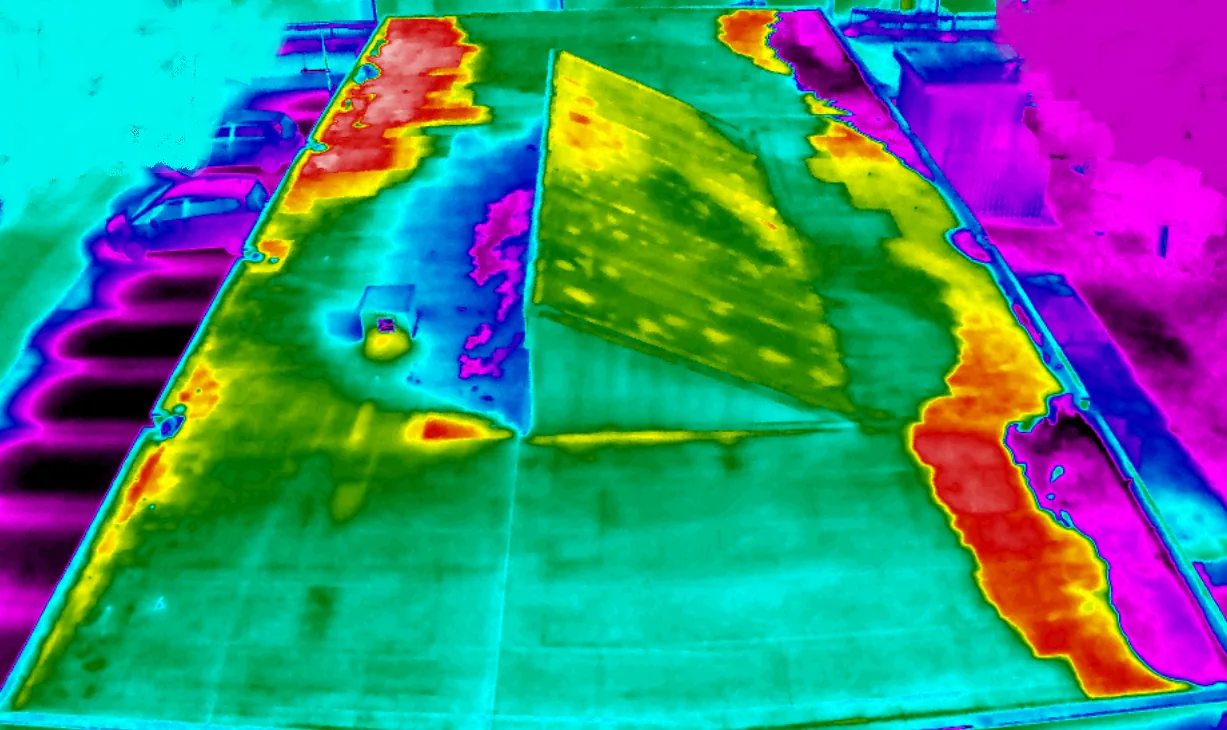
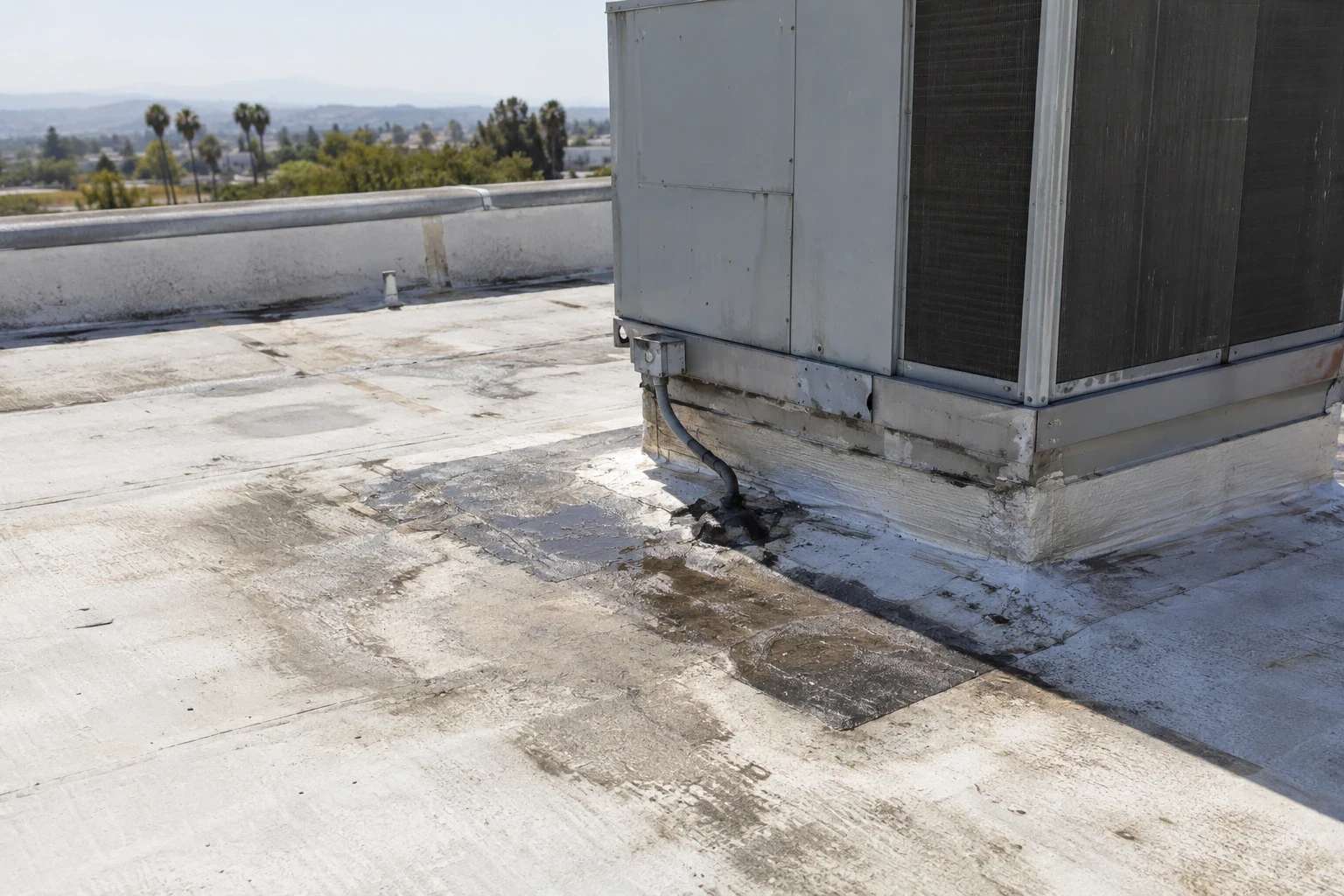
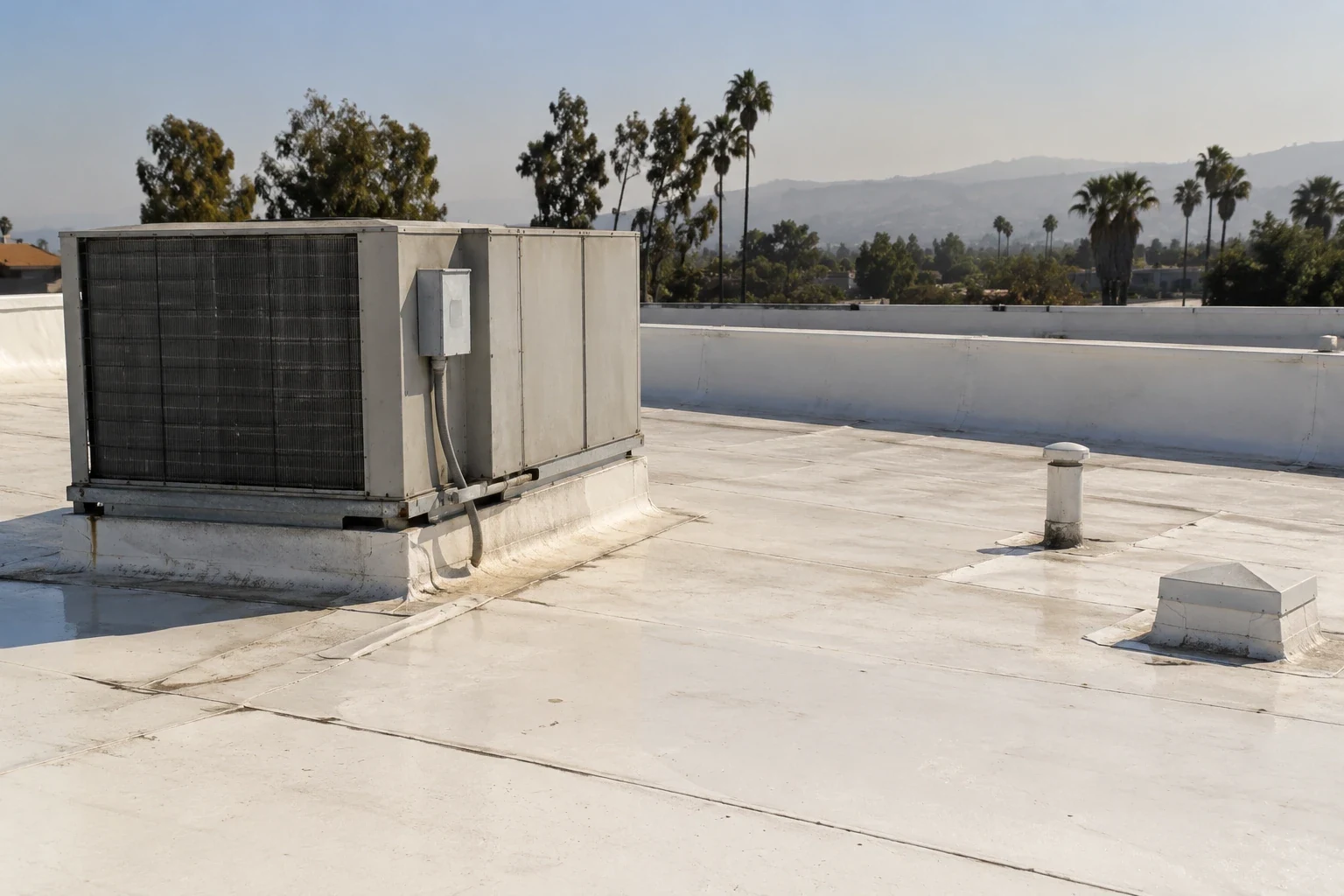
A TPO sheet can look intact while a weak weld, puncture or poorly closed termination admits water. We look for a seam that peels, a probe that enters a discontinuity, a patch with lifted edges, and a change in membrane tension near a curb or parapet. Then we inspect the field for cuts, displaced fasteners, abrasion, wrinkles and areas where water remains. A narrow split may be repairable if the surrounding sheet is clean, attached and compatible with the repair material. Blisters, wet insulation or repeated open seams call for more testing. We mark each observation on a roof plan so the estimate distinguishes a verified defect from an area that still needs an opening.
Plan for Hesperia Roof Movement
Heat and daily use can stress TPO seams, corners, and penetrations, but a repair decision starts with what the field inspection establishes. Check weld integrity, sheet tension, attachment, insulation, and nearby drainage. Hesperia 2 E's August daily-high normal is 97.0°F; measure current surface conditions separately before handling or welding membrane. Hesperia's plan assigns clean industrial and business-park activity to the area near the I-15/395 junction. For a property there, confirm gate clearance and roof entry with the site contact. A test weld or sample repair should be limited to a representative area and documented before the method is repeated elsewhere.
Hesperia's Industrial District is a broad land-use location; confirm a property's roof entry and staging rules with its manager.
Hesperia Industrial District and Highway 395 are broad geographic references only; the building inspection establishes its roof condition.
Trace Water Before Cutting
A ceiling stain can sit several feet from the entry point because water follows a seam, fastener line, insulation joint or deck before it appears indoors. We begin above the interior mark, then work outward through nearby laps, penetrations, drains and edge details. Moisture readings can narrow a test area, but they do not replace an authorized core or selective opening when the insulation condition will change the scope. If the insulation is dry and the sheet is firmly attached, a localized weld or flashing repair may be enough. If water has traveled into multiple layers, we measure the affected boundary before discussing replacement. The moisture survey and a leak repair assessment can help organize the investigation.
Compare Attachment Choices
TPO roofs may be mechanically attached, adhered or installed in a ballasted assembly, depending on the design and building conditions. The choice affects fastener layout, perimeter reinforcement, sheet movement, access for repairs and how the roof interacts with insulation and deck. We confirm the existing attachment at a safe location before quoting a tie-in. A new system must account for wind design, structural capacity, deck condition, existing layers and drainage rather than simply matching the visible membrane color. For an overlay, verify that the retained assembly is dry and stable. If it is not, a new sheet can conceal a problem without solving it. Review the alternatives with PVC roofing and EPDM roofing when the building's use and maintenance plan support a broader comparison.
Set a Safe Close-In Point
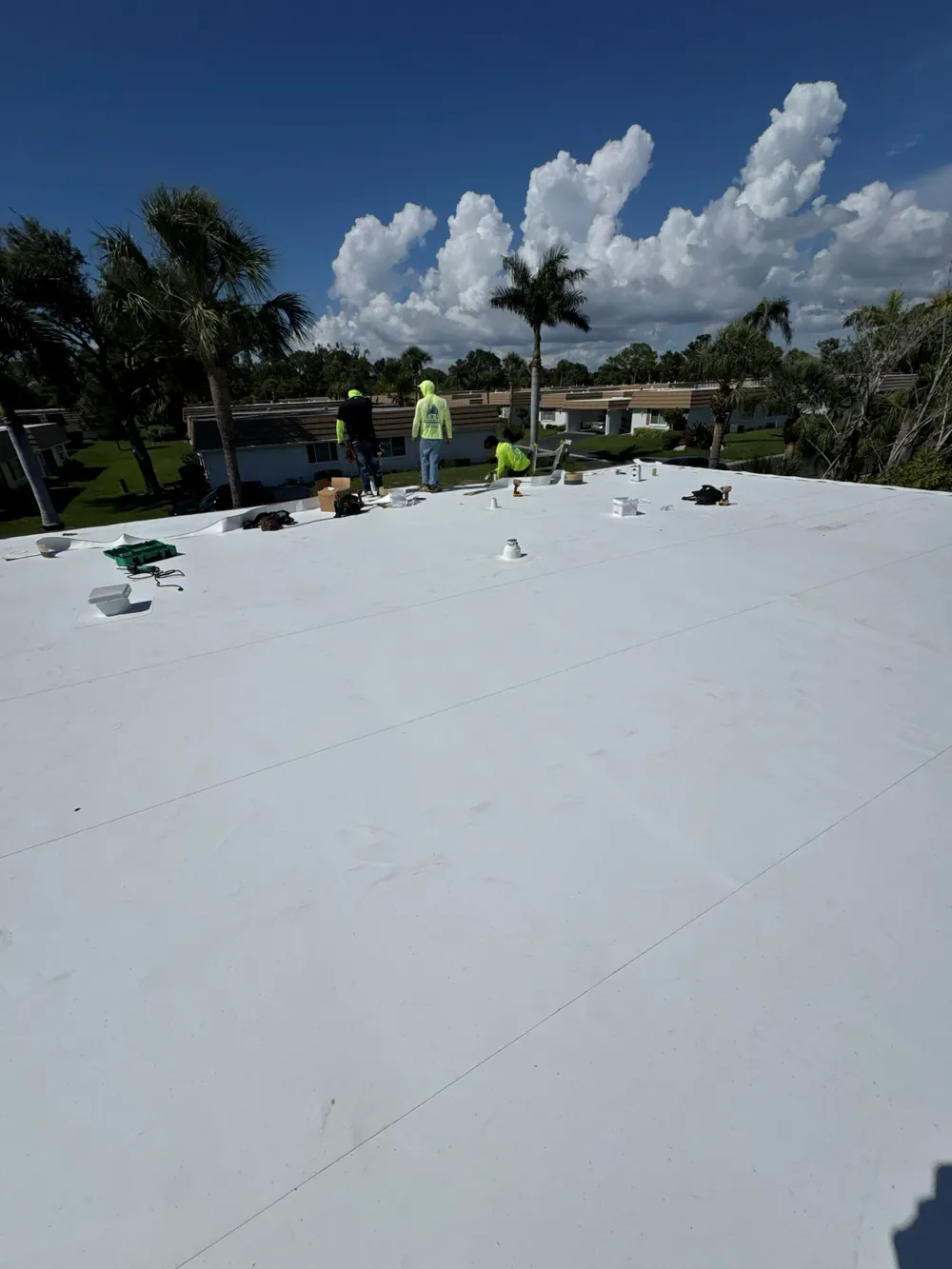
Installation starts with a marked work zone, confirmed roof access, material staging and protection for areas below. We remove or prepare only the section that can be dried, insulated, attached and closed before the shift ends. At a weld, the crew cleans the sheet, sets the appropriate overlap, and uses controlled heat and pressure so the seam forms continuously without scorching the membrane. Corners, drains, curbs and wall transitions need detail work before field production moves past them. When the building remains in use, we coordinate noise, delivery paths and any interior exposure with the facility contact. A phased occupied-building plan and a district service review can inform logistics, while the actual gate and roof map control site access.
Keep the Repair Boundary Clear
A useful proposal names the roof section, membrane condition, tested area, repair method, quantity assumptions and exclusions. It should also say what would trigger a price or scope change, such as wet insulation beyond the opened boundary or a deck that cannot hold the specified attachment. For a full replacement, compare disruption, tie-ins and disposal with the life left in the existing assembly. For a repair, record the seam length, nearby details and the condition of the surrounding sheet. Hesperia’s City Center concept includes civic and pedestrian-oriented retail uses, while industrial districts have different access patterns. We confirm the route and roof details at each property. A condition inspection can establish the roof record before you select a path forward.
Before authorizing a seam repair, record the membrane identification, seam direction, patch history, and any nearby change in slope or attachment. A weld test should use a representative area selected with the property contact, and its result should not be generalized to sections that were not examined. When separate additions have different TPO generations, map each one independently and document the transition before a replacement detail is selected.
Price the Assembly, Not the Sheet
A TPO estimate changes with more than membrane square footage. Access, tear-off, disposal, insulation replacement, attachment density, perimeter details, penetrations, drainage corrections and occupied-building phasing all affect labor and material. We separate those conditions so an owner can compare a repair with a recover or full replacement. A low number that omits wet insulation or edge work is not a useful comparison. If the roof plan does not match what the crew finds, we identify the changed area and ask for approval before extending the work. Lead time also depends on the selected assembly, color, attachment and delivery access. For a Hesperia property, we confirm staging and vehicle paths with the operator before setting the work sequence. Schedule around heat exposure and the time needed to close each opened area. The proposal should state what is included, what remains unknown, and what condition would change the price. That gives the owner a decision tied to the roof rather than a single unexplained total. A final quantity review should reconcile the roof sketch with each completed seam and detail. Keep photographs labeled by section so later work starts from the actual repair boundary.
Commercial Roofing Questions
What makes a TPO seam a repair candidate?
A seam is a candidate when the weld can be cleaned and rejoined to sound sheet, with enough intact membrane around it to form a durable tie-in. We check the lap, attachment and nearby insulation first.
Does a TPO roof need a full replacement after one leak?
One leak does not decide the project. The affected area, moisture below the sheet, attachment and condition of other seams guide whether a localized repair or larger scope fits.
Can new TPO go over the existing membrane?
An overlay requires a dry, stable assembly and a compatible attachment plan. If testing finds wet insulation, loose layers or a weak deck, opening and correcting those areas may be necessary before new membrane is installed.
What should the estimate identify?
It should identify the roof section, seam and detail repairs, measured quantities, tie-in method, access assumptions and what happens if a test opening reveals concealed damage.
How does hot weather affect TPO work?
Heat changes surface conditions and material handling. We check application limits, schedule the work window and protect the open area rather than assuming a climate normal describes the roof on that day.