Infrared Roof Moisture Survey in Hesperia, CA
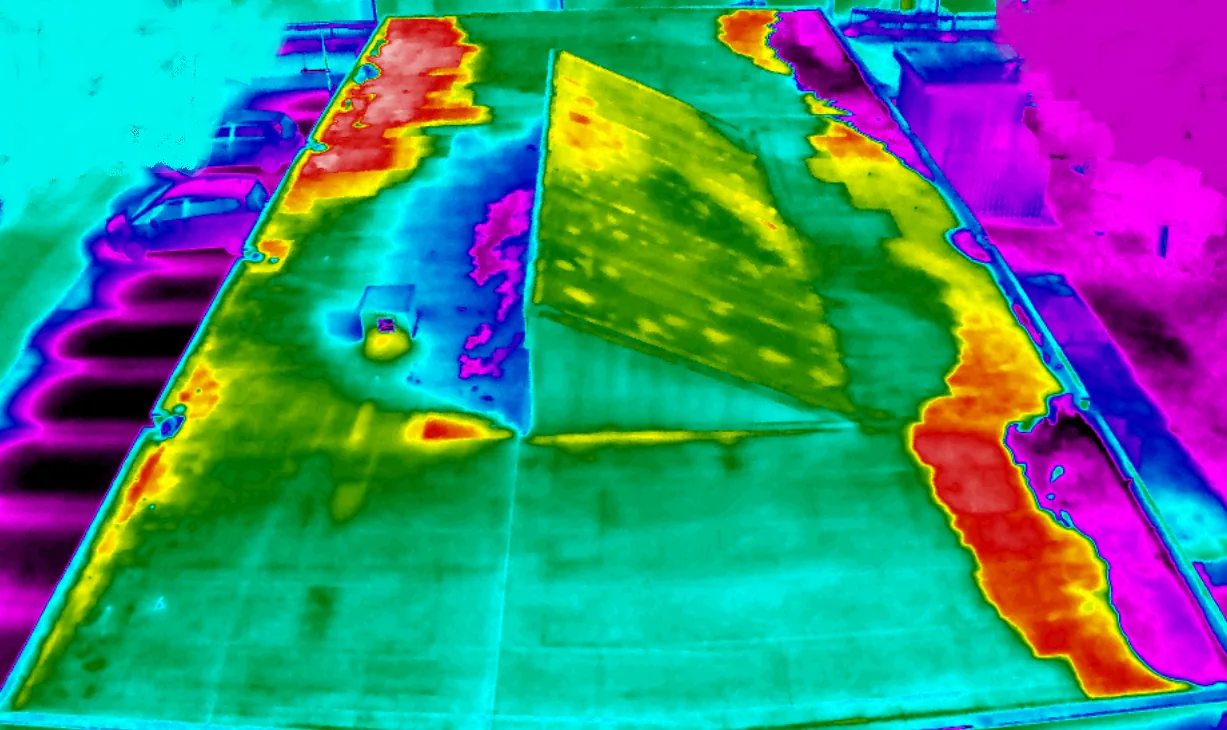
An infrared image is a pattern to investigate, not a map of wet insulation by itself. The roof, weather, surface condition, and timing all affect what the camera records. Before a survey, define the decision it must support: locate a suspected wet area, compare roof zones, or help set selective core locations. We review the roof assembly, available plans, recent rainfall, occupancy, and access limits. The survey is most useful when a qualified reviewer can connect each thermal pattern to a roof zone and then verify it using appropriate field methods. Hesperia’s dry High Desert setting still has seasonal temperature and precipitation shifts. The Hesperia 2 E station's December normal daily minimum is 35.2 degrees Fahrenheit, with normal precipitation of 1.23 inches. These values describe long-term climate, not the conditions on the survey date. Schedule and interpret the work against actual site weather.
Write the Question Before Scanning
Start with the roof history and the question that would change the owner's next action. A recurring leak may call for a targeted comparison near a reported entry. A capital review may need a survey grid across several sections. A suspected wet layer beneath an older repair may call for a few carefully selected verification openings. Each goal needs its own boundaries. Identify the building, roof zones, prior repairs, membrane type if known, and the contact who can authorize testing. The roof inspection and roof condition report provide visible-condition context before thermal data is interpreted. If water has appeared inside, record the room and timing separately; do not assume the ceiling location marks the roof entry. Hesperia has several planned districts along its Main Street and freeway corridor, including industrial and regional-commercial areas. That broad mix makes consistent labels helpful across a portfolio, but every roof still needs its own survey map and ownership approval.
Check Weather and Surface Conditions
Infrared surveys depend on a useful temperature difference and a roof surface that can be interpreted. Recent rain, dew, wind, cloud cover, sun exposure, roof color, surface reflectance, and internal heat can change the pattern. A long-term climate normal cannot replace a day-of check. Hesperia's normal August daily maximum temperature is 97.0 degrees Fahrenheit. On hot days, plan roof access around heat exposure and verify that the surface is suitable for the measurement method. In cool months, overnight cooling and daytime sun may create contrasts that appear meaningful but need careful comparison with the assembly. Record start time, weather, roof condition, and any areas excluded from the survey. If the surface is wet or conditions do not provide a reliable contrast, reschedule or use a different test. A scan performed under poor conditions can create false confidence, so we explain what can and cannot be concluded before proceeding.
Build a Repeatable Roof Map
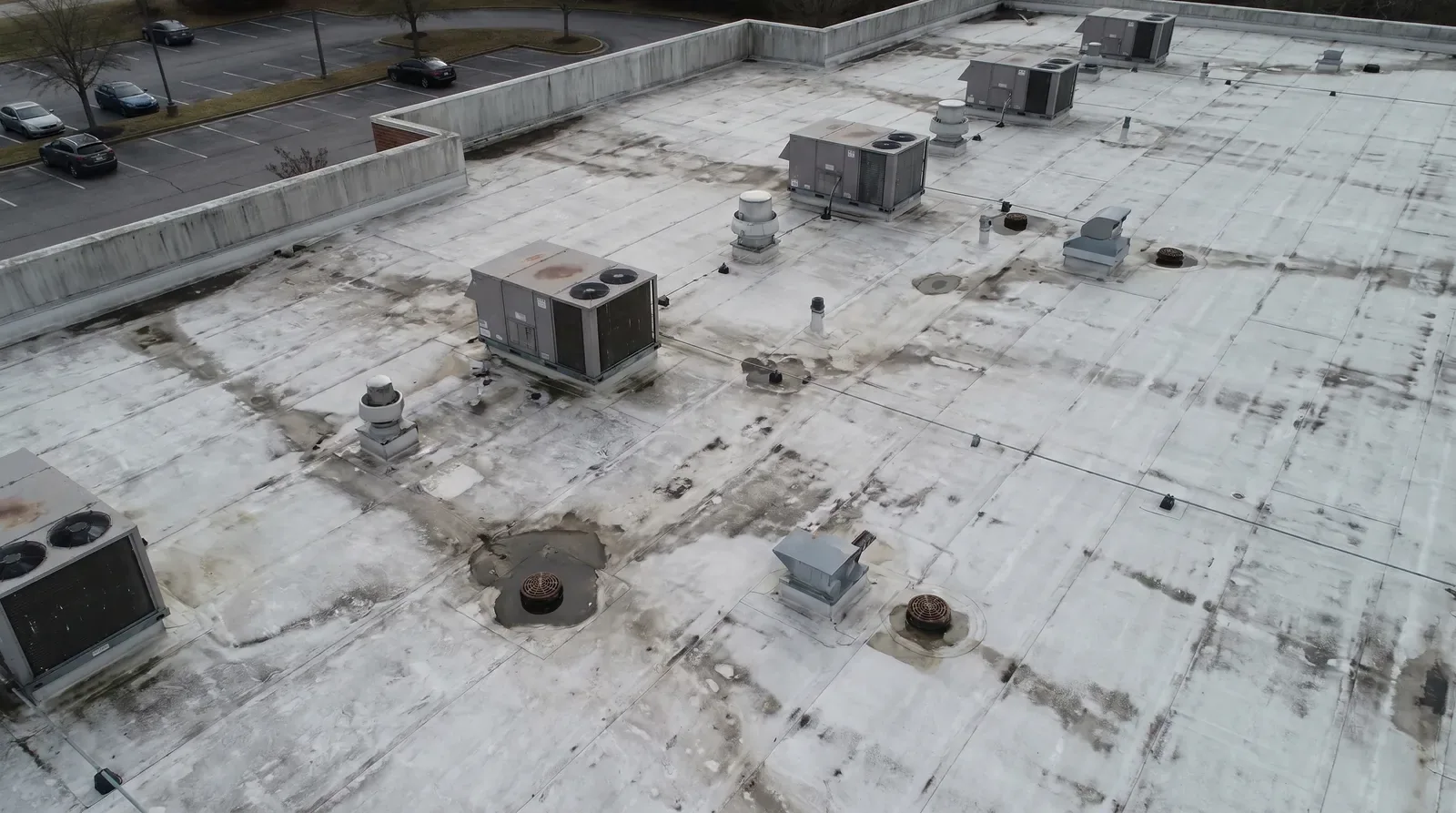
Divide the roof into labeled sections that correspond to the property plan. Mark drains, curbs, expansion joints, roof edges, access routes, known patches, and any equipment that may affect thermal readings. Collect comparison areas that appear representative of dry material. A pattern that crosses a seam or changes at a shadow line deserves a different follow-up than one that tracks a broad field area. Keep the thermal image paired with a visible-light reference and a note about its position. A drone image set can help orient the map where an aerial view is appropriate, while close roof observations establish the physical detail. For Hesperia properties near the I-15 and U.S. 395 corridors, confirm gate, loading, and staging directions with the site operator before bringing equipment. Hesperia's marked truck-route network covers arterial approaches in addition to I-15 and Highway 395. Actual site directions still control. For a broad Hesperia place target, the Highway 395 and I-15 District roof review starts with the property address and roof map, not the district label alone.
Verify Before Pricing Removal
Thermal anomalies do not tell the owner how much material to remove. Verify priority areas with a core, probe, moisture meter, or another method appropriate to the assembly and authorized scope. Choose openings to test the question, not to fill a quota. Record coordinates, layer thickness where visible, moisture observations, and how the opening was closed. If a core confirms wet insulation, draw a boundary based on measured conditions and nearby comparisons. If material is dry, identify whether the original thermal pattern had another explanation. A recover evaluation may depend on moisture extent, deck condition, and added roof height. If the field roof is a thermoplastic membrane, compare its test areas with the TPO membrane system before choosing a repair detail. For a repair, coordinate the verified boundary with leak tracing and the exact failure detail. The report should show which findings are confirmed, which remain uncertain, and what action would resolve each open question.
Make the Results Usable
Deliver a labeled roof map, visible-light and thermal images, survey conditions, excluded areas, verification locations, and a short interpretation for each pattern. State whether the scan is a screening tool, a comparison, or a basis for defined openings. Do not state that an entire roof is dry because no anomaly appeared. Some materials and conditions limit detection. A useful conclusion separates current repair needs from additional testing and monitoring. In Spring 2026, Hesperia's combined industrial-space pipeline was estimated at about four million square feet entitled, under entitlement, or under construction. That total is subject to change and says nothing about any building in the survey. It does make clean property-level records valuable when ownership or operations evolve. Store the survey with that roof's drawings and repair history. Ask the owner to send the site address, roof plan if available, leak history, and access contact. We will define the survey area and what findings can support before recommending any removal or repair.
Know When Another Test Is Better
Infrared work has value when its output can be compared with a known assembly and checked against a decision. It is a poor fit when the surface is wet, the roof has recently changed temperature unevenly, or access restrictions prevent a useful comparison. It may also be unnecessary when a visible opening already establishes the repair scope. We discuss these limits before the survey rather than presenting a thermal image as a complete diagnosis. If the owner needs a leak path, start with the interior report and roof details. If a replacement is under review, combine moisture verification with layer, drain, curb, and edge measurements. If a maintenance item is the only concern, a focused roof walk may answer it with less testing. In Hesperia, a December normal minimum of 35.2 degrees and 1.23 inches of precipitation describe seasonal conditions, but day-of weather remains decisive. The written scope should say which result would change the recommendation.
Commercial Roofing Questions
Can thermal readings establish moisture inside a commercial roof assembly?
No. It identifies temperature patterns that may warrant verification. Weather, material, shade, and roof assembly can affect those patterns. A targeted opening or another suitable check may be necessary before a removal boundary is set.
Can a survey cover multiple Hesperia buildings at once?
A portfolio survey can cover multiple buildings when each roof is identified, access is approved, and maps and results remain separated. The report should connect images and test locations to the correct building rather than combine findings.
Which roof and weather conditions make infrared scanning more useful?
Timing depends on the roof assembly, weather, surface condition, and the temperature contrast required by the method. We review recent conditions and the roof before setting a date. If the surface cannot yield useful information, another method or a later window may be better.
Will thermal results provide a repair price?
The images can help target field verification, but pricing needs confirmed material quantities, access, and a defined scope. The report should state what was opened, what was measured, and where concealed conditions remain unknown.