Commercial Roofing for Real Estate Investors in Hesperia, CA
A roof line in a transaction file is only useful if it matches the assembly on the building. A patch invoice may describe one leak without showing wet insulation, repeated repairs, or the detail that failed. An August normal high of 97.0°F near Hesperia puts exposed edge details on the inspection list for an asset review. That station statistic is not a roof-surface reading. We inspect the roof records and field conditions together so an investor can distinguish a confirmed repair from an open diligence question.
Separate Evidence from Assumption
We start with the roof plan, age and installation records if available, past scopes, warranty documents, and any current leak reports. On site, each photo is tied to a roof section and detail. A note that says “aging” is not enough to price a repair or replacement. We record whether a seam is open, insulation is wet, a drain is obstructed, or a test remains necessary. The resulting list can be reviewed alongside a transaction schedule without implying that one observation explains the whole asset. For a decision tied to a financing or transfer date, identify the last date access is available and who can approve a test opening.
Hesperia's I-15 and Highway 395 corridors support freight movement and warehouse development. Those area conditions do not establish what is on a specific parcel. For the asset under review, we check use, access, roof layers, and equipment against owner records and field conditions. A due diligence roof survey can organize observed findings, while roof capital planning can separate immediate repair needs from planned replacement decisions.
Account for Hesperia Heat
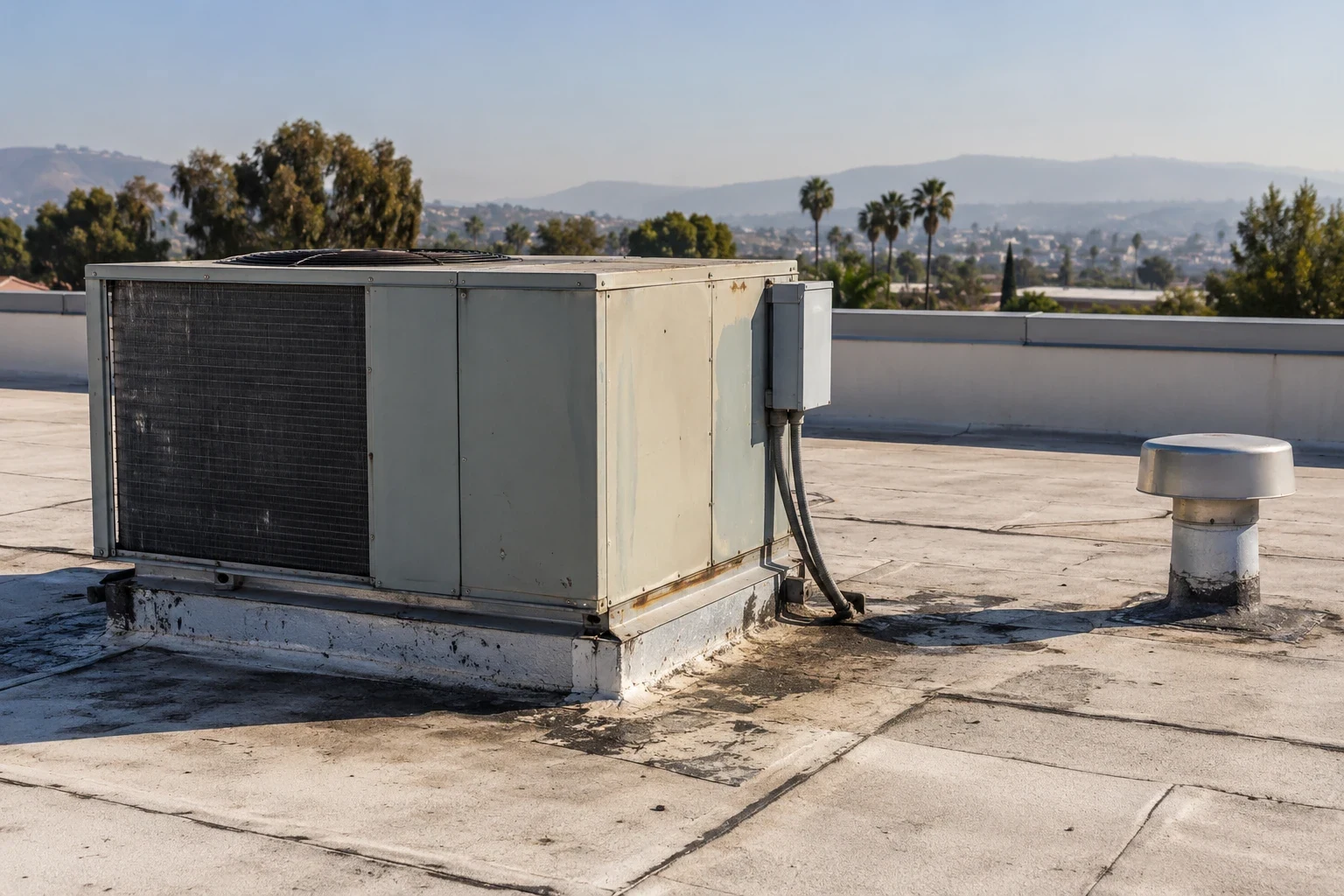
The Hesperia 2 E August normal daily maximum is 97.0°F. It belongs to the station record, not to a roof membrane measurement. In the field, we look for movement-related symptoms at seams, perimeter edges, sealant joints, and equipment curbs. The condition of those details matters more than applying a climate number to a material life estimate. If a prior patch has lifted or a tie-in has separated, we document its location and whether adjacent material is still secure.
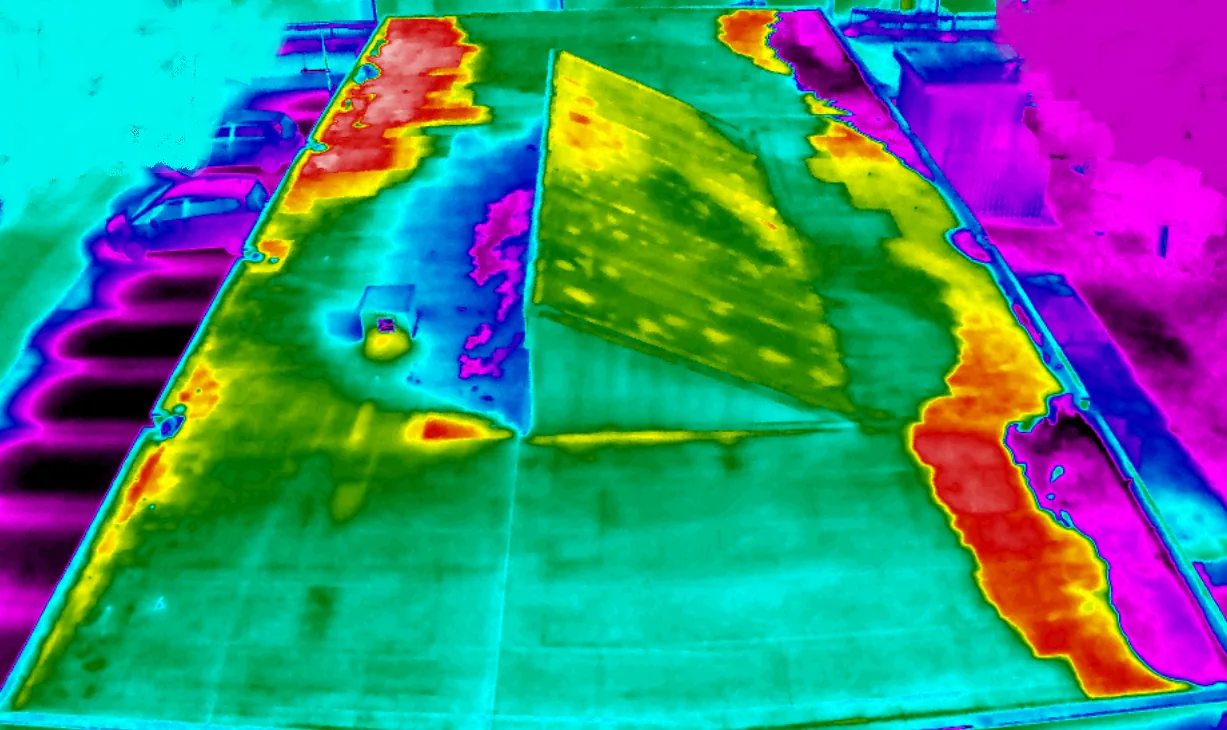
Investment review benefits from separating weather context from condition evidence. A Hesperia roof inspection records the membrane and transitions; infrared moisture testing can help select an opening where the assembly is not visible. The site report identifies both the station fact and any test result used in the scope. No single climate normal establishes the remaining life of a building’s roof.
Check the Drainage Plane
A roof can have a dry interior today and still show drainage or flashing conditions that deserve a planned correction. We check drains, scuppers, overflow paths, low points, and parapet edges. Water that stays near a seam can expose a weak tie-in; a clogged bowl needs a different response from a deck that holds water because of its shape. We record the cause we can confirm and mark any area requiring a test. That prevents diligence from turning a visible pond into an unsupported replacement recommendation.
For an asset near a designated truck route, material staging and removal may affect deliveries, but route proximity does not establish an access plan. We confirm truck movement and loading at the property. A drain and scupper repair addresses outlets, while ponding-water repair focuses on a different failure path. If the roof has multiple layers, a test opening shows whether a recover remains possible.
Compare Repair, Recover, and Replacement
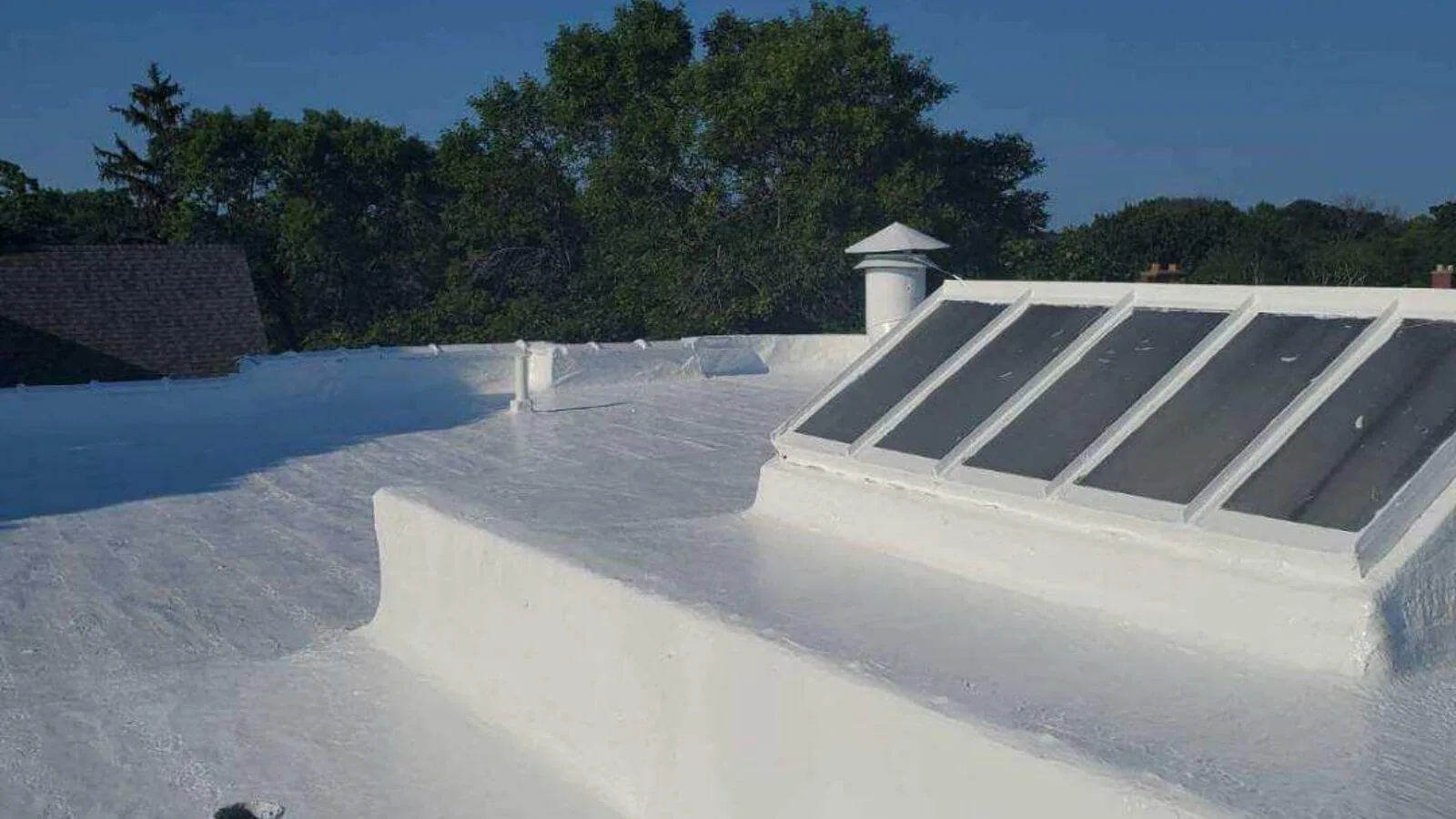
A repair scope is credible when the defect and tie-in boundary are clear. Selective removal may be necessary if testing finds wet insulation in a limited area. A recover can avoid some tear-off only when layers, attachment, deck condition, and drainage height permit it. Full replacement opens more of the assembly and may address widespread failure, but it includes demolition and disposal. We compare the options using inspected conditions, unresolved tests, and assumptions that could change the work after removal.
The property management roof records and standing-seam metal retrofit are different assemblies with distinct detailing. The diligence question is not which product sounds newer; it is what fits the existing deck, insulation, drainage, and edge conditions. Our roof recover assessment records whether the existing assembly supports another layer or whether removal provides the more defensible scope.
Model the Work That Is Known
Cost exposure depends on removal depth, wet insulation, deck repair, drain and edge-metal work, equipment coordination, staging, disposal, and phase size. Schedule depends on access, approvals, material selection, weather, and the date each roof zone can be released. We list confirmed items separately from contingencies tied to hidden conditions. A test can narrow an allowance; an opening during tear-off can reveal more. The file should state who approves an adjustment before removal expands.
Industrial, business-park, regional-commercial, civic, and residential uses appear along Hesperia’s Main Street and freeway corridor. Those area uses do not predict an investment property’s tenant or roof needs. For an asset in the Main Street and freeway corridor, the address still determines street entry, parking, and material staging. An insurance restoration file can keep tested findings and budget assumptions tied together.
Set the Diligence Boundary
Before closing or approving capital work, decide which items are confirmed, which need testing, and which can remain under monitoring. We provide a map of the inspected area, roof details, moisture findings, and recommended scope, with photographs that support the boundary. If access limits leave sections unseen, the report states that plainly so the asset file does not treat the uninspected roof as a confirmed finding. The buyer can then request access or price the remaining uncertainty. If access was limited during diligence, the report should name the sections not seen and the opening needed to confirm them. A buyer can then decide whether to seek access, reserve a test, or carry a documented unknown into the capital plan. We separate a fact found on the roof from a transaction question that remains with ownership, so neither gets presented as a completed repair recommendation. The Hesperia freeway corridor is useful geographic context, but the transaction address determines access and roof scope.
Send the address, roof plan, available repair and warranty records, leak history, and site access contact. We can identify gaps in the information and outline a field review without promising a visit date or a financial outcome. Use the freeway corridor to orient a portfolio map; inspection scope still follows the actual assembly, tenant access, and transaction schedule.
Commercial Roofing Questions
How can an investor estimate the remaining service life of a roof?
An inspection documents observed condition and tests. It does not turn a limited observation into a fixed lifespan. We explain what the evidence supports and identify any section that was not accessible.
What if seller records conflict with visible conditions?
We map the discrepancy to a roof area and note which document or test supports each statement. A test opening can clarify layers or moisture when access is approved.
Does a roof recover reduce transaction risk?
Only if the existing assembly is dry, secure, compatible, and within drainage and height limits. We record the checks that support or rule out an overlay.
Which roof costs are hardest to confirm before tear-off?
Wet insulation, deck condition, layer count, and concealed flashing transitions may remain uncertain until opened. We identify those risks and how approval is handled if quantities change.
What should an investor request before the site review?
Share roof plans, prior scopes, warranty papers, known leaks, and access rules. These records let us compare the file with the visible roof and define a test boundary.