Commercial Roofing for Insurance Restoration in Hesperia, CA
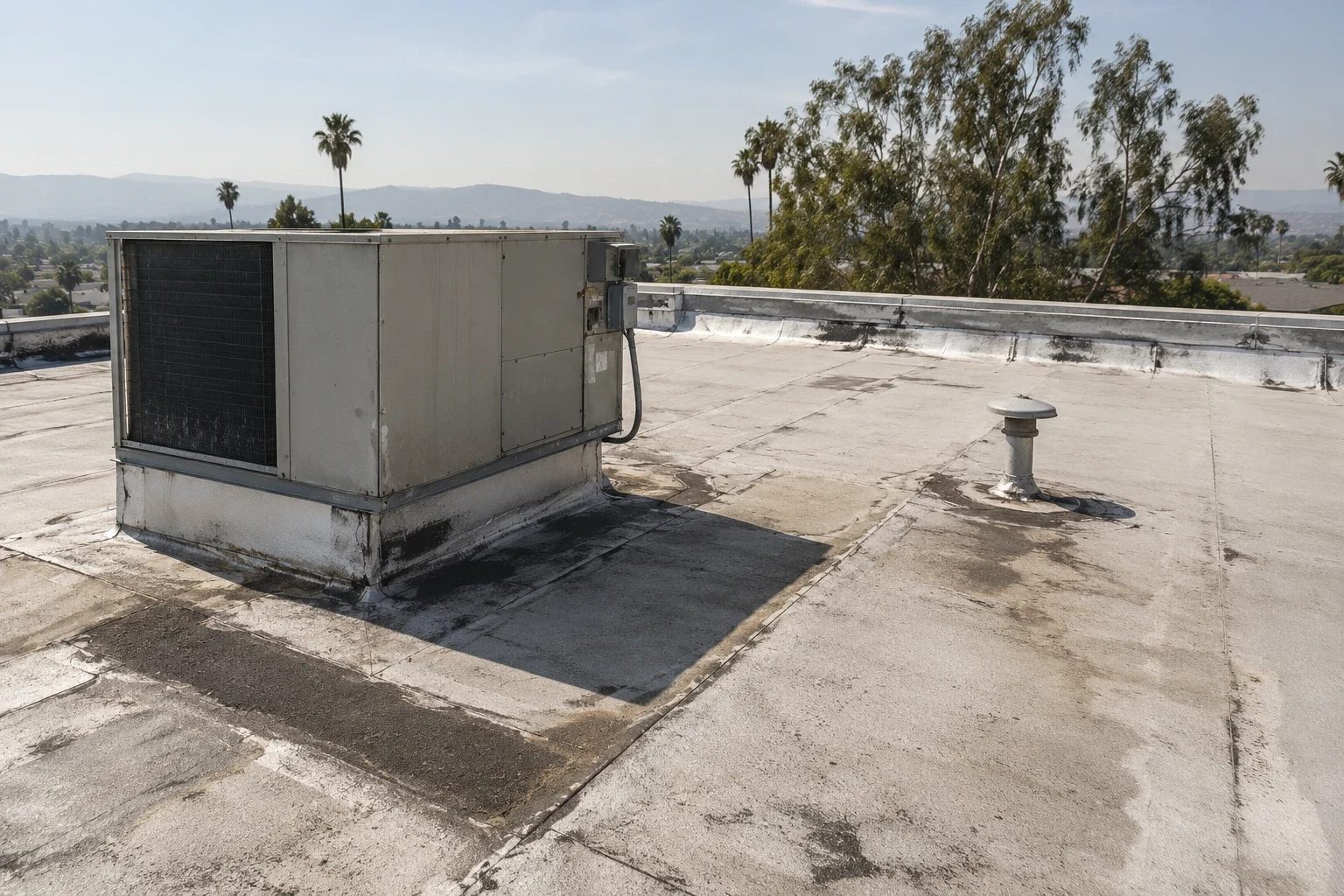
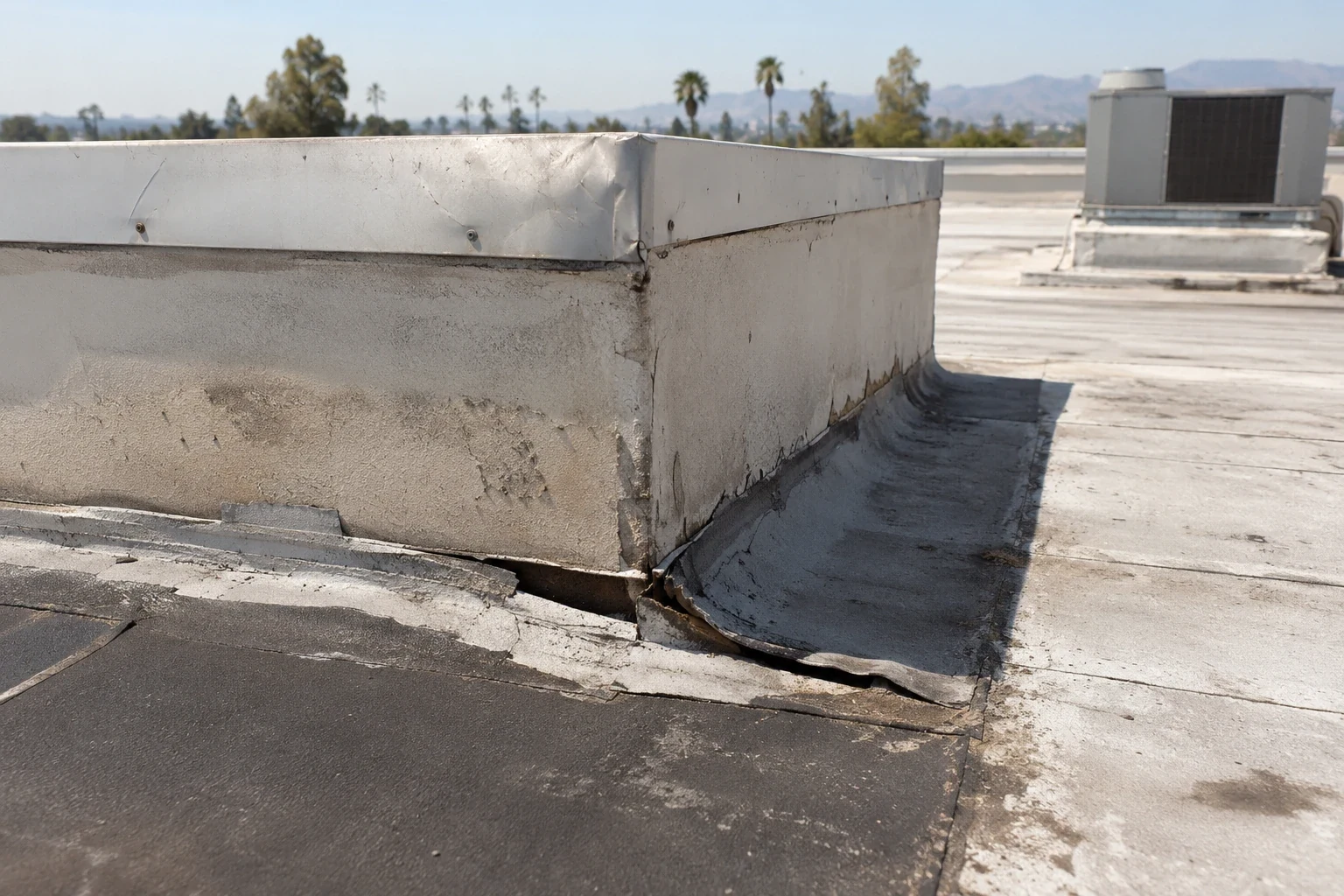
A restoration scope is strongest when the roof condition is tied to a date, a specific area, and photographs that show the detail. A wet ceiling alone does not identify the cause or the full repair limit. Hesperia’s 97.0°F August daily maximum normal at the Hesperia 2 E station is climate context, not proof of storm damage or a roof measurement. We inspect seams, edge metal, drains, and penetrations, then separate observed conditions from questions that need testing.
Record the Condition Promptly
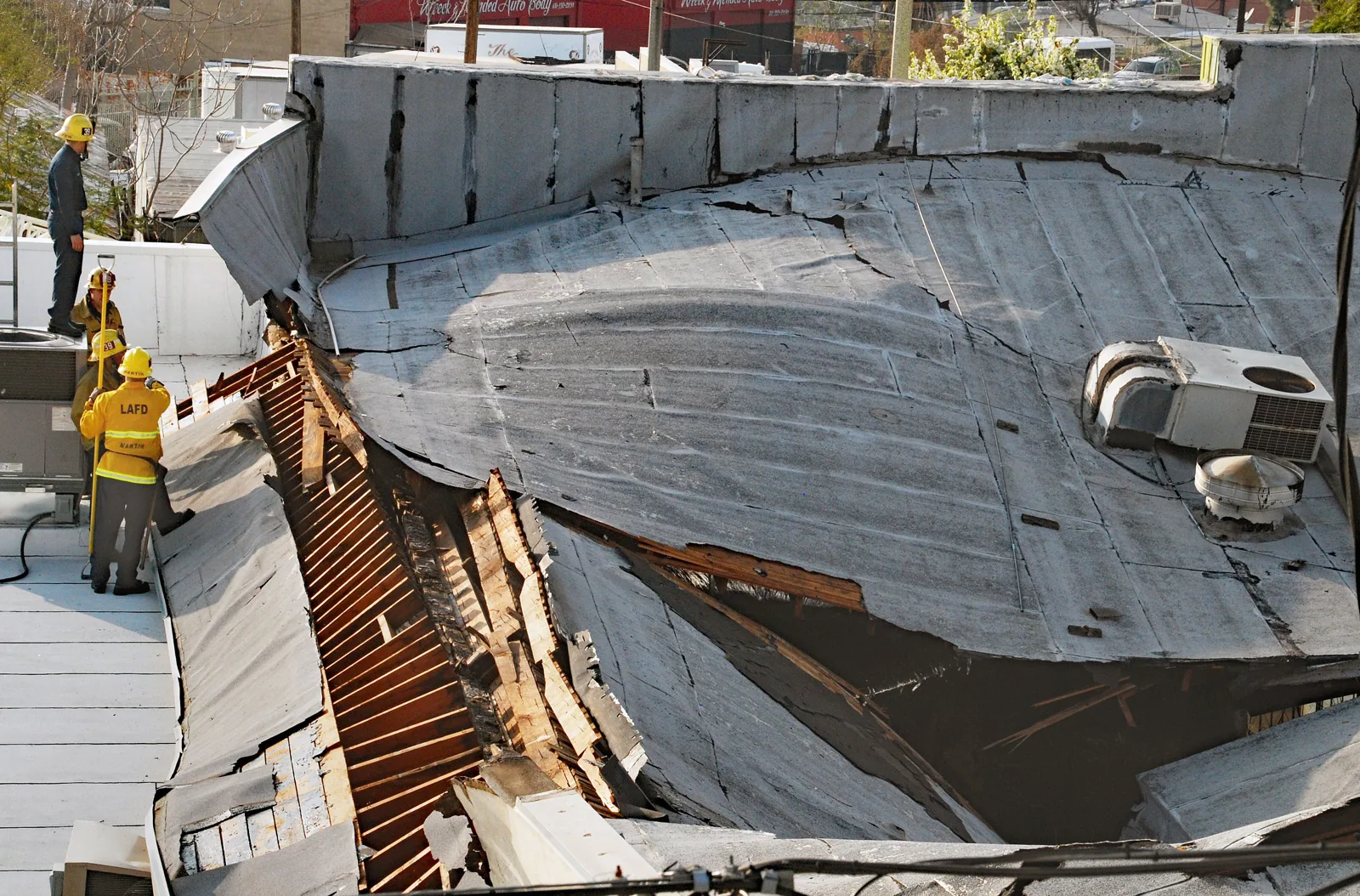
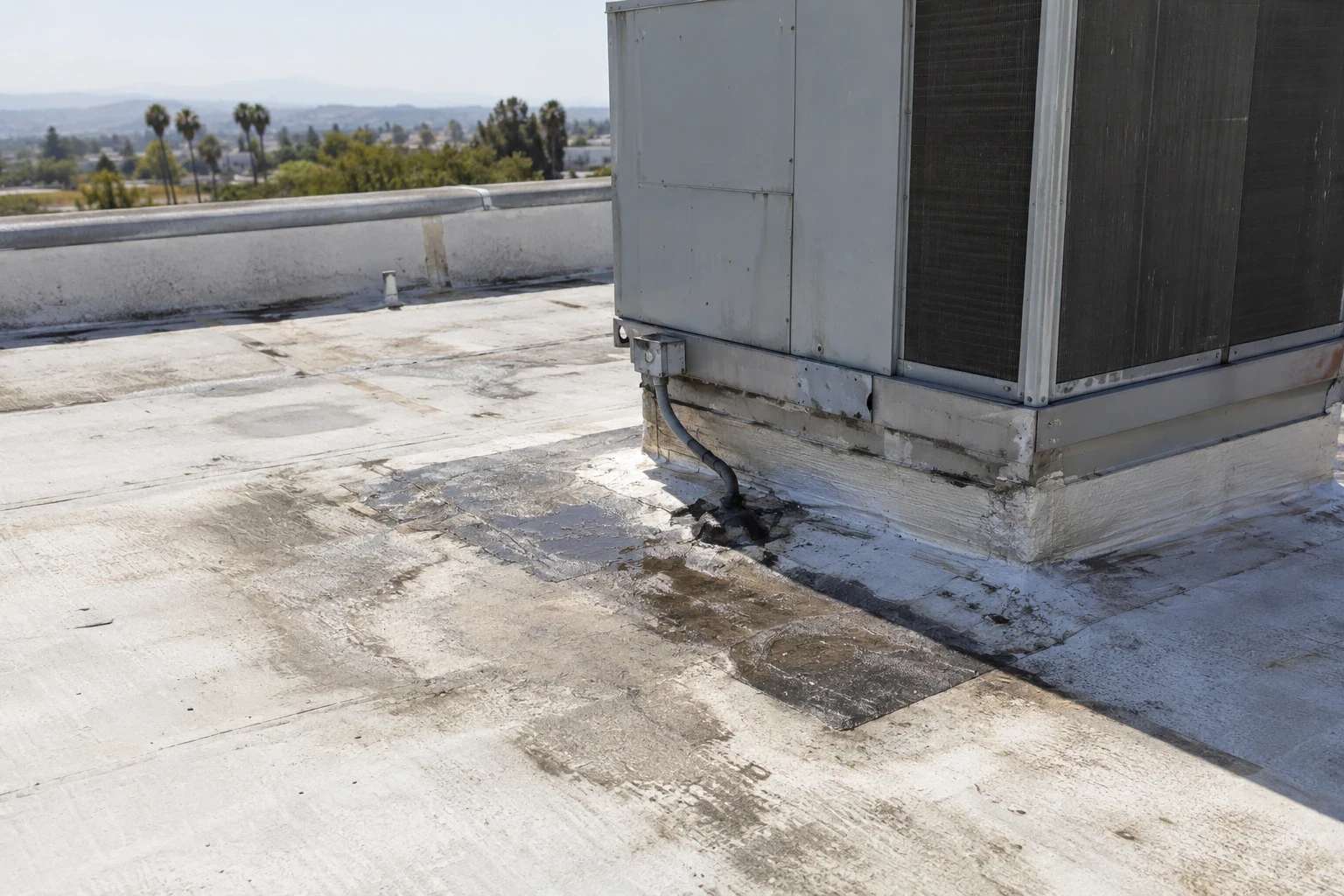
The property contact should note when water was first reported, which rooms were affected, and whether temporary protection was installed. We photograph the roof detail and its surrounding assembly, mark its location on a plan, and record any prior patch. If the membrane has dried, that does not erase the condition; records from the event and the current inspection help reconstruct what was observed. We distinguish an impact or opening from general wear without assigning a cause the evidence cannot support.
I-15 and Highway 395 carry Hesperia freight-area development, but corridor activity cannot establish damage at a claim address. Each roof needs a field record. A roof inspection report can document the current condition, while storm damage repair identifies immediate stabilization and repair boundaries. The owner decides how documents are submitted to an insurer.
Measure the Repair Boundary
A claim-related estimate should state the area inspected, material affected, removal depth, and how the patch ties into sound roof. If moisture extends beyond the visible opening, a test area can establish whether insulation is wet. The scope then separates measured work from a potential extension. Photos need useful scale and location so the reviewer can compare them with a roof plan and follow the repair sequence without guessing which section is shown.
The August normal daily high recorded near Hesperia is 97.0°F, a climate context that does not prove a cause of loss. That number belongs to climate context and does not show a cause of loss. We inspect the actual roof for seam separation, puncture, flashing movement, and drainage condition. An infrared moisture survey may help select a test location, but an opening confirms the insulation and deck before they are included in a measured scope.
Separate Damage from Existing Wear
A roof can have an event-related opening and pre-existing deterioration in nearby areas. We mark each condition separately, including old patches, brittle sealant, failed flashing, and wet material. That gives the owner a factual repair plan without treating every issue as part of one event. If cause or timing is uncertain, the report states what is visible and what would need another record or test. The repair scope remains tied to the building condition and not to an assumed coverage outcome.
Industrial, commercial, civic, and residential districts are included in Hesperia’s Main Street and freeway land-use pattern. It does not identify the age or condition of an individual building. The property's own history and inspection guide the review. A commercial leak repair can address the active opening, while flashing failure repair handles a distinct transition. The photo log should keep those work items separate.
Choose Stabilization or Permanent Work
If water is entering, temporary protection may be necessary before the permanent assembly is ready. A permanent repair requires compatible material, dry substrate, and a sound tie-in. Wet insulation may need removal. Broader failure can call for selective or full replacement, while a recover needs checks for layers, attachment, deck, and drainage height. We describe each path and its evidence so an owner can choose immediate stabilization, testing, or a larger scope in sequence.
A TPO membrane repair and a modified bitumen repair require different materials and preparation. The roof’s existing system sets the method. A roof recover assessment checks whether layers can remain. The Hesperia heat normal informs inspection attention to exposed details, but the roof surface and tested assembly determine the repair.
Prepare a Reviewable File
For the project file, retain the first report, dated photographs, roof plan, measured scope, test results, temporary work notes, and final closeout. Record who approved a test or change and when the assembly was closed in. If a reviewer asks for a revision, use the same location references so photographs and quantities remain connected. We can provide roofing observations and an estimate; the insurer makes its own coverage and payment decisions. For a multi-asset owner, property management roof records can keep each file tied to its address.
Hesperia connects I-15 and U.S. 395 near the freeway corridor and identifies local truck routes. That may matter for material delivery after a loss, but access must be confirmed at the property. A roof condition report can consolidate findings. The Hesperia Industrial District is a broad geographic context, not an individual facility or claim target.
Decide What Needs Testing
The next decision should follow the evidence: authorize a limited repair, open a test area, stabilize active water, or compare a larger replacement scope. We show which finding supports that choice and what a test may change. If roof access was limited, that limitation stays with the report. This approach gives the owner a clear repair plan while keeping the cause, scope, and claim decision distinct from one another. Use the freeway corridor to orient a restoration map; roof access, claim evidence, and safety rules remain address-specific. An investor review can use the same evidence while keeping cause and coverage decisions separate.
A measurement should show how the proposed patch reaches sound material and where the existing assembly changes. Record whether the boundary follows a seam, curb, drain, or tested area, then note how the new material ties in. This makes the estimate easier to compare with the photograph and helps prevent an allowance from being mistaken for a confirmed quantity. If the owner authorizes only a temporary measure, label it that way and set the next inspection question separately.
Keep temporary protection and permanent work in separate entries. Note the date, material used, location, and person authorizing each temporary measure, then photograph the permanent repair before it is covered. If testing changes the measured boundary, preserve the first observation and add the new result instead of overwriting it. That sequence helps the owner explain what was known at each decision point and gives maintenance staff a clear handoff after a claim review ends. A useful roof record states the tested area, remaining questions, and next action without turning a possible extension into completed work.
Send the address, roof plan, event or leak date, interior location, prior repair record, and access contact. We can review the information, identify field questions, and prepare a documented roofing scope without promising insurer approval, coverage, payment, or repair outcome. The I-15 and Highway 395 corridor is local orientation only. The property’s roof and the owner’s records determine the next step.
Commercial Roofing Questions
Does a roofing estimate decide insurance coverage?
No. We document roof conditions and price roofing work. The insurer makes coverage decisions under its policy and review process.
What photos are useful for a restoration file?
Use dated images with a roof-zone location, a wider view, and close detail of the seam, flashing, puncture, or drain. A marked plan helps connect them.
How do you separate old wear from a recent opening?
We record visible conditions separately, compare prior repair records, and identify any test needed. We do not assign a cause that the evidence cannot support.
Can wet insulation be included in the repair?
If an inspection or test confirms it, the scope can identify the measured area and removal depth. Unverified material should remain a test question.
What should the owner send first?
Provide the address, roof plan, event date, affected rooms, previous repairs, current photographs, and access contact. These records help focus the site review.