Flashing Failure Roof Repair in Hesperia, CA
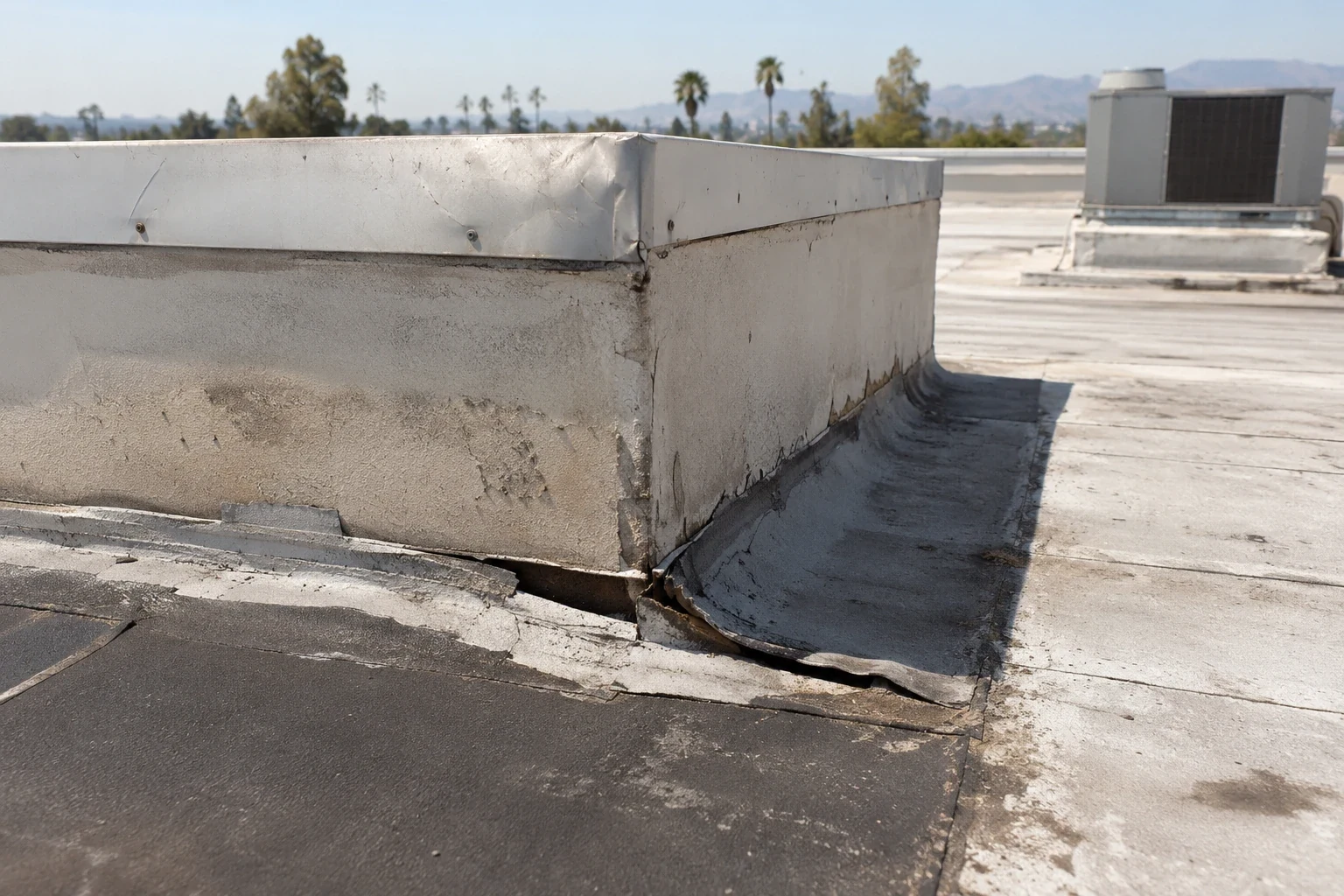
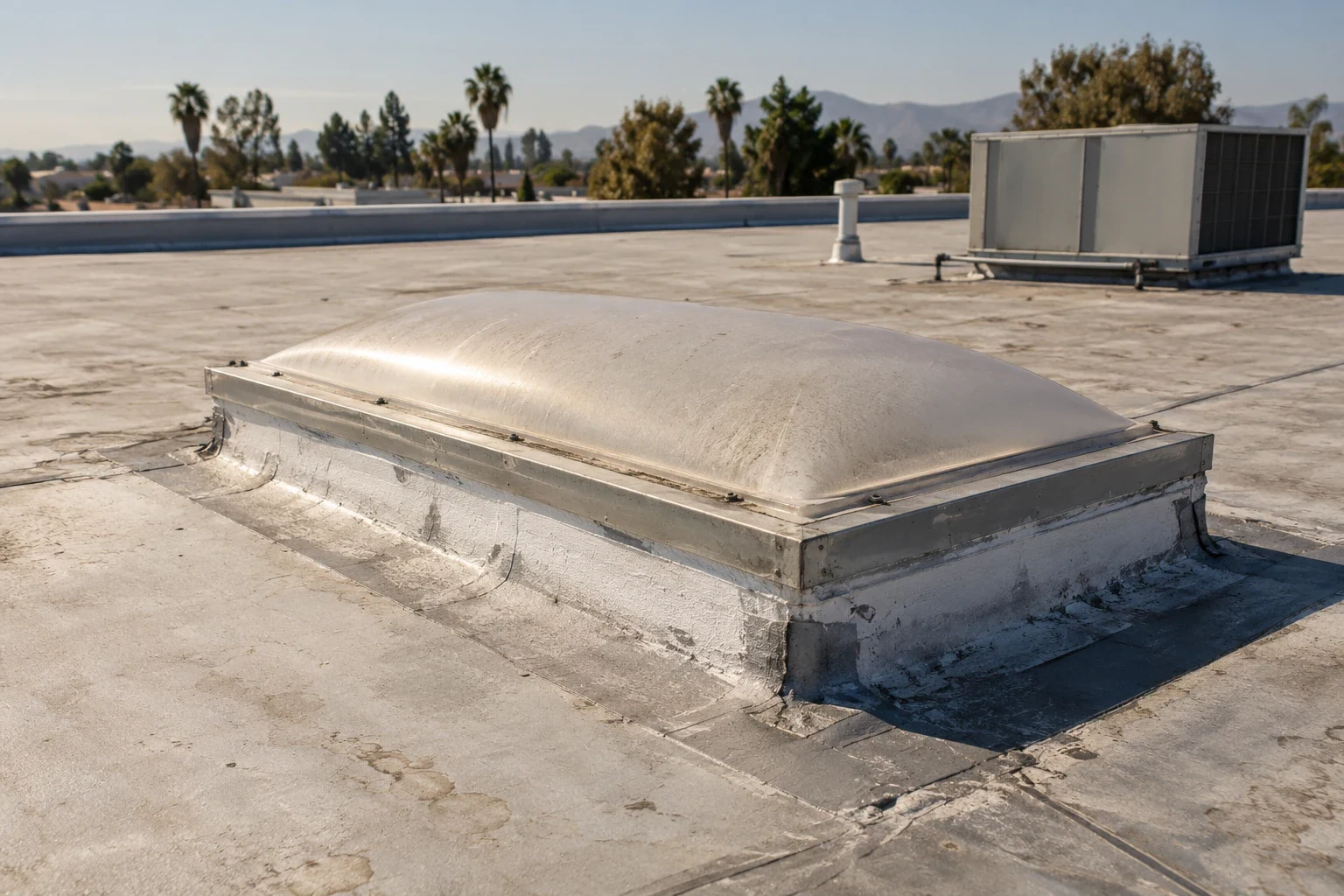
A curb can look intact from the roof while its flashing has separated at one corner. The detail is where movement, water, and different materials meet, so a surface seal alone may hide the opening without restoring the transition. Hesperia 2 E's 1991-2020 normals put the average August daytime high at 97.0°F. In Hesperia, CA, daily heat cycling gives us reason to inspect the membrane-to-metal bond and the upper termination, not just the visible sealant bead. We photograph each side, check whether the substrate is stable, and trace the reported moisture path before setting a repair boundary.
Inspect every side of the transition
Flashing failure can occur at a wall, curb, pipe, drain, expansion joint, or roof edge. We check where the flashing turns up, how it terminates, whether corners are reinforced, and if the adjacent membrane is sound enough to accept a tie-in. A split at one corner may be local; a loose termination running along a wall may require a longer repair. We note previous caulk and patches because they can obscure the original detail. Photographs and measurements establish what is exposed, what remains bonded, and whether an opening would clarify the condition below.
Corner conditions deserve their own inspection. We check the cut edge, reinforcement, sealant, and whether the turn-up remains high enough to terminate above the roof surface. A corner patch should not bridge over loose material or leave an exposed cut. On metal counterflashing, we look for movement and attachment that can hold without pinching the membrane. The repair details vary by system, so we record what was present before removal and photograph the completed transition from more than one angle.
Plan around the working building
Hesperia’s planning framework sets land-use designations for Main Street and its freeway vicinity, spanning employment, shopping, public, and residential settings. That mix means roof details can sit above active customer areas, loading zones, mechanical rooms, or occupied offices. Before opening a flashing, we agree on access, interior protection, and the time needed to close the assembly. A municipal development report tracks warehouse proposals at different approval stages and relates their access to mapped freight roads. For a working facility, the staging point and access route should not interfere with those daily operations. At the Hesperia Industrial District, we verify who controls roof access and where the flashing test can be isolated.
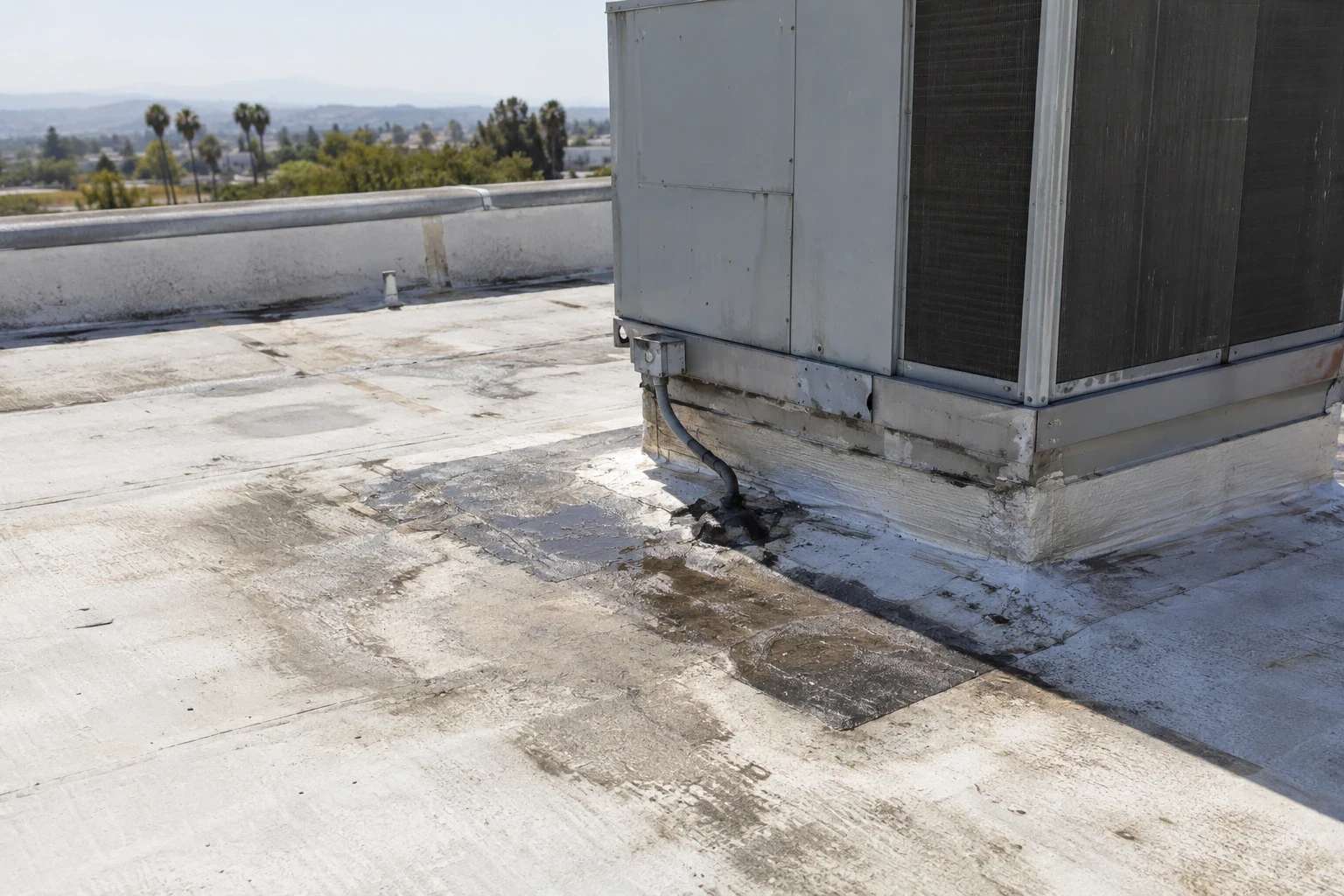
We map nearby penetrations and drains because several details can share the same leak path. A plumbing vent, curb, or conduit may sit upslope from the interior mark, and water can move below the membrane before showing. We note which details were inspected and which remain outside the agreed boundary. That gives the owner a clear basis for deciding whether a second test is warranted, instead of spreading sealant across every nearby object.
Find the entry before sealing it
Water can enter behind an upstand, pass beneath a membrane, and appear at a ceiling away from the detail. We compare the interior report with roof slope, insulation joints, and nearby penetrations. We look for a failed sealant joint, separated flashing, loose counterflashing, cracked pitch pocket, or a movement joint that no longer accommodates movement. Hesperia’s August heat normal is 97.0°F, and repeated expansion and contraction can stress transitions. That climate fact supports close inspection, but it does not identify the failed component by itself. The repair follows the condition we can document.
When a repair needs an open assembly, we plan how it will be protected during the work window. The crew removes enough material to inspect the termination, keeps debris out of drains, and closes the area before leaving. If the substrate is wet or the flashing has lost its attachment, the repair may extend beyond the first visible split. We set that decision point in advance so the owner can authorize a controlled extension rather than discover an undocumented opening at closeout.
Use a tie-in that matches the assembly
A durable flashing repair requires compatible materials, clean and dry surfaces, sound attachment, and the correct termination. We identify whether the roof is TPO, PVC, EPDM, modified bitumen, metal, or another system before selecting a patch or flashing method. We also check whether the detail can be repaired without disturbing adjacent equipment or finishes. Our skylight and penetration flashing work covers transitions where new or existing penetrations meet the roof; commercial roof leak repair documents the entry path and interior report.
For a roof with different membrane types across additions, the same curb can meet materials that need separate preparation. We identify each layer and its tie-in before proposing a repair. A new flashing piece must connect to the existing assembly with a compatible method and allow movement where the detail requires it. We avoid a surface-only seal if the water path enters behind the termination, because that can leave the original gap untouched and make later diagnosis harder.
Keep the opening controlled
Scope and timing turn on how much flashing is detached, whether the substrate is wet, the material needed for a compatible tie-in, and how quickly the assembly can be closed. A small exposed corner may be a focused repair; concealed wet insulation can expand the work. We identify those possibilities before removal and note the decision point that would change the work order. For delivery planning, the municipal truck-route map includes Bear Valley Road and portions of Santa Fe Avenue, alongside the two interstate and U.S. highway links. We coordinate delivery and roof access with the building contact so a repair does not block a working yard. Where the defect sits at the edge, coping and edge metal repair can be scoped with the flashing tie-in. At a perimeter transition, wind can expose a weakness that calls for a separate wind opening review. We also record any seam separation independently, with photographs showing where the conditions meet or remain apart. commercial roof repair can share one closeout record with the flashing boundary and photos.
The report records whether water entry was confirmed, what the repair ties into, and what testing was completed. It also notes access limits and any nearby condition that could not be checked without a separate opening. If the owner has plans for rooftop equipment changes, we can identify the flashing condition before that work is scheduled. A coordinated detail repair reduces the chance that a new curb or trade visit disturbs a transition that was just restored.
Commercial Roofing Questions
Can failed flashing be repaired without replacing the whole roof?
Often the decision can be made at the detail. We test the surrounding membrane, attachment, and substrate to see whether a compatible tie-in will hold. If deterioration extends beyond the flashing or moisture has spread below it, the work may need to include adjacent roof material.
Why does water show up away from a curb or wall?
Roof layers can let water travel laterally before it reaches the ceiling. We compare the leak location with slope, laps, insulation joints, and other penetrations, then record what supports the repair boundary. The visible stain is useful evidence, but it does not always sit directly below the opening.
What happens if old sealant covers the failed joint?
We inspect whether the material is bonded and whether it is compatible with the roof system. Sealant over a moving or wet joint can conceal a gap without restoring the flashing. If needed, we remove only enough material to inspect the termination and specify a repair that can be tested and recorded.
What should I include in the first request?
Send the building address, roof plan if available, the reported leak location, and an access contact. Include photographs from inside and on the roof when they can be taken safely. We use that information to identify likely transition details and whether the first visit should include a test opening.