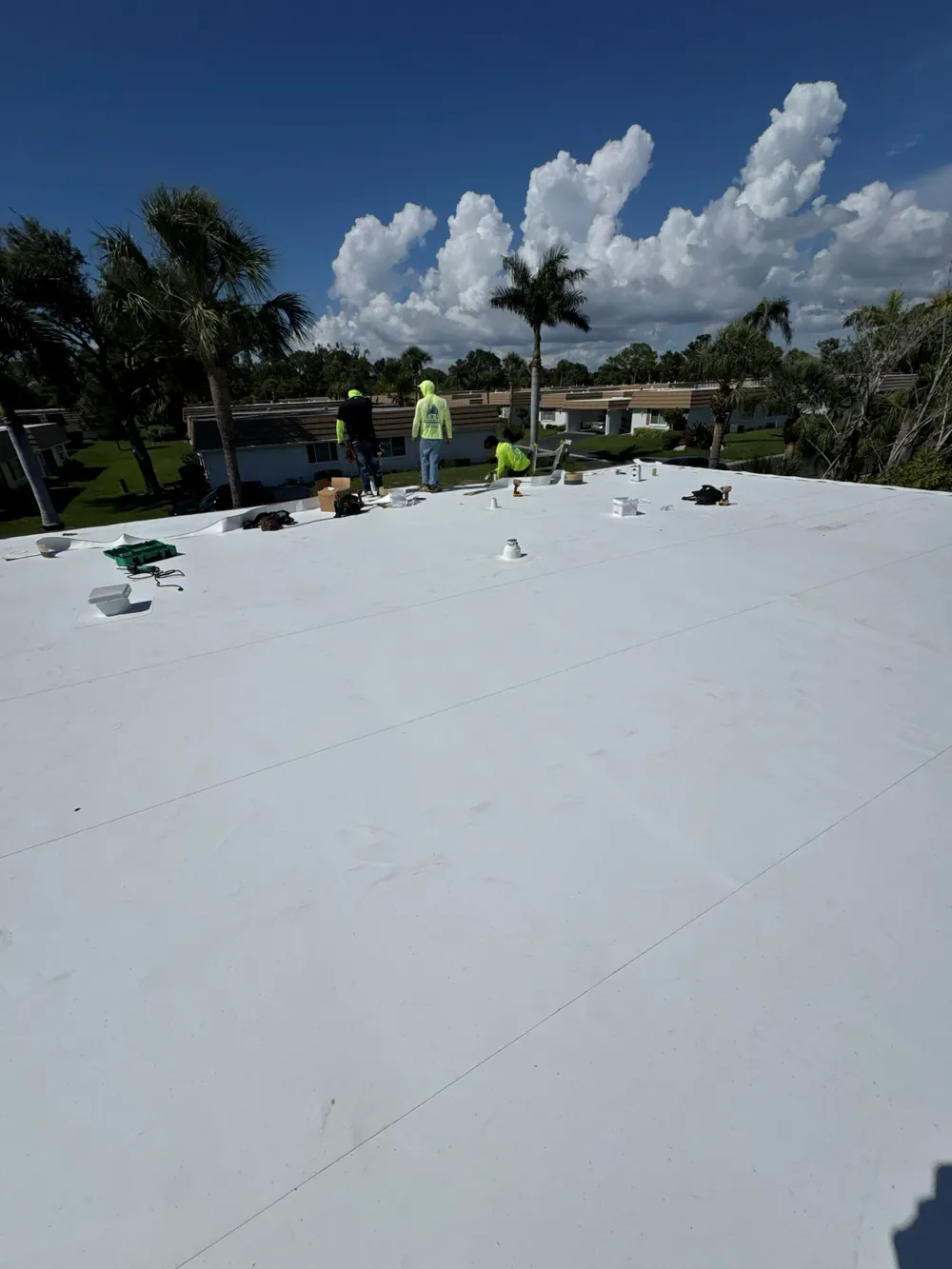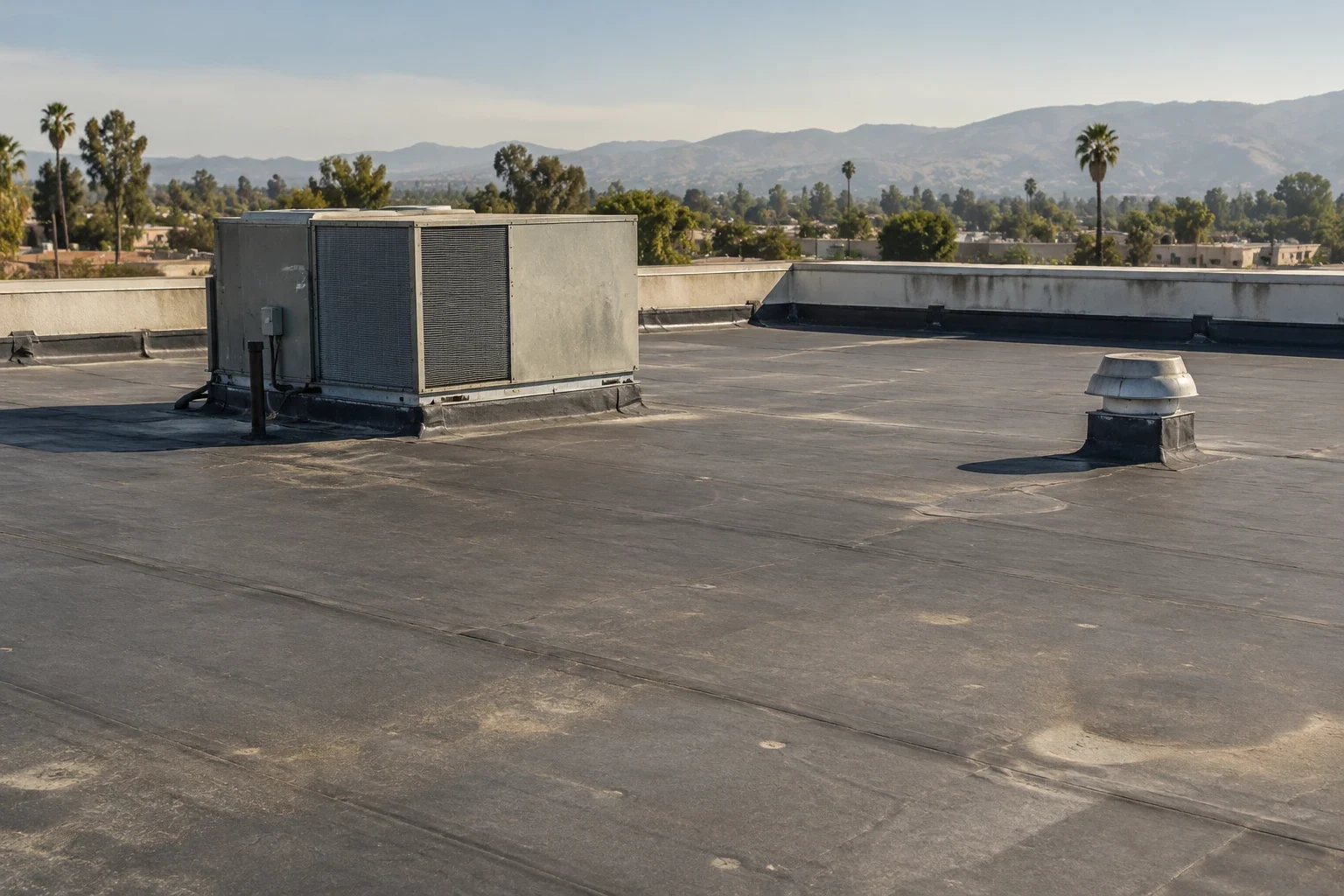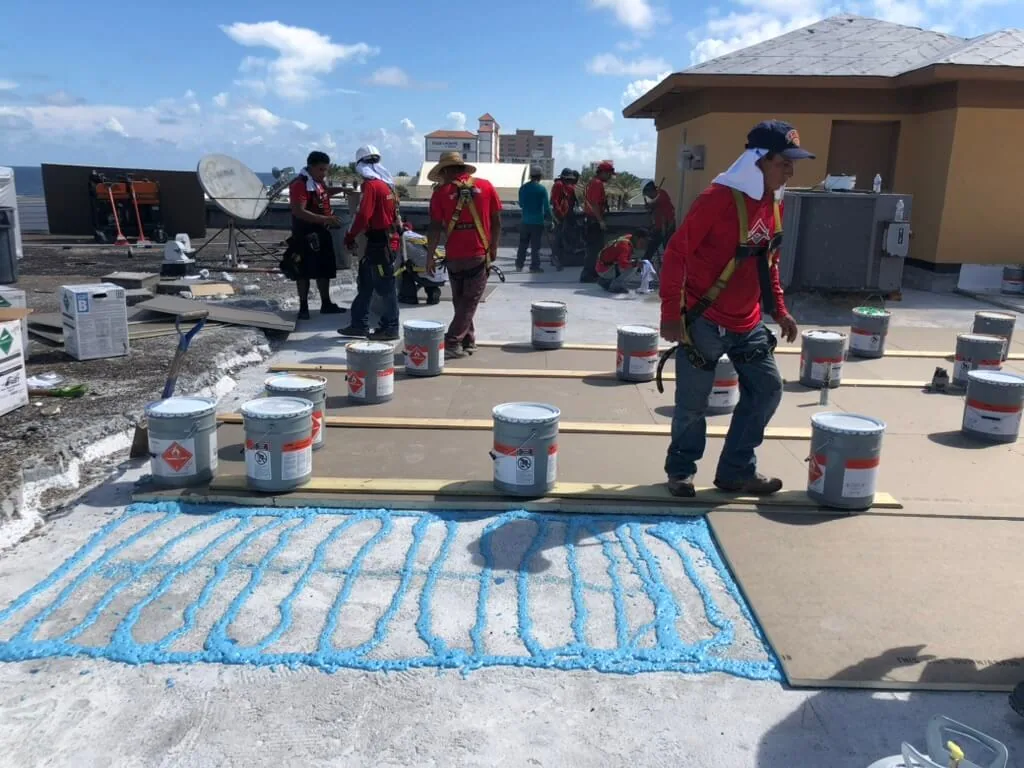
Roof Seam Failure Repair in Hesperia, CA
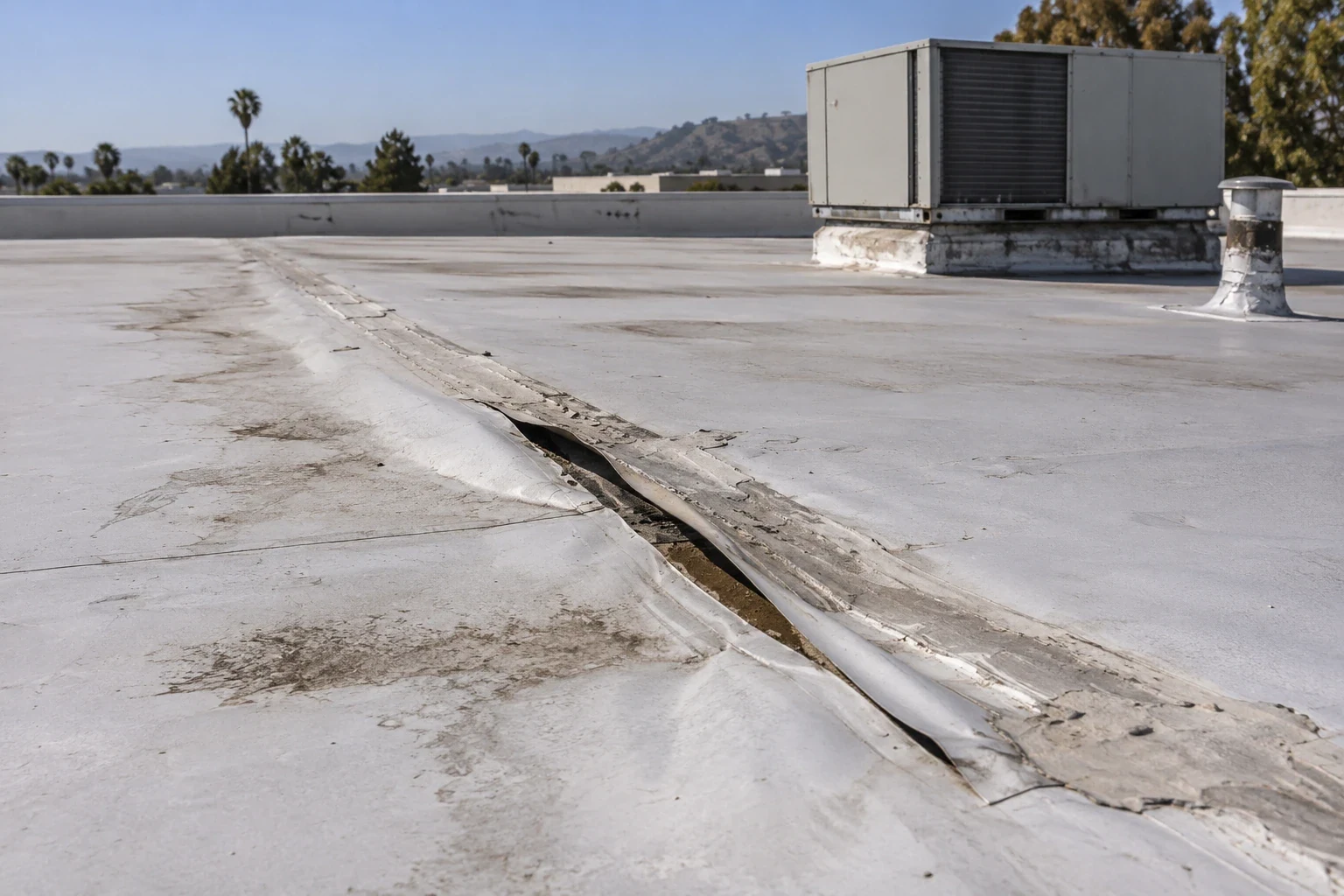
A seam can separate in a narrow line while the membrane on either side still looks serviceable. That makes the repair boundary important: a patch placed on weak material may peel with the same movement that opened the joint. Summer heat cycles can move roof materials, so the full seam run and its intersections deserve a close inspection. We identify the membrane type and check drains, curbs, and earlier repairs before setting the repair boundary. The goal is to establish whether the defect is isolated or part of a larger bond failure before material is cut.
Separation Can Extend Past the Visible Opening
We examine the seam line, lap width, weld or adhesive condition, wrinkles, fishmouths, and any change in surface texture. On mechanically attached systems, the fastener row and plate placement matter; on adhered systems, the bond and substrate condition matter. A seam may hold in the middle and fail at a corner, termination, or penetration where stress concentrates. We mark the beginning and end of the tested area and take photographs that show nearby details. That record helps distinguish one repairable opening from a seam that needs a longer section removed and rebuilt.
We use a compatible probe or test method along a representative portion of the seam, avoiding a claim based on one point alone. The repair record identifies the test location, membrane temperature when relevant, and surface condition. If the seam is contaminated, we document whether cleaning changes the bond. A repaired lap should continue beyond the failed segment onto sound, bonded material, with intersections and terminations addressed as part of the same detail.
Property Operations Shape the Work Window
New warehouse development along I-15 and Highway 395 keeps loading activity close to roof access and staging routes. Active logistics buildings may need a short, defined work window and a clear separation between roof access and loading traffic. We identify where materials can be carried or lifted, where a safe work zone can sit, and when the seam can be cleaned and dried. A good repair sequence includes the close-in point so the roof is not left open when operations resume. The same planning applies to regional-commercial and industrial districts along the city corridor.
A wrinkle or fishmouth can concentrate stress and provide a path for water even if the seam edge appears closed. We inspect the surrounding sheet and attachment pattern before flattening or covering it. If the roof has multiple patches, we note which materials can remain and where removal is needed to expose the original membrane. This prevents the repair from stacking incompatible layers and helps the owner understand why the proposed boundary may be wider than the visible separation.
Movement Can Explain a Seam Opening
Seam separation may reflect poor adhesion, contamination, incompatible prior repair material, membrane shrinkage, or movement at a nearby detail. We inspect the lap, surrounding sheet, attachment pattern, and adjacent flashing before identifying the failure path or checking whether moisture reached the insulation. Hesperia's December normal daily minimum is 35.2 degrees, with 1.23 inches of normal precipitation. When a seam is open ahead of a wet period, temporary protection and a scheduled permanent repair need distinct documentation. We compare the interior stain with roof findings and map any moisture that extends beyond the visible seam.
The repair can be affected by dust, moisture, low or high surface temperatures, and access to power or equipment. We check product conditions before setting the work window. In Hesperia, summer roof temperatures may differ sharply from the morning air, so surface readings and manufacturer application limits guide the day’s sequence. When temperature or moisture prevents a dependable bond, we protect the area and schedule permanent work for a suitable window.
Sound Material Defines the Repair
The correct repair depends on whether the membrane can be cleaned and welded, bonded, or covered with a compatible detail. We check the product type and age record where available, then prepare a test area to see whether the seam can hold. If moisture or contamination prevents a dependable tie-in, we identify the removal boundary and the material needed for close-in. A TPO seam can be heat-welded when the sheet and surrounding material are sound; an EPDM seam follows the membrane's adhesive or tape assembly. Where a repair crosses membrane installed in different phases, test each side separately; a bond to newer sheet does not establish compatibility with an older surface. The close-in detail should preserve drainage direction and avoid a raised edge that catches debris. The repair record should show the method, tested area, and completed tie-in. A defined repair scope keeps the photos and boundary with the work.
Where seam separation appears near a drain or curb, we inspect that intersection as its own failure point. Water can enter through the transition even after the straight seam is repaired. We record the lap end, patch edge, and nearby flashing to show whether the repair closes the complete path. When wet insulation is found, we map it separately and extend the approved removal boundary to sound material before closing the seam.
A Close-In Point Protects the Roof
Before the shift begins, agree on roof access, tool staging, and the area that remains open to building traffic below. Mark the seam segment planned for repair and keep the adjacent loading route clear during material handling. If removal exposes wet insulation, stop at the approved boundary and request scope approval before extending the opening. Protect the exposed area at the end of work with a closure compatible with the roofing system. The final repair should extend onto sound membrane and finish at the termination required for that assembly.
When a nearby flashing failure or membrane puncture is confirmed, separate its scope unless it shares the same work area. A roof condition report can keep each condition assigned to its roof section. For roofs in the Hesperia Industrial District, stage away from loading routes. At closeout, photograph the finished lap and note the material used. A later inspection can compare the repair with current conditions without treating the entire roof as one issue.
Commercial Roofing Questions
How do you know if the seam is the only failure?
We trace the opening along its full length, inspect each intersection, and compare its location with the interior report and roof drainage. A seam may be one entry point among several. We identify the area tested and note where concealed conditions could require an opening before giving a larger repair recommendation.
Can you weld a seam that has been patched before?
The repair depends on the membrane material and whether the old patch can be removed without damaging the sheet. We test a prepared area and check that the underlying surface is dry and sound. If the layers are incompatible or contaminated, a new compatible repair detail may need to bridge beyond the old patch.
What does a seam repair record show?
It should identify the roof section, defect limits, material or method used, test location, and completion photos. If a test opening exposed moisture, the record should show its boundary and the disposition. That lets the property team track repaired seams without treating the entire roof as one undocumented area.
How should I prepare the request?
Provide the address, roof plan if available, which seam or room is involved, the reported condition, and an access contact. Include any roof system records or earlier repair notes. We use those details to plan the right test materials and decide whether access needs coordination with loading or tenant schedules.