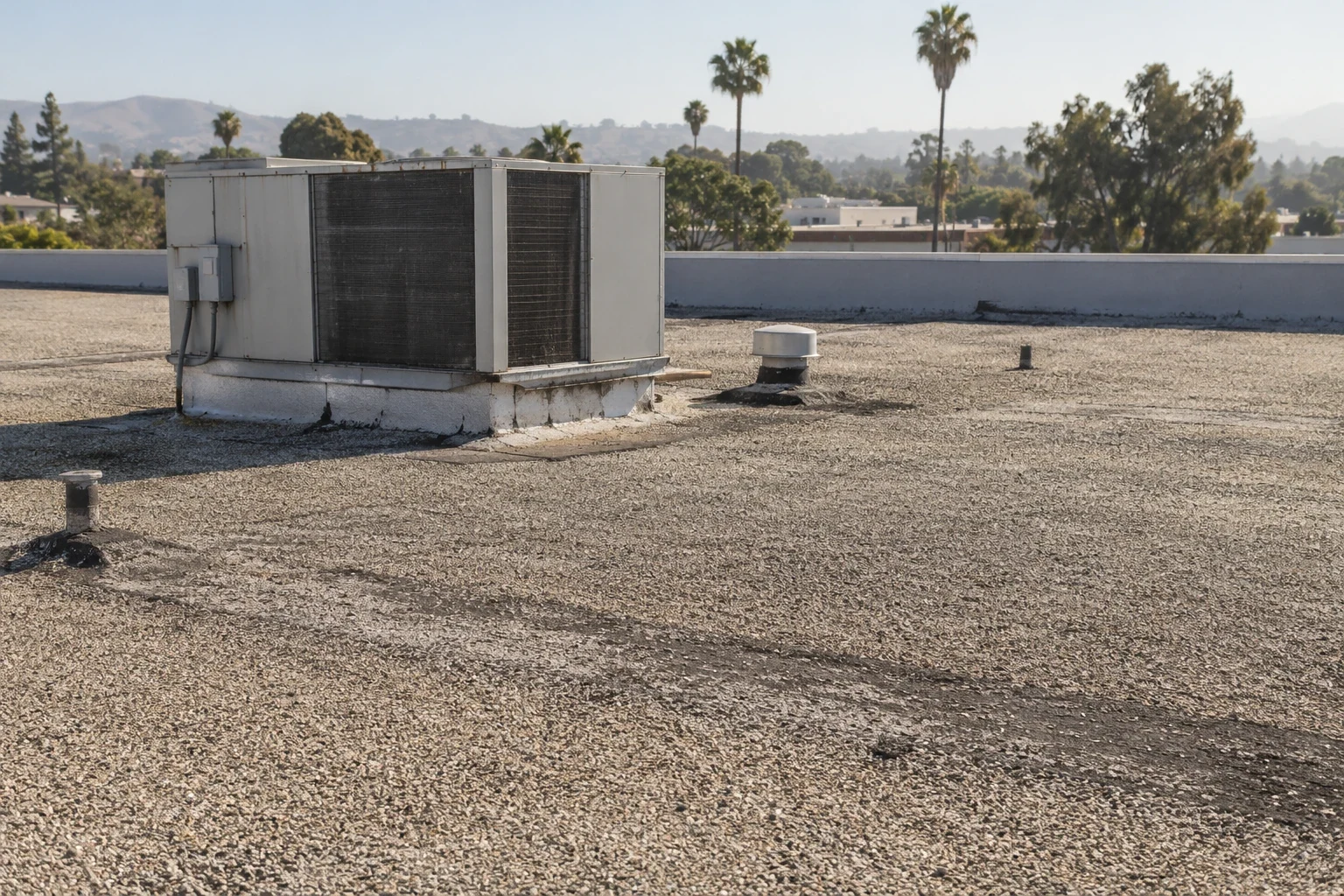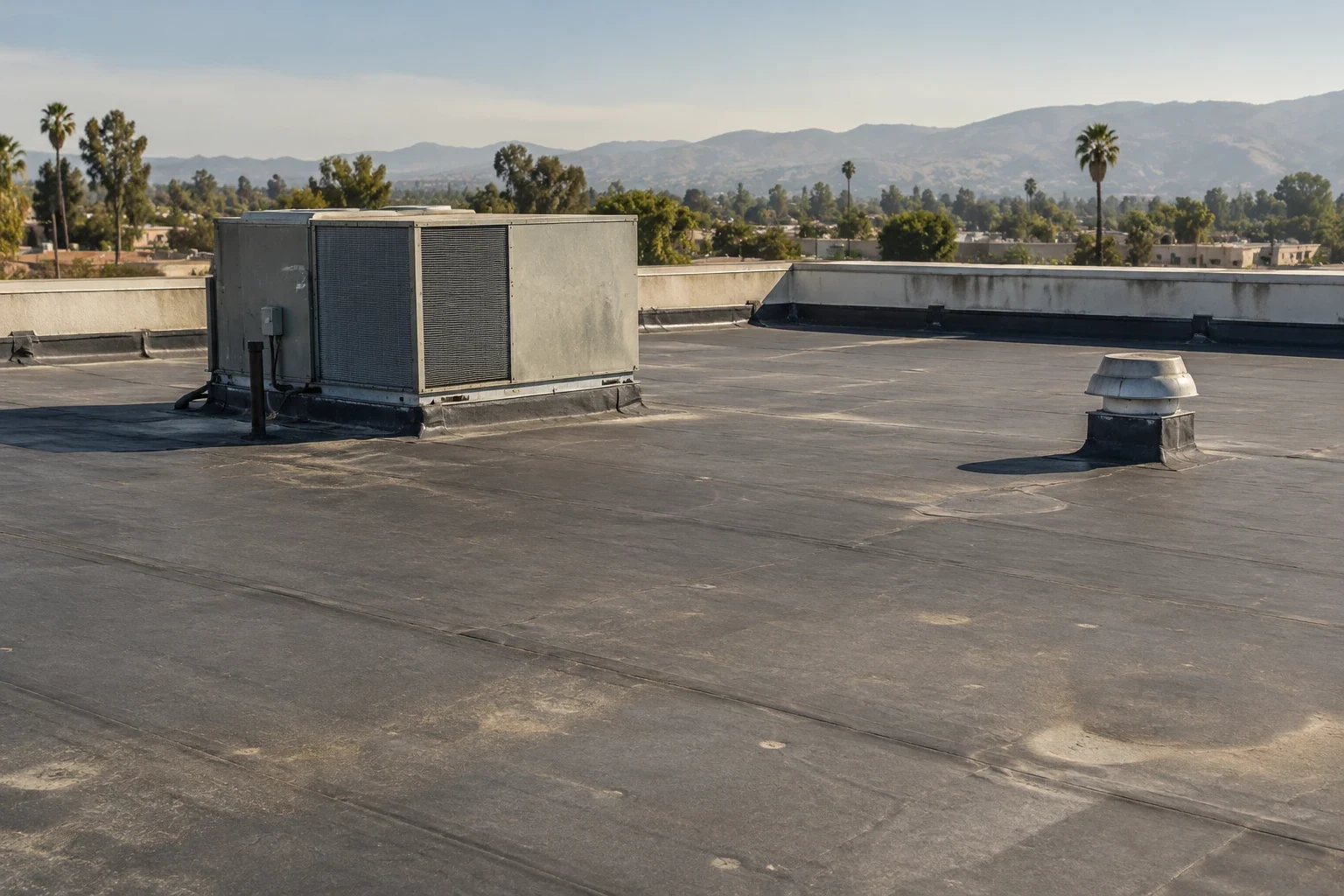
Modified Bitumen Roofing in Hesperia, CA
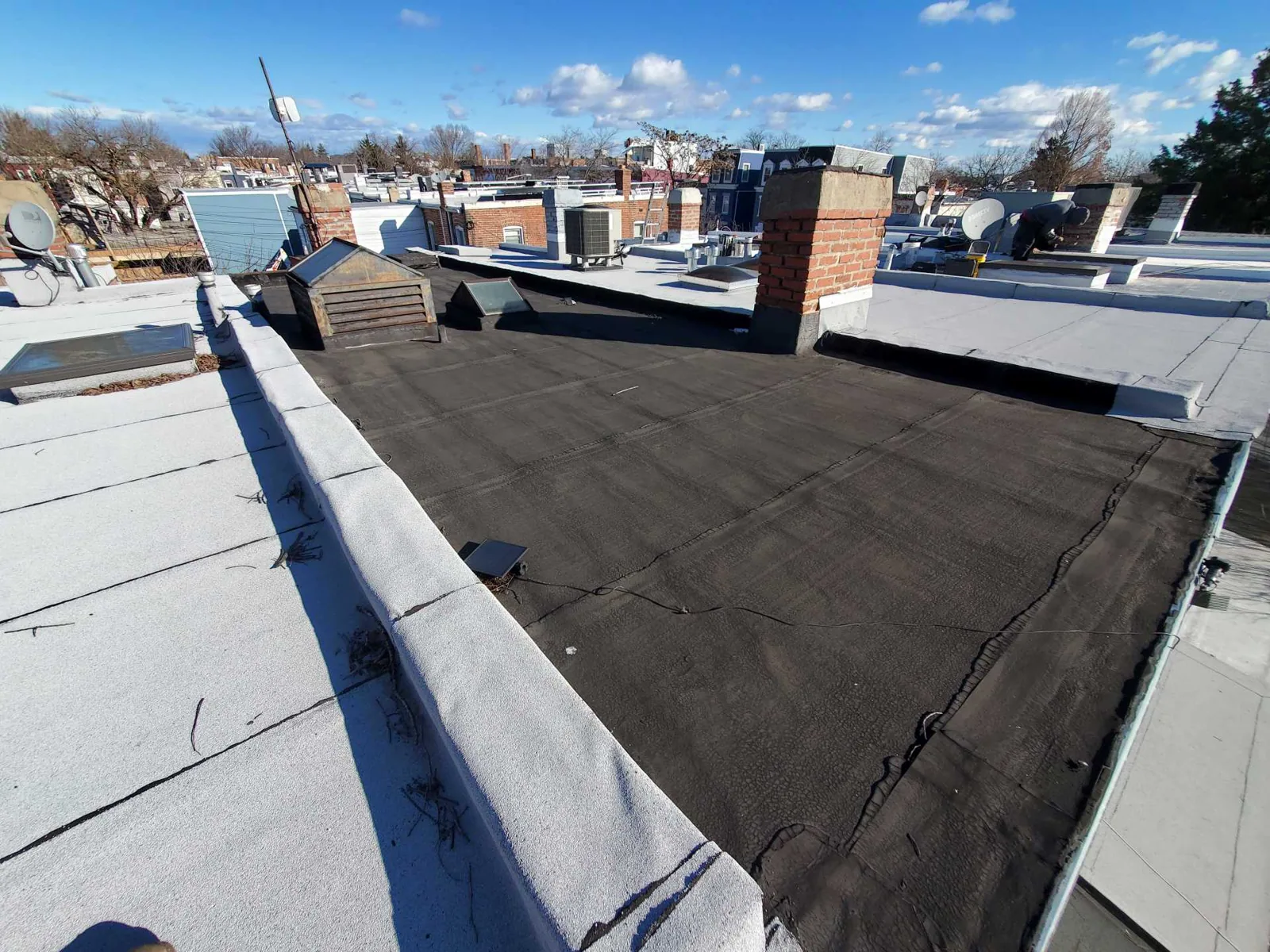
On a modified-bitumen roof, inspect the cap sheet, seams, flashing, insulation, and deck before choosing a repair. A split at the surface may involve one ply or several, and a darkened area does not by itself show how far moisture extends. Hesperia 2 E records a 1.23-inch normal December precipitation total; the figure is long-term context, not a prediction of leakage. Review drainage history and the observed water path, then define the layer to be opened and the compatible material needed to close it. The owner should understand what remains below the repair boundary.
Keep the roof plan with the repair note.
Read the Surface Layers
Granule loss, blistering, exposed reinforcement and split laps provide different clues. We check whether the cap sheet remains bonded, if the seam edge is open, and how a previous patch meets the surrounding surfacing. A blister can reflect trapped moisture or a surface change; we identify the test question and review it with the owner before opening the assembly. At a wall or curb, the base flashing must rise and terminate securely without a fishmouth that directs water behind it. We also note soft insulation, deck movement, standing water and drains that collect debris. Photos show both a close detail and the roof zone so a repair crew can find the same point later.
Know the Application Method
Modified bitumen can be installed in multiple plies using heat, cold adhesive or self-adhered products. The existing assembly tells us which repair materials and preparation are compatible. If a torch-applied system is involved, the work plan must account for fire controls, combustibles, roof penetrations, hot-work permits and a fire watch where required. Cold-process work has its own substrate, temperature and cure requirements. A system selection should state the base and cap sheets, reinforcement, surfacing, attachment and flashing details. A built-up roof comparison or EPDM alternative can be useful when the current assembly is near the end of service life, but the deck and existing layers remain part of the decision.
Account for Cool Nights
Hesperia’s Main Street and I-15 District includes regional-commercial and single-family residential uses. That planning context does not predict the roof assembly; it is a reminder to confirm access, ground protection and work sequencing at the property rather than assuming a commercial address has a clear staging zone. A Main Street-West area review is geographic context, not permission to enter a specific property.
Before pricing a modified-bitumen repair, separate cap-sheet work from base-ply or insulation removal. If a test opening changes the assumed number of layers, stop at the agreed boundary and document the added scope. Keep heat controls and close-in steps tied to the specified application method.
Trace Moisture Through the Plies
A puncture in the cap sheet may be easy to see while the wet insulation lies farther away. We inspect seams, penetrations, drains and prior repairs, then use testing to decide where a selective opening would be valuable. If the opening shows dry, firm layers and a sound deck, a surface repair may remain appropriate. If water has spread between plies, measure the boundary and determine whether the affected material can be removed without disturbing sound areas. A moisture survey can prioritize test locations; a condition inspection can document what is visible. The owner should see the evidence before the scope grows from one seam to a roof section.
Build a Sound Tie-In
Surface preparation is not cosmetic. Remove loose surfacing, dry the substrate where required, cut back to material that can accept the repair, and lap the new sheet in a direction that sheds water. At curbs and parapets, rebuild the flashing height and termination rather than bridging a loose edge. Keep hot work controlled and protect penetrations, drains and combustible materials. We set a daily close-in point that leaves no exposed ply at the end of the shift. For a tie-in near an occupied area, confirm the route for tools and removed material before opening the cap sheet. Keep pedestrian protection and debris control tied to the actual roof hatch and work zone. A phased roof sequence helps keep work zones away from active operations. Each phase should be marked on the roof sketch.
Price the Layered Scope
Modified bitumen pricing varies with the number of plies, tear-off depth, surfacing, insulation, deck work, flashing, hot-work controls, fire watch, disposal and access. We identify whether the estimate includes removal to deck, a recover, or a localized repair. If the existing layers are unknown, a test opening can prevent a broad allowance from hiding a major condition. We show measured quantities and explain what would change if wet insulation or damaged deck appears. A replacement estimate can be compared with repeat repairs when several seams or flashings are deteriorating. For a retained roof, a maintenance schedule can track surfacing, drains and new seams. The estimate should also name the application method and the work window it requires.
Timing also depends on whether the crew can maintain a dry, stable working surface and close each area before weather or building use interrupts the sequence. A torch-applied method may require additional coordination and fire-watch time; an adhered or self-adhered approach still needs surface preparation and product-specific conditions. If the roof has multiple prior overlays, verify the edge thickness and attachment before staging materials. The owner's approval point should be tied to a measurable discovery, such as wet insulation, loose plies or deck damage, rather than a vague allowance. That lets the crew protect the building and gives the facilities team a clear decision when the layers differ from available records.
Keep Repair History Specific
Record the installed sheet, application method if known, repair material, seam location and limits of any opened area. The next person should be able to tell a patch from a cap-sheet lap and see whether it crossed a prior repair. Label photos with building, roof zone and direction. Hesperia’s Main Street and I-15 District includes regional-commercial activity and single-family residential areas. For the roof, we confirm the assembly and condition from records and inspection. The owner's own roof record is more useful: layer details, previous leak locations, contractor work and access rules. When moisture or movement repeats, compare the current observation with that record before deciding whether to patch again or price a broader scope.
Commercial Roofing Questions
How do we identify the modified bitumen application method?
Look at approved submittals and exposed edge details, then confirm the field assembly at a safe location. The repair method depends on whether the sheet was heat applied, adhered or self-adhered.
Can a blister be patched without opening it?
First determine whether it contains moisture, whether the plies remain bonded and whether the area is moving. A test opening is useful only when the result will change the repair decision.
What should happen at a modified bitumen wall flashing?
The base flashing should tie into the field membrane, rise to the planned height and terminate securely. We inspect the corner, counterflashing and substrate instead of sealing only the visible edge.
Does modified bitumen need a fire watch?
Torch work requires a site-specific hot-work plan and appropriate fire controls. We confirm the application method, nearby combustibles, permits and closeout procedure before work begins.
When does repair stop making sense?
Repeated seam openings, wet plies, widespread brittle surfacing or recurring flashing failure can support a replacement comparison. We document those conditions and the affected area before expanding the proposal.