EPDM Roofing in Hesperia, CA
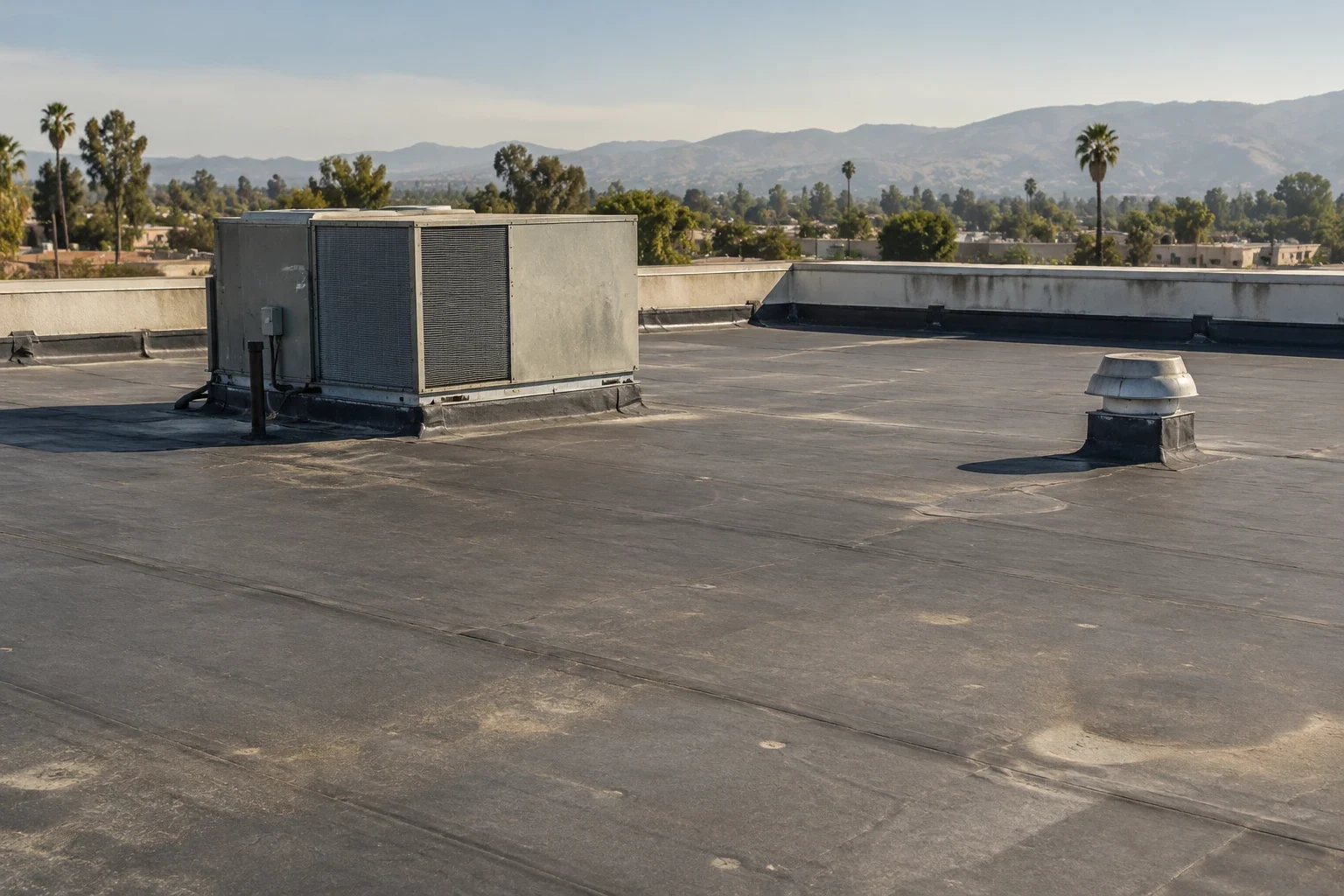
A loose EPDM lap can move water across a roof before a ceiling shows the first sign. In Hesperia, CA, we trace that path through the membrane, seams, drains and transitions instead of covering the nearest visible defect. Review the property's drainage history and the route water takes across the field. We identify whether the membrane is fully adhered, mechanically fastened or held in a ballasted assembly, then inspect the affected edge and the insulation below. That lets the property owner compare a targeted repair with a larger correction using the actual roof construction.
Inspect the Lap Before Patching
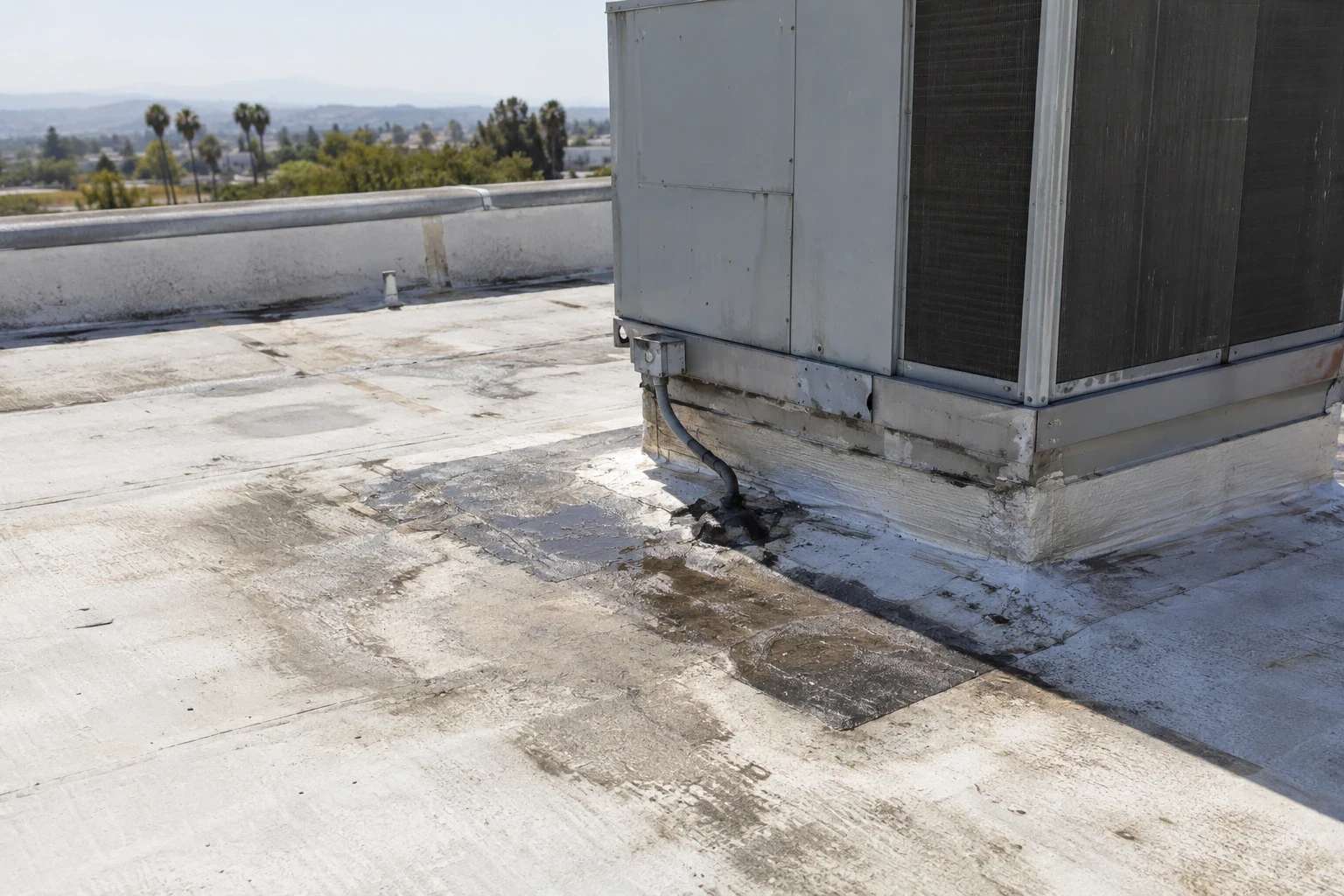
EPDM seams may be joined with tape, adhesive or a system-specific detail. Age, contamination, poor pressure, movement and prior repair material can change whether a new patch will bond. We clean a small test area, check the lap edge, and look for fishmouths, open corners, shrinkage at walls, punctures and fasteners backing out of a termination bar. A patch needs sound rubber beyond the damage, not a narrow strip laid over a moving edge. At a drain, the membrane must turn into the bowl without a gap or wrinkle that catches debris. We photograph the condition before preparation and measure the repair boundary so the proposal can distinguish labor for the field from detail work.
Keep Seasonal Checks Practical
Hesperia Neighborhood District planning includes residential areas, parks, open space, and neighborhood commercial activity. That broad designation cannot identify a roof assembly; inspect the membrane and drainage on the actual building. Before adhesive work, confirm the substrate and work-area temperature, then mark where water may have traveled beneath the sheet.
The Highway 395 and I-15 District is only a geographic reference, not evidence of a roof assembly. Before an EPDM repair, confirm the sheet's attachment and whether the membrane can be lifted without tearing sound material. Mark the opening boundary, check the insulation immediately below it, and close the repair only after the lap and adjacent field are ready. Keep equipment paths and drains on the roof sketch, with the date and the person who approved the opening.
For a Hesperia roof with separate additions, identify each membrane and drain run independently. Water can cross a seam before it reaches a ceiling, so the visible stain is only one point in the investigation. Record the path, test boundary and close-in decision by section.
Find the Entry and the Travel Route
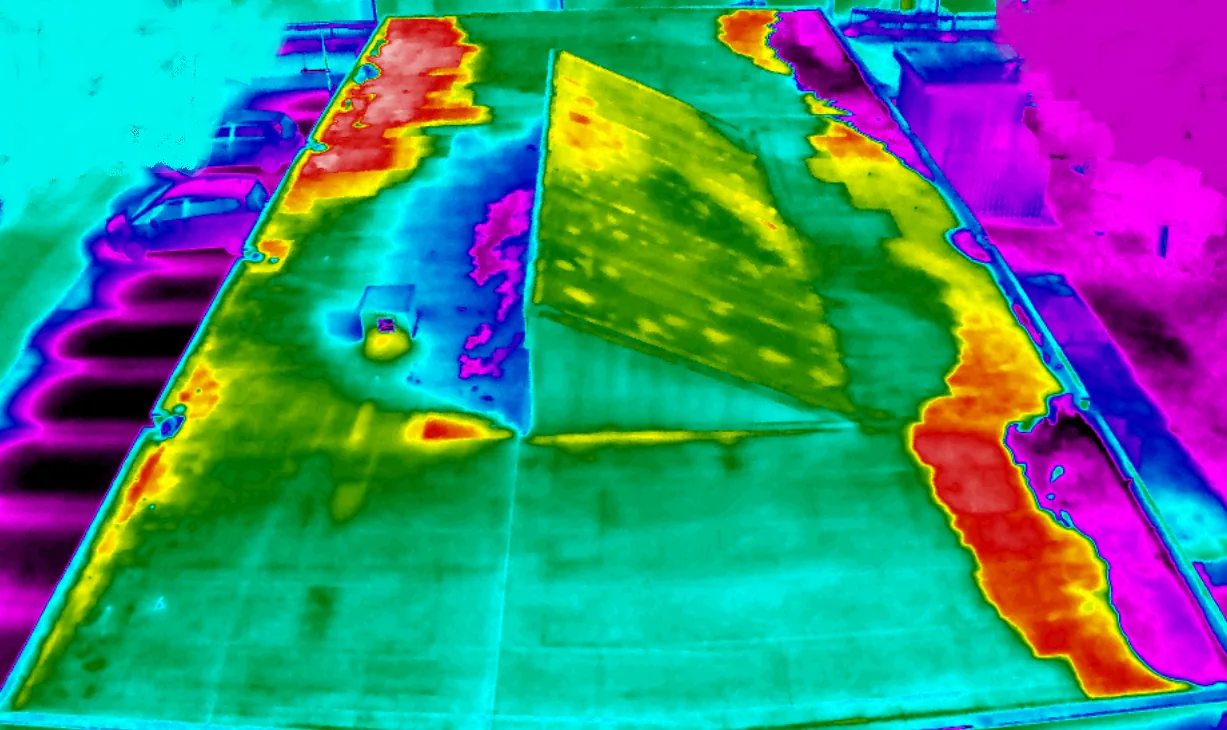
Water can travel beneath an EPDM sheet, follow a seam or move through insulation before it reaches an interior space. The stain location is a starting point, not the repair boundary. We inspect nearby laps, penetrations, parapets and drainage points, then compare the surface condition with interior observations. A moisture scan can help prioritize a test, but a core or selective opening may be necessary to confirm what is wet and whether the deck is sound. If the insulation is dry and the rubber is secure outside one small split, a local patch may be suitable. If the membrane has pulled away across several transitions, the scope may need more than seam work. Use a leak-path inspection or moisture survey to organize the next check.
Choose a Repair That Bonds
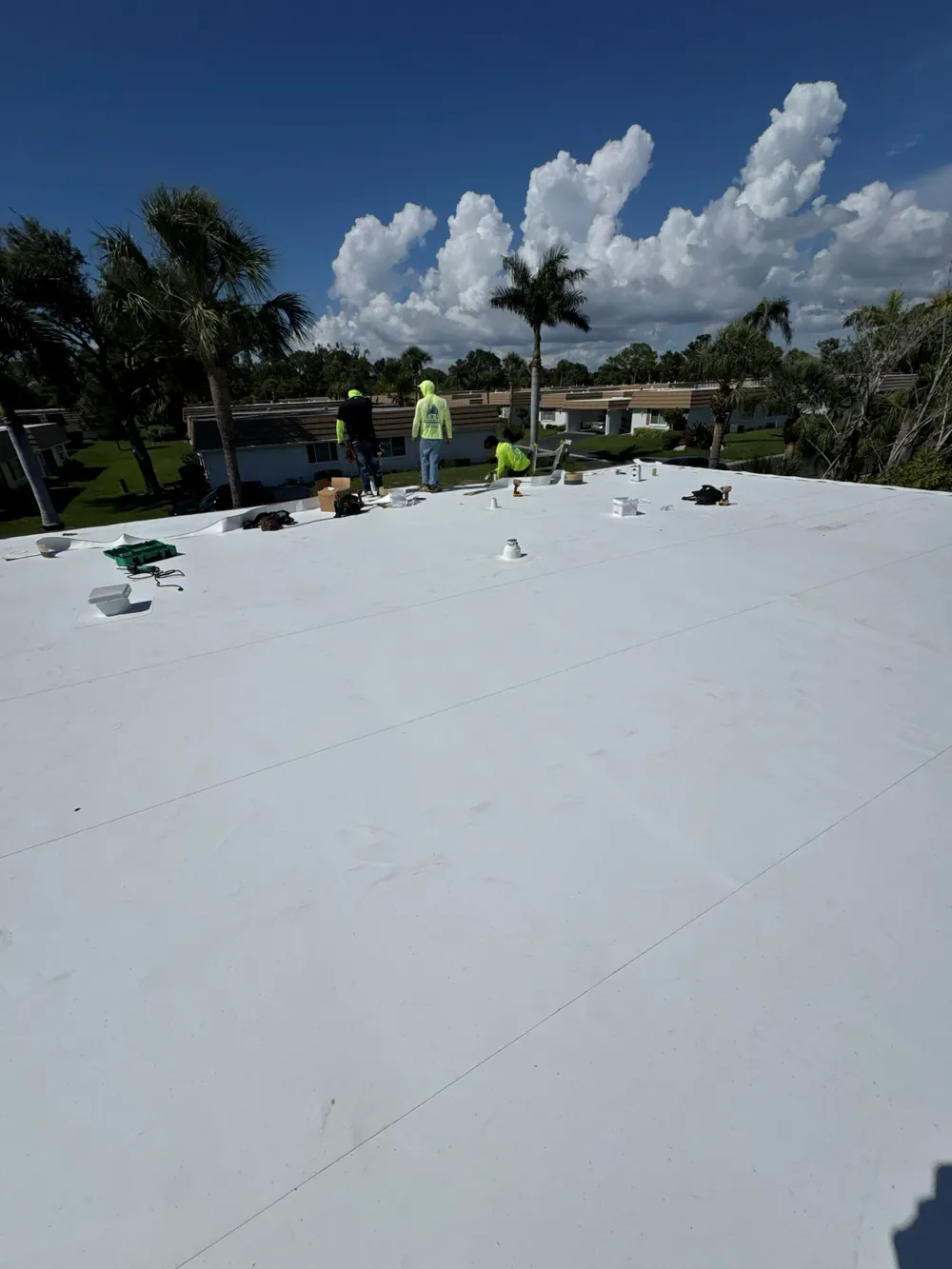
EPDM repairs depend on a clean surface and materials compatible with the installed membrane. We identify whether the field sheet is black or white, note any coating or contamination, and check prior patches before choosing a primer, tape or adhesive detail. A repair that bonds to the patch but not to the roof is not a completed tie-in. For replacement, review deck attachment, insulation condition, perimeter restraint, fire requirements and drainage as one assembly. A new sheet may be fully adhered, mechanically fastened or ballasted where the building and design allow. Compare a TPO option or built-up roof only after the existing layers and owner priorities are known. The inspection record should show which conditions drive the choice.
Lay Out the Open Area
Before removal or bonding begins, set the work zone, stage materials, protect drains and agree on a close-in point. Adhesive work needs clean, prepared surfaces and time for the product to reach the right condition. We do not leave an open seam or exposed insulation beyond the planned work window. At a wide warehouse roof, phase the work so crews and material carts do not cross a wet adhesive area or block a service path. Mark the delivery plan on the roof sketch, including the receiving point, hatch and path that keeps carts away from wet adhesive. The operator should approve those directions before materials are staged. A phased roof sequence can coordinate work below and overhead. Mark each completed section before moving to the next.
Measure the Repair Boundary
Price depends on more than the patch dimensions. The estimate should identify surface preparation, primer, seam tape or adhesive, flashing, termination work, wet insulation, deck correction, access and disposal. If a test opening shows an expanded moisture boundary, pause before removing additional material and obtain the owner's approval. A replacement budget should include tear-off, attachment, edge restraint, penetrations, drains and closeout details. A replacement comparison helps when repair quantities repeat across several roof sections. When repair quantities repeat, map each wet boundary and state which sections remain untested. That record keeps the next estimate tied to observed conditions instead of treating separate roof areas as one uniform assembly. The final proposal should state what is included, what remains concealed and what would change the scope.
Photograph the membrane lap before cleaning it, then capture the prepared surface and finished repair. Use one roof-zone label across each image, and note if insulation, deck or perimeter conditions were outside the test boundary.
Keep the Roof Record Current
After a repair, record the EPDM type, patch material, seam location, surface preparation and surrounding condition. Photograph the detail from a wide view and close enough to see the lap. Note whether the insulation or deck was opened and what was found. That detail helps a future inspector tell an old repair from a new separation. On a multi-section roof, label the plan by building and roof zone so a recurring stain can be compared with prior work. A maintenance review can revisit the same seams and drains before a small defect spreads. If evidence points to repeated movement or wet layers, present the repair and replacement paths separately. The owner can then weigh disruption, exposure and the cost of reopening the same area.
Commercial Roofing Questions
Can EPDM tape repair a separated seam?
It may, when the surface is clean, compatible and supported by sound membrane. We test the bond and inspect the seam edge before selecting a patch width and termination detail.
Why does an interior leak appear away from the roof split?
Water can move under the rubber, along a lap or through insulation before reaching the ceiling. We map the route and confirm the wet boundary before choosing a repair location.
Does cold weather affect EPDM repair?
Adhesive and primer have application requirements. We verify actual surface conditions, product limits and the time available to complete a secure close-in.
What does a core opening tell us?
A properly closed test can show layer sequence, insulation condition and deck material at one location. It does not describe every roof area, so we pair it with a mapped moisture review.
When should an owner compare a replacement?
Repeated seam work, widespread shrinkage, wet insulation or weak attachment can make a larger scope worth pricing. We document the conditions and repair quantities before presenting that comparison.