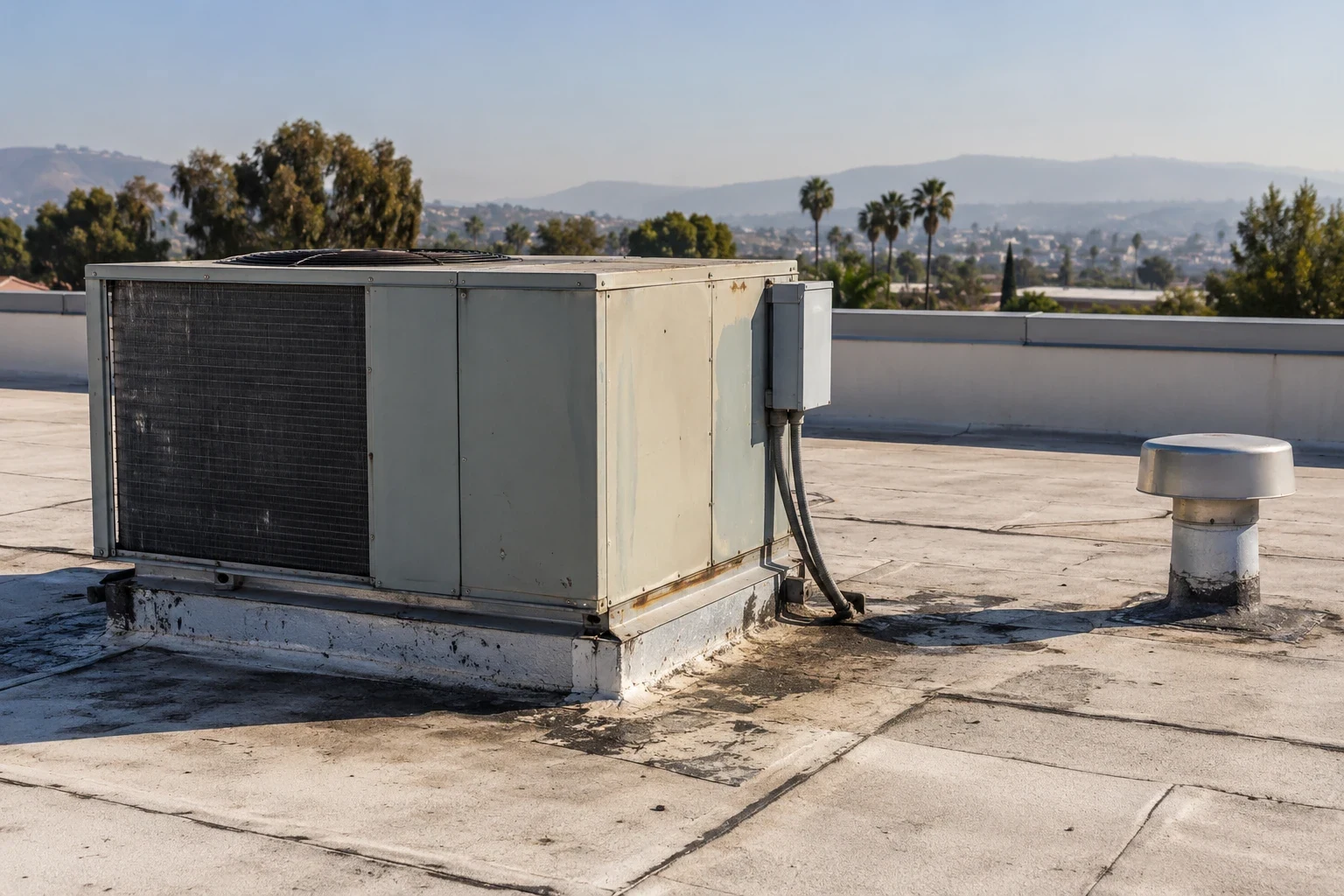
Commercial Roof Condition Reports in Hesperia, CA
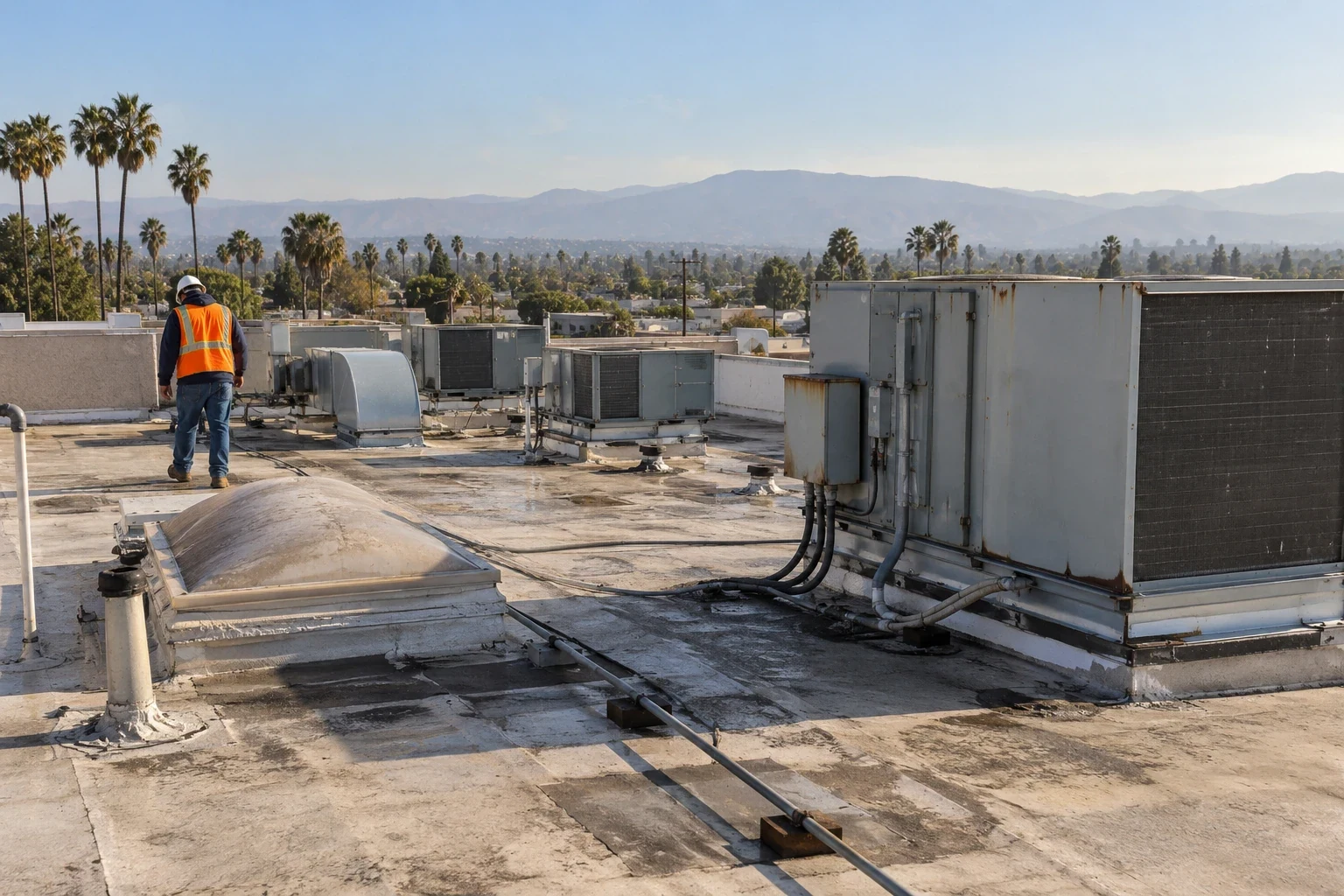
A useful roof condition report tells the owner what was observed, where it was found, and which decision it supports. In Hesperia, August's normal daily high is 97 degrees. Repeated heat cycles can stress exposed seams, flashing transitions, and metal details on low-slope roofs. The report ties its recommendation to the actual assembly, observed condition, access limits, and any test needed to confirm concealed moisture or attachment.
The Field Record Separates Observation from Interpretation
A Diligence Notes becomes useful when it separates direct observation from interpretation. We identify the roof section, material visible at the surface, drain and edge conditions, penetrations, and the location of each concern. Photos show enough surrounding detail to find the area again. If we see an open seam or loose flashing, we describe its extent and whether water entry is active or reported. Concealed layers remain marked as unconfirmed until an opening reveals them.
A commercial roof inspection can produce a condition record for repair planning, budget review, or ongoing maintenance. The purpose matters. A same-day leak check may focus on one transition, while a broader report compares several sections and their drainage paths. A retail entrance may need temporary protection while crews open or close a roof section. Record the actual door, access route, and hours that should remain clear during the repair.
Photos Need a Roof Location
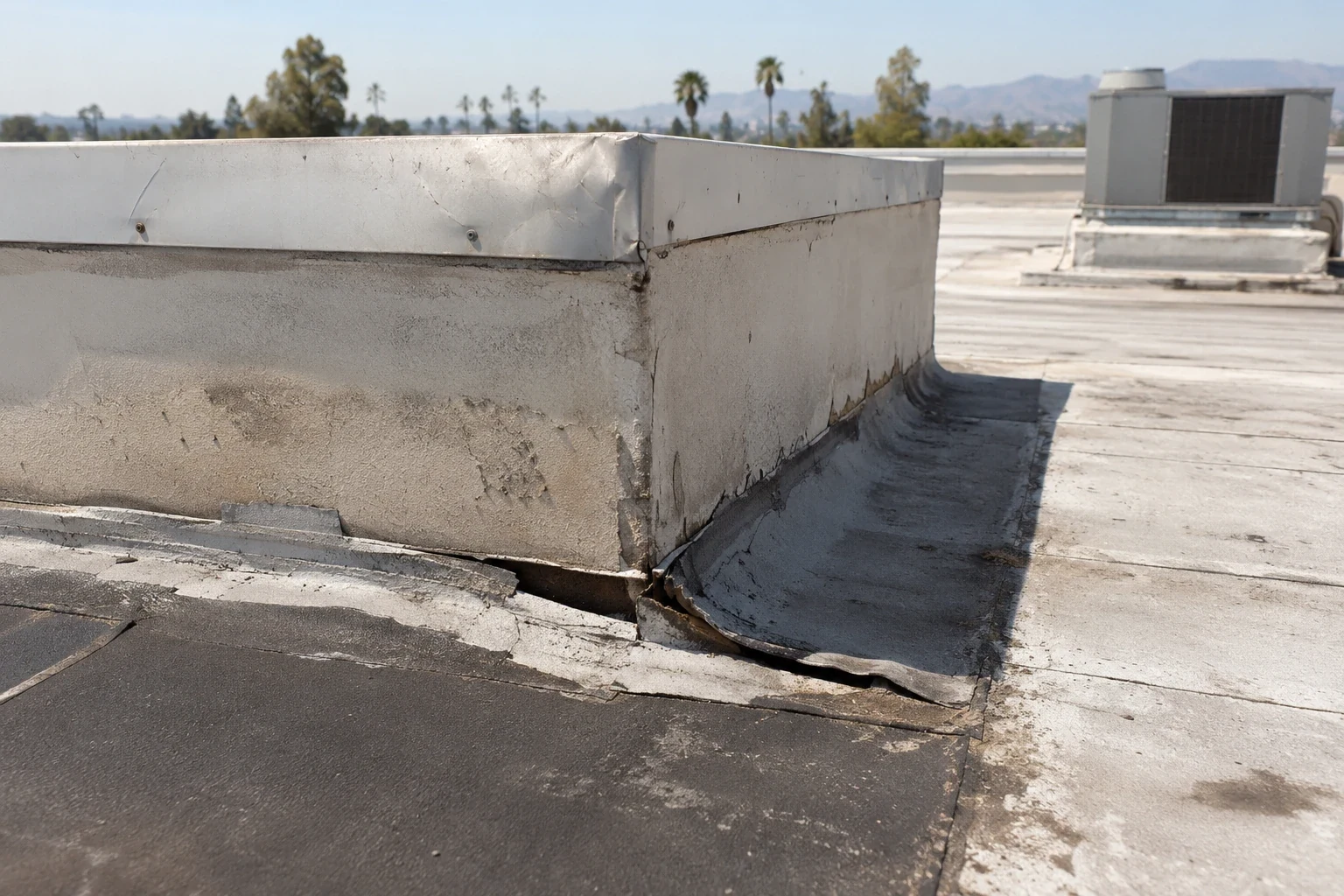
A close-up without context can be difficult to use after the crew leaves the roof. We pair detail images with a wider view or roof-plan mark so the owner can locate the condition. Each image caption identifies the section and the observation, such as a split sealant bead at a curb, a loose termination, or debris restricting a drain. The report can also distinguish an older repair from a new opening when the visible material makes that clear. We date an earlier repair only when a record or visible sequence supports it.
During Hesperia's hot season, exposed seals and metal transitions deserve a close review. We record each crack, separation, or repair mark at the location where it appears. If the owner reports a leak, we map the interior area separately from roof observations until the evidence connects them. That keeps the repair boundary tied to the tested area instead of a ceiling stain alone.
Water Can Travel Beyond the Entry
A report should explain why one observation may matter. A blocked drain can hold water near a low point. A discontinuity at a curb can let water reach insulation or a deck. A seam separation may sit far from the interior mark because water can travel along a layer before it appears below. We describe the plausible path and identify what remains unconfirmed. The owner can then see whether a localized repair is ready to price or whether a test opening would change the scope.
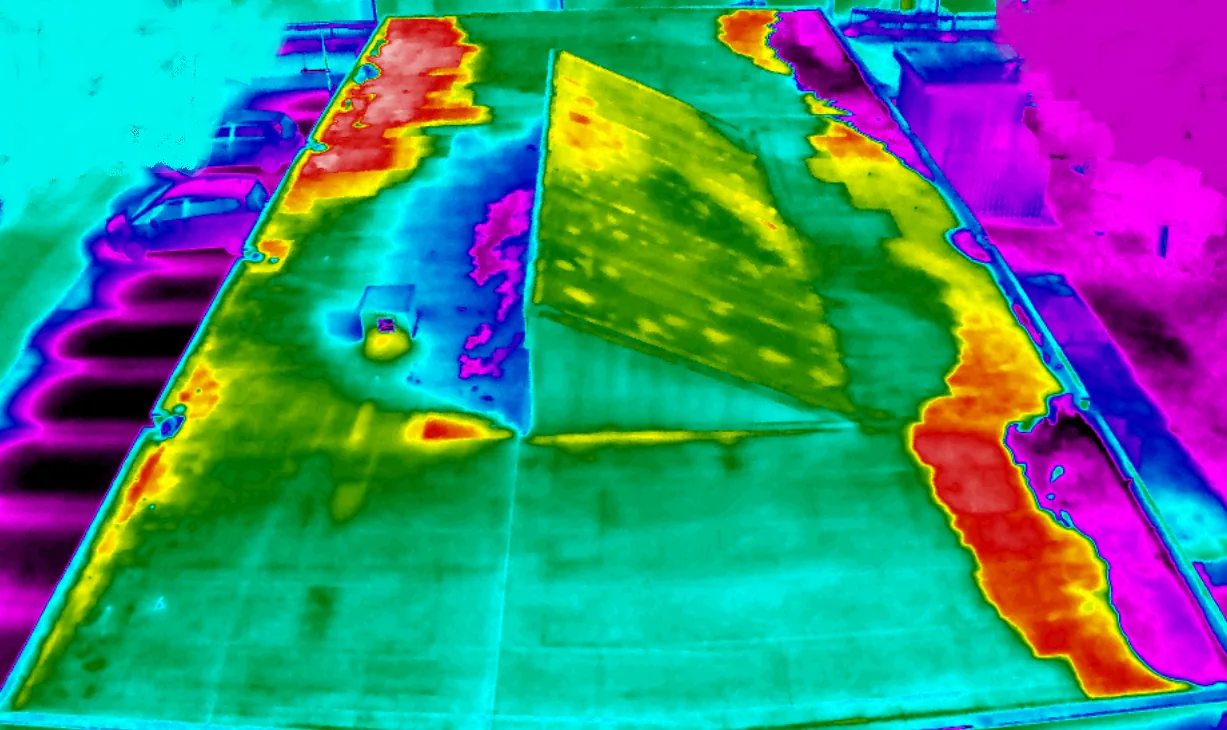
When moisture mapping is appropriate, an infrared moisture survey can help identify areas for follow-up testing under suitable conditions. Use the scan to choose where a test opening can confirm the assembly and define the repair boundary. The report lists the tested area, any limits, and the next step. If a flashing transition is clearly open, a focused flashing repair may be defined without broadening work to unrelated roof sections.
Each Finding Needs a Clear Action
Owners should be able to scan a report and separate immediate action from monitoring. We identify urgent water entry, work that can be scheduled, and conditions that need another measurement. Each recommendation has a reason and a scope boundary. A note such as 'repair this area' is too vague unless the location, affected detail, and tie-in are clear. Likewise, 'replace roof' is not a useful conclusion where only one section has been reviewed. A repair scope should identify the affected detail and its limits.
The report can include repair priorities, photos, access notes, drainage observations, and limits on visibility. The report identifies any locked area, inaccessible equipment platform, or concealed layer the inspection could not reach, along with the access needed for follow-up. A separate due-diligence review serves a transaction question, while a capital plan weighs timing across projects. For continuing history, an asset record can keep the report with the correct roof section.
Access Details Shape the Repair
After the owner selects a scope, use the field map to decide how the crew reaches the roof and which building use must remain active. Mark the actual route, work zone, nearby drains or equipment, and the operation that cannot pause. I-15 and Highway 395 meet near Hesperia's freeway corridor, but the property itself determines the safe entry, loading route, and lift path. Confirm those points before work begins instead of relying on a map assumption. After the repair, compare the completed detail with the marked roof zone. If removal reveals wet insulation or a different assembly, pause for an owner decision before opening a larger area. That keeps the field change attached to the approved scope.
An open report item should not become a field assumption. Identify any missing key, escort, lift reservation, or room protection and the roof zone that depends on it. If the contact cannot clear it by mobilization, shift work to a released area or reschedule the blocked section. Set who can accept the area after close-in. This makes the access recommendation usable in the work plan.
A Report Must Work Without Its Inspector
Different readers use the same report for different decisions. A facilities lead may need a repair boundary and access note; finance may need the cost driver and the date to revisit it. We label each recommendation by roof section and cite the photograph and Diligence Notes that support it. If a test opening is proposed, state the question it answers, its location, who approves it, and how the roof will be closed. The summary separates work due now from conditions carried into maintenance. That lets managers assign follow-up without turning one observation into a building-wide replacement recommendation.
The Property Sets the Repair Sequence
Civic activity, mixed-use buildings, and pedestrian-oriented retail define the Hesperia City Center District. For a roof above a public entry, the access route and operating hours shape the repair sequence. We mark the entrance that must remain available, define where materials can be staged, and set a close-in point before opening the surface. The facilities contact can then coordinate barriers and notices around actual building use. A photo record should show the work zone in relation to the entrance, not only the roof detail.
Commercial Roofing Questions
Can a report identify the exact source of every leak?
Only when the inspection evidence supports that conclusion. We distinguish a reported interior symptom from the roof opening, then note any testing or exposure needed to connect them.
What makes photos useful to a property manager?
Each image needs a location, roof section, and short description of the observed condition. A contextual view helps the manager find the area; a detail view shows the seam, flashing, drain, or repair boundary.
Will a visual report confirm wet insulation?
Not by itself. We can note visible indicators and recommend a test opening or suitable moisture survey when concealed conditions would change the scope.
Can I use one report for repairs and budgeting?
Yes, if the report states its scope and audience. Repair notes can define near-term work, while section condition and limitations can support capital planning. A transaction survey may require different questions.
What should I send before the inspection?
Send the building address, roof plans if available, reported leak areas, prior repair notes, and the contact who can arrange access. Those details help focus the field review on the right roof sections.