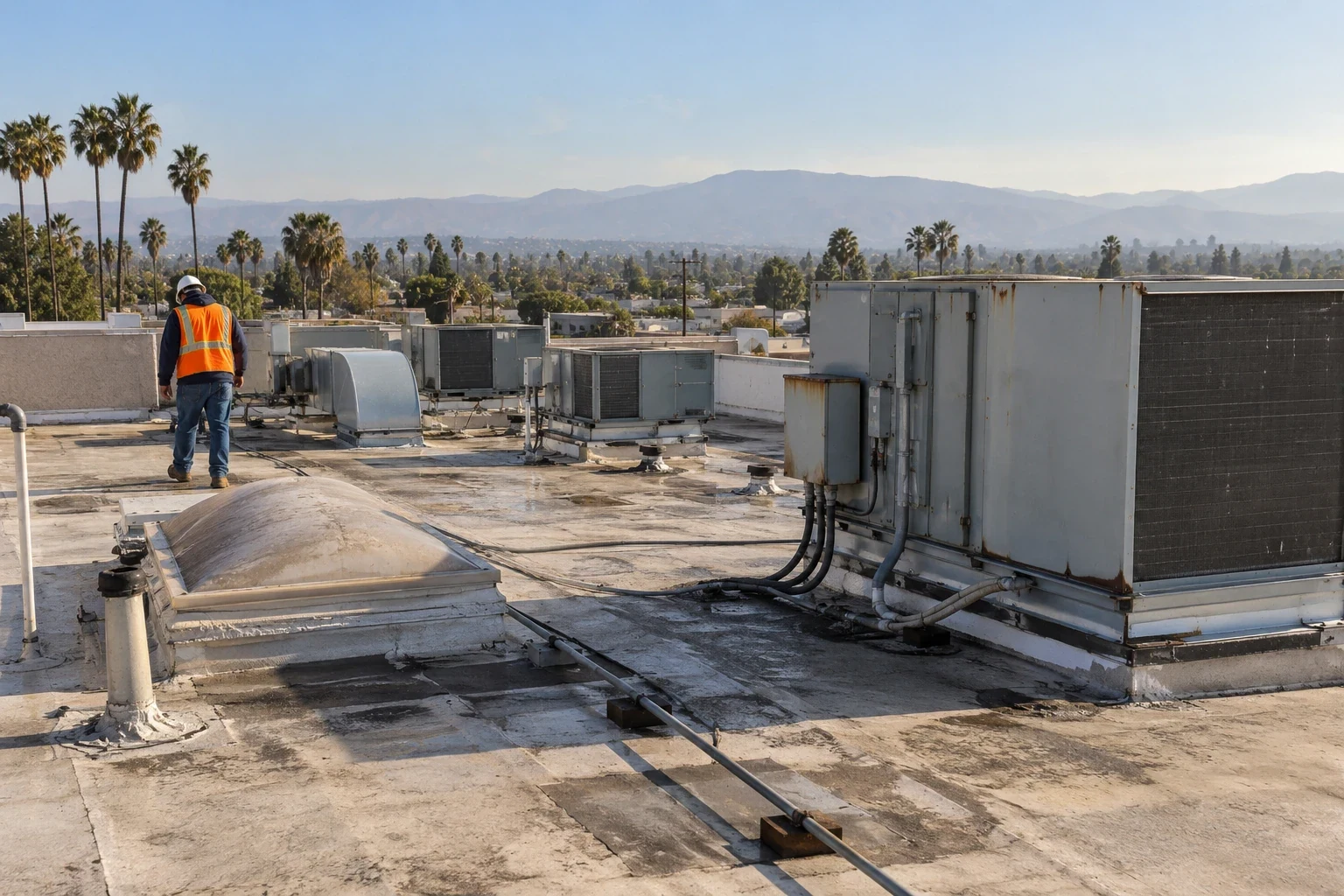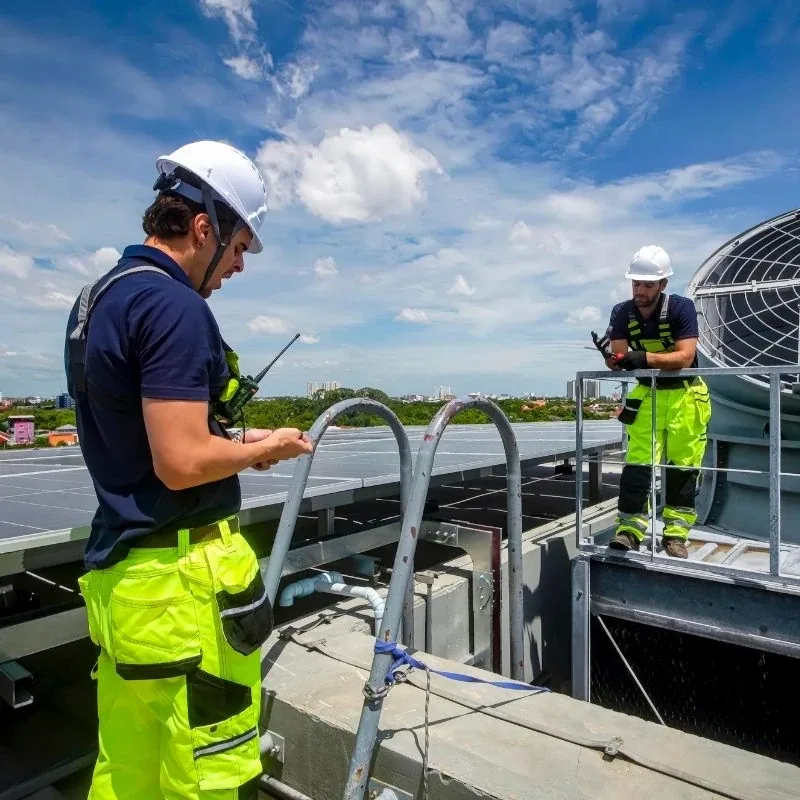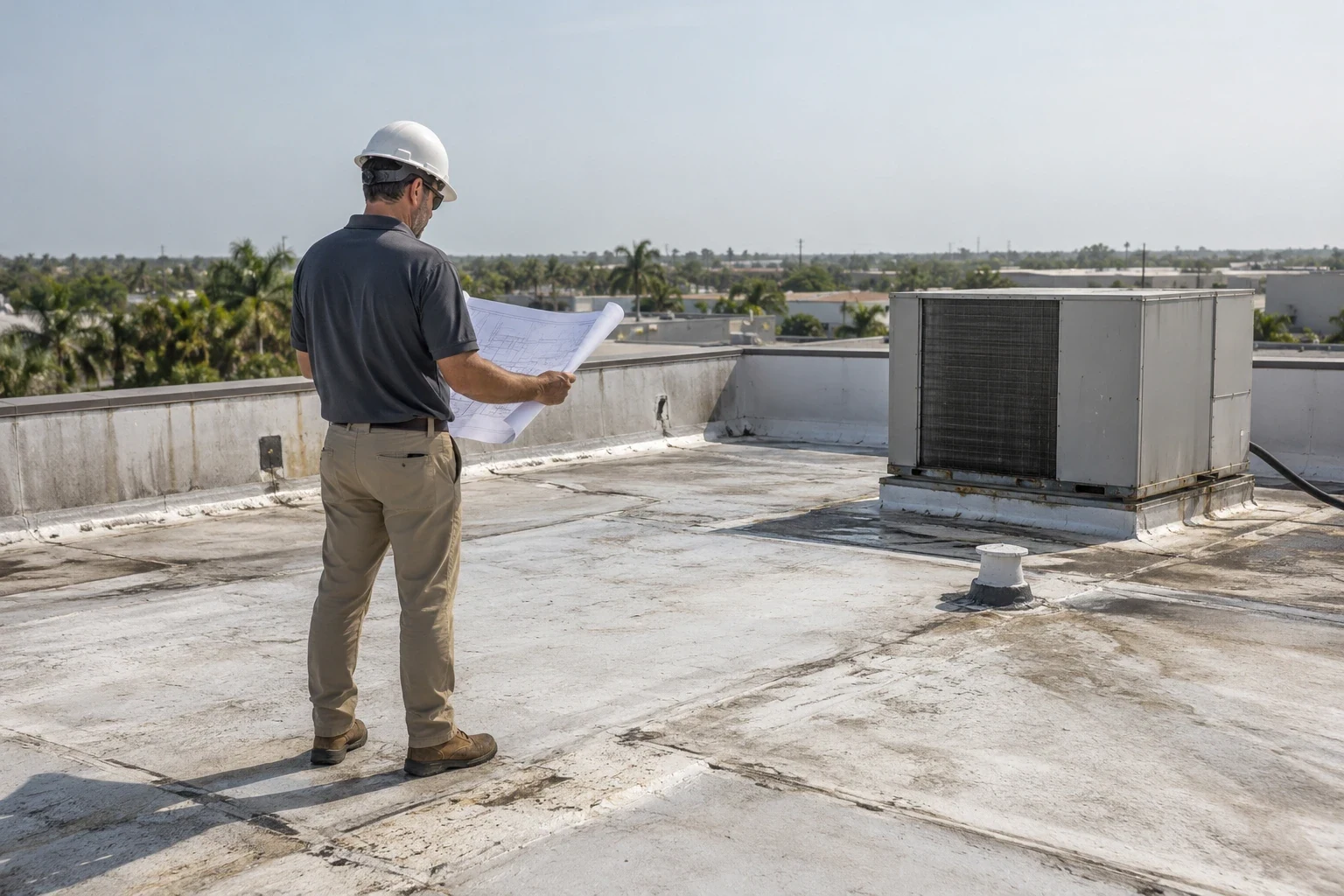
Commercial Roof Asset Management in Hesperia, CA
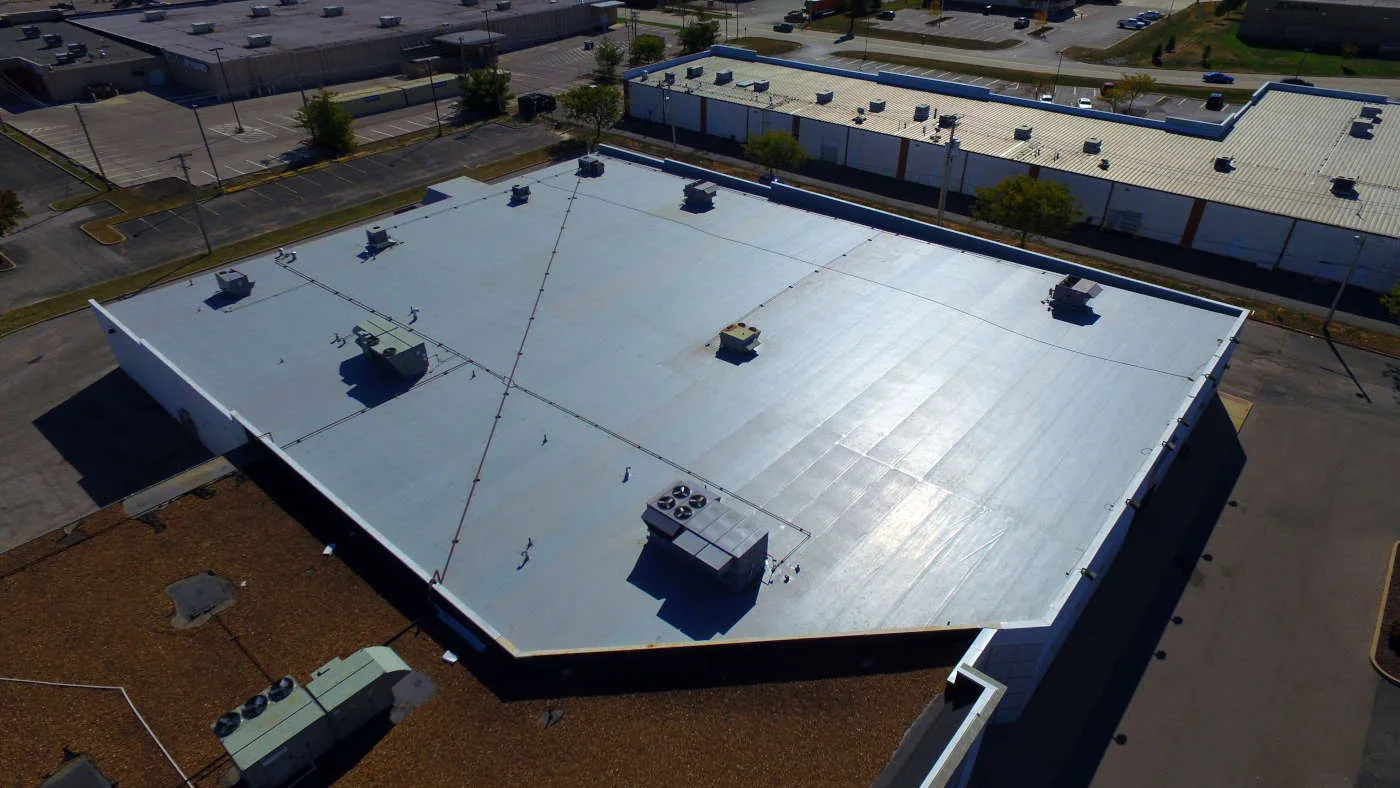
A roof asset register is useful only when it helps choose the next piece of work. In Hesperia, CA, that choice may involve a warehouse roof under repeated summer heat, a smaller office section with a different membrane, or an addition tied into an older assembly. Hesperia's normal August daily high is 97.0 degrees. That heat belongs in the maintenance calendar, but the roof's actual condition still decides the scope. We connect each roof section to its material, drainage, penetrations, known repairs, and current operating constraint. A clear record lets an owner compare today's repair with the next capital decision.
Each roof section needs its own identity
A large building can contain several roof areas with different ages, slopes, materials, and repair histories. Treating the whole surface as one asset hides the boundary where a leak, open seam, or wet insulation actually sits. We divide the record by section and note the visible assembly, access point, drain path, curb details, and any tested area. The starting inventory can come from roof plans, prior reports, and a field review. We mark uncertain details as unconfirmed rather than turn an old invoice into proof of what is installed today.
For a Hesperia warehouse, the difference between the original field and a later addition can affect both repair scope and future replacement sequencing. New warehouse buildings and projects are moving through approval and construction along I-15 and Highway 395. That is useful context for owners managing expanding facilities, but each roof still needs its own record. A section-by-section condition report can tie photographs and observed conditions to the right roof area, so a later discussion begins with a known boundary rather than a vague building-wide label.
Heat and traffic change the maintenance view
High Desert sun adds repeated expansion and contraction at seams, metal edges, pitch pockets, and curb flashings. The August normal high of 97.0 degrees at Hesperia 2 E gives a seasonal reference point, not a reading from any particular roof. We record whether a concern appears at a transition, field seam, drain, or prior patch, then compare it with the roof section's material and repair history. A maintenance interval should follow the observed exposure and condition, not a generic calendar copied across unrelated properties.
The asset record also needs to reflect how people reach the roof and what happens below it. Hesperia's freight corridors connect commercial properties with regional routes, but the asset record needs the site's actual access details. We note the gate or roof entry, delivery periods, rooftop equipment, and staging point that affect a field review. That information belongs beside the roof record because it influences when a section can be surveyed and how temporary protection is arranged.
Separate observation from confirmed condition
A visual review can identify surface wear, open flashing, displaced metal, debris at a drain, or a patch that has begun to release. It cannot establish the full extent of concealed moisture without a suitable test. We label what is visible, what was opened or measured, and what remains unknown. Where the next decision turns on wet insulation or attachment, a focused test opening may be more useful than a broader inspection. A tested area is then linked to the roof section and photographed before it is closed.
The register should make that distinction easy to find months later. A note that says 'repair completed' is not enough if it omits the location, material, tie-in, or condition at close-in. We store the repair boundary and any follow-up observation with the relevant section. For a large portfolio, the inventory can point toward a warranty record or a capital review, while the maintenance team can schedule a specific preventive roof visit. Each reference stays attached to the asset it describes.
Keep the record useful for the next budget
A roof register is not a replacement schedule by itself. Its value is that it lets an owner sort work by condition, consequence, and timing. A recurring seam repair may deserve a closer look than a broad coating allowance. A drain concern above occupied space may need a near-term scope even if the surrounding membrane remains serviceable. We note which condition is urgent, which item can be monitored, and what evidence would change that judgment. The record should distinguish a near-term repair from a future planning item rather than compress both into one severity score.
Budget comparisons improve when each entry names an actual work boundary. We can separate a localized flashing correction from wet insulation removal, then identify whether adjacent membrane or edge metal must be disturbed. Material compatibility, access equipment, protection of inventory, weather windows, and close-in requirements affect timing and cost. A commercial roof inspection can refresh the observed state, while a TPO roof section or another assembly is recorded with its own repair history. The owner can then compare like with like instead of treating different roofs as one line item.
A practical register answers a practical question
A useful asset file lets a property manager answer: which section is affected, what has changed since the last review, and what should happen next? It should show the location on the roof plan, surface and flashing observations, drainage notes, repair dates when known, and any photos or test results. If the available records do not establish an installation date or product, we leave that field open. A blank with a clear next check is safer than a confident guess that can send the next repair in the wrong direction.
Owners with multiple buildings can use the same field names without pretending every roof has the same risk. A warehouse roof with loading activity may need access coordination; an office section may have a different tenant schedule; an addition may have a separate assembly and drain path. We can help build the register from a current warehouse roof review or another building type, then attach planned maintenance to the appropriate sections. The objective is continuity: a new manager should be able to understand the last finding without reconstructing the whole history from disconnected files.
district
The Hesperia Industrial District is planned for general industrial uses. For a portfolio manager, that is useful as a place label, not as a condition rating. We still record each building, section, system, and operating constraint separately. A site with several roof areas can then be sorted by what is confirmed, what needs a new inspection, and which access window will work. Keeping those fields together makes the record usable when the person managing the building changes.
Commercial Roofing Questions
What should the first asset record include?
Start with the building and roof-section name, visible membrane or metal type, approximate area if documented, drain and access locations, known repair history, and current observations. We separate confirmed details from assumptions and attach photos to the specific section.
Can an inventory tell us which roofs need replacement?
It can help compare condition and repair history, but replacement needs a current review of the assembly, moisture, attachment, drainage, and repair options. We identify which sections need more evidence before assigning a capital direction.
How do new warehouse projects affect an existing portfolio?
Hesperia reports warehouse development along I-15 and Highway 395, which may change how local operators plan facility growth. That does not establish roof conditions at any one building. We keep additions and existing sections separate in the register.
How are repairs recorded after work is complete?
We record the repaired boundary, material tie-in, affected drain or penetration, and any follow-up condition that matters. If removal exposed wet insulation or a different assembly, the record shows that change instead of leaving the original estimate as the final description.
What information should I send for a register review?
Send the building list, roof plans or prior reports if available, known leak areas, and the best access contact. We can identify which records are usable, which sections need a fresh look, and what information would support the next decision.