Commercial Roof Warranty Management in Hesperia, CA

A roof warranty matters only when its covered area and conditions can be matched to the building in front of the owner. Start with the signed document, installation record, roof plan, and later work history. Hesperia's August daily-high normal is 97.0°F, a useful climate reference when reviewing records for exposed details, but it does not determine warranty coverage or explain a defect. We help organize the available files, identify missing dates and sections, and separate documented requirements from questions that need the manufacturer or issuing party to answer.
Match each document to its roof section
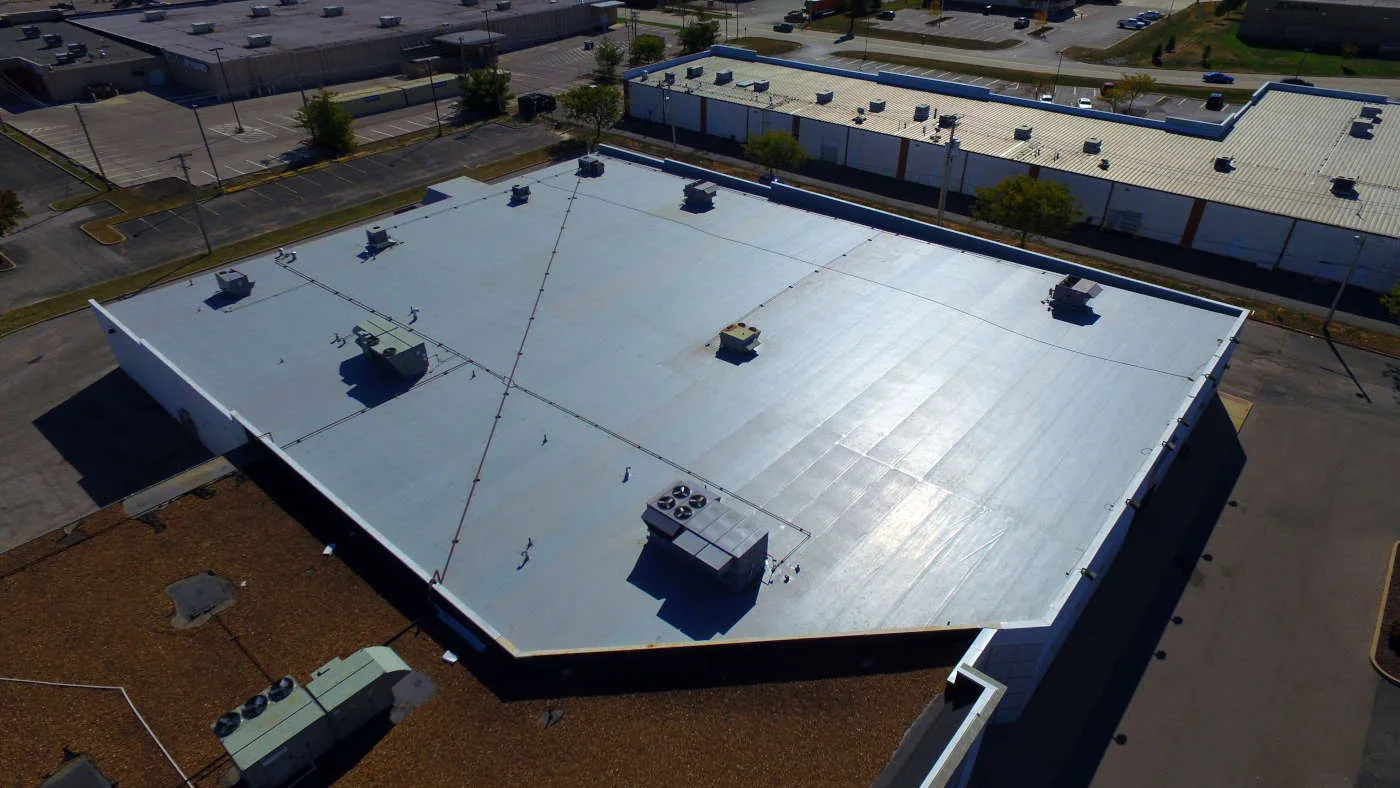
Warranty review begins with document control. Record the building, section or phase named in the paperwork, installation date if shown, system description, exclusions, and steps required to report a concern. Compare those details with current roof plans, photographs, invoices, and any later penetrations or repairs. Hesperia's active industrial corridors make phased additions a practical possibility, but each property needs its own drawing and record set. A roof asset record can map sections to their files, while a warehouse roof review should note whether a reported condition falls within the documented boundary. Do not treat the brand name or a nearby project as proof of coverage.
For properties spanning the Hesperia Industrial District and Main Street-West District, keep warranty documents tied to each address and roof phase.
Keep a separate note for post-installation changes, including new curbs, drains, penetrations, and repair layers.
Read the requirements before the repair
The paperwork may describe inspection intervals, notice steps, approved repair methods, or conditions that affect coverage. We locate the language that applies to the proposed work and summarize it in plain terms. If the document is incomplete or its limits are unclear, we identify the missing record or question before the crew opens the roof. This is especially relevant when an owner is considering a coating, a new curb, or a repair that crosses a seam. The planned scope should fit the assembly and the written requirements.
A field review helps connect a document to a visible condition. We note the roof section, seam or flashing involved, drainage nearby, repair history available, and any test opening needed to confirm concealed layers. For an active leak, temporary protection and permanent work may be different scopes. A commercial roof inspection can establish what is visible, while a focused repair scope defines the work and tie-in. The owner can submit the proposed approach through the procedure stated in the applicable document.
Plan for heat at exposed details
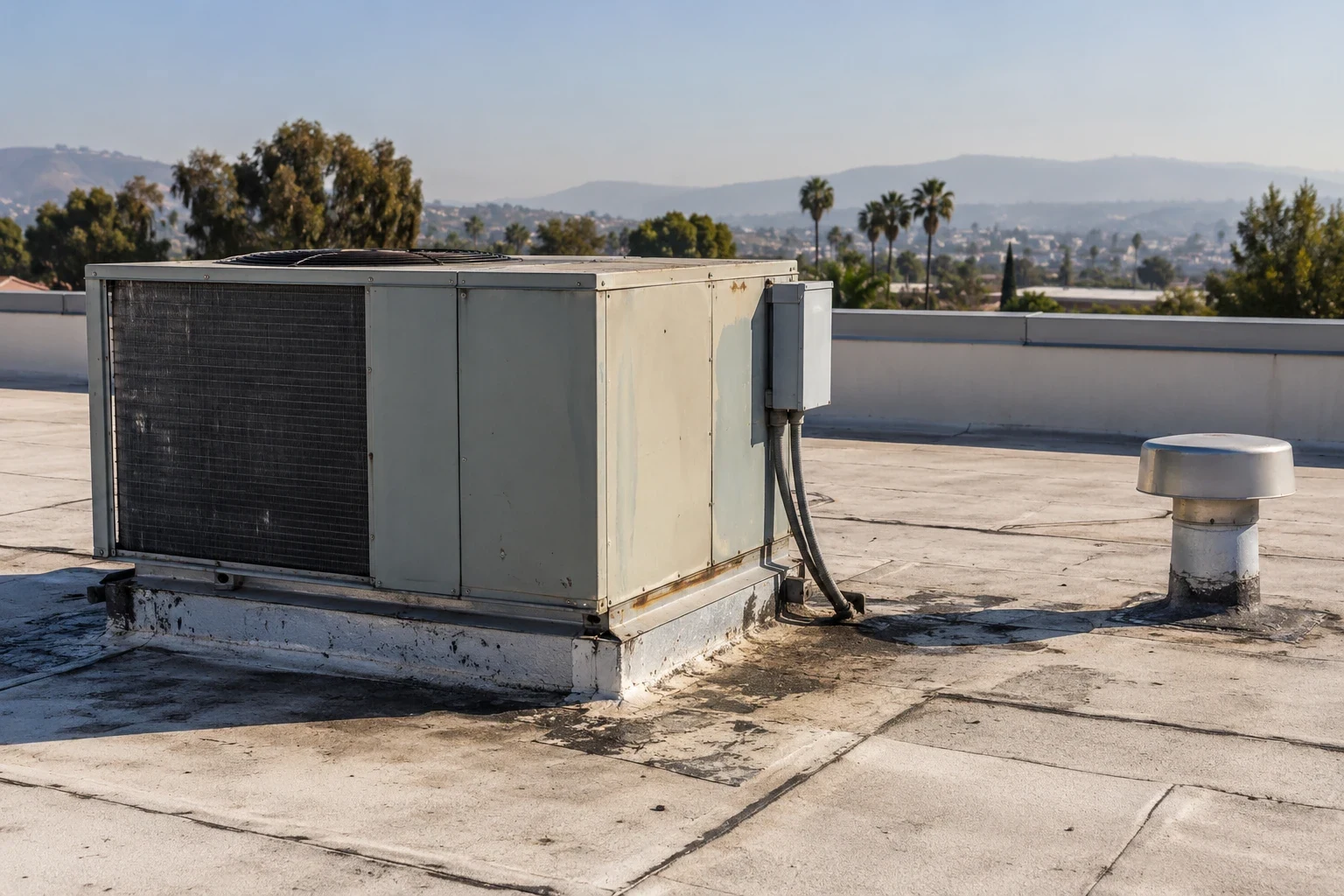
The Hesperia 2 E 1991-2020 normals show a 97.0°F average daily high in August; current weather and surface readings set the work window. That seasonal reference is useful when reviewing exposed seams, sealant joints, and metal transitions that move with temperature. It does not determine whether a specific condition is covered. We photograph and describe the actual detail, compare it with the available system documents, and record whether the concern is new, repaired before, or not yet dated. This gives the owner a factual starting point for a warranty inquiry.Bear Valley Road is one of Hesperia’s designated truck routes. At an operating building, delivery timing can affect when the roof is inspected or opened. We record the practical work window and the contact who can authorize roof access alongside the technical file. Those details do not change a warranty term, but they help the owner coordinate an inspection or repair without losing track of required notice timing.
Keep the file current after each repair
A warranty record loses value when the roof changes but its file does not. After repair, the record should show the area, materials used, repair boundary, photographs before close-in, and any new condition found beneath the surface. If the work involved a different system or an addition, that distinction belongs in the asset file. We keep the contractor's scope and available product documentation with the relevant roof section so a later manager can see what was done without treating a repair ticket as a complete system specification.
The schedule should track more than a calendar date. It can show inspection due dates stated in the document, notice contacts, repair follow-up, and any unresolved question. A condition report provides the current observation, and preventive maintenance can record routine roof work. If the system needs a manufacturer-specific review, the owner can use the identified contacts in the paperwork. We compare the product name with the written documents, installed assembly, and current roof condition before evaluating a coverage question.
Know what the record can support
A well-kept file supports three practical questions: which roof section is involved, what the written requirements say, and what evidence should accompany the next repair or inquiry? The issuer decides whether a future claim fits the written terms and the facts presented. Our work is to make the roof condition and repair history easier to evaluate, not to replace the document's terms with a verbal assurance.
Owners can keep one file for the roof plan, installation or repair documents, inspection notes, photographs, notice correspondence, and upcoming tasks. A current condition report can be compared with prior findings, while a capital plan can identify work that sits outside the repair question. For businesses in Hesperia's Industrial District, access coordination may be part of scheduling; the actual roof section and its documents still set the technical scope.
Keep the file ready to hand off
The handoff record should show who supplied the document, which pages or attachments were reviewed, and what could not be located. If a roof has several phases, a simple map can mark the documented section and any later work beside it. We also keep dated inspection photographs and repair invoices in chronological order. That lets a property manager answer a specific question without confusing a past condition with the current one. When a repair changes the assembly, the file should capture the material tie-in and close-in point so future work starts with an accurate description.
Track notice timing
Some documents call for notice before repair or a specific form of supporting record. We identify those steps from the paperwork supplied and record the contact method and date when the owner sends notice. If emergency protection is needed, the work record can show what was done to limit water entry and what permanent repair remains. Keeping those events in order helps the property manager explain the sequence without overstating what the document covers.
Commercial Roofing Questions
Does a roof warranty cover every part of a building?
Coverage follows the document. We match its covered area and system description to the roof plan, then flag later additions or unclear boundaries before treating them as included.
Should a repair wait while coverage is reviewed?
Active water entry may require protection or prompt repair. We document the condition, identify any notice procedure in the file, and help the owner coordinate the next step without leaving an open roof exposed.
What records help with a warranty inquiry?
Provide the applicable document, roof plan, prior repair tickets, inspection notes, and dated photos if available. A clear description of the affected section makes it easier to compare the issue with the written requirements.
Can routine maintenance change the warranty status?
A document may state maintenance or inspection requirements. We review the language provided, record maintenance performed, and identify missing records. Only the issuer can determine how those terms apply to a particular inquiry.
How should work on an addition be documented?
Keep the new roof area and tie-in separate from the original section, with its system details, close-in photos, and applicable paperwork. That prevents a later manager from assuming the original document automatically covers the addition.