Commercial Skylight and Penetration Flashing in Hesperia, CA
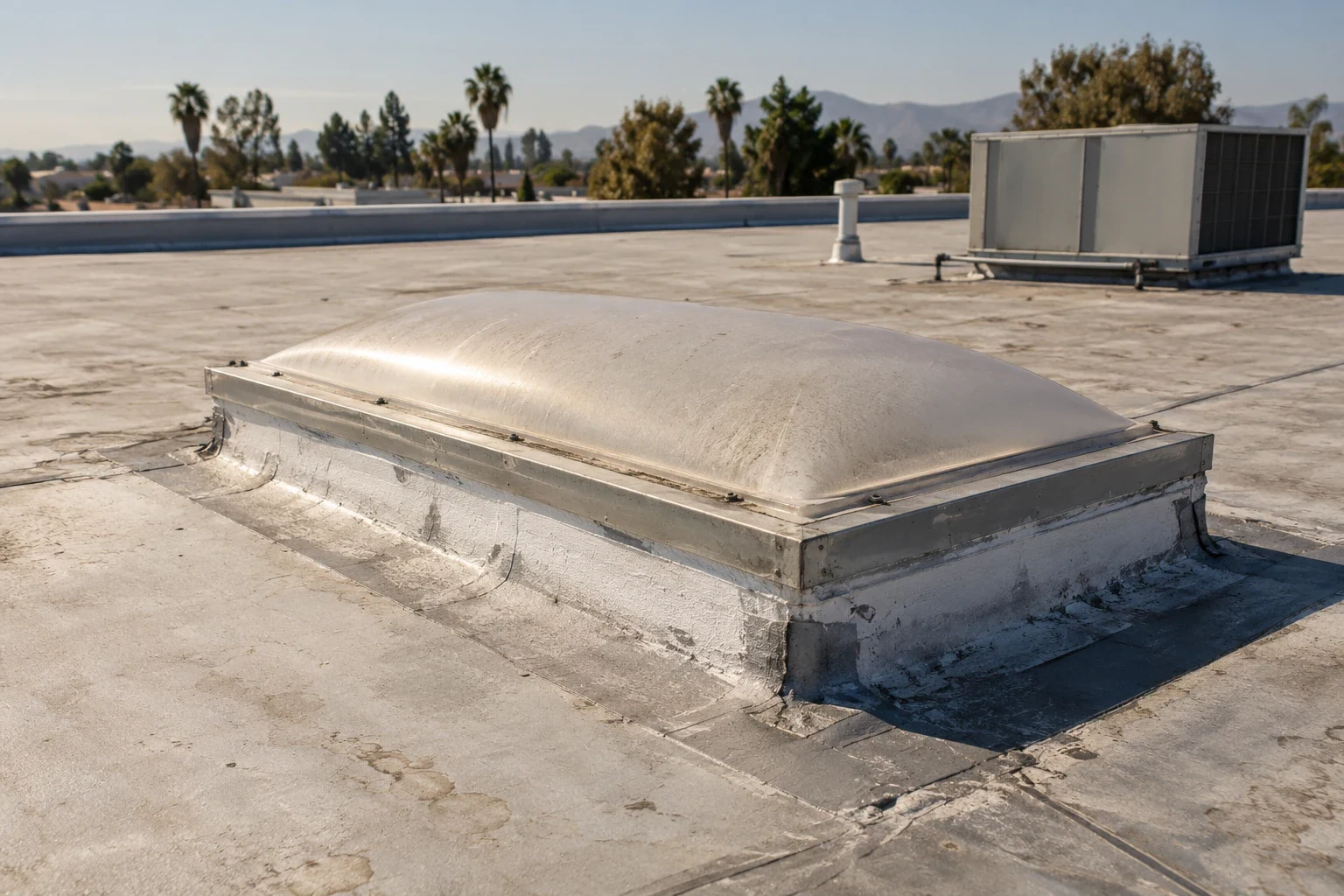
A stain near a skylight does not prove the glazing is the entry point. Water may cross the roof before it reaches the opening, or the failure may sit at a curb corner, seal, counterflashing, or adjacent seam. Start by locating the interior report and matching it to the roof plan. Then inspect the skylight frame, curb height, flashing laps, fasteners, sealant, and nearby membrane. Hesperia 2 E has a 97.0°F August daily-maximum normal for 1991-2020; the roof's own conditions remain decisive. We check the actual membrane and flashing surface before selecting a repair detail. We map the suspected entry, identify what can be tested, and separate roofing work from glazing or interior repairs. If water has appeared inside, a leak-path inspection can connect the report to the roof detail.
Identify the Opening and Its Components
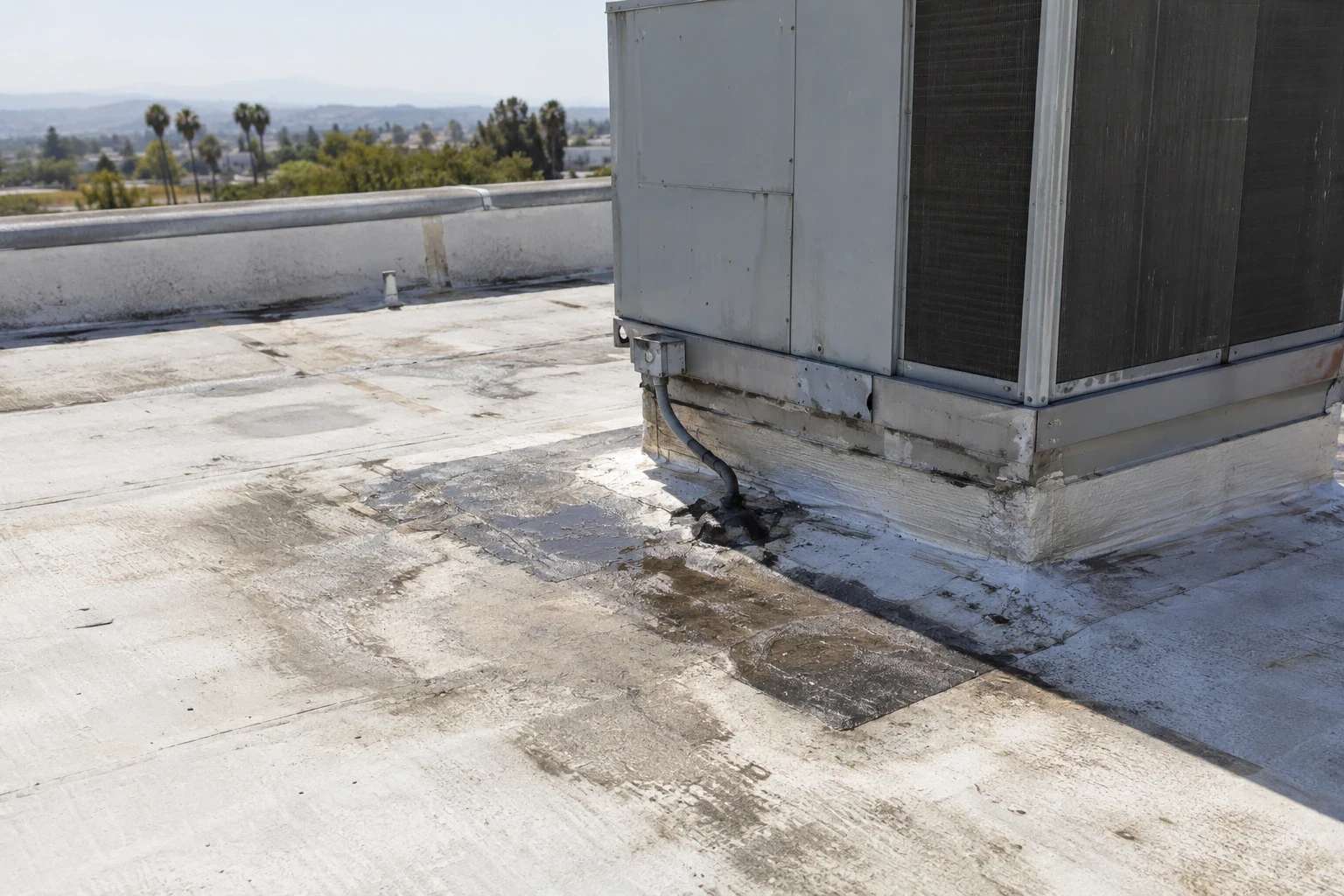
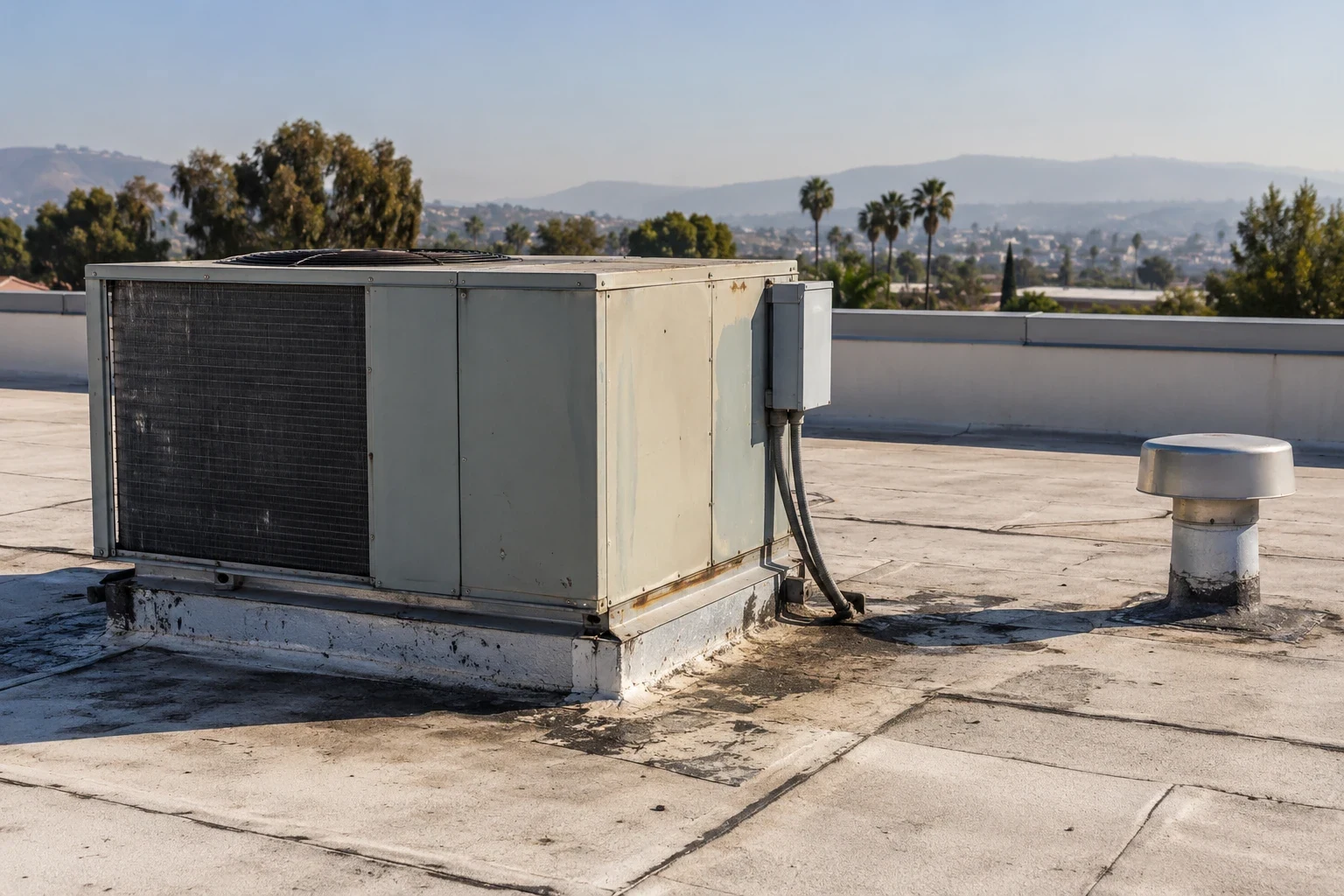
Record whether the opening is a skylight, smoke vent, pipe, curb-mounted unit, or another penetration. Note its dimensions, curb material, roof system, and any earlier patch. Look for a frame that has shifted, cracked glazing, loose hardware, or water inside the unit. Those conditions may require a glazing or equipment specialist in addition to roofing work. Around the curb, check membrane height, inside and outside corners, termination bars, fasteners, counterflashing, and transitions to the field. Do not apply a bead of sealant before locating the actual separation; sealant can conceal a lap or leave water trapped. Hesperia's City Center District includes civic and mixed-use properties with pedestrian-oriented retail. On a site with active entrances, identify who controls access below the skylight and protect the interior before test work begins. A roof inspection records the nearby seams and penetrations in one marked zone.
Trace the Water Beyond the Curb
Use interior timing, roof slope, seam direction, and earlier repairs to select the first area to test. Check uphill transitions before assuming that the nearest corner is the entry. Water can follow a deck joint, travel beneath a membrane, or pass from a curb into a ceiling cavity. If multiple openings show interior marks, map them separately and look for one shared roof feature only after the field walk supports it. A skylight near the Highway 395 and I-15 District still needs a water-path check that follows its roof slopes, seams, and curb. Keep the test area narrow enough to interpret. If the roof system permits a controlled water test, isolate one side of the detail at a time and watch the interior report. If conditions do not support a test, explain the limit and consider a selective opening with owner approval. The result should identify what was tested and what remains unknown.
Repair the Flashing Assembly
Flashing must bridge the curb or penetration to the roof membrane while allowing the movement the assembly is designed to handle. Preparation depends on membrane type and surface condition. A thermoplastic weld, coated fabric, metal counterflashing, or compatible liquid detail may be appropriate in different assemblies. We remove loose material, inspect the substrate, and rebuild the flashing where its bond or attachment has failed. A patch should extend to sound material and leave a deliberate termination. Do not trap water beneath a new layer or cover deteriorated curb material without resolving it. For membrane-specific work, compare the curb detail with the TPO roof assembly or the relevant installed system. If the curb is loose, corroded, or too low, the scope may require carpentry, sheet metal, or equipment coordination before the membrane closes.
Coordinate Work in Hesperia
Hesperia’s Main Street-West District pairs multifamily residential areas with neighborhood commercial uses, while the Industrial District provides a separate business setting. Keep building and roof records distinct when equipment is added. Confirm the actual use, curb access, equipment clearances, and safety rules with the site contact. Confirm the approved gate, staging area, and equipment clearances with the property contact before opening the roof. For a broad industrial-area reference, the Hesperia Industrial District page is geographic context only. The work order needs the property's street address, roof zone, and a person who can release access. When a skylight sits above an occupied room, agree on a safe boundary below and confirm whether contents or operations need to move before the roof is opened.
Separate Roofing From Glazing
A roofing scope should identify flashing, curb, membrane, fasteners, and transition work. It should not include glazing replacement or smoke-vent adjustment unless that trade is expressly part of the agreed work. If the frame or lens is damaged, note it for the owner and identify the trade that needs to evaluate it. If roofing access requires equipment lockout, escort, or a restricted work period, capture that before pricing. For a curb that must be rebuilt, show the roofing closure point and who confirms the replacement curb dimensions. A building access plan helps coordinate work below without treating the tenant space as a roof diagnosis. Separate any hidden substrate allowance from the known flashing repair and obtain approval before increasing the area. The owner should be able to compare a repair with a larger roof repair scope using the same mapped opening and test results.
Record the Detail After Repair
Photograph each side of the curb, the finished flashing, the field transition, and any component left outside the work. Label the images by roof zone and note whether the test produced an interior response. Record the membrane type, repair materials, date, and any access limitation. If a glazing specialist adjusted or replaced a component, keep that work record separate but attach it to the same property file. Recheck the area after a later rain or during a scheduled preventive maintenance visit. If the leak returns, map its location and timing before applying another patch. Send the Hesperia address, interior report, roof plan if available, prior work, and access contact. We will identify the opening, the roofing detail to test, and any scope that needs another trade.
Set a Return Check
If a repair cannot be tested during the visit, state what weather or site condition would make the next check useful. Identify the person who will report interior water and the roof section to recheck. Keep the original stain location separate from any new mark. If the opening has moving parts, ask the owner to confirm their normal operating position before future testing. A dated record lets the facility team compare the same curb corner and flashing lap after work rather than relying on a general note that the skylight was repaired.
Give the facility contact a closeout note identifying the repaired perimeter, any glazing work left to another trade, and the conditions that should prompt another call. That handoff keeps the roof record useful when the person who first noticed moisture is not managing the next visit.
Commercial Roofing Questions
Is the skylight itself always the cause of a leak?
No. Water can travel from a seam, curb corner, or roof transition before it appears near a skylight. Inspect the opening and trace the likely path before selecting a repair.
Can you repair the skylight glass?
Roofing work addresses the curb and membrane flashing. Glazing or operating hardware may require a separate qualified trade. The inspection should identify which component failed and keep the scopes distinct.
Can sealant fix a leaking curb?
Only when the defect is a compatible, localized joint and the surrounding flashing is sound. If the substrate, membrane bond, curb, or termination has failed, surface sealant can hide the condition without repairing the assembly.
What should a Hesperia owner send before inspection?
Provide the property address, interior leak location and timing, roof plan if available, opening type, earlier repair notes, and access contact. Photos should be taken only from a safe area.