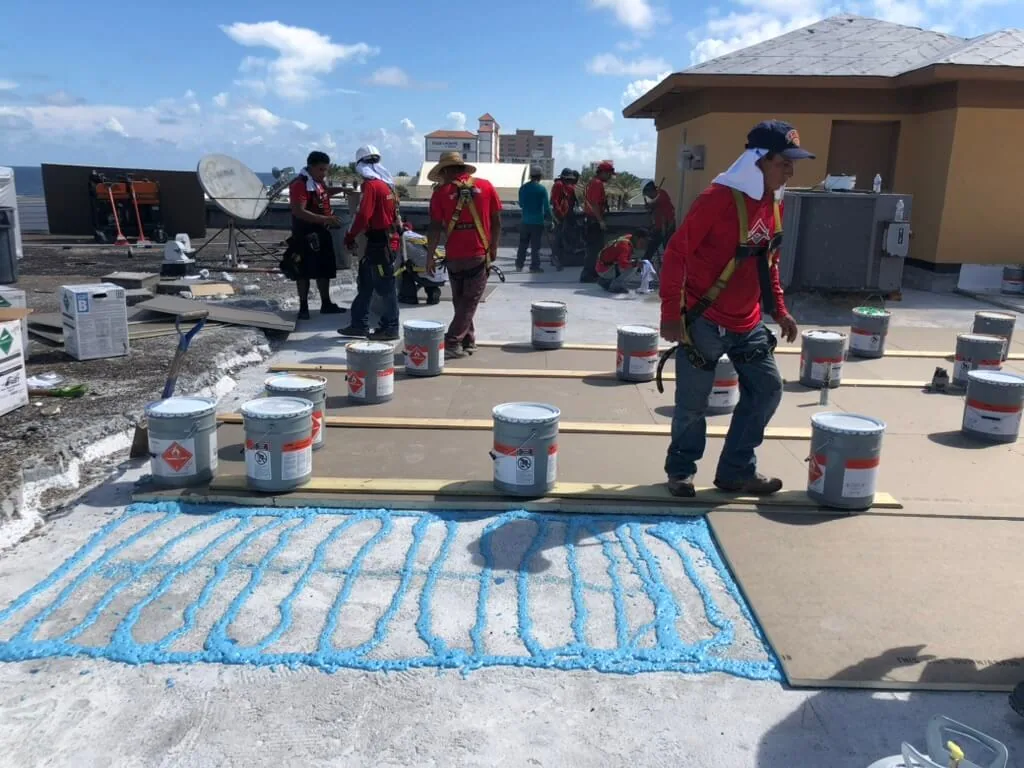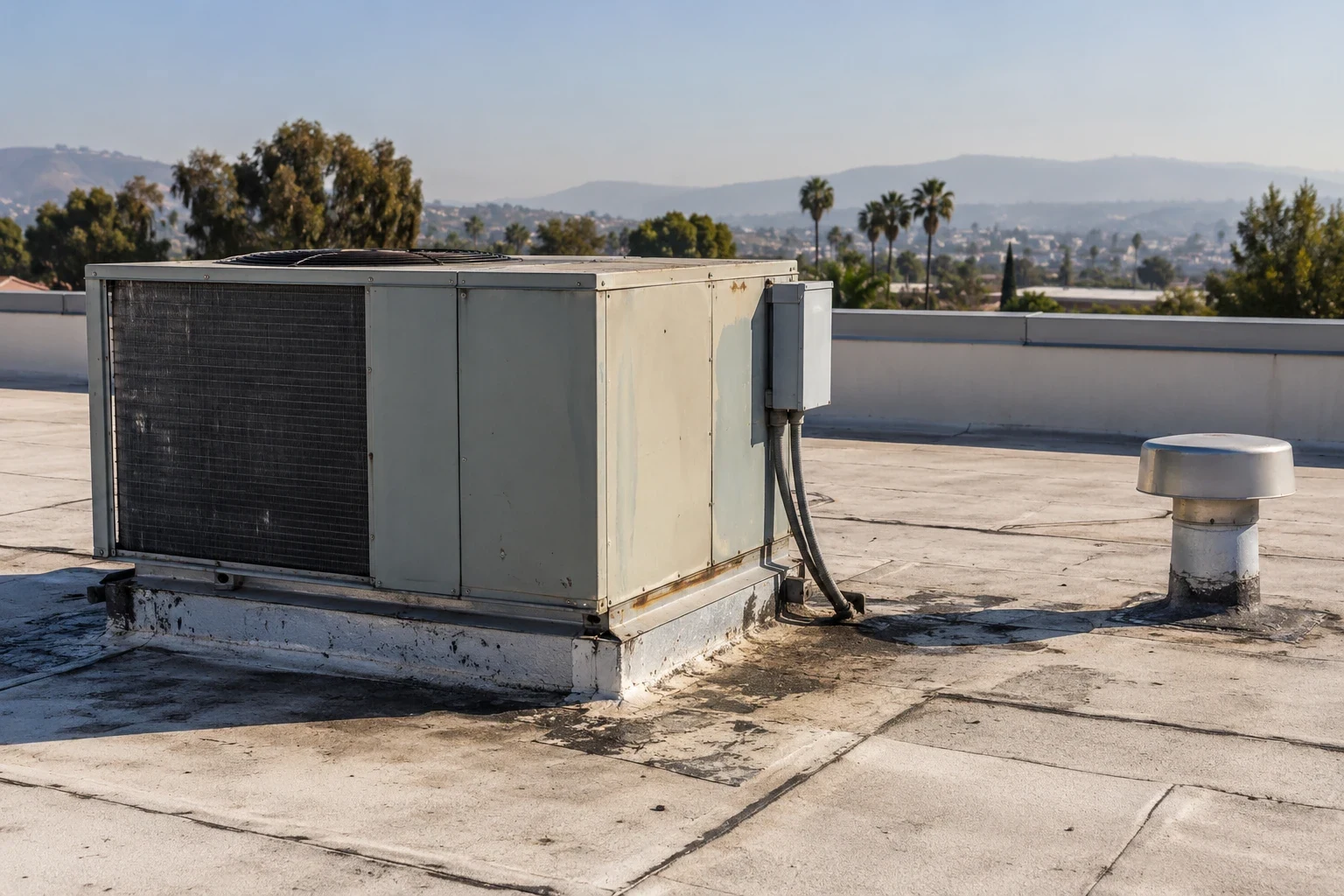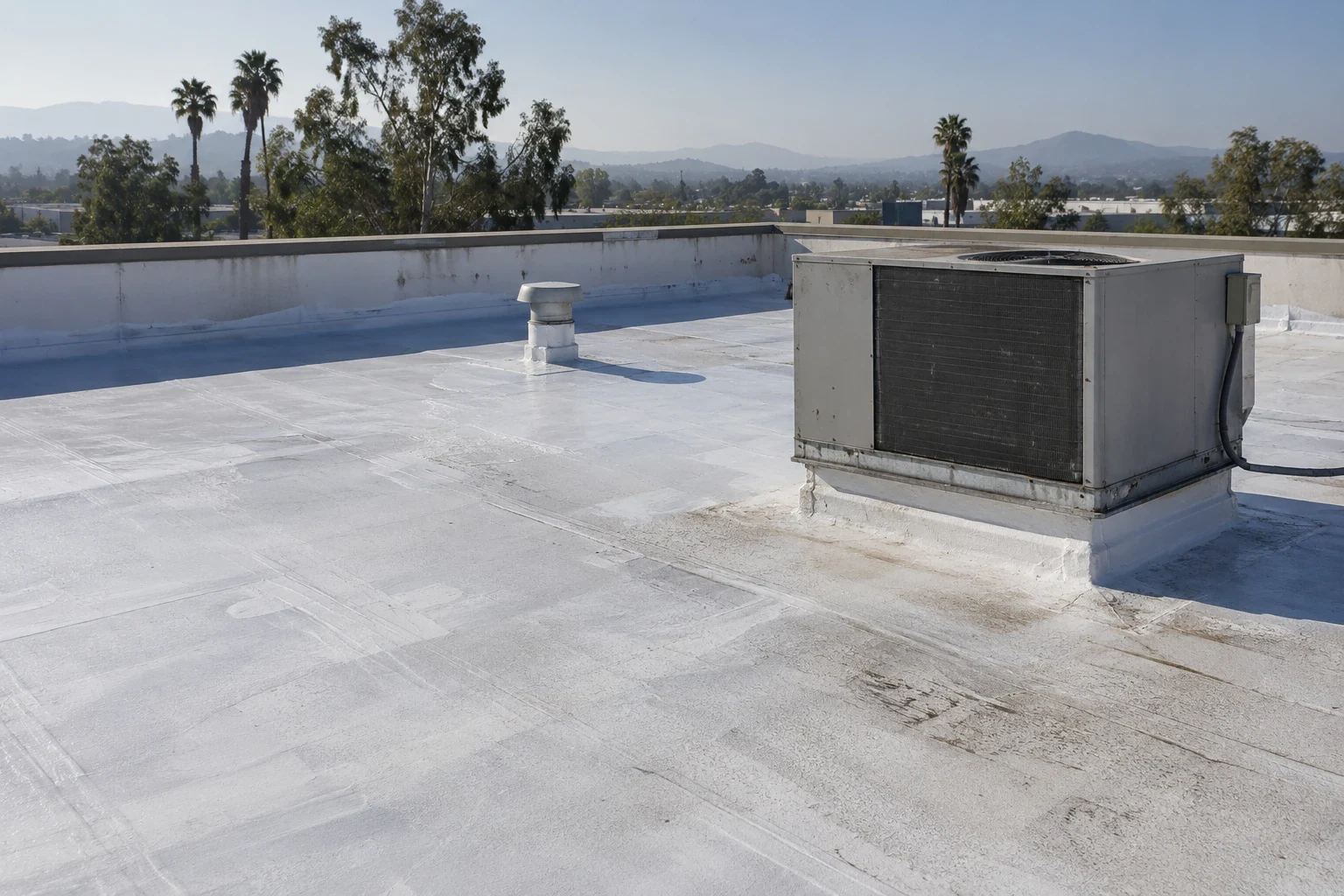
Wind Damage Roof Repair in Hesperia, CA
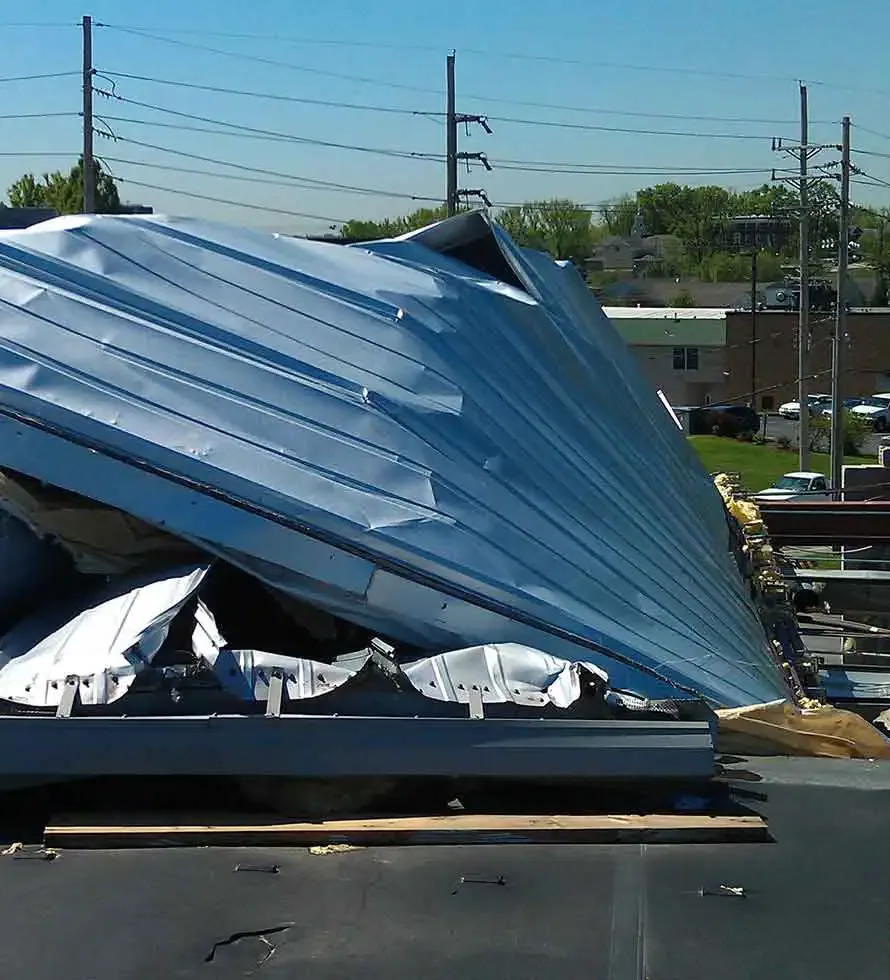
A loose edge metal section can turn a small wind event into a roof opening once the sheet starts moving. In Hesperia, repeated heat cycles add another variable: The Hesperia 2 E station’s 1991-2020 climate record gives an August mean high of 97.0°F. Metal, membrane, fasteners, and sealants respond differently as the assembly warms and cools. Our first pass separates lifted components from surface wear, then traces the condition toward the nearest seam, curb, drain, and prior patch. That boundary matters before anyone removes material. For a commercial building in Hesperia, CA, we record what is visible, identify what needs a closer test, and give the owner a defined next decision.
Start at the edge
Wind-related roof damage often begins where one assembly meets another. We check perimeter metal, corners, parapet caps, termination bars, exposed fasteners, and membrane transitions. A loose metal piece can flex repeatedly; a lifted membrane edge may reveal a weak bond or a failed termination. We photograph each affected location from a consistent reference point so a later repair review can distinguish movement from old staining, coating wear, or a previous patch. The visible opening is only one part of the record. The repair boundary should follow the actual failure, not an assumed circle around the first mark.
We also inspect perimeter corners, where a cap, cleat, and membrane termination share a short run. A corner that lifts can expose the next seam to suction and rain, so the repair note identifies each connected detail instead of treating the edge as one part. We compare the adjacent parapet and roof surface, record fastener movement, and check whether old sealant is hiding a gap. If the adjoining material is stable, the repair can stay local; if it moves, the scope should include the connection.
Access follows the roof section
City development reporting follows industrial proposals through review and construction while relating their access to mapped freight streets. Those corridors bring loading, deliveries, and roof access into the repair plan. Before mobilization, we identify where a lift, material staging, and debris handling can fit without crossing an active loading path. Bear Valley Road, Santa Fe Avenue, and Lemon Street appear on Hesperia’s designated truck-road map, which helps us discuss delivery access with the property contact. On an operating property, access and the close-in point can decide whether the work is one contained visit or several controlled phases.
For buildings with multiple roof sections, we label each section and note the access route used to reach it. That matters when a symptom returns after a repair: the owner can compare the same edge, seam, and drain instead of relying on a general note such as north roof. We include photos with a fixed reference and mark the repair boundary on the roof plan when one is available. This gives facility staff a useful record for the next inspection and helps coordinate a safe work window.
Trace the path, not just the mark
A wind-driven opening can admit water at a seam, edge, curb, or wall transition, then move laterally under the membrane before it appears inside. We compare the reported leak location with roof slope, drain paths, insulation joints, and the direction of membrane laps. That review helps distinguish a direct opening from moisture traveling from another detail. Hesperia’s August heat can cycle exposed surfaces through substantial daily temperatures, so we also look for brittle sealant, stretched patches, and movement at dissimilar materials. The repair scope should name each verified defect and leave unrelated aging in its own category.
A probe or hand check is limited to the material and location tested. We record where it was performed and whether the membrane remained bonded beyond the opening. If the sheet releases farther than expected, the boundary changes and we show that before removal continues. Dry, stable substrate is also part of the decision. A patch can close a visible split and still leave a weak tie-in if the surrounding surface is dusty, brittle, wet, or covered by an incompatible repair material.
Choose a repair boundary
A surface patch is appropriate only when the surrounding membrane can accept a compatible bond and the substrate is sound. We clean and prepare the area, check the membrane type, and confirm that a patch can extend onto stable material with the required overlap. If the edge lifts again or the substrate feels soft, a test opening may be needed to see whether insulation or cover board is wet. Our commercial roof repair service can include that inspection and repair sequence; a written condition report records photographs, limits, and the next step.
Owners may need temporary control while access or material is arranged. We distinguish that step from the permanent repair in writing, identify who will monitor the protected area, and set a follow-up inspection point. For an operating warehouse, the roof access contact and ground contact should know which zone is closed and when it can be reopened. Regional suppliers can reach the High Desert over its principal highways; loading windows and lift placement remain specific to the building.
Separate urgent control from full repair
Timing depends on whether the roof is open, whether water is entering, the roof system, safe access, and whether wet insulation must be removed. A temporary control can limit exposure while a compatible permanent repair is planned, but it should be labeled and tracked rather than mistaken for completed restoration. I-15 and U.S. 395 provide the principal regional road connection by Hesperia’s freeway area; site access and loading needs still determine the repair schedule. We coordinate the work window around actual loading and tenant needs. The owner receives a scope that identifies the tested area, repair limits, exclusions, and what evidence would change the scope. We also check whether a roof coating restoration belongs in the longer-term plan after the open detail is repaired. Wind uplift can loosen an edge while leaving a nearby joint intact, so we photograph each boundary before deciding how far the repair extends. If the inspection shows a separate flashing repair or a distinct seam separation, we document that condition under its own scope and identify the evidence behind it. We plan wind-repair staging in the Highway 395 and I-15 district around the building’s own access conditions.
At closeout, the record names the roof section, repair materials, preparation, test result, and remaining observations. It also identifies conditions that were outside the repair boundary, such as unrelated coating wear or a separate drain issue. If the roof plan is incomplete, we can mark the observed section on a sketch for the owner to retain. That creates a starting point for maintenance rather than implying that a localized wind repair resolves every roof concern.
Commercial Roofing Questions
What should the first roof review include after a wind report?
We compare the reported area with perimeter details, seams, penetrations, drains, and earlier repairs. Photographs show what was accessible and what could not be confirmed without opening the assembly. If the roof has several transitions, we map them separately so a small repair does not conceal a second loose termination.
Can a lifted metal edge be fastened back in place?
The attachment pattern and condition of the substrate decide that. We inspect the metal, cleat or fastener connection, and adjacent membrane before choosing reattachment or replacement. Simply adding fasteners through a damaged flange can leave the edge moving and may puncture the waterproofing.
How do you tell whether wind damage caused an interior leak?
We trace the roof opening and water path against the interior report, then note other plausible entry points. Water can travel under a membrane before appearing below. A documented match between an opening, wet insulation, and the reported area supports a repair scope; a stain alone does not establish the exact entry point.
What details should I send for a repair scope?
Send the property address, a roof plan if available, the reported condition, and an access contact. Include the date noticed, affected rooms or equipment, and any prior repair record. We can use those details to prepare the first review and identify whether a roof visit, test opening, or immediate temporary control is the next step.