Rooftop Equipment Curbs and Supports in Hesperia, CA
An HVAC curb can look sound from the roof while its flashing has started to separate at the corners. Hesperia's August normal daily maximum is 97 degrees Fahrenheit, so the membrane, curb metal, fasteners, and sealant move through recurring heat cycles. We inspect the curb as a roof transition, not as a piece of equipment trim. That means tracing the membrane tie-in, checking the uphill edge, and following water toward the drain path. A commercial roof inspection can establish whether the issue is isolated to one curb or part of a wider pattern. Before work begins, we identify the unit, access route, operating contact, and shutdown limits.
The Curb Is Part of the Roof
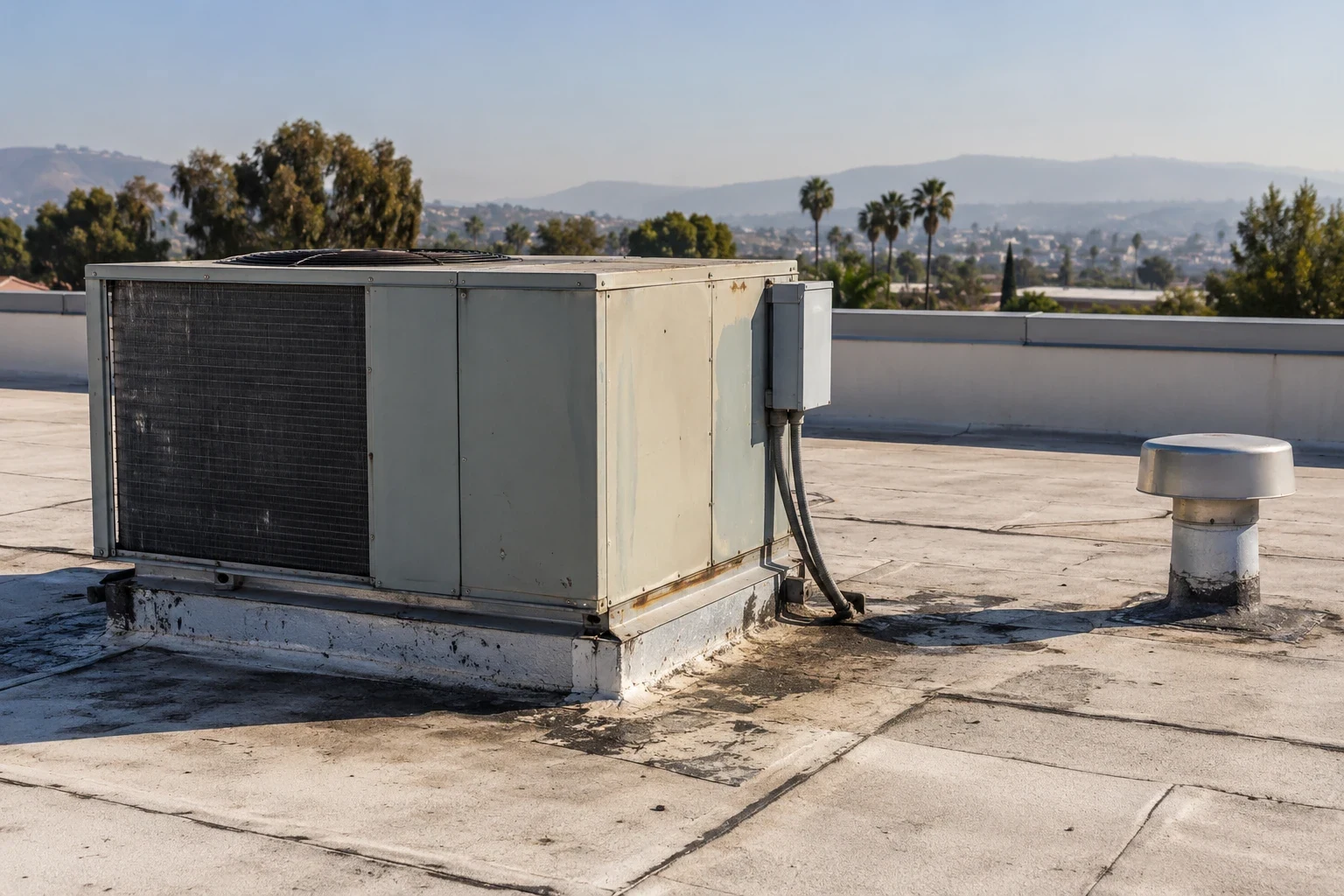
Movement at the equipment can work on the flashing even when the membrane field still looks stable. We check whether the curb is square, whether its base is secure, whether the membrane turns up without a fishmouth, and whether corner patches remain bonded. A split at one corner may point to a localized detail. Loose metal, repeated patch layers, or a gap that follows the curb perimeter calls for a closer look at the attachment and the condition beneath it. We photograph each side and note what remains concealed.
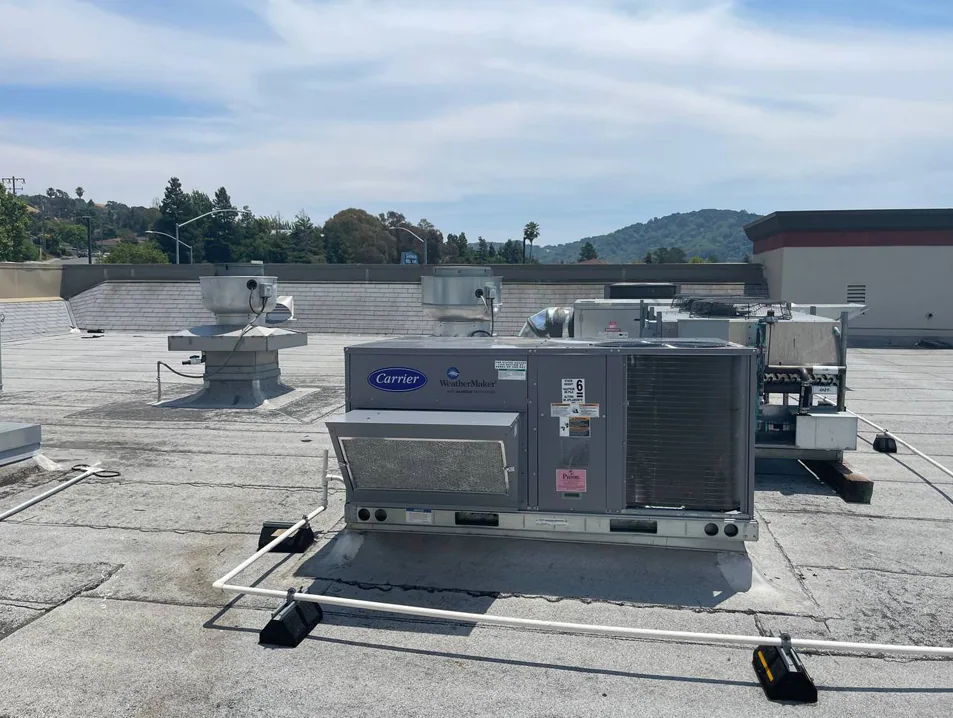
Support rails and pipe stands create their own contact points. A foot that bears directly on the membrane can scuff or compress the surface as equipment vibrates. A support that blocks water flow can leave debris against the base. We record foot spacing, pad condition, visible movement, and any conflict with seams or drains. If the assembly obscures the repair boundary, the scope identifies who must move it before the roof is opened.
Match the Repair to the Assembly
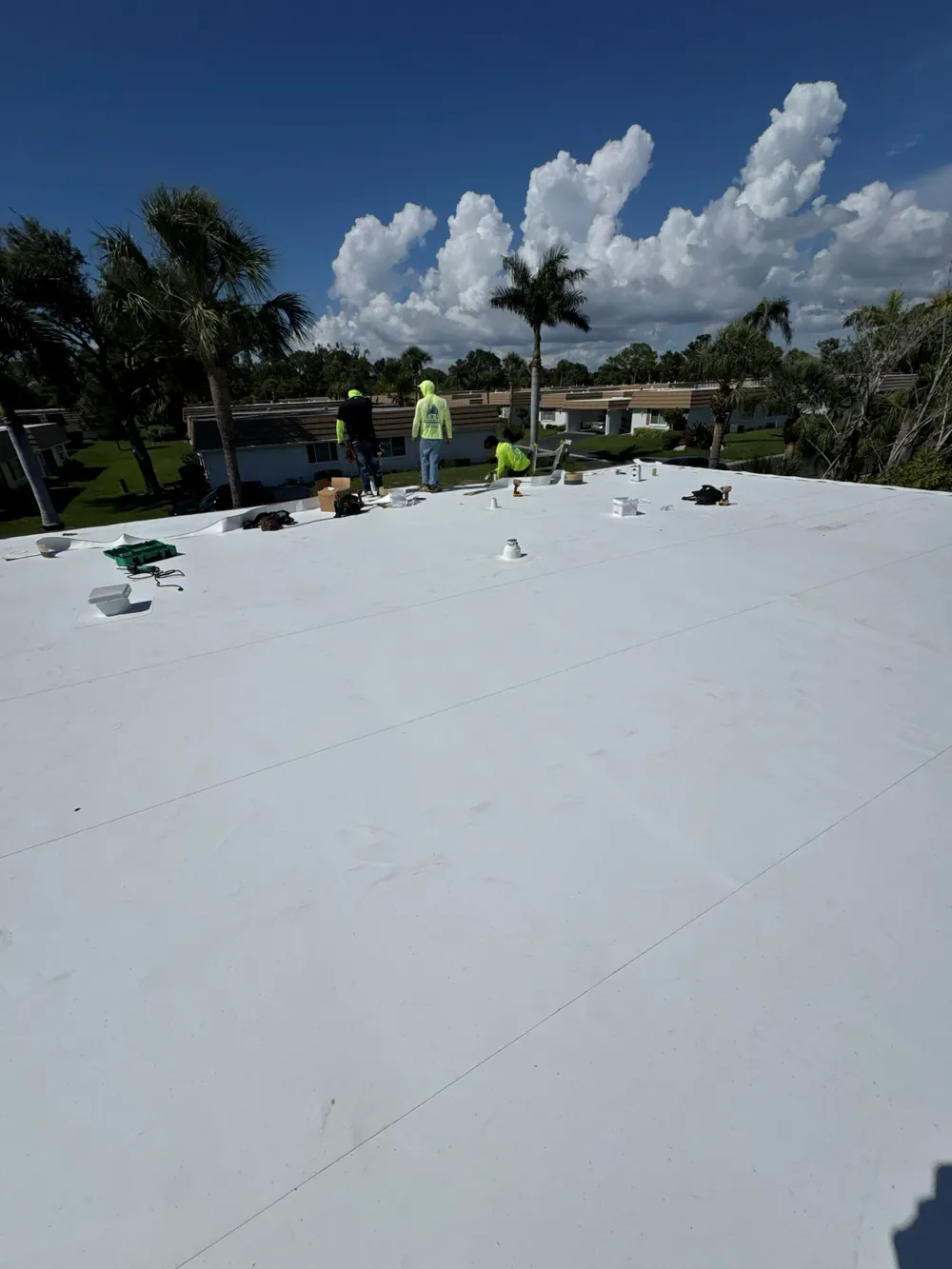
A curb detail has to suit the roof system already in place. On a thermoplastic roof, the patch material and weld need to match the membrane and surface condition. On modified bitumen or built-up roofing, the transition depends on compatible plies and a sound tie-in. Metal roofs need a different approach at curb flanges and panel ribs. We identify the assembly before selecting compatible materials and deciding whether to restore or replace the flashing. A TPO roof assembly and a standing-seam panel do not share the same curb detail, even if both support similar equipment.
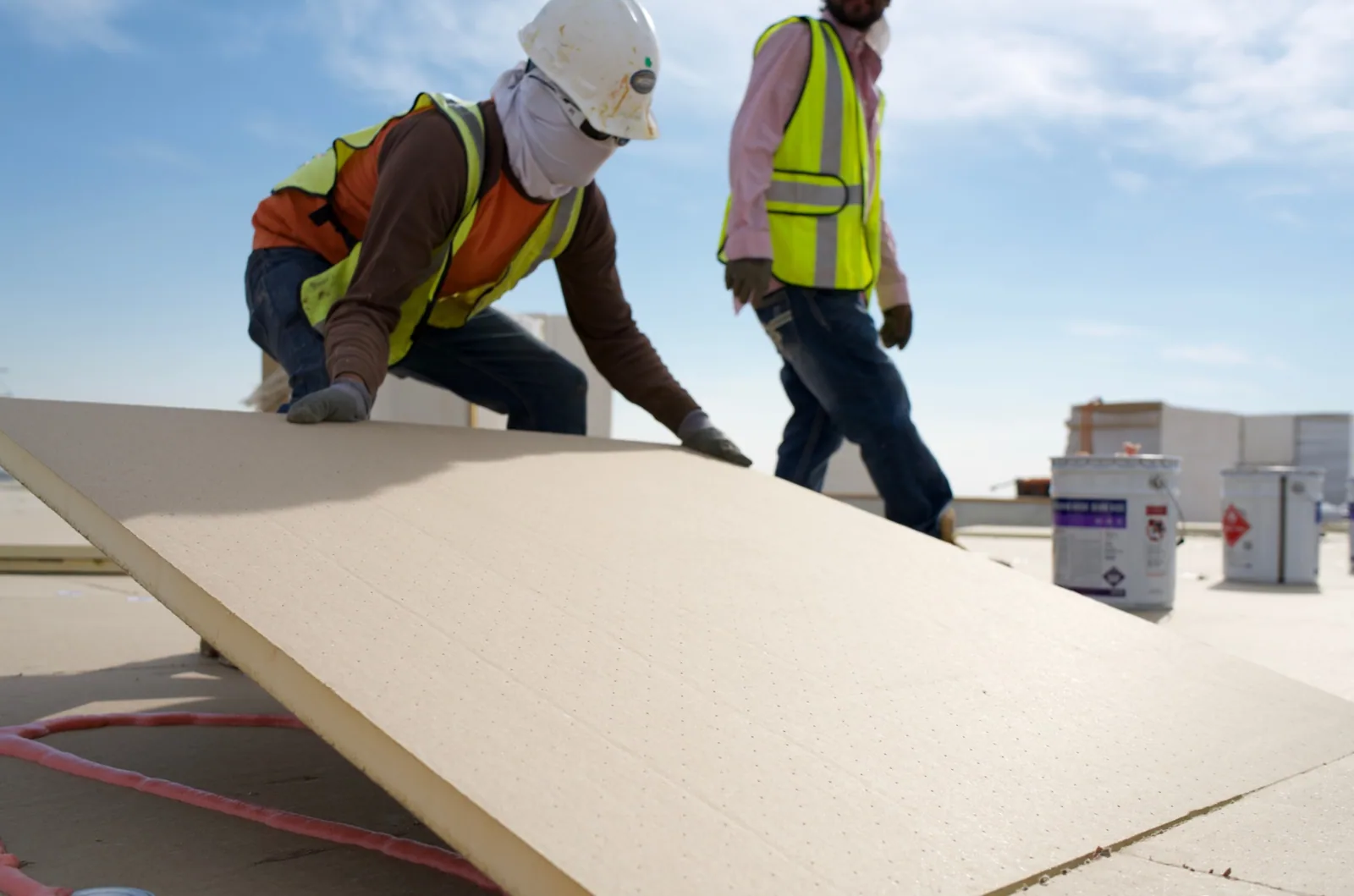
Insulation and cover board matter at the curb base. A leak can travel below the surface and appear some distance from the penetration. If there is soft cover board, staining at a deck joint, or a history of interior moisture, we separate visible surface work from any test opening needed to define the wet area. The roof insulation and cover-board review helps establish that boundary before a patch hides the evidence. Removal stops at the boundary the assembly condition supports.
Plan Around Equipment and Access
Warehouse projects are in planning along Hesperia's I-15 and U.S. 395 corridors. In an operating warehouse or distribution building, equipment access can share space with loading, rooftop service paths, and truck movement below. We confirm where the lift or material can stage, which roof hatch is available, and whether the unit can remain in service during the work. Hesperia's designated truck network includes I-15, U.S. 395, Bear Valley Road, and other local routes. Delivery and gate rules still come from the property manager.
Heat also changes the work window. A membrane surface can be hot enough to affect safe handling and the timing of welds, adhesives, or sealants. We check conditions that day and sequence each tie-in so it can be inspected before foot traffic resumes. Where several curbs sit close together, a marked roof plan helps keep tools and materials away from active drains, fragile panels, and service clearances.
Define What Must Move
Some curb repairs can be completed with equipment in place. Others require an HVAC technician to disconnect or lift the unit so the flashing can be rebuilt beneath its footprint. The roof scope should state which trade owns that work, what the equipment team must do before roofing starts, and how the opening will be protected if work spans more than one shift. The facility contact must authorize equipment movement and shutdowns.
For a repair, the boundary may include corner metal, a short membrane apron, or deteriorated substrate around the curb. For a replacement, it can include the curb assembly, flashing, insulation, and tie-in to the field membrane. We check corrosion, loose fasteners, damaged nailers, and signs of trapped water. The flashing failure repair scope can include nearby wall and penetration transitions when the same separation continues beyond the curb.
Sequence the Work in Clear Steps
Cost and duration follow the access and the amount of assembly that must be opened. A curb that is reachable, dry below the flashing, and compatible with a localized repair is a different scope from one that needs equipment relocation or substrate replacement. We mark each curb, separate confirmed damage from suspected concealed conditions, and show any allowance for a test opening as a distinct decision. That keeps a limited repair distinct from a wider scope.
Before mobilization, confirm roof access, shutdown needs, and the point where the repair can be protected at the end of the work period. The crew removes failed material, prepares the substrate, installs compatible flashing, and checks the tie-in. Photos identify each curb, completed corner, and water-shedding edge. A roof condition report can retain those observations with the building's maintenance record.
Choose Repair or Renewal
A single failed curb on an otherwise sound field can support a focused repair. Repeated openings at several curbs, brittle membrane, wet insulation, or failed perimeter transitions may justify comparing a larger restoration or replacement. We compare the failure pattern across the roof, not only the visible leak. If a roof has several equipment zones, we note which curbs share a system, which have different ages or details, and which need another trade's input before a recommendation is final.
For industrial properties, roof work also has to preserve service access after closeout. We check that walking pads, support feet, and flashing do not leave a new obstruction across the drain path or maintenance route. Hesperia's designated truck corridors and warehouse development explain why access planning can matter for a property, but the roof assessment stays tied to the actual facility. Across the broader Hesperia Industrial District, the same questions start with the roof plan and the operating contact, not an assumption about the building's equipment.
Send the Roof Details
Send the property address, a roof plan if available, the equipment involved, a description of the curb or support condition, and the access contact. Roof and ceiling photos help locate the affected area; concealed conditions still need field review. Include any shutdown window or lift restrictions already known. We can then outline the curb locations, likely repair boundary, equipment coordination, and any question that needs to be resolved before work is scheduled.
If water is entering now, describe the last rain or washdown, the interior area affected, and whether the condition is changing. Emergency roof repair is available around the clock, including holidays, with response planning based on the reported condition and site access. The first review can define the next step, while concealed conditions remain subject to access.
Commercial Roofing Questions
Can a curb be reflashed without removing the HVAC unit?
Sometimes. We check access around the base and the existing tie-in. If failed material sits beneath the unit, the scope identifies the HVAC work needed first.
What signs point to a curb leak rather than a nearby membrane leak?
An interior stain is only a starting point. We compare its location with curb corners, seams, fasteners, and water paths, then identify any test opening needed.
Does Hesperia heat affect curb-flashing work?
The August normal daily high is 97 degrees. Surface temperature and material condition guide safe handling and the timing of compatible welds, adhesives, or sealants.
What should the facility team have ready?
Provide equipment identifiers, roof access instructions, shutdown limits, roof plans, and the person who can coordinate with the mechanical contractor.
When is a curb repair no longer enough?
Several failed curbs, wet substrate, recurring leaks, or wider membrane deterioration may support comparing restoration or replacement with a localized repair.