Grocery Store Roofing in Hesperia, CA
Refrigeration loss can start with water at a roof detail above a case or prep area. Hesperia’s 2022 retail sales totaled about $1.252 billion, a market with customer-facing operations that can shape roof access and work windows. The roof work itself begins at the affected section: equipment curbs, penetrations, seams, drains, insulation, and the interior area below. We map those elements before setting a repair boundary. A commercial roof inspection helps separate a localized failure from a system condition that needs broader work.
Locate Sensitive Areas First
Before a roof opening, the store contact should identify refrigeration equipment, food preparation, receiving, stock rooms, and any area that needs added protection. We align that interior map with roof drains, HVAC units, exhaust penetrations, and previous patches. If the reported leak appears near a freezer or cooler, we trace the plausible water path rather than cutting straight above the ceiling mark. Water can follow insulation or a deck joint before entering the space.
The scope defines which aisle, case, or work area may need temporary protection and who can move product or restrict access. If roof removal uncovers wet insulation, we stop at the agreed boundary and document the finding before extending the opening. A roof insulation and cover-board check can help determine whether the issue is limited to the membrane or reaches the thermal layer.
Coordinate Refrigeration and Roof Equipment
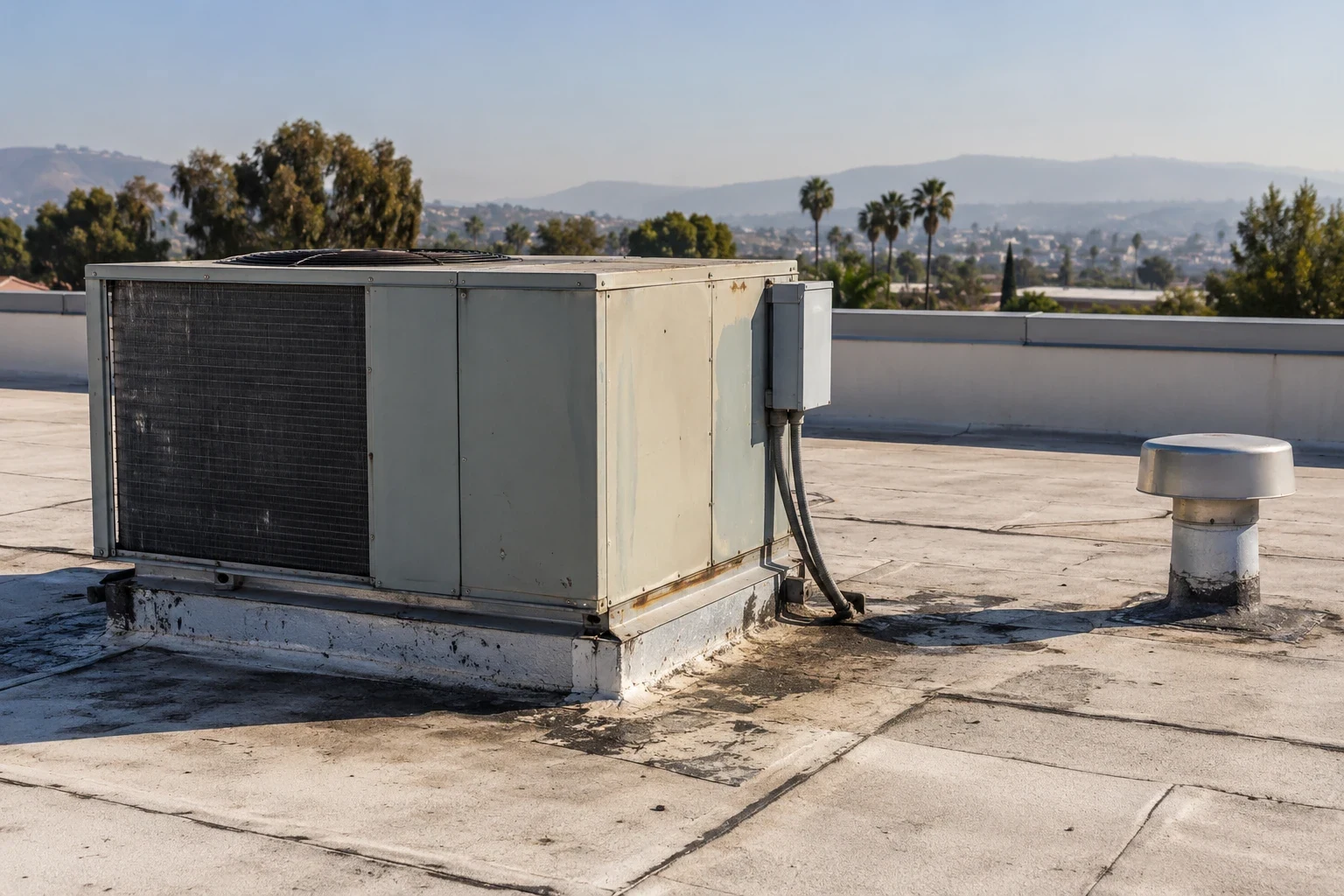
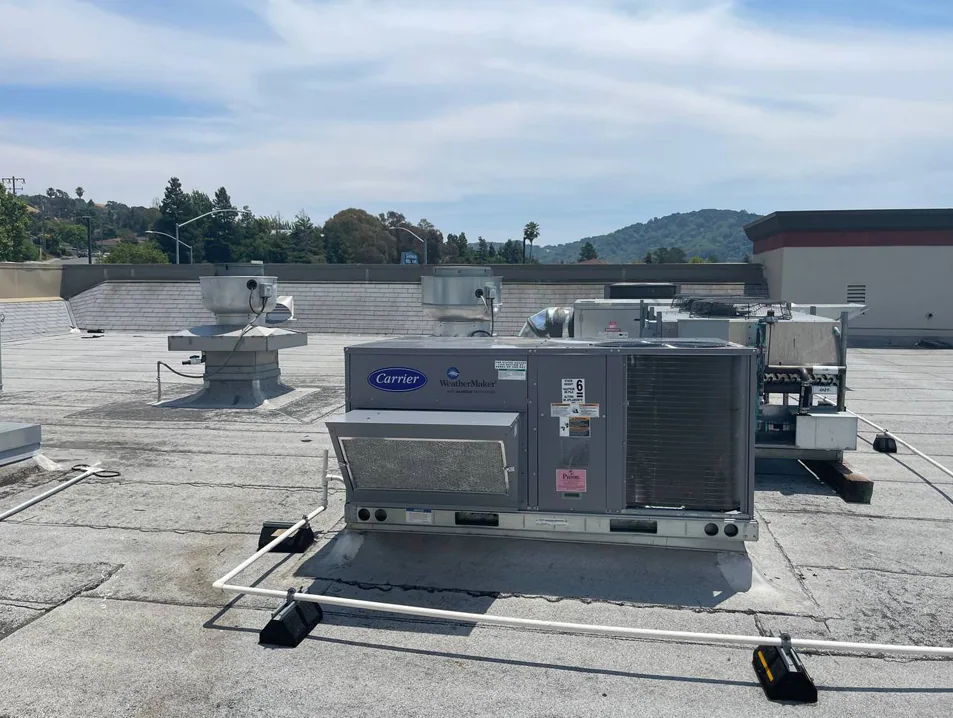
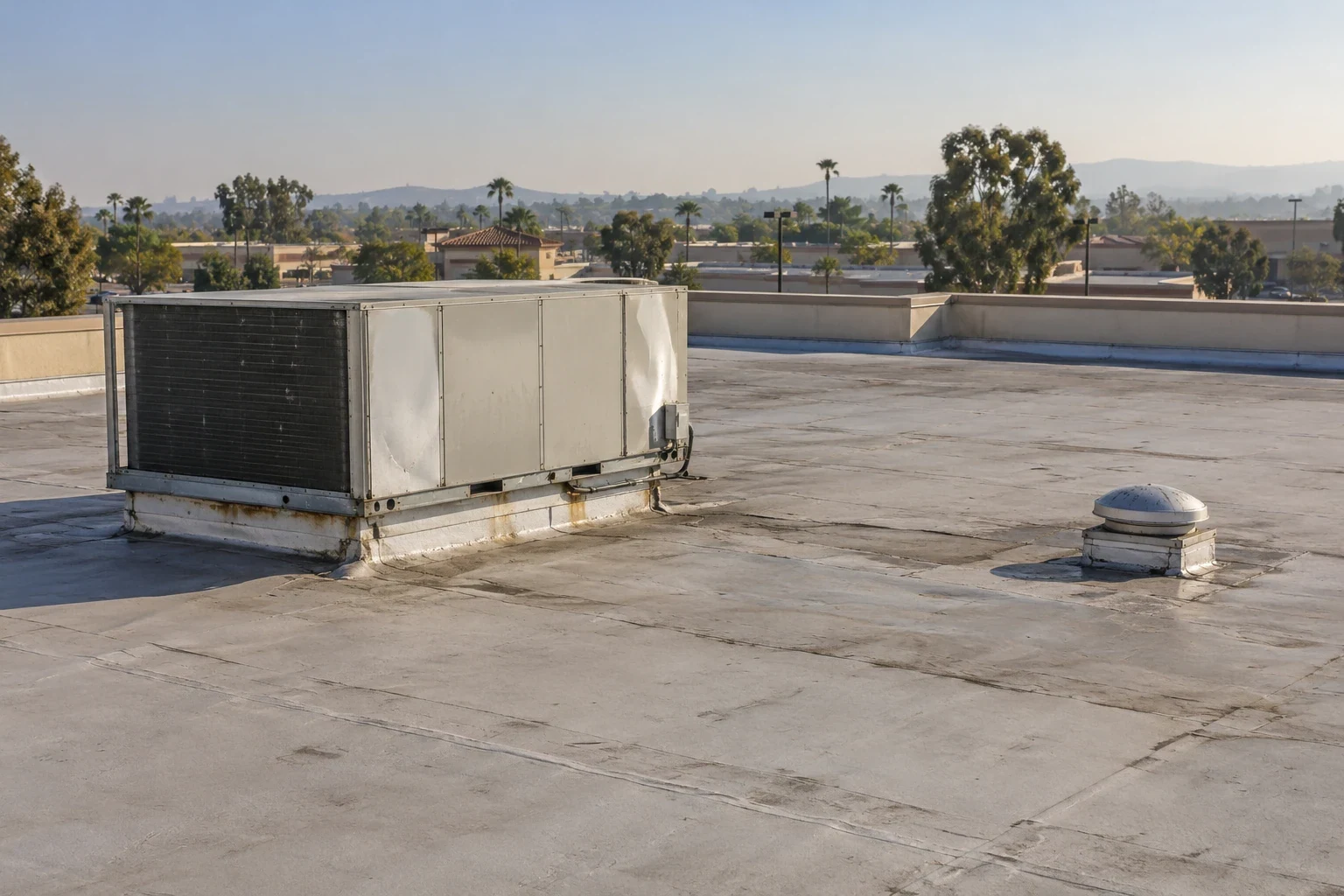
Grocery roofs often include condenser units, piping, exhaust fans, and electrical routes that require service access. We inspect how those components meet the roof and whether their supports interrupt a seam or drain path. A flashing detail must fit the existing assembly and remain accessible for maintenance. If a unit needs to be disconnected or lifted for replacement, the roofing scope names the HVAC or refrigeration trade and the handoff before a crew begins removal.
Some roof sections may have many penetrations in a small area. We mark each curb and pipe, note any loose flashing or corrosion, and separate equipment access from the membrane repair. An unplanned equipment move can expose wiring, piping, or other conditions outside the roofing scope. The curb and rooftop support review can address those transitions, while the facility contact sets the service limits for refrigeration equipment.
Keep Water Moving Off the Roof
Food stores can have extensive rooftop equipment screens, parapets, and service paths that collect windblown material. We check drain bowls, strainers, scuppers, overflow points, and low areas before choosing a roof treatment. A slow drain may reflect debris, a damaged bowl, or a roof section that has settled. The repair scope should identify the cause that is visible and any test needed to assess concealed conditions.
During construction, insulation packages, rolls, and debris need a staging zone clear of the drain path. If a phase crosses a low point, we maintain a route for water to leave the active area. The drain and scupper assessment can be included with membrane work when those components affect the same roof section. Closeout includes checking that strainers are in place and that temporary protection has not blocked the outlet.
Use Hesperia's Commercial District Context
Receiving and customer access set the ground plan for grocery roof work. Hesperia's Main Street and I-15 District and Freeway South include regional-commercial areas, but a planning label cannot reveal a store's operating hours or roof layout. Ask the operator where chilled and frozen deliveries arrive, which entrances must stay clear, and whether a lift can stage without crossing a customer path. Map the affected roof section and nearby equipment curbs, drains, and penetrations before setting a repair boundary. The Main Street and I-15 District review is geographic context; the active receiving calendar and building plan govern the project sequence.
Confirm receiving hours again before the crew arrives.
Confirm the roof access contact before changing the receiving plan.
Choose the Scope by Failure Pattern
A localized flashing failure or seam opening can support a repair when surrounding material remains sound. Widespread brittleness, repeated patch failure, wet insulation, or open seams across multiple roof sections may warrant restoration or replacement. We map the failures and assess each assembly before recommending a broad treatment. A coating is appropriate only where the substrate and preparation support adhesion; it will not correct damaged insulation or a failed drain.
System choice also affects future service. A low-slope membrane needs sound terminations and accessible equipment details. Metal roofing depends on panel and flashing movement. If the grocery store has several additions, each roof section may need a distinct scope and material tie-in. A shopping-center roof assessment covers shared multi-tenant sequencing, while big-box retail roofing considers a larger single-store layout with its own operational constraints.
Plan Work Around Store Functions
Roof work should be phased with the store's receiving, stocking, cleaning, and customer schedules. The manager identifies hours when a loading area or aisle cannot be blocked. We mark crane or lift positions, material staging, roof access, and the ground-level boundary before mobilization. The crew opens only the area it can prepare and close within the agreed window, and keeps a temporary protection plan for an unexpected change.
Noise from demolition or mechanical fastening may affect spaces below. The sequence can move work near refrigeration or food-preparation areas to an appropriate window when access and weather allow. If another trade must adjust a line or unit, that handoff is agreed before the roof is opened. A phased occupied-building reroof plan helps set boundaries and close-in points while the store remains active.
Separate Repairs From the Larger Plan
Budget depends on the extent of tear-off, insulation replacement, number of curbs and drains, roof access, product protection, and work-hour restrictions. A quote should separate confirmed repairs from test openings or concealed deck work. If the roof needs wider renewal, we map which areas must be addressed now and which can be monitored. That gives the store owner a clear comparison rather than a single undifferentiated line item.
Record repair locations and material transitions after the work. A future leak report can then be compared with the corrected seam, drain, or curb rather than treated as an entirely new roof issue. We provide photos, the repaired zone, and remaining maintenance observations to the property contact. If water threatens food or refrigeration before a planned project, emergency repair is available at any hour, holidays included. The store contact can provide the affected roof zone and access conditions.
Commercial Roofing Questions
How do you protect refrigerated cases during roof work?
The store contact identifies sensitive cases and food areas, then we map them to the roof phase. Protection and close-in steps are agreed before an opening begins.
Can grocery refrigeration stay on during roof repairs?
The roofer does not decide equipment shutdowns. We coordinate with the store and refrigeration trade, and define any required shutdown or lift before work reaches the unit.
What local Hesperia details affect grocery roof planning?
The city's planned commercial districts and truck routes include Main Street, I-15, U.S. 395, and Bear Valley Road. Each store's receiving and staging rules still need direct confirmation.
When is a small patch not enough?
Repeated failures, wet insulation, or deteriorated seams across several areas can justify comparing restoration or replacement. We mark evidence and identify any needed test opening.
What should the grocery manager send first?
Provide roof plans, leak locations, refrigeration and exhaust equipment details, delivery hours, access rules, and an interior protection contact. Those facts shape the first roof review.