Shopping Center Roofing in Hesperia, CA
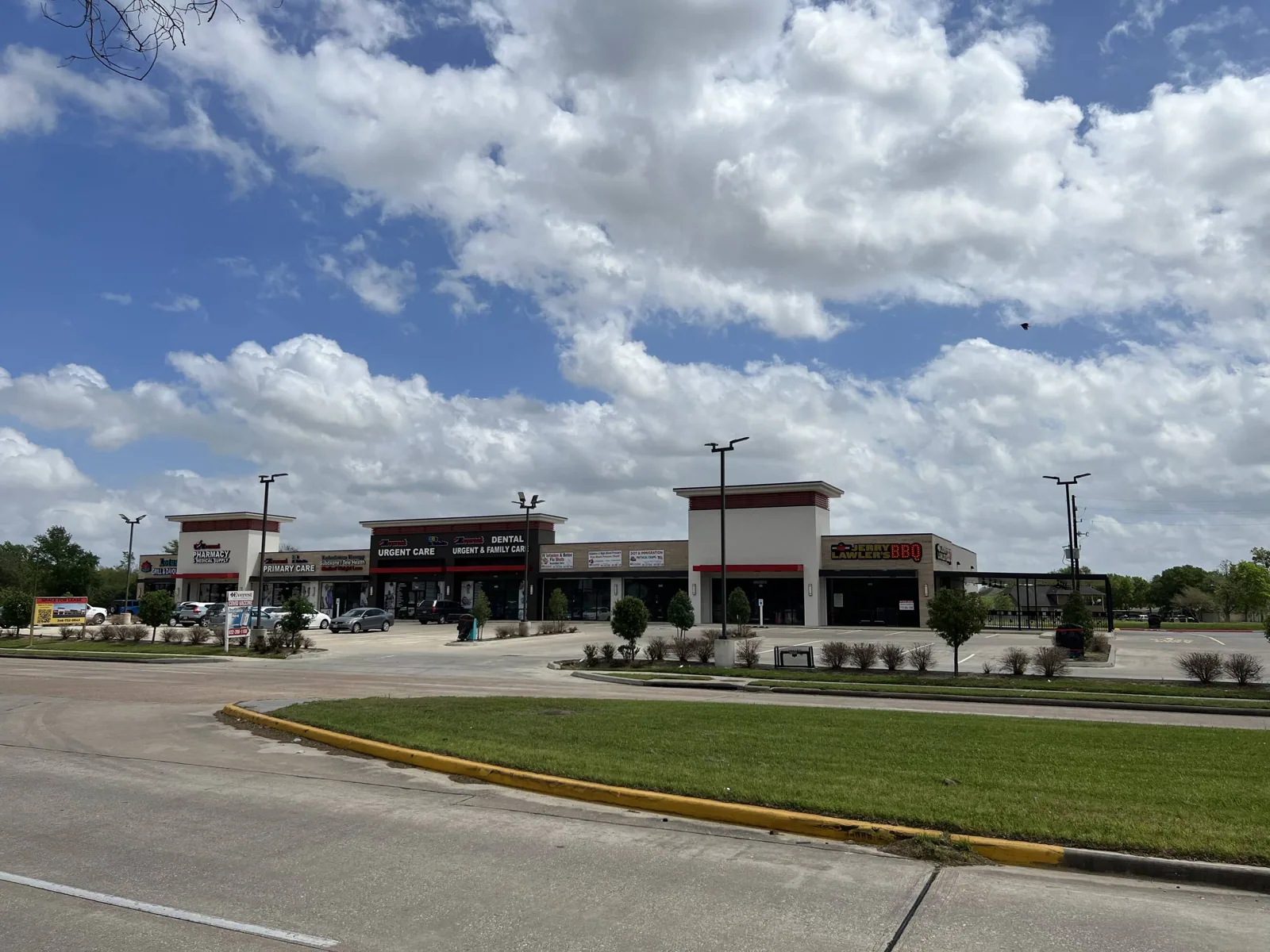
Shared storefront rows need a roof plan that protects tenants and customer access while repair work moves above them. Each center's roof condition still has to be inspected directly. We map the affected section, drainage, penetrations, and prior patches, then identify which tenant spaces and access routes need protection. We map the affected section, drainage, penetrations, and prior patches, then identify which tenant spaces and access routes need protection. A commercial roof inspection creates the starting record for repair or renewal.
Connect Each Tenant to a Roof Zone
A retail center may have one continuous membrane over several suites, separate roof elevations, additions, canopies, or a mix of roof systems. We label sections so a leak report from a tenant can be compared with the nearest seam, curb, drain, or wall transition. Interior fit-outs can hide the original roof plan, so the property team should point out tenant boundaries and sensitive areas before work is mapped.
Store hours do not necessarily match loading, cleaning, or mechanical service windows. We ask which entrances must remain clear, how tenants receive access notices, and where equipment can stage without blocking customer paths. A restaurant roof assessment pays special attention to exhaust equipment and grease-related rooftop service, while a shared center needs a broader sequence across multiple suites. Each tenant receives the affected area and work window that applies to its space.
Check Drains Before the Field Membrane
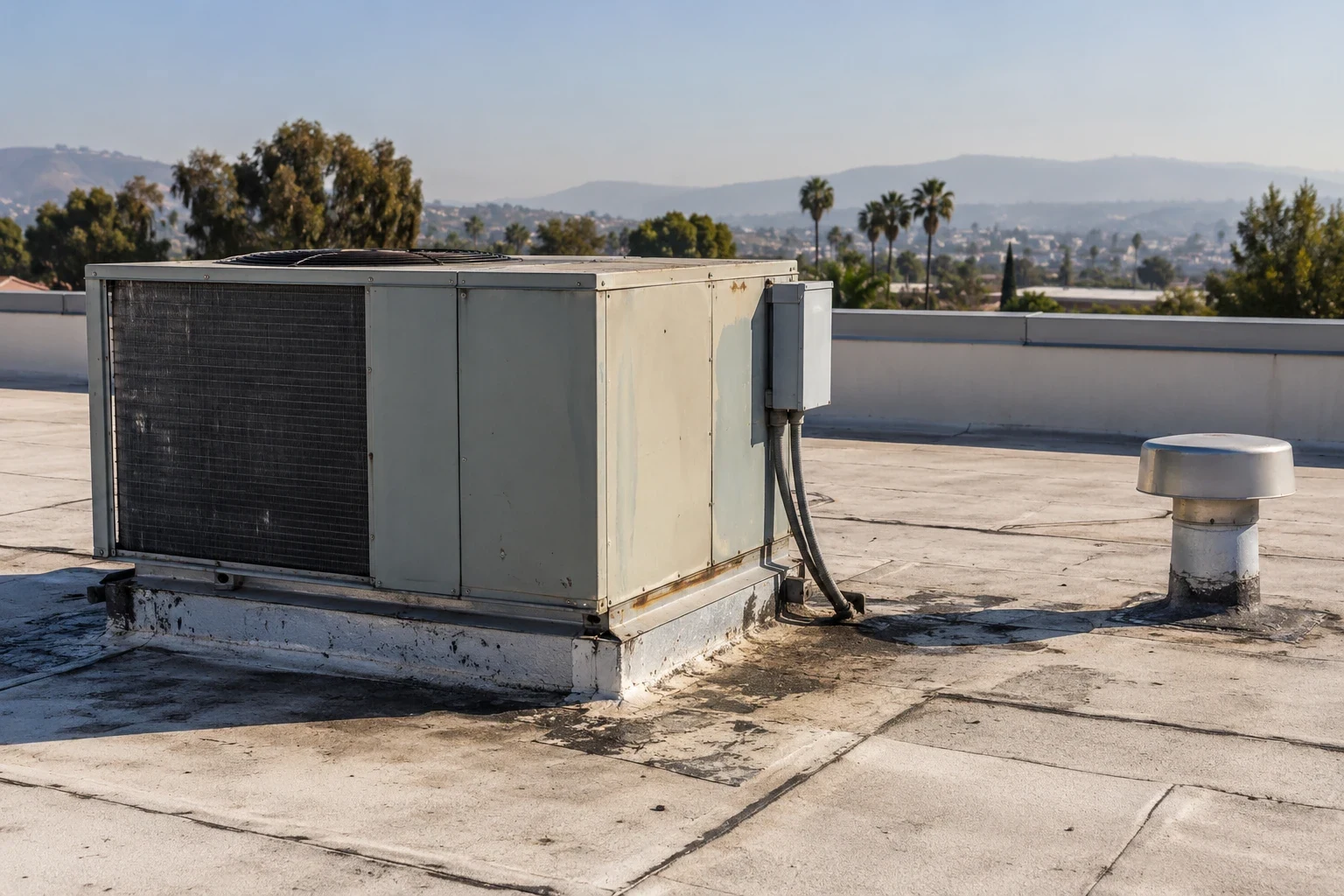
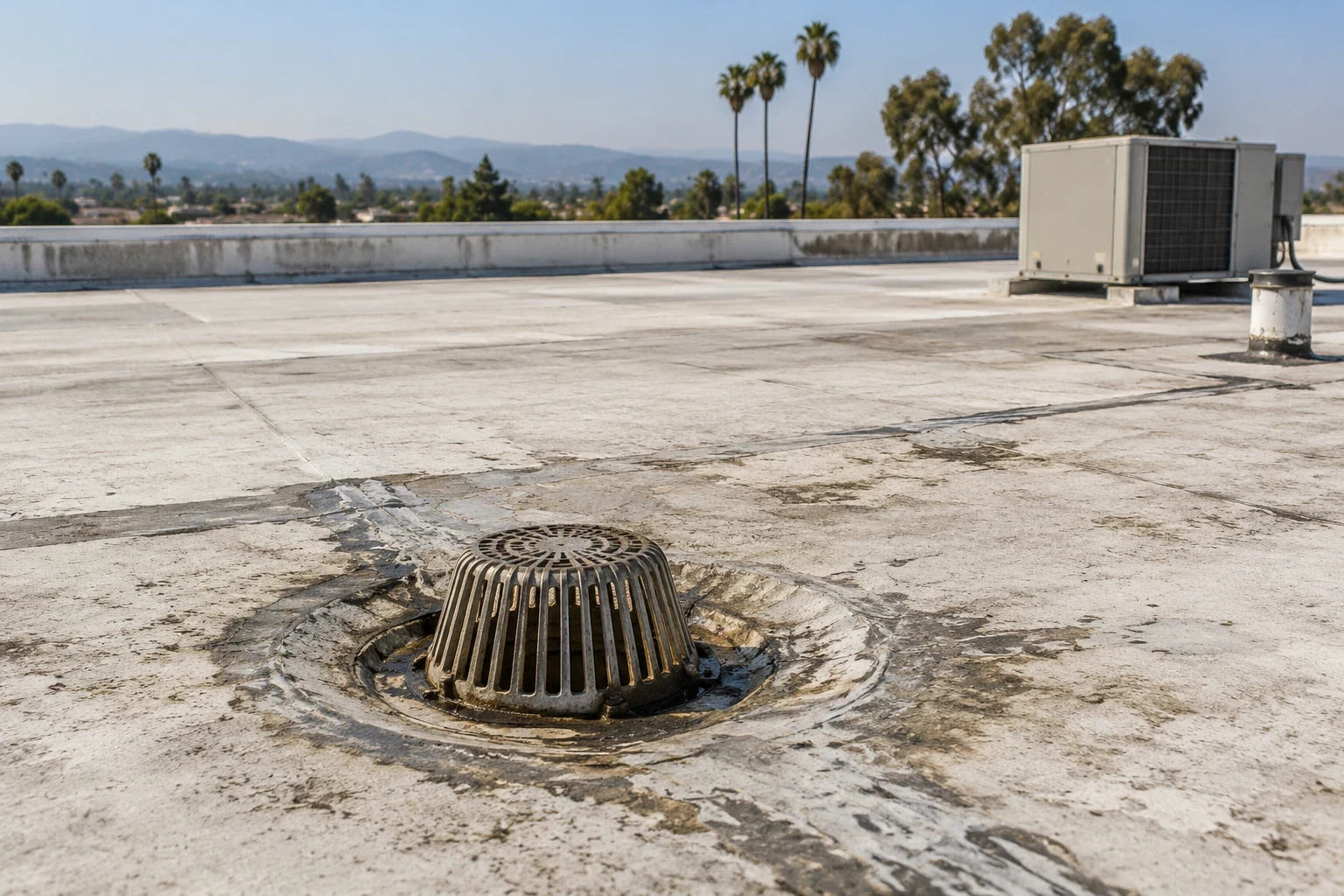
Shopping-center roofs can collect debris around parapets, HVAC screens, and drain bowls. We inspect primary drains, overflow paths, scuppers, and low points before recommending a patch or coating. Ponding can complicate a system decision, but the visible water does not by itself explain whether the cause is a blocked drain, settled insulation, or a deck condition. We document the water path and define what needs cleaning, repair, or further testing.
Storefront leaks can be hard to trace because water may travel under a membrane or follow a wall before reaching a ceiling. We compare the reported location with penetrations, roof joints, edge details, and previous repair areas. If wet insulation is suspected, we mark a test location and protect the tenant space below before an opening is made. A drain and scupper repair plan addresses the components that carry water off the roof, not just the interior stain.
Read the Center in Its Hesperia Setting
The Hesperia City Center District concept follows Main Street near civic uses. The Hesperia Freeway North District plan places business parks and regional-commercial uses alongside residential areas. These broad settings help frame retail access without describing any particular center; the tenant list, roof levels, and operating hours come from the property manager.
The city includes Lemon Street, Phelan Road, and portions of Santa Fe Avenue in its truck-route network. Deliveries of membrane, insulation, or rooftop equipment still need to align with the center's loading rules. We confirm the delivery entrance and staging zone rather than assuming that a truck route reaches the work area. A Freeway North commercial-area review gives the broader district context; site logistics still need direct confirmation.
Choose Work That Fits the Roof
We identify the existing system, attachment, deck where known, perimeter details, and condition of insulation before comparing options. A localized repair can be appropriate where the failure is contained and adjacent material remains sound. Repeated seam separation, widespread wet insulation, deteriorated edges, or layers of incompatible patches may require broader restoration or replacement. If the roof has several elevations or additions, each section may need a separate recommendation.
Coating is not a universal short-cut for a retail center. The surface needs suitable adhesion, stable seams, and preparation that can be completed without leaving active tenant areas exposed. A new membrane or recover also changes roof elevation, drain details, and access around rooftop equipment. A big-box retail roof review can weigh high-volume access and large roof zones. A roof coating restoration review can test whether the existing assembly qualifies, while a replacement evaluation compares renewal when the underlying roof condition calls for it.
Keep Storefronts in the Work Plan
Work can be divided by roof section, tenant row, or drainage area, depending on the building layout. Each phase should show the entrance or loading zone affected, the work hours, the close-in point, and the way customers and employees stay away from overhead activity. Material staging belongs outside fire lanes and accessible routes. The property manager coordinates notices; the roofing crew maintains the marked work boundary and keeps debris contained.
Roof removal should be limited to an area that can be prepared and closed within the approved window. If a test opening or deteriorated deck changes the scope, the crew protects the exposed area and notifies the owner before proceeding beyond the planned boundary. This is especially important where a tenant holds stock or equipment below. A phased occupied-building reroof can keep the work sequence tied to active operations without treating every tenant suite as the same condition.
Price the Scope by Area and Access
Cost depends on roof sections, tear-off depth, wet insulation, the number of drains and penetrations, access for lifts, and how many tenant areas need protection. A quote should separate confirmed work from test openings and concealed conditions. It should also describe whether rooftop units remain in place, which trades move them, and how the crew will protect the roof if equipment work is delayed.
For a center with several tenants, schedule can matter as much as the area under repair. A night shift may reduce one type of disruption but can change access, lighting, and noise constraints. We record those requirements before building the sequence rather than adding them after mobilization. The owner's choice can then compare a short repair, a larger section renewal, or phased replacement with the same roof map and operating assumptions.
Give the Manager a Section Record
At completion, the property team should receive a roof plan marked with areas worked, system and material notes, photos of seams and transitions, and any maintenance items discovered. The record should identify which tenant row or drain area was involved without relying on a general description such as 'north side.' It also notes work left outside the approved boundary.
We inspect completed edges, penetrations, drains, and tie-ins before removing barriers. The manager can then restore normal roof access and share relevant closeout details with tenants or maintenance staff. If a new interior report appears later, its location can be compared against the map. For water entering a retail space before planned work, urgent repair can be arranged any hour, including holidays. Report the affected area and safe roof access.
Commercial Roofing Questions
Can each tenant stay open during shopping-center roof work?
That depends on work area, overhead risk, access routes, noise, and tenant hours. We phase the roof and mark storefront or loading changes with the property contact.
How do you locate a leak reported by a tenant?
We map the interior report to roof seams, drains, penetrations, edges, and prior patches. If the entry point remains uncertain, the scope identifies the test needed.
Can a coating fix a shopping-center roof?
Only when the existing surface, seams, and substrate support adhesion and the preparation can be completed. We compare coating with repair, recover, or replacement.
What local Hesperia factors affect planning?
Hesperia plans the City Center concept along Main Street near civic uses. The truck-route network also names Phelan Road and portions of Santa Fe Avenue; we verify the store’s actual delivery entrance.
What should the property manager provide?
Share the roof plan, tenant boundaries, leak reports, hours, delivery rules, access restrictions, and contact for each affected area. That helps define phases and protections.