Cool Roof Installation in Hesperia, CA
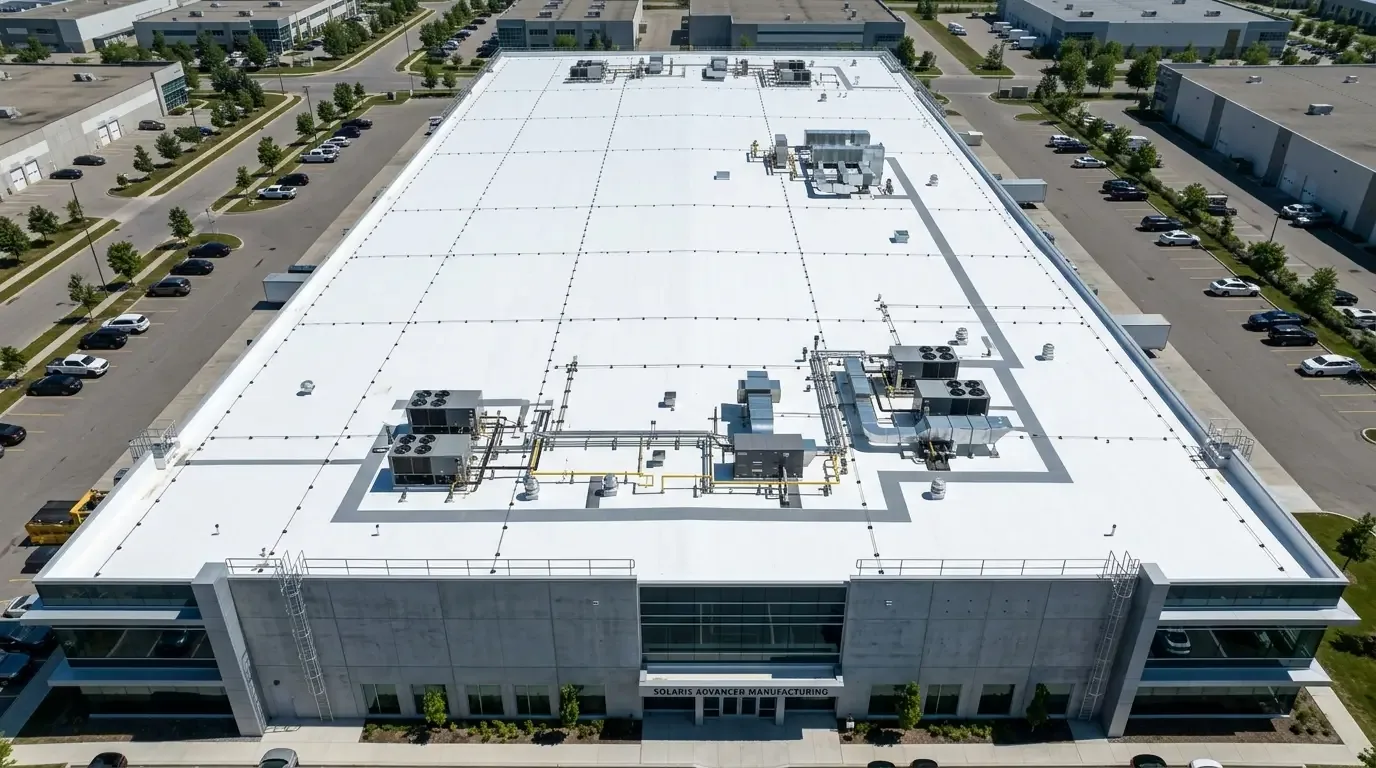
A reflective surface can change how a roof absorbs solar heat, but the coating or membrane still has to fit the existing assembly. Hesperia 2 E's normal daily maximum reaches 97 degrees in August, making surface exposure a practical factor in material selection and installation timing. We start with the roof condition, drainage, seams, penetrations, and insulation, then compare systems that can be installed over that substrate. The decision may point to a reflective membrane, a coating over a suitable existing roof, or removal and replacement. A roof inspection separates the visible surface from questions about moisture below it.
Start With the Existing Roof
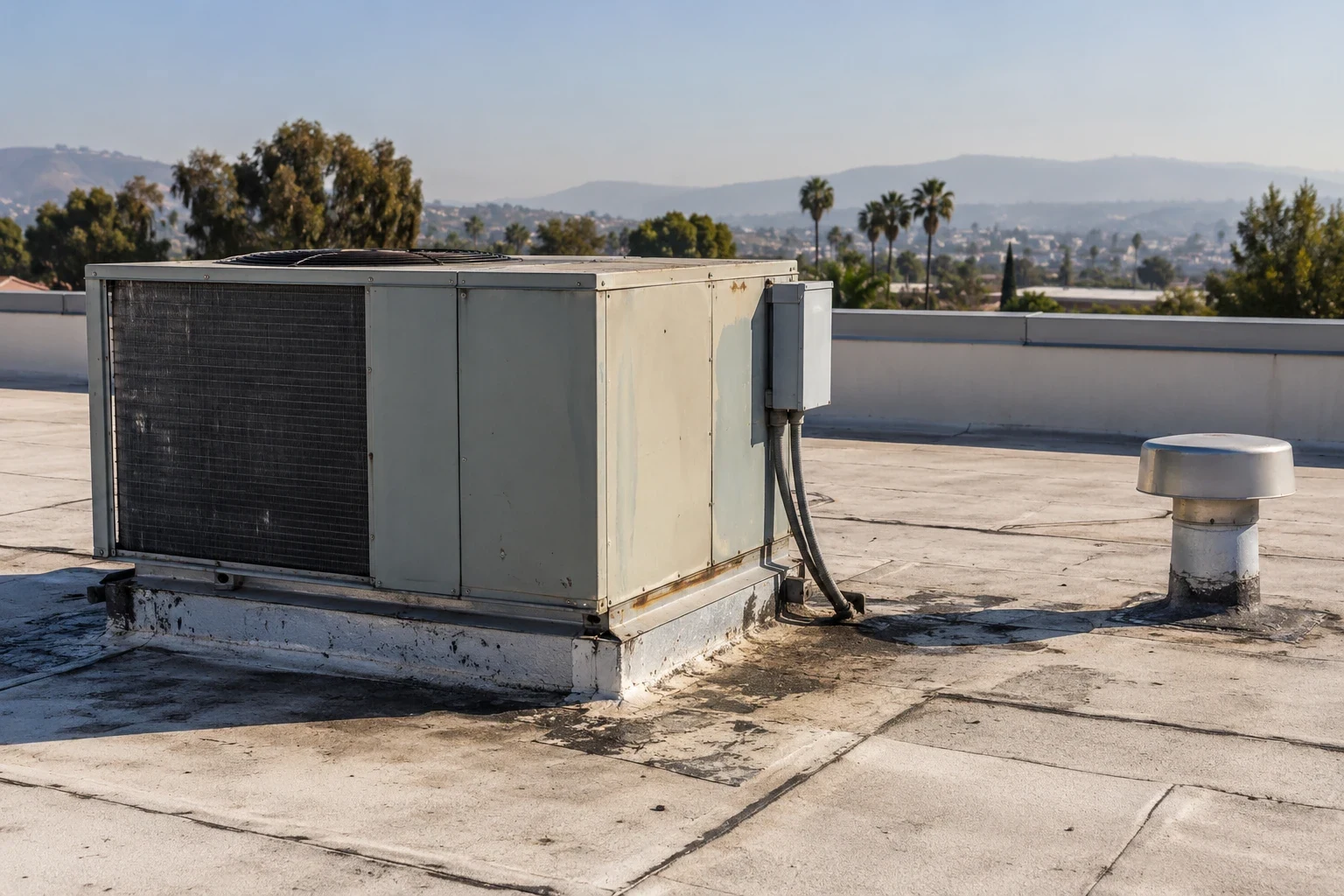
Reflectivity does not repair a weak substrate. Before selecting a cool-roof system, we check adhesion, seam condition, repair history, surface contamination, ponding, edge details, and the condition of insulation or cover board where evidence is available. A coating needs a substrate it can bond to and details that can be reinforced. A new membrane needs secure attachment, compatible edge transitions, and a tie-in that can shed water. If an assembly has trapped moisture or widespread separation, applying a reflective layer can conceal a problem rather than resolve it.
We map roof sections separately when materials or repair histories change across the building. The inspection record marks areas suitable for restoration, areas that need testing, and areas where replacement is the more direct path. A roof insulation review helps define the thermal layer and identify where a test opening may change the recommendation. A short, approved opening is more useful than assuming every section shares the same condition.
Select a System That Fits
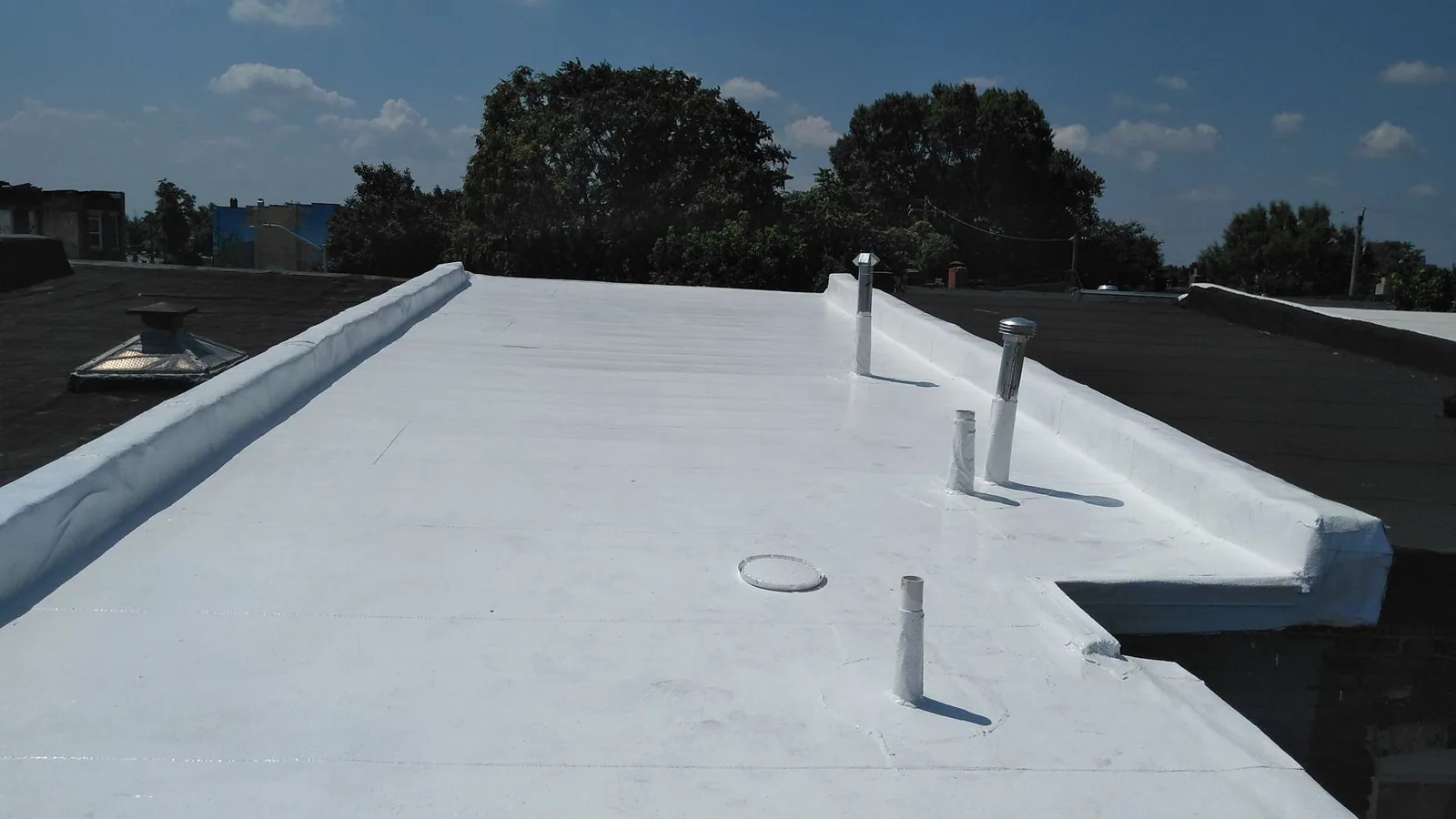
Cool-roof work can use a reflective single-ply membrane or an eligible coating system. A membrane choice depends on the existing deck, attachment method, wind exposure, drainage, and details at curbs and walls. A coating choice depends on adhesion, surface preparation, reinforcement needs, and the condition of existing seams and patches. We compare these paths by the assembly they create, the repairs required before application, and the maintenance access the building will need afterward. A silicone roof coating and an acrylic roof coating have different strengths and application limits; roof condition determines whether either belongs in the scope.
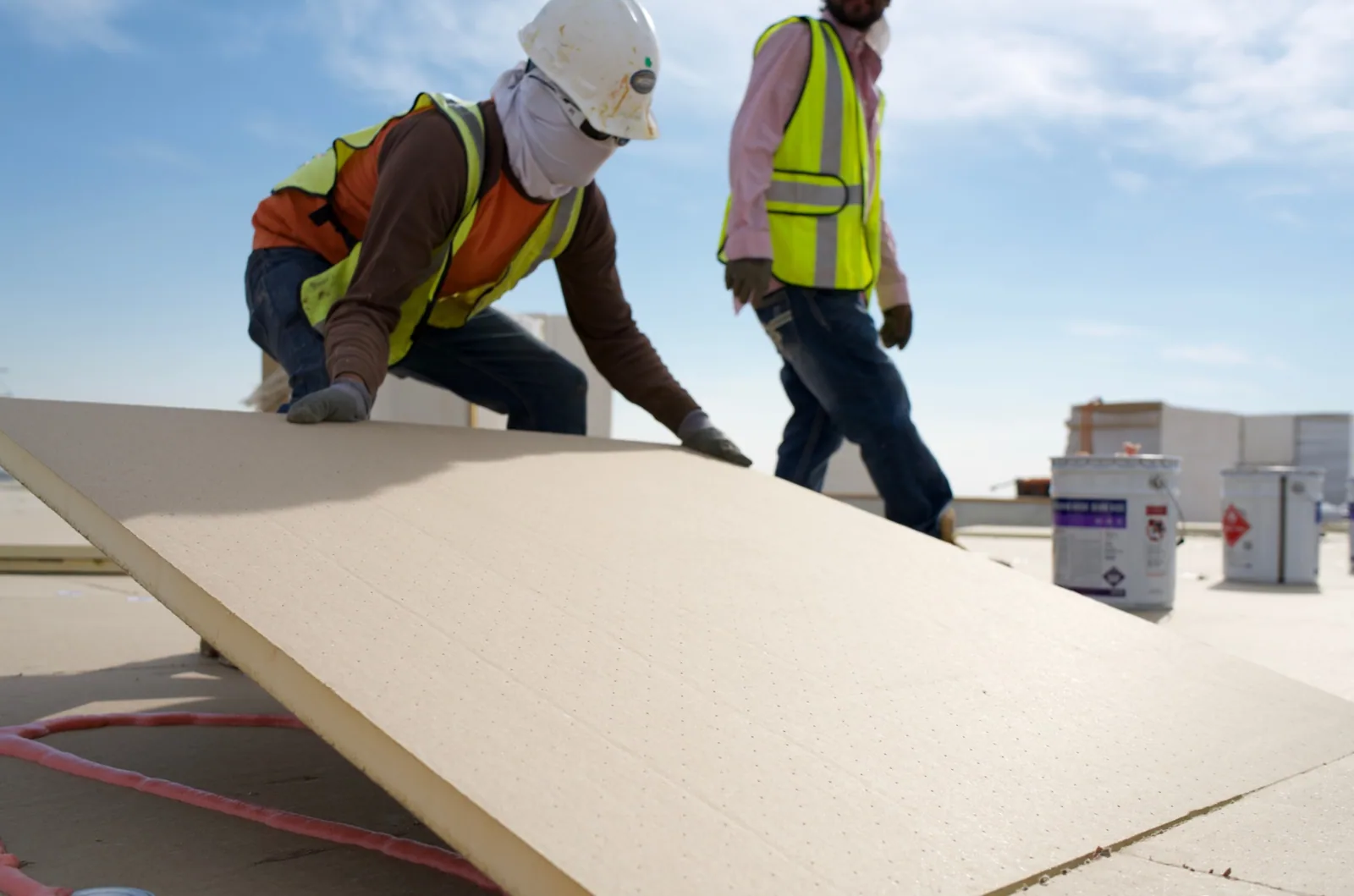
Reflective color alone does not establish the right assembly. We review insulation levels, cover-board stability, parapet and edge heights, drain elevations, and manufacturer requirements for the chosen system. If the existing surface has several incompatible layers, the roof may need removal or a defined separation layer before new work. For a broader restoration comparison, roof coating restoration begins with eligibility and preparation, not with a product label.
Keep Drainage in the Design
Water still needs a continuous path off a reflective roof. We check drain bowls, scuppers, overflow points, tapered areas, and low spots before setting a finished height. New insulation can change the elevation around drains and curbs. A coating can bridge a small surface texture, but it cannot correct a blocked drain or a deck slope that holds water. The drain and scupper review identifies whether those components need cleaning, repair, or adjustment as part of the project.
Edges deserve equal attention. At parapets, roof edges, expansion joints, and penetrations, the new system has to connect to a sound termination. We record locations where flashing is loose, metal is corroded, or old patches obscure the original detail. Those conditions may add work before the field surface is covered. The goal is a single assembly with coherent water-shedding details, not a bright field membrane surrounded by weak transitions.
Plan for Hesperia Conditions
Hesperia's corridor specific plan recognizes industrial, business-park, regional-commercial, civic, and residential districts along Main Street and the freeway corridor. Warehouse projects near Hesperia's I-15 and Highway 395 corridors are in entitlement, approval, and construction stages. For a roof project in those settings, deliveries, loading activity, rooftop equipment, and access can affect the installation sequence. We confirm the building's actual use and staging limits with the owner, then plan material movement and protected work zones accordingly. Regional development context helps frame the conversation; the roof itself sets the technical scope. The city plans the Highway 395 and I-15 District for clean industrial uses and a business-park setting. A reflective roof in that commercial context still needs a substrate review, drain plan, and safe route to rooftop equipment.
Heat is a direct scheduling consideration. The August normal high is 97 degrees, while surface temperatures can differ from the air. We check conditions during the work window and follow the selected system's installation requirements for substrate, application, curing, and foot traffic. If the roof must remain in service, we coordinate access to drains and equipment before covering work zones. Hesperia is served by I-15 and U.S. 395, but delivery timing and gates remain property-specific.
Set Preparation and Repair Limits
Preparation determines whether the new layer can perform as intended. Depending on the roof, work may include washing, removing loose material, repairing seams, reinforcing transitions, replacing wet insulation, or applying a primer. Each item should have a defined boundary. We identify what can be addressed from the surface and what needs an opening or additional trade. If test results show wet insulation beyond the planned area, the owner can decide whether to extend removal before the roof is closed.
Scope documents should identify the product family and assembly, substrate preparation, reinforcement details, drain and edge work, protection of rooftop equipment, and closeout checks. They should also identify exclusions that matter, such as hidden deck damage or inaccessible conditions. A roof condition report can keep the observed condition, repair choices, and completed work tied to roof sections instead of relying on a single overall description.
Sequence the Installation
Work proceeds by roof section. We protect the interior and rooftop assets, stage material, complete preparation, repair details, and apply or install the selected system in a sequence that keeps tie-ins manageable. Open areas need weather protection, and finished areas need a clear cure or access period before other trades return. The schedule should identify who can approve moving an HVAC unit, antenna, or service line if it blocks the assembly. We coordinate that work before the roofing crew reaches the detail.
After installation, we check seams or coating coverage, penetrations, edge terminations, drain paths, and any repaired substrate. The owner receives a record of the system and areas completed, along with maintenance items that affect the roof's next inspection. A cool-roof choice is not a substitute for drainage or routine upkeep. If the current roof is not a candidate for coating, a replacement evaluation can compare a new assembly with continued repairs.
Commercial Roofing Questions
Will a reflective roof lower the building's cooling load?
A reflective surface can reduce solar absorption, but the effect depends on insulation, roof assembly, HVAC operation, and building use. We scope the roof system without promising a specific energy result.
Can a coating go over the existing roof?
Only if adhesion, moisture condition, seams, and substrate support it. We inspect and test where needed, then compare coating with membrane restoration or replacement.
Does reflective roofing solve ponding water?
No. We inspect drains, scuppers, slope, and low areas separately. Drainage repair or tapered insulation may need to be part of the scope before the new surface is installed.
How does Hesperia heat affect installation?
The local August normal daily maximum is 97 degrees. We check actual surface and weather conditions and follow the selected system's application and curing requirements.
What information helps compare cool-roof options?
Send the address, roof plan, current system if known, repair records, leak locations, and access limits. Those details help define inspection, testing, and system-selection steps.