Hotel Roofing in Hesperia, CA

Guest-room water reports can arrive before the roof entry is clear. The first question is which unit and roof zone share a plausible path. In Hesperia, CA, the city is served by I-15 and U.S. Highway 395, regional routes that give context to commercial access and travel through the High Desert. The roof plan still begins with the actual building: reported room, roof zone, curb, seam, drain, and any prior repair. We map that relationship and identify a quiet access and work window with hotel operations. A commercial roof inspection can establish the observed condition before the owner chooses a repair or renewal path.
Locate the Room Below the Roof
Hotels have different interior priorities across guest rooms, corridors, kitchens, laundry, meeting areas, and mechanical spaces. We ask the property contact to map reported stains or active water to the floor plan, then compare that location with the roof assembly above. A leak may travel along a deck, insulation joint, pipe, or framing member before it appears in a room.
Before making an opening, we identify what is below the proposed work area and how staff will protect it. If a guest room needs temporary closure, the hotel decides that operating choice. The roof scope can identify the work zone, interior protection, expected noise, and close-in point. A leak-repair assessment records the suspected entry and any test needed to define wet insulation or concealed damage.
Keep Equipment Details Serviceable
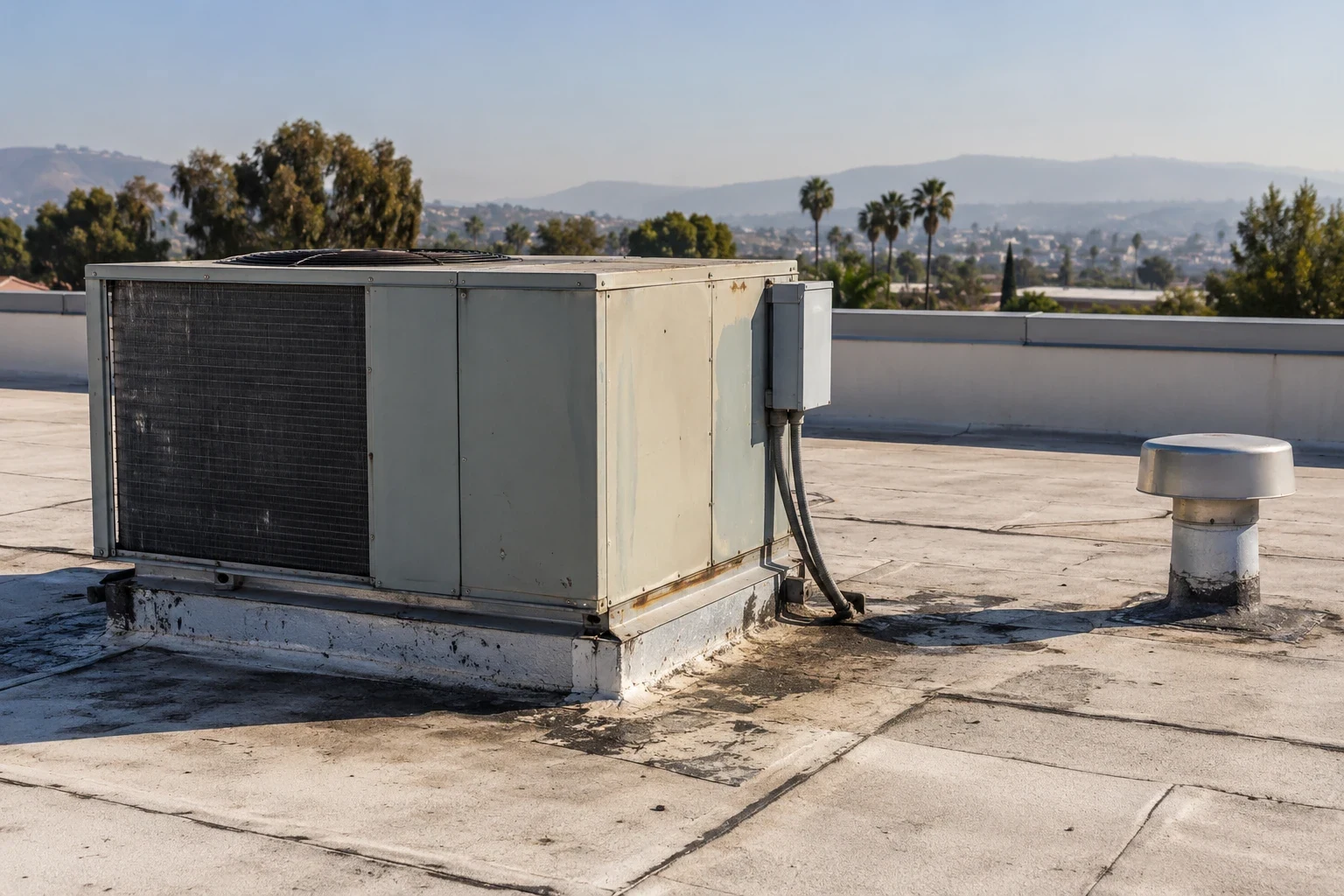
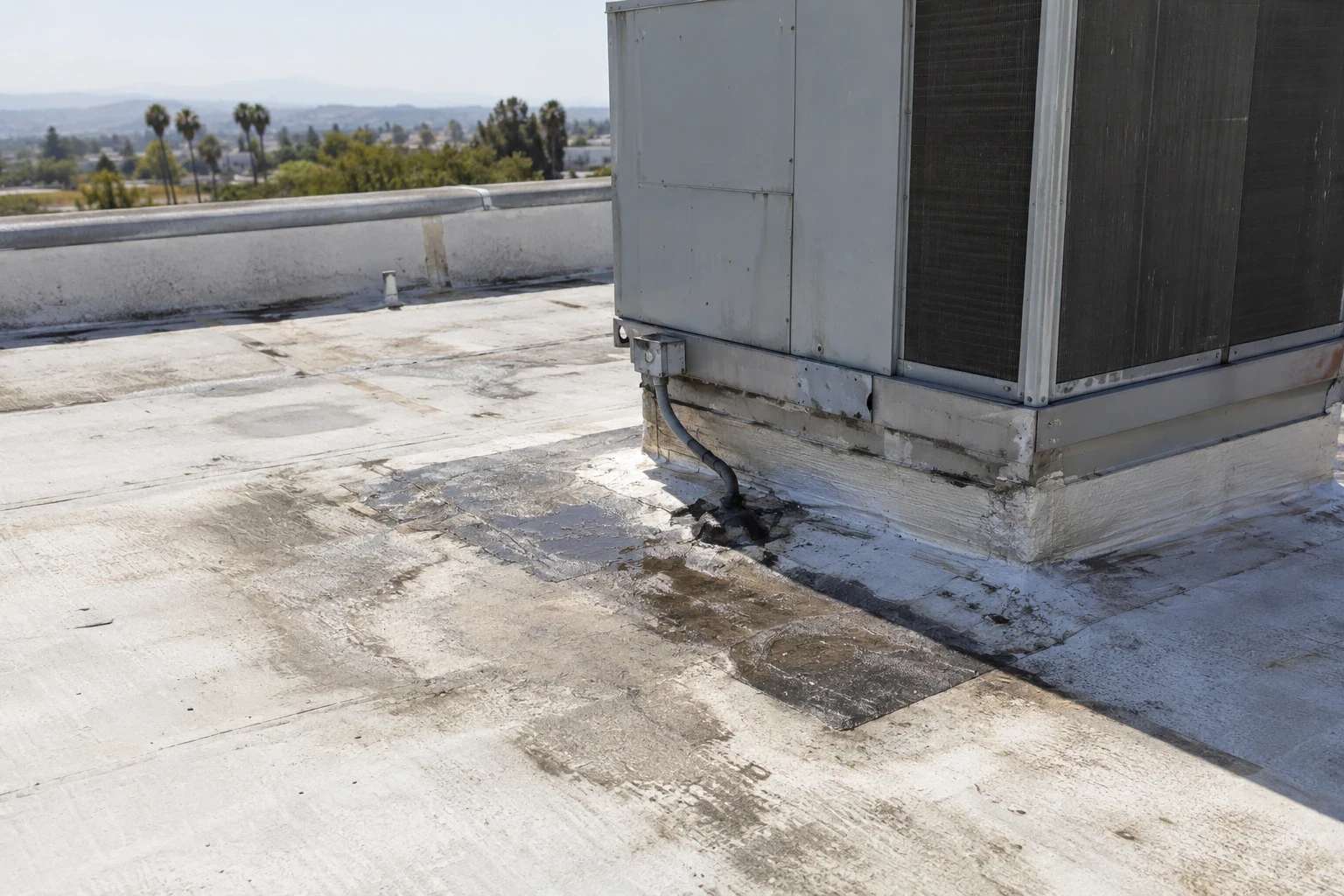
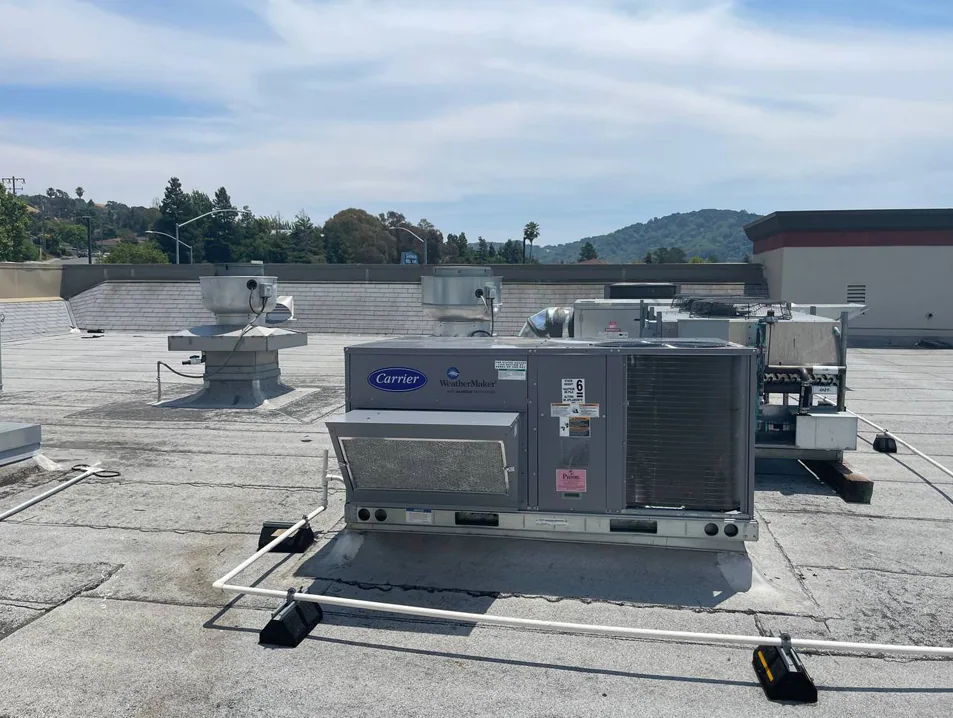
Hotel roofs may carry large HVAC units, exhaust, kitchen lines, communications equipment, and walkways. Each curb or support affects the waterproofing, and maintenance crews need a route to service the equipment after roofing is complete. We check curb corners, base flashing, fasteners, support pads, and clearance around access doors. Where another trade must move a unit, the scope identifies that handoff before the roof is opened.
Roof equipment can also mask a seam or drain. We mark each component against the roof plan and look for a failure that continues beyond the visible curb. A focused repair should not leave an adjacent flashing loose or block access needed for future service. The curb and equipment-support review addresses the transition, while the full hotel roof map keeps the work tied to its building zone.
Check Drainage and Interior Risk
Hotels can have several roof levels, courtyards, canopies, and parapets that change how water moves. We follow the drainage path from the field to the drain bowl, scupper, or overflow. Debris or a damaged drain may be part of the issue, but ponding can also reflect slope or a settled assembly. We note what is visible and identify testing needed before a larger area is opened.
Interior risk can help set order. Active water near electrical, guest service, or food-preparation areas may need immediate stabilization while the owner plans a permanent repair. If insulation is wet, we map the limit before closing the surface. Roof drain and scupper repair can be scoped with membrane work where both affect the same roof section. The repair plan should keep outlets open as crews move from one zone to another.
Use Hesperia's Districts as Context
The Hesperia Freeway North District plan includes residential, business-park, and regional-commercial uses. The Main Street and I-15 District is described as a mixed-use area near the freeway corridor. The areas provide planning context; the hotel entrance, receiving point, and roof access determine the actual material route.
Hotels also rely on arrivals and service access that can change by hour. We ask which entrance stays clear, where a lift can stage, and how to separate roofing from guest circulation. The restaurant roof review adds kitchen exhaust and dining-space coordination when those operations share the building. A Freeway North District review or Main Street and I-15 District context can orient the discussion without replacing a building-specific access plan.
Compare the Repair Boundary
A localized curb or seam repair may be appropriate where surrounding membrane remains sound. Extended-stay spaces share issues with residential buildings; an apartment roof assessment considers those access needs. Repeated openings, brittle surfaces, wet insulation, or failed perimeter details may point to a broader restoration or replacement. We record the condition by roof level and compare each area separately. An older addition or canopy may have a different assembly from the main guest-room block, so one recommendation should not automatically cover every surface.
Coating is considered only when the substrate, seams, preparation, and drainage support it. A recover or replacement needs the right attachment, elevation, and transition at walls, drains, and equipment. A roof-coating restoration review can check whether the existing surface is a candidate. If removal is needed, a replacement scope defines the sections, interior protections, and trade coordination before work begins.
Set Quiet and Close-In Windows
Hotel work is scheduled by roof section, access, guest impact, and the ability to close the assembly before a shift ends. The operations contact can identify quiet hours, room turnover periods, event schedules, and service routes. We identify the expected noise and vibration for each phase rather than describing all work as a single interruption. If a lift or crane is needed, the property team selects a staging area away from required guest access.
Hesperia 2 E's normals put the August daily maximum at 97 degrees. That is climate context rather than a roof-surface reading. We check actual temperature and material condition when selecting the work window and close-in plan. A phased occupied-building reroof plan keeps those daily boundaries visible as the work advances.
Set the Scope and Closeout
Price depends on roof area, access, tear-off depth, insulation condition, number of equipment details, and interior protection. Guest-room coordination can affect schedule and the order of work, but it should be described separately from the roofing material and labor. If units must be moved, the proposal identifies what the roofer handles and what the mechanical contractor must provide.
We divide the cost into confirmed repair, testing, and possible concealed work. A test opening that finds wet insulation can change the boundary, so the owner needs the chance to review the evidence before adding removal. Photos and a roof map make that decision easier to follow. The same record lets the hotel maintain an active room and roof schedule without assuming that every later leak is part of the current scope.
Before a work zone is released, we inspect seams, drains, curbs, and edge details, clear debris, and confirm that roof access can return to the agreed condition. Closeout marks each completed section, material transition, and maintenance note. If a temporary room or access restriction was used, the hotel contact coordinates its return to service.
The roof record should identify where the work ended and what remains outside the scope. A future room report can then be compared with the completed zone instead of treated as a general hotel-wide problem. For water entering a guest area before planned work, emergency repair is available any hour, holidays included. Share the room, roof access details, and current water condition to scope the first response.
Commercial Roofing Questions
Can guests remain in rooms below roof work?
That depends on the work type, noise, vibration, interior protection, and the hotel's operating choice. We map each phase to the space below and agree on notice and access.
What should hotel staff provide before the roof review?
Share room or corridor locations, floor plans, leak history, roof access rules, equipment details, quiet hours, and the operations contact who approves changes.
Can roof work be scheduled at night?
A night shift may change lighting, noise limits, access, and the time available to close a roof section. We plan around the property's requirements and system conditions.
How does Hesperia's heat affect the schedule?
Hesperia’s long-term climate normal shows a 97-degree August daily maximum. We check the roof surface and current weather before setting application and access windows.
When should a hotel replace rather than patch?
Repeated failures, moisture across multiple zones, or deteriorated seams may support comparing broader renewal with a repair. The roof map shows the evidence and any open question.