Solar-Ready Commercial Roofing in Hesperia, CA
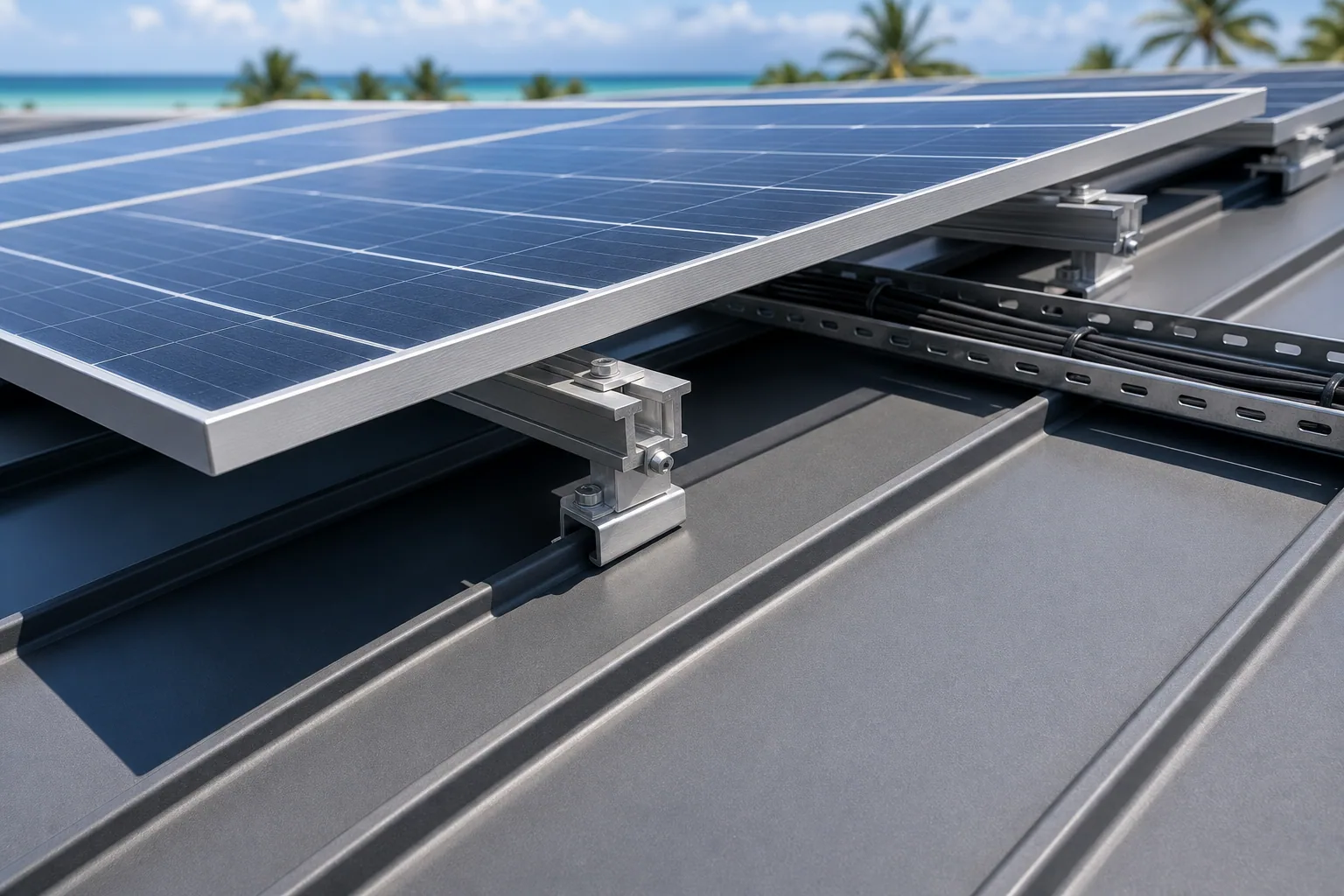
Solar equipment adds penetrations, supports, wiring paths, and maintenance traffic to a roof that already has to drain and protect the building. A solar-ready scope starts with the roof assembly and its remaining service condition, not with a panel layout alone. Hesperia's August normal daily high of 97.0°F comes from the 2 E station's 1991-2020 record; we assess the actual assembly directly. We inspect the roof and planned support locations before solar work. We review the membrane, seams, flashing, insulation, drainage, and roof records, then coordinate the roofing details with the solar designer's loads and attachment plan. A commercial roof inspection can define what is visible and which conditions need further testing.
Start With Roof Life and Condition
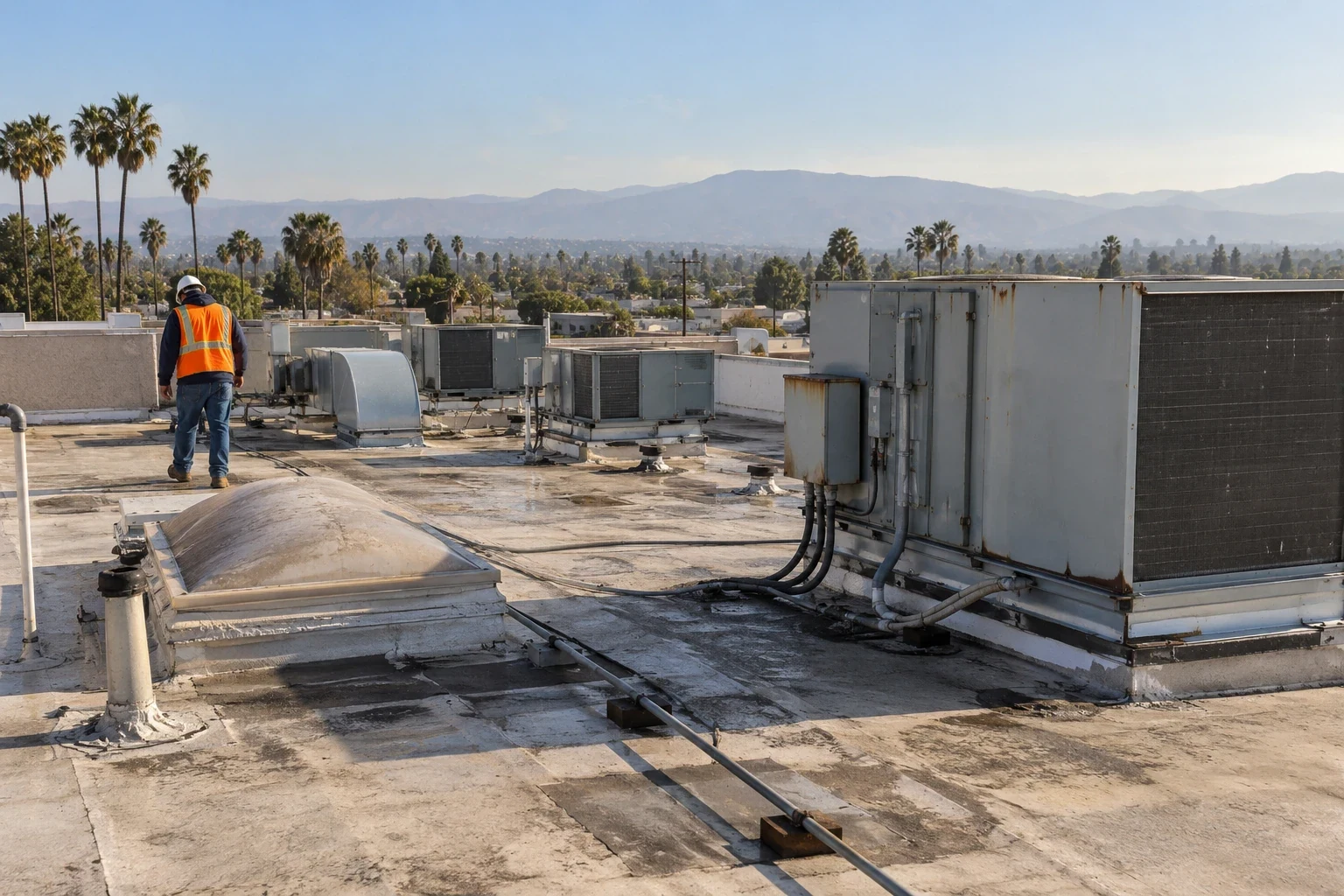
A roof can be dry today and still be a poor base for new equipment if seams are brittle, insulation is wet, or repairs are failing across the field. We map roof sections, record system type where it can be identified, and note open laps, aged sealant, ponding, soft areas, and prior patches. A test opening may be appropriate when the visible surface cannot answer whether moisture is trapped below. The owner can then compare repair, restoration, and replacement before solar equipment makes access more difficult.
Existing warranties and roof records should be reviewed before an attachment method is selected. We identify the system manufacturer and available detail documents, while the solar contractor or design professional supplies the equipment loads and attachment requirements. The roofing scope can then address the waterproofing tie-in around each support and preserve the roof details required by the specified assembly. A roof condition report keeps observations, open questions, and the decision boundary together for the project team.
Coordinate Supports and Penetrations
Every attachment transfers forces through a specific path. The roof review identifies the membrane or panel, insulation, cover board, deck where known, and proposed support locations. Structural capacity and attachment engineering must be established by the project design team. The roofer then details the waterproofing at approved attachment points and confirms that supports do not obstruct drains, cover a seam that needs service, or block access to rooftop equipment. If the solar layout changes after the roof scope is set, the details need another coordination review.
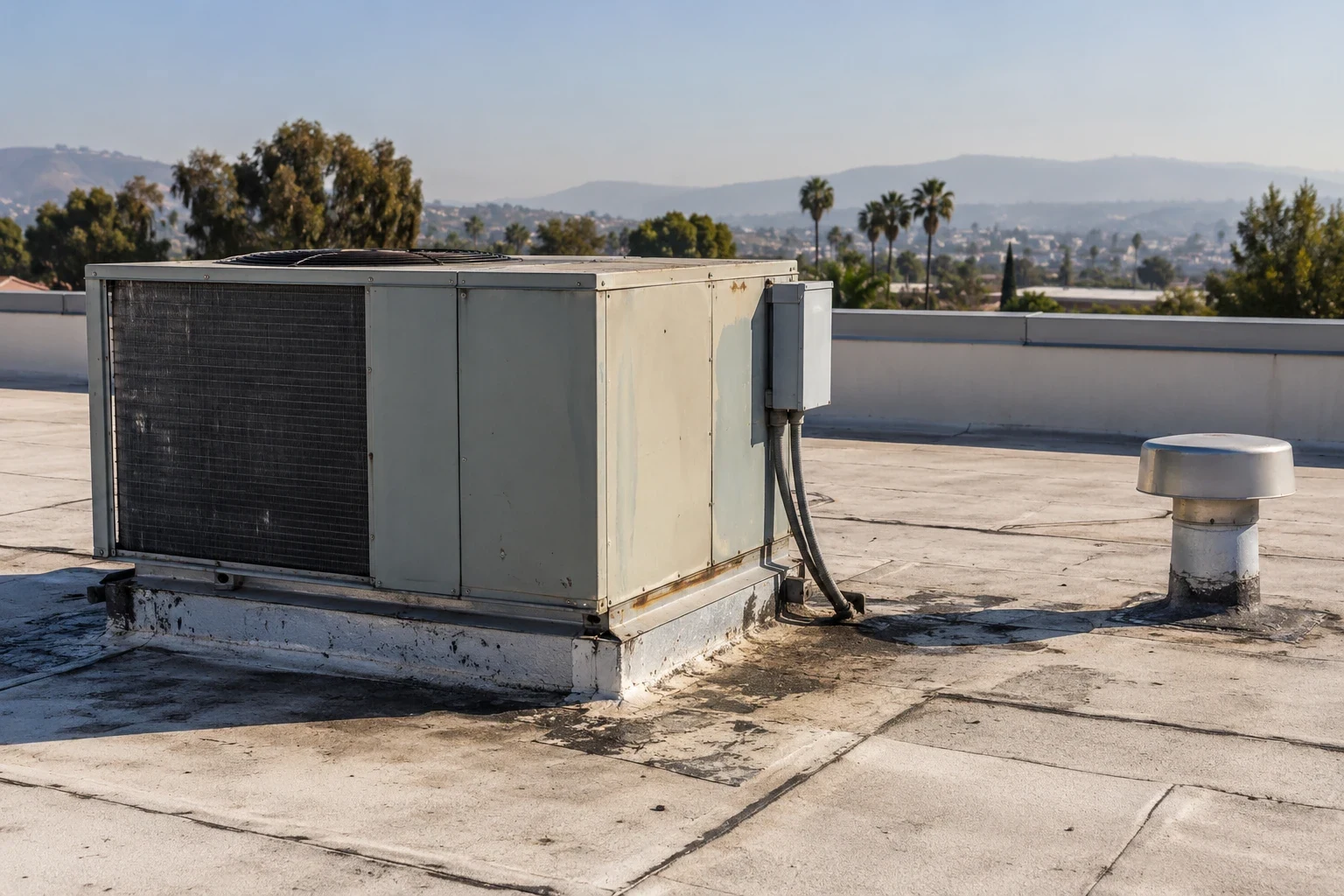
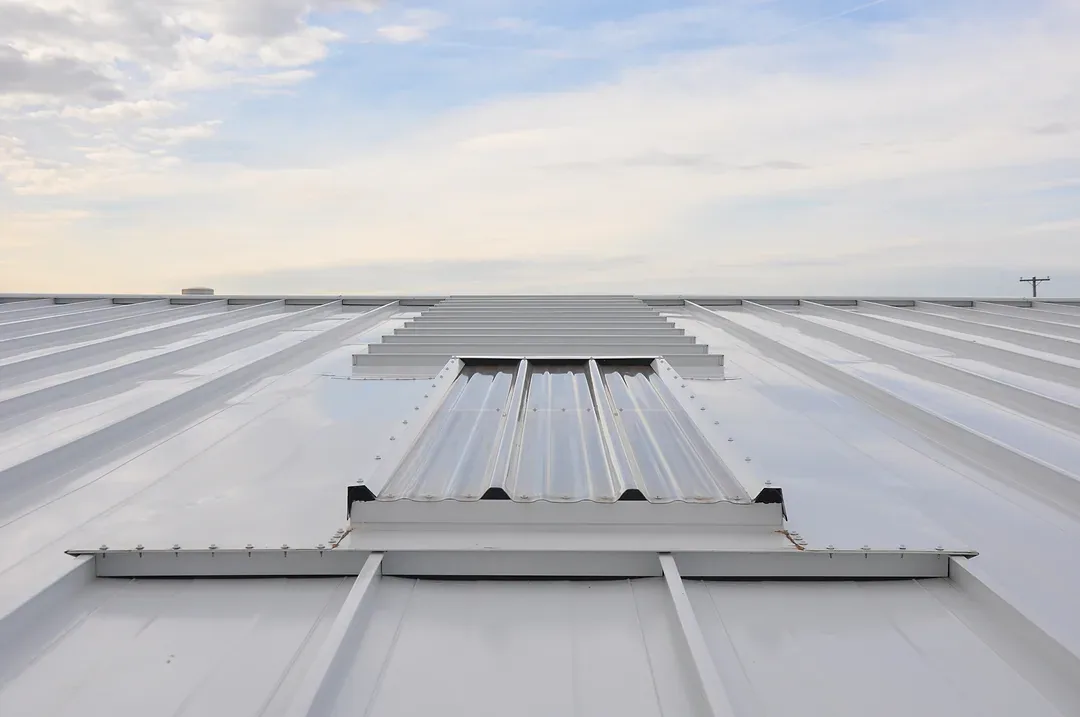
Penetrations need compatible boots or flashed curbs with a tie-in suited to the existing roof. On metal roofs, panel profile and movement affect how a support is attached and sealed. On low-slope membranes, the selected detail must connect to sound material and be accessible for inspection. A standing-seam roof assembly calls for panel-specific coordination; a membrane roof needs its own approved penetration detail. A solar support needs a compatible flashing assembly that connects to the roof system and maintains drainage.
Keep Water and Service Paths Clear
Solar rows should leave a maintenance route to drains, scuppers, access hatches, and mechanical equipment. Before installation, we compare the roof plan with the proposed array and mark clearances that affect inspection and repair. A support foot or cable path placed in a low area can collect debris or interrupt water flow. If drainage is already slow, correct that condition before the equipment makes the area harder to reach. Our drain and scupper review checks the roof's water path and the components that carry it off the building.
Roofing and solar trades need a sequence for staging and penetrations. The solar team should identify where equipment will land, how materials reach the roof, and who restores any temporary opening. The roofing scope should state which party supplies supports, flashings, and any structural blocking. A closeout walk can verify that attachment points are sealed, service paths remain open, and roof drainage is not covered by wiring or debris.
Plan for Hesperia's Roof Exposure
That normal is useful context for heat exposure, but the roof surface and installation conditions must be checked during the actual work window. Heat cycling can affect membrane movement, sealant condition, and the timing of adhesive or flashing work. We record the roof system and the condition at each planned attachment zone, then coordinate installation so the new detail is completed with compatible materials and allowed cure time.
I-15 and U. S. 395 connect Hesperia with regional freight markets. Warehouse projects along those corridors are aligned with designated truck routes. For an industrial or warehouse property, solar material delivery can interact with loading routes and active yard operations. We confirm staging, gate access, roof access, and equipment shutdowns with the property contact instead of assuming a standard route. A broad Highway 395 and I-15 District reference provides context for the commercial setting; each project's logistics still depend on the individual site.
Set the Work Sequence Before Mobilization
Start with records and a roof walk, then settle the solar layout, support locations, and roofing details before material arrives. If testing is needed, complete it before the array blocks access. If the roof requires renewal, compare that work with the intended solar schedule so a new system is not installed over a roof that is near the end of its useful life. A cover-board and insulation review can help identify conditions that change the roof scope.
During construction, mark completed roofing tie-ins before the solar crew installs adjacent equipment. Keep drains, walk paths, and temporary protection visible in the daily work plan. The closeout record should identify attachment locations, roof areas completed, system materials where documented, and any maintenance restrictions. If solar is planned for a roof that may instead need a recover, compare that option with a roof recover evaluation before approving the equipment schedule.
Make the Roof Decision First
Before an array layout is finalized, verify that the roof's expected service life, attachment zones, and repair history can support the project sequence. A targeted repair may resolve isolated defects, while widespread wet insulation or seam failure can justify replacement before equipment is installed. Identify penetrations and support bases on the roof plan and assign each detail to the appropriate trade. For a Hesperia industrial property, confirm lift staging and work-zone access with the facility contact. Keep structural analysis and electrical design with qualified project professionals; the roofing scope should define substrate, tie-ins, and weather-tight close-in.
A warehouse roofing review can map roof zones and access before the array layout is finalized.
Send the Roof and Solar Information
Send the property address, roof plan if available, current roof system, reported leaks or repairs, solar layout, support details, and project contact for the design or installation team. Include roof access rules, loading constraints, and any shutdown window. The first review can identify visible roof issues, coordination questions, and tests that may be needed before the attachment details are approved.
Emergency roof repair is available around the clock, including holidays, if a leak needs attention before a planned solar project. A current leak should be scoped and stabilized before the array is placed over that area. We can outline the roofing work and its interfaces with the solar installation, while structural design and electrical work remain with the qualified project team.
Commercial Roofing Questions
Can solar go on the existing commercial roof?
That depends on roof condition, moisture, attachment design, and remaining service life. We inspect the assembly and coordinate approved support details before equipment covers the work area.
Who determines whether the roof can carry the panels?
The project design professional establishes structural capacity and attachment requirements. We document the roof assembly and detail the waterproofing around approved supports.
Should roof replacement happen before solar installation?
If the roof has widespread deterioration, trapped moisture, or a short remaining service life, compare renewal first. Future access beneath a solar array can make roof repairs more involved.
How do Hesperia conditions affect the roof plan?
We consider heat exposure in material selection and work sequencing, then verify actual conditions during installation.
What should the solar contractor provide?
Provide the current layout, equipment loads, attachment details, cable paths, staging plan, and schedule. Those items let the roofing scope resolve penetrations and access before work starts.