Commercial Roofing in Victorville, CA
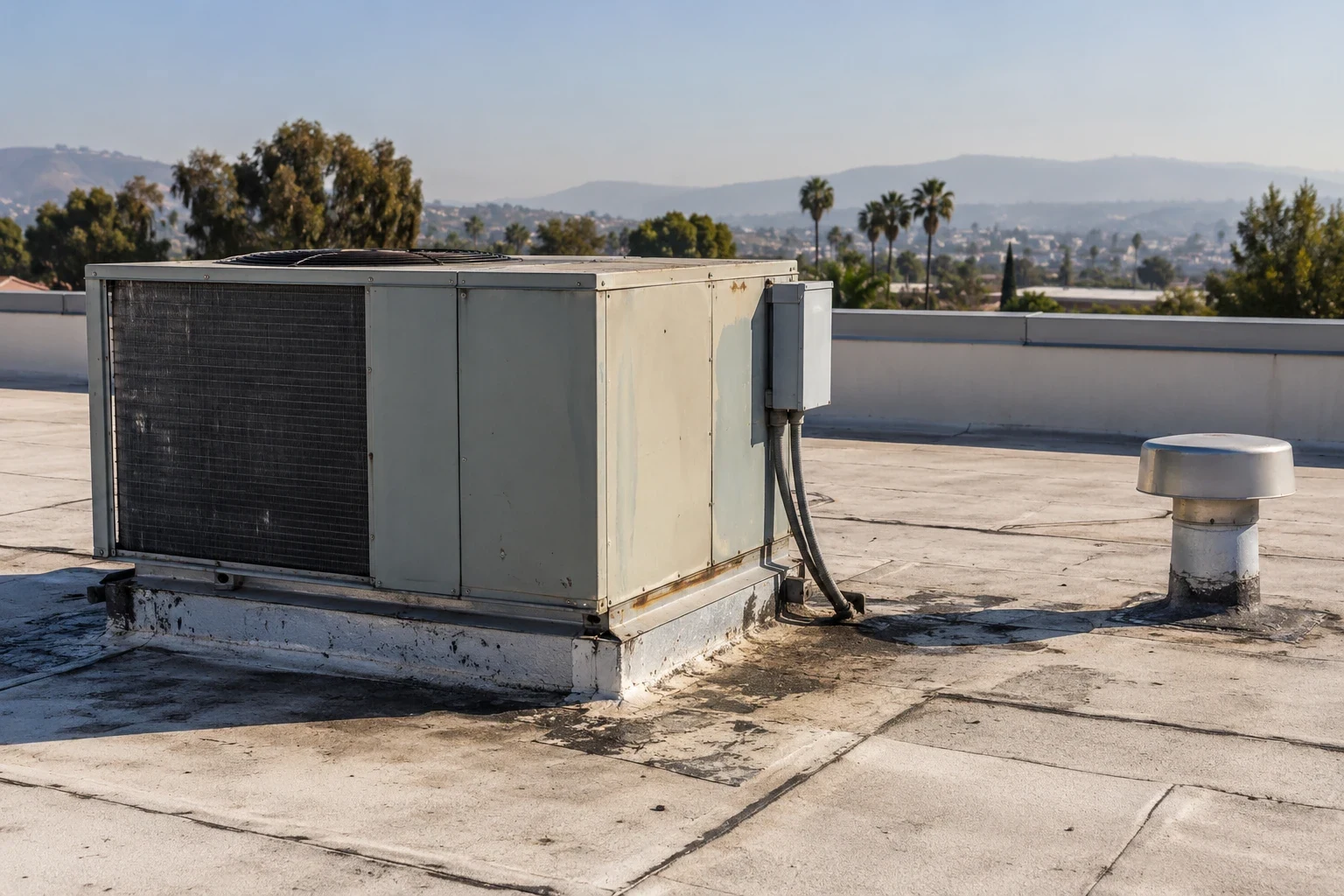
A warehouse leak can disrupt a receiving door before anyone knows which roof seam failed. For a commercial property in Victorville, CA, the first useful step is to map the reported interior area against roof drains, penetrations, and prior repairs. Victorville's 2022 transportation and warehousing receipts totaled $407,719 thousand. For an operating building, deliveries and access may shape the work window. We inspect the actual roof, identify its assembly, and state what can be repaired or needs testing.
Plan around a freight-oriented operation
Transportation and warehousing receipts give an owner a reason to ask about receiving schedules, but they do not describe one facility's operations. We confirm when loading areas are active, where a lift can stage, and which doors need to remain clear. The crew's route from the gate to the roof should be settled before material arrives. If roof access crosses a truck path, the work plan identifies the crossing, the time window, and who can pause deliveries if the condition changes.
Victorville's 2022 retail sales totaled $2,945,338 thousand. At active commercial buildings, entry protection and debris handling can matter as much as the roof repair itself. We identify customer paths, public entries, and any service lane beneath the proposed work. The nearby Adelanto and Apple Valley markets have separate property needs, but the inspection in Victorville starts with this building's access and observed roof conditions.
Find the entry point before pricing
Interior water can travel before it appears at a ceiling. We locate the reported stain, then examine likely roof transitions, including seams, curbs, skylights, edge metal, and drains. If the source remains uncertain, a small test opening may show whether insulation is wet or the leak path turns along a roof layer. We explain what the test is meant to establish before opening the surface. A commercial roof inspection can record both the visible defect and the area that remains unconfirmed.
The nearby Hesperia market connects to Victorville through the broader I-15 and U.S. Highway 395 network. Those highways provide regional travel context; they do not establish which road a crew should use for a particular property. We confirm the address, gate, roof access, and staging conditions with the site contact. For a roof with repeated leaks, a condition report can keep observations and repair boundaries together instead of relying on separate service tickets.
Trace damage through the assembly
A roof repair should follow the water path and stop at a sound boundary. A split at a pipe boot may call for a local flashing repair if nearby membrane and insulation remain dry. A larger wet area may require removal beyond the visible opening. We inspect drains and low points as well, because ponding can add stress at seams and patches. The work scope identifies the material removed, the tie-in, and the condition left beside the repair.
If the property has a single-ply membrane, we identify the product family before selecting repair materials. TPO, PVC, EPDM, and other systems use different details and compatibility requirements. A TPO roof review begins with the actual surface and seam construction, not a citywide assumption. For a larger assembly issue, a replacement evaluation can compare phased renewal with a defined repair section.
Price the work that is actually included
Repair cost depends on access, roof height, the amount of material removed, insulation condition, membrane type, edge details, and the tie-in required. A short patch can become a larger scope if opening the assembly exposes wet insulation or another roof layer. We mark those conditions as potential changes and explain what decision the owner will face if they appear. That keeps the initial estimate from hiding a known uncertainty.
Timing also depends on weather, product requirements, lift availability, staging, and the building's receiving hours. If the loading area must remain open, work can be sequenced by roof section, with the close-in point stated for each shift. The repair scope should list protection, removal, tie-in, cleanup, and any follow-up check. If the roof is dry and stable outside one isolated defect, a maintenance review can track those sections without expanding the immediate repair.
Close the loop after the repair
The owner should receive a record that identifies the repaired roof zone, photographs the tie-in, notes material used, and states whether any adjacent condition remains under observation. If opening the assembly reveals a different system or wet area, that finding is documented before close-in. A manager can then distinguish the repair from the next item rather than treating the building as either fully fixed or completely failed.
For portfolio owners, a repeatable file keeps building identifiers, access contacts, and roof plans together. Victorville's economic activity does not identify which roof needs replacement. Confirm the building's hours, customers, inventory, delivery schedule, and roof history directly. Keep its assessment separate from a Freeway North or Industrial District property record. A roof asset record can preserve Victorville's repair history for the next review.
Protect drains and low points
A roof above a receiving area needs clear drainage before and after a repair. We check whether strainers are seated, whether debris is collecting at the drain bowl, and whether a scupper discharge can reach its intended path. A follow-up image can show whether the drain basin clears after rainfall, with the outlet and low point marked on the roof sketch. We do not call standing water a membrane failure without checking the assembly and drainage detail.
Where a drain or overflow is damaged, the scope should identify the roof-level part and any site plumbing or ground drainage question that falls outside the roof work. The owner can then assign the right trade without leaving the roof question unresolved. A good repair file notes which outlet was checked, what was cleared or repaired, and whether a return observation is needed after the next rain.
Keep dispatch and roof records aligned
Regional operators often coordinate building work with receiving staff, a property manager, and a central maintenance contact. We identify who can release roof access and who needs the closeout photos after work. If a delivery schedule changes on the day, the work plan should state who can move the lift or shift the roof window. That simple contact chain matters when a repair needs a test opening before a permanent tie-in can be approved.
For a building with several roof zones, the record should show each zone on a plan and use the same label on the estimate, photos, and invoice. A manager can compare the repair to earlier work without relying on a crew member memory. If the section has a separate system from an addition, we note that boundary before the next project is priced.
Commercial Roofing Questions
Can you keep a receiving lane open during roof work?
We confirm the delivery schedule, lift route, work zone, and overhead protection before setting a sequence. If the lane cannot be safely shared, we identify the alternate window with the property contact.
What should happen if the leak source is not visible?
We map the interior report and roof observations separately, then identify a test area if concealed conditions could change scope. The owner sees what the opening is meant to confirm before work expands.
Does Victorville's transportation activity identify warehouse roof conditions?
No citywide economic measure describes a particular roof. It can prompt useful operating questions, while the inspection establishes the membrane, drainage, transitions, and access at the building.
What makes renewal more practical than repeat repairs on a Victorville roof?
We compare replacement when deterioration spans multiple sections, moisture is confirmed, or repairs cannot reach a sound tie-in. The report shows what is confirmed and what remains dependent on testing.
What should be in the closeout file?
Keep the roof-section location, photos, material tie-in, repair boundary, observed condition at close-in, and any follow-up date. That file lets the next manager understand exactly what changed.