Commercial Roofing in Eastvale, CA
A roof leak above an active shop or service area needs two plans: one for the water path and one for people moving below. In Eastvale, CA, we identify the affected roof section, locate drains and transitions, and agree on a safe access route before choosing a repair. Eastvale had 69,757 residents in the 2020 count, a growing city with commercial properties that can have varied tenant schedules. That citywide figure helps frame the scale of occupied space a manager may serve, but it says nothing about any particular building’s roof. We inspect the actual assembly and document the condition that controls the next decision.
Follow the roof path, not the stain
Water may travel from an opening to a distant ceiling mark, especially where insulation, deck flutes, or an old repair carry it sideways. We begin at the reported interior location and compare it with roof slope, drains, wall transitions, and penetrations. The field review checks whether the surface is split, loose, punctured, or holding water, then notes what lies beneath if an authorized opening is needed. We record the tested area and the limits of access. If two rooms show moisture, we do not assume a single defect connects them. The evidence determines whether one repair can close the path or separate roof sections require their own investigation.
Connect commercial activity to the work plan
Eastvale recorded $984,320 thousand in retail sales for 2022, while transportation and warehousing receipts reached $243,653 thousand. These citywide figures do not identify the use or condition of an individual property. They make it useful to ask whether the roof work touches customer entrances, receiving activity, service visits, or a room that must remain open. The Eastvale property representative confirms the entry, staging area, and permitted access window. A service business may need a clear parking entrance, while another building can schedule work away from deliveries. The roof scope is based on the assembly and reported leak, and the staging plan reflects how that property operates during the chosen work window.
Check where water is meant to leave
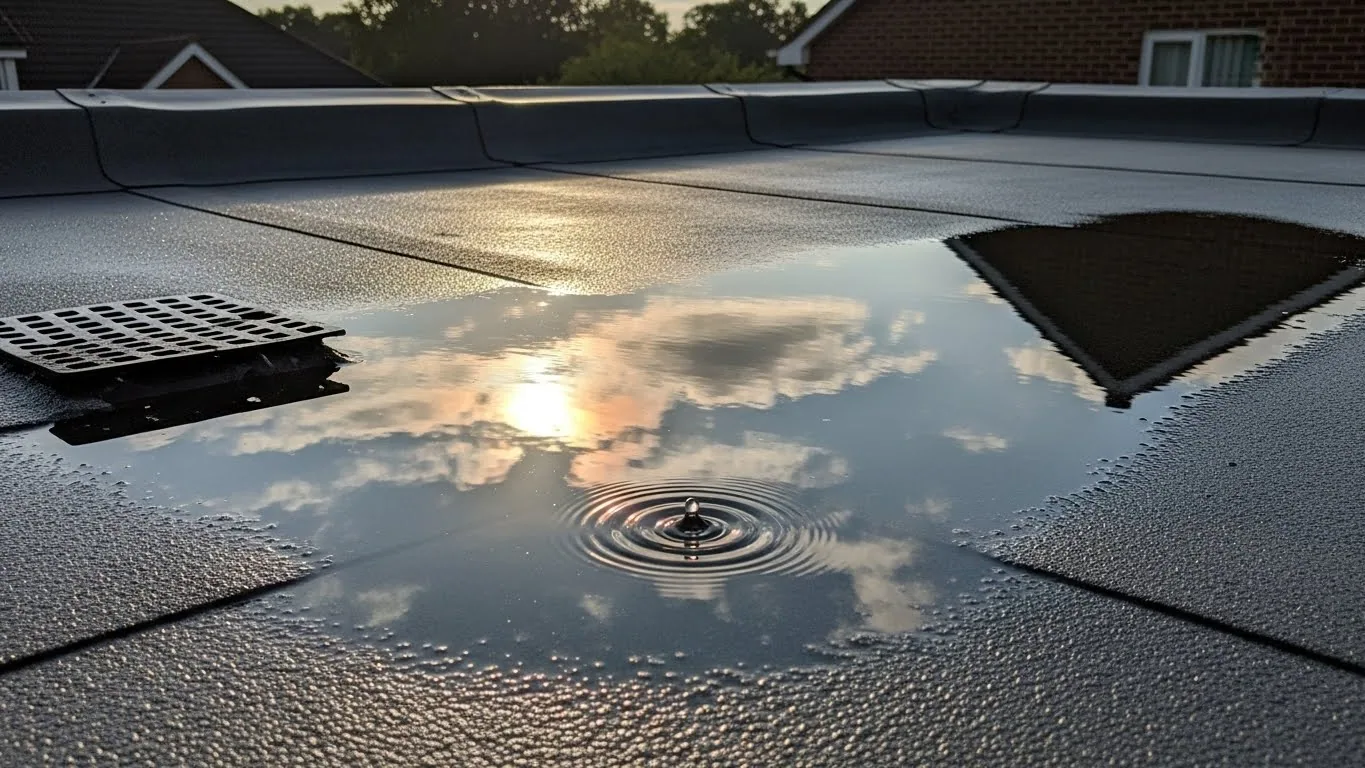
A roof can appear dry at the leak location while a drain bowl, scupper, or low area remains wet. We inspect the path to the outlet and note debris, standing water, soft cover board, or membrane separation that could change the repair. Clearing a drain may restore flow, but it does not establish that insulation below is dry or that the roof has adequate slope. Where a water line remains after the surface clears, we record the observation and arrange a suitable moisture check. The commercial roof inspection can map the drain path and tested area; ponding-water roof repair addresses the separate question of persistent water at a low point.
Protect entry and occupied areas
Before opening the membrane, we confirm who can authorize roof entry, where materials can be placed, and which interior area needs protection. A lift or ladder can alter pedestrian movement; a small repair may still need a closed doorway or a spotter near the work zone. We keep the opening limited to the approved footprint and define how it will be made weather-tight before the crew leaves. If the property cannot pause a particular activity, we sequence that roof section for a quieter period or another visit. Clear access instructions also help a follow-up inspection return to the same location and avoid disturbing unrelated tenants.
We also agree on how the owner will receive a daily status and who can approve a scope change if the opened area reveals a concealed problem. That matters when interior protection must remain in place overnight or another trade needs the roof the same day. The work plan identifies the close-in point, the condition that triggers a pause, and the person who can authorize the next step. Each decision stays attached to the inspected section rather than being carried forward as a general instruction for the whole property.
Choose the method that matches the assembly
A welded thermoplastic sheet, adhered membrane, coated surface, and multi-ply roof do not share one patch method. We identify the material from records and field details, prepare a test area when needed, and check whether the proposed tie-in can bond to sound material. If the repair uncovers wet insulation or a deteriorated deck, we stop at a safe boundary and explain what the next opening would establish. A commercial roof repair can address an isolated defect; a larger section may call for restoration or replacement planning. The owner can compare those options through EPDM system details when that is the assembly present, or through a system-specific review once the roof is identified.
Return the findings to the roof record
Closeout should make the work findable six months later. We record the roof zone, repair material, preparation, test result, and any area that remained inaccessible. Photographs show the opening before work, the tie-in, and the completed close-in. If the inspection found a separate concern at an edge or curb, we list it outside the patch quantity so the owner can decide whether to authorize it. A roof condition report can keep these observations with the maintenance and capital record. For a second property under the same manager, Moreno Valley receives a separate roof map, contacts, and work limits rather than an assumed match.
A useful report also distinguishes maintenance observations from repair work. A clogged drain, loose edge, and completed patch may belong in the same visit record, but they are separate decisions and should remain separately described. We note whether the item was corrected, tested, or left for approval, then identify the next review point. That gives a new facilities contact enough context to understand what happened without assuming an open item was completed or a temporary control was permanent.
Make the next decision specific
The useful next step depends on what the first visit confirms. A dry, stable surface may need a compatible patch and a follow-up check. A wet assembly calls for a defined opening and a close-in plan before removal proceeds. A recurring leak across several sections may justify a broader condition review. We state what the inspection supports and what evidence would change the scope. To prepare, share the property address, available roof drawings, the room or area affected, business hours, and the person arranging access. If a nearby site in Chino needs attention too, its findings remain specific to that building and are documented separately.
Commercial Roofing Questions
How do you locate the source of a ceiling leak in Eastvale?
We compare the interior report with roof slope, drains, seams, and penetrations, then inspect the most likely path. Moisture readings or a controlled opening may be needed when the assembly hides the extent. The findings identify tested areas and call out roof zones that remain untested.
When is drain cleaning enough to address standing water?
Cleaning can restore flow if the outlet is blocked, but it does not correct a low roof area or wet insulation. We check the drain, surrounding membrane, and water boundary, then document whether water remains after the outlet is clear.
Can repair work be phased around customers or deliveries?
Yes. We agree on the access route, staging point, interior protection, and time the area can be closed. If the property has a busy entrance or receiving period, the sequence can move the roof work to another zone or work window.
What should be ready before we inspect?
A roof plan, leak location, prior repair notes, operating hours, and access contact help focus the visit. We still verify the assembly and conditions in the field before recommending a repair method or estimating removal.