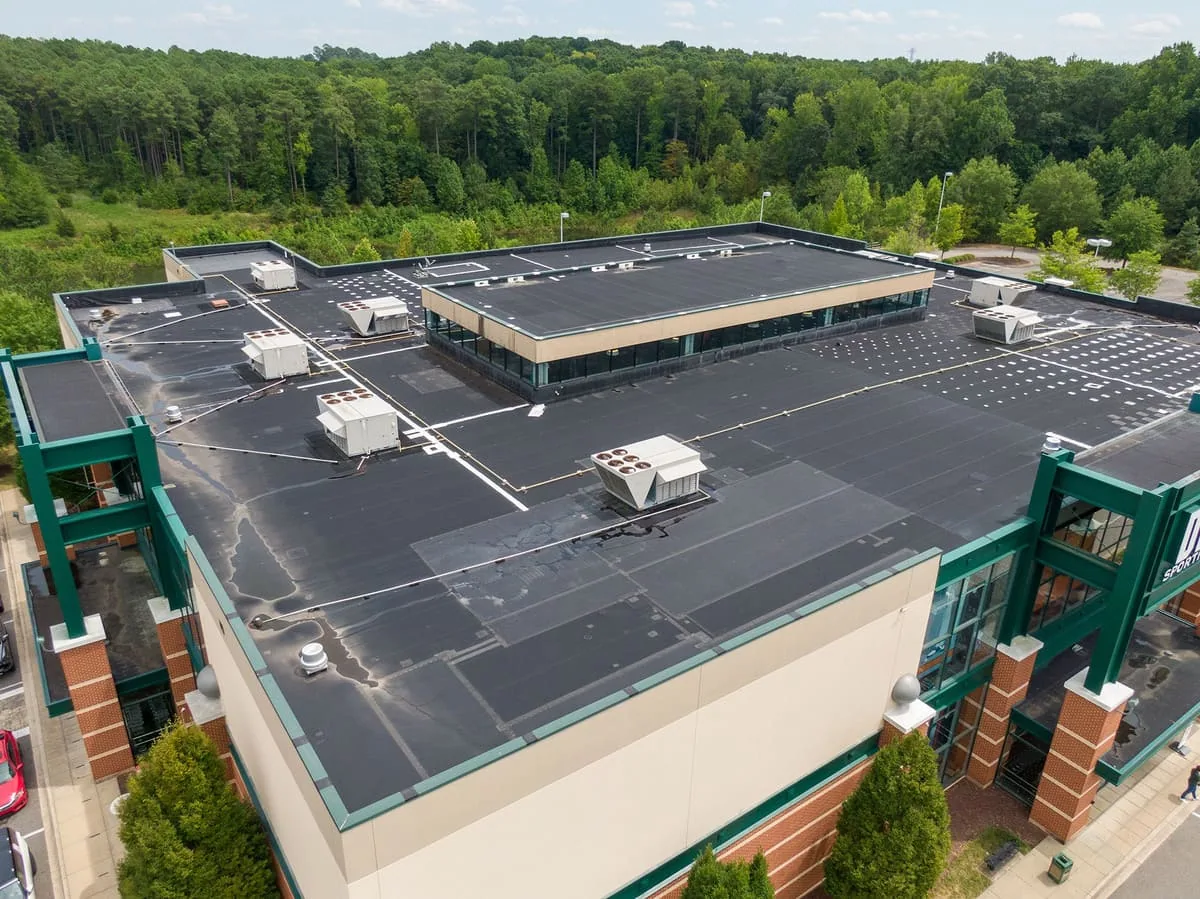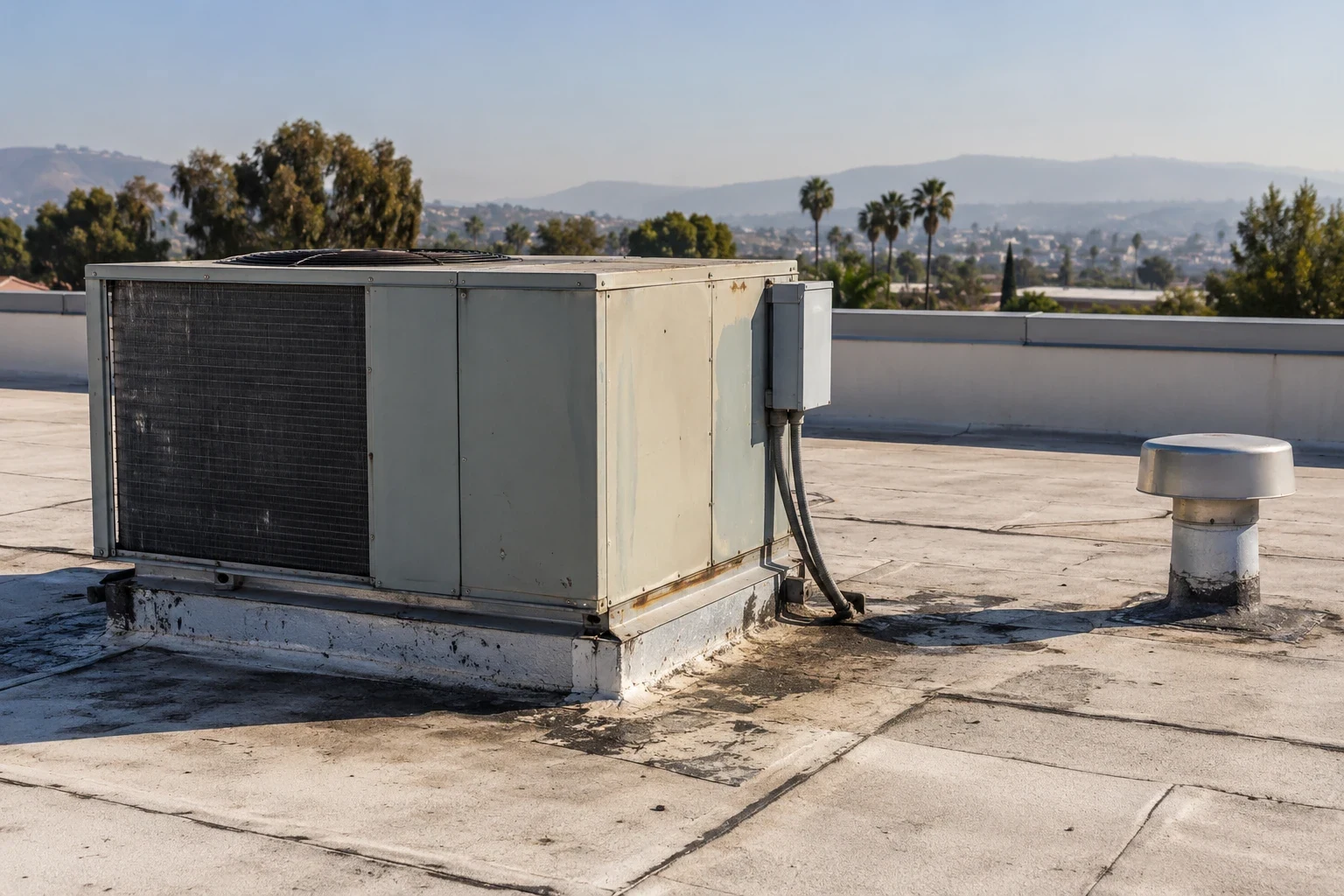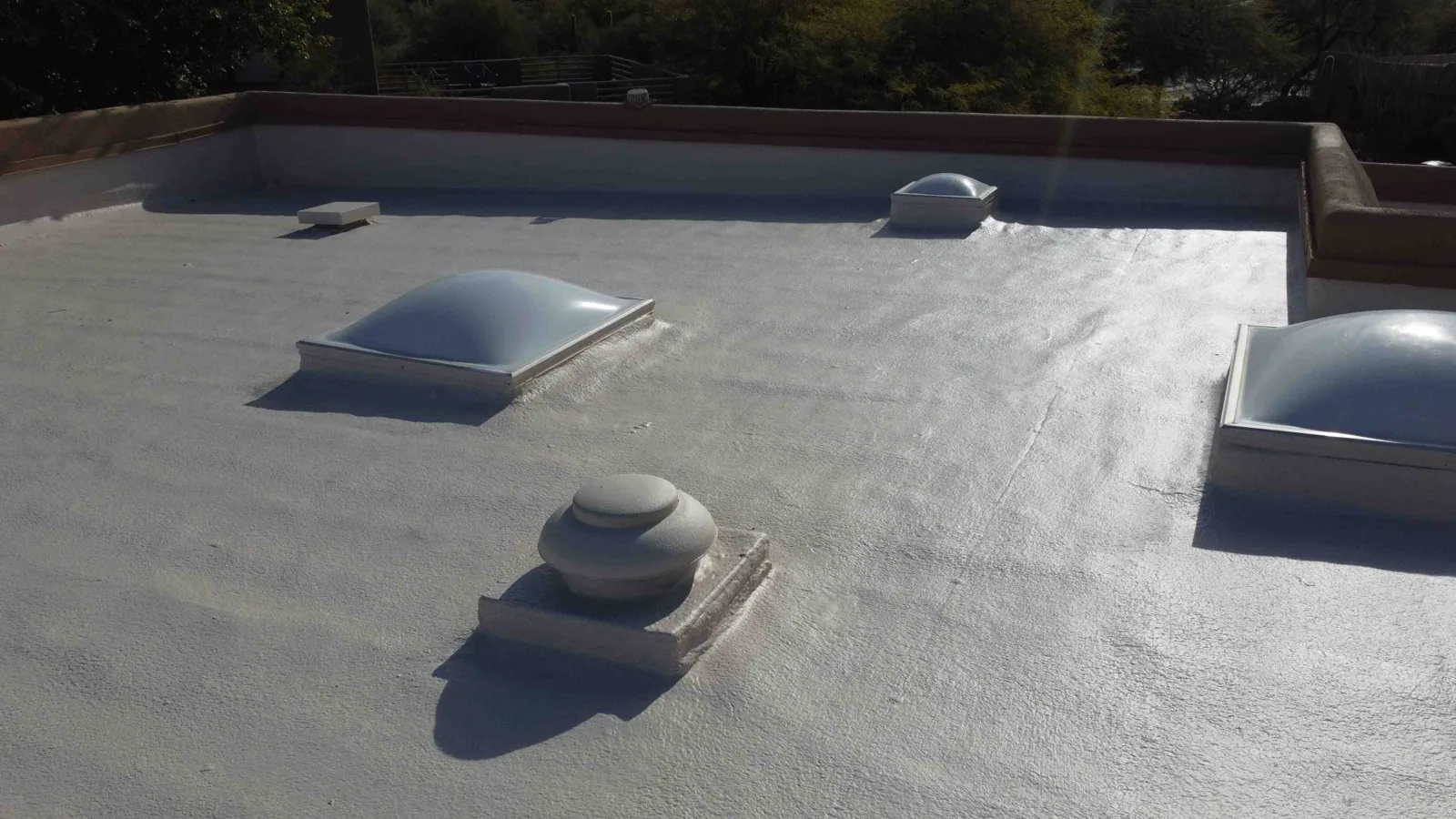
Commercial Roofing in Chino, CA

Commercial roofing in Chino starts with the building, not a standard package. A roof over an office, retail tenant, warehouse, or public use can have different drainage, insulation, edge, and equipment details even when the symptoms look alike from inside. We map the affected area to a roof section, record what can be reached safely, and identify what needs closer inspection before discussing a scope. That prevents an interior stain from being treated as proof that the entire assembly has failed. For Chino property owners, a useful first conversation covers the address, roof age if known, prior patches, access rules, and what changed before the leak appeared. The inspection can then focus on the right details and leave the owner with a clear choice of next step.
Use local context without assuming a roof type
Chino had 91,403 residents in 2020. Chino's 2022 retail sales were $2,380,225 thousand, and its transportation and warehousing receipts were $871,490 thousand. Those citywide figures describe economic activity, not a particular building or roof. For a property manager, their practical value is modest: commercial sites may have customers, deliveries, employees, and tenants using the same property at different times. The inspection plan should therefore identify receiving doors, pedestrian paths, sensitive interior areas, and any operating constraints before materials are staged. A number on a city table cannot establish roof construction, membrane type, deck condition, or repair history. We verify those items from records and the roof itself rather than inferring them from the surrounding market.
Trace the source before selecting a repair
A roof inspection should follow the water path. We note where water appears inside, what the weather was doing, whether the symptom changes after rain, and which roof section sits above the affected area. From a safe access point, the review covers drains, scuppers, seams, penetrations, curbs, parapets, edge metal, and transitions between systems. One weak detail can admit water that travels along a deck or insulation before reaching a ceiling, so the visible stain is a starting point rather than a repair boundary. If a moisture survey or test opening is warranted, the owner should know what the test can confirm, what it cannot show, and how the result would change the scope. A roof plan marked by section makes repeat visits and follow-up observations easier to compare.
Compare repair, recover, and replacement scopes
A repair is appropriate when the observed failure is limited and surrounding materials remain suitable for a durable tie-in. The proposal should identify the location, materials to remove, substrate condition to verify, compatible replacement materials, and the finished detail to inspect. If water or damaged insulation extends beyond the first opening, the scope may need an allowance or a new decision before work proceeds. A recover can reduce tear-off only when the existing assembly is dry enough, securely attached, and suitable under applicable project requirements. A coating is not a substitute for resolving trapped moisture, failed seams, or poor drainage. When the assembly has broad deterioration, a replacement scope can separate removal, deck work, insulation, membrane, edges, drainage corrections, and close-in milestones. Compare options against evidence, service life needs, disruption, and budget timing.
Plan access around the property schedule
Before scheduling work, confirm roof access, parking, loading areas, building hours, alarms, roof hatches, and the person who can authorize a changed scope. A delivery path that crosses customer parking or a shared drive should be planned with the site contact rather than assumed from a map. For occupied buildings, we identify which entrances or interior zones need temporary protection and how occupants will be notified. A small repair can often be contained to one section, while a larger project needs daily weather-tight endpoints and a defined sequence for materials and equipment. If rooftop units or electrical equipment are close to the work, their owner and trade responsibilities should be clear before removal begins. The access plan belongs in the work documents so the crew and property contact share the same boundaries.
Leave a record the next manager can use
A complete roof record is more useful than a brief note that says a leak was repaired. It should identify the building and roof section, inspection date, reported symptom, drains and penetrations reviewed, photographs, test locations, observed layers, and the work completed. Separate confirmed conditions from areas that were not opened or could not be reached. If the roof has several patches, mark each location so a future manager can distinguish prior repairs from new observations. After a replacement, retain product data, attachment and edge details, close-in photos, and any warranty documents provided with the project. That record helps maintenance staff understand what was changed and where an inspection should resume. It also gives ownership a basis for comparing later proposals without relying on memory or an unlabeled photo folder.
Make the next decision from documented conditions
A practical recommendation should connect the observed condition to the consequence of waiting and the boundary of the proposed work. If an active leak is isolated and the adjacent membrane is sound, a localized repair may be the right first action. If recurring water appears at several seams or moisture testing indicates a broader wet area, additional investigation or a phased replacement may be justified. A budget option should state assumptions about concealed conditions and explain what would trigger a revision. Owners can then weigh immediate protection against a capital project instead of comparing prices that cover different work. For multi-tenant properties, coordinate notification and interior protection with each affected occupant, while keeping responsibility for the roof scope with the owner or manager. A written decision trail makes the next inspection more useful whether the roof is repaired now or revisited during planning.
Related roofing work for Chino
A Chino roof concern may call for a focused commercial inspection, leak repair, or a broader replacement review, depending on what the roof shows. For an urgent condition, see Emergency Roof Repair; for a planned evaluation, start with Commercial Roof Inspection. Owners comparing options can review Commercial Roof Replacement and Roof Coating Restoration after confirming that the existing assembly is a candidate. Building-specific guidance is available for Distribution Center Roofing and Shopping Center Roofing. Nearby market context appears in the Chino Hills service area and the Hesperia City Center District.
Commercial Roofing Questions
What information should a Chino owner share before an inspection?
Provide the property address, a roof plan if available, known roof age, prior repairs, the rooms affected, and the site contact who can arrange safe access. Photos of an interior stain can help locate the concern, but they do not identify the roof entry point by themselves.
Can a leak in one room mean the whole roof needs replacement?
No. Water can travel beneath the membrane or along a deck before it becomes visible indoors. An inspection should connect the symptom to roof details and test only where evidence supports it. Replacement is considered when the documented condition extends beyond a limited repair area.
What should a repair proposal identify?
It should state the roof section, observed failure, materials to remove and install, substrate assumptions, protection and access needs, and how the completed detail will be checked. Any concealed condition that could change price or scope should be identified before work begins.
How is a recover different from a new roof?
A recover adds a new system over an existing assembly when that assembly is dry, secure, and eligible under the project requirements. A replacement removes some or all existing layers and can address substrate or insulation conditions. Inspection findings determine which option is appropriate.
What helps keep an occupied property operating during roof work?
A defined work zone, delivery route, protected entrances, interior safeguards, clear notices, and daily weather-tight stopping points reduce avoidable disruption. The owner should identify operating hours and restricted areas before the crew is scheduled.