Commercial Roofing in Chino Hills, CA

A commercial roof in Chino Hills should be evaluated from its own plans and conditions. A leak at a wall, drain, curb, or seam may leave a ceiling mark far from the point where water entered. We begin by documenting the affected space, roof section, access limits, and repair history, then use those details to choose inspection points. The result should separate a confirmed failure from a suspected area and explain whether a small repair, additional test, or broader project deserves consideration. That distinction matters when an owner needs to protect occupied space while deciding whether to request a capital estimate. A first review can use the address, available roof plan, recent photos, and a contact who knows the building's access and operating rules.
Read the market facts in the right context
Chino Hills had 78,411 residents in 2020. Chino Hills' 2022 retail sales were $1,047,359 thousand, and transportation and warehousing receipts were $141,288 thousand. These are citywide context, not evidence about a specific roof or tenant. Property owners still need to confirm the actual use, construction, and access conditions at their site. A retail location may operate on a different schedule from an office or community building; a shared property may have separate parking and maintenance responsibilities. We ask the owner or manager to identify who controls roof access, who receives leak notices, and who approves changes to the work. That prevents a contractor from treating general city data as a substitute for building records or assuming a neighboring business shares the same roof system.
Locate the detail that admits water
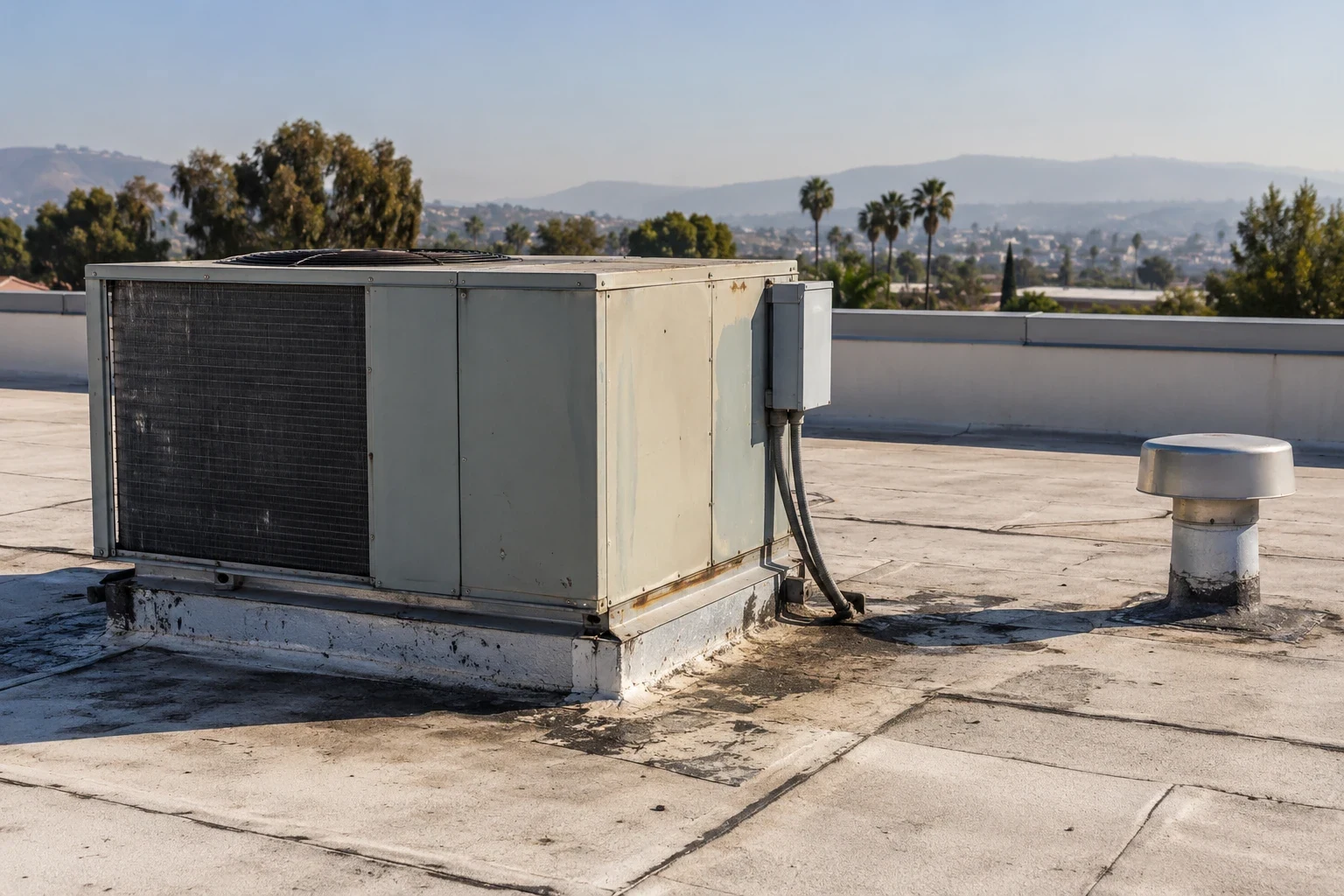
The inspection follows the roof geometry and the path water can take. We note slopes and low points, drain bowls, scuppers, parapet edges, wall transitions, skylights, mechanical curbs, and previous patches. Inside, the reviewer records when a stain appeared, whether it grows after storms, and which rooms or equipment are affected. Those observations narrow the search but do not prove that the nearest roof detail is defective. If moisture scanning is appropriate, its readings should be mapped and interpreted alongside the assembly and recent weather. A controlled opening may be needed to verify insulation or deck condition before a larger scope is set. The report should label tested areas and inaccessible sections so the owner knows where the evidence ends and where further investigation could change the recommendation.
Keep the scope matched to the assembly
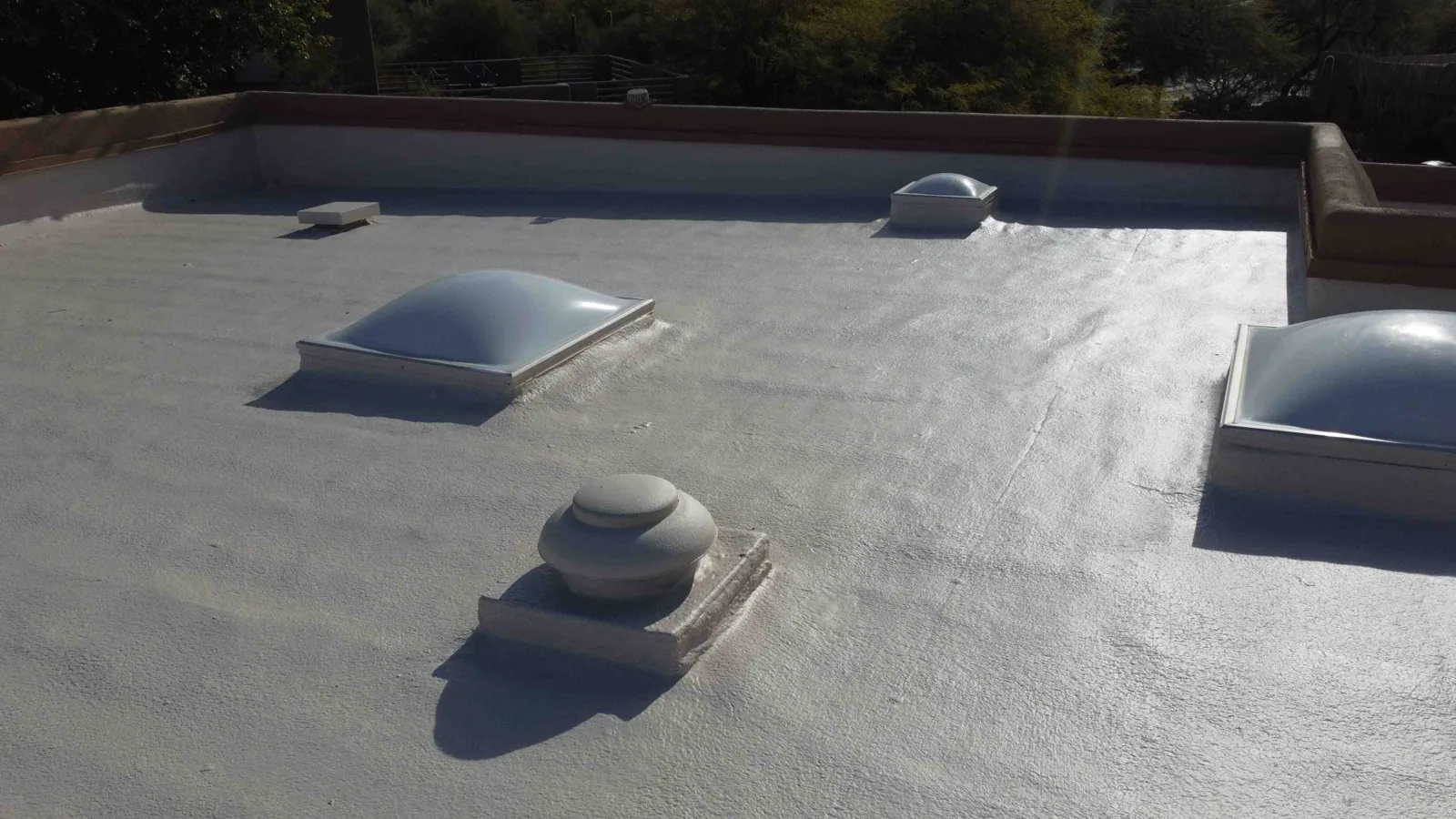
The right option depends on what the inspection confirms. A repair can address a limited seam, penetration, flashing, or edge failure when surrounding materials are sound and a compatible tie-in is available. A recover can be considered only if the existing roof is dry, stable, and permitted by the project and system requirements. A coating requires a suitable substrate and cannot correct a saturated assembly, open termination, or drainage problem on its own. If defects appear across several sections, removal and replacement may allow the project to address wet insulation, deck repairs, attachment, and drainage in a coordinated sequence. A proposal should distinguish the base scope from allowances, list known exclusions, and state how concealed damage will be handled. Owners can then compare alternatives by what they fix, what remains, disruption, and likely capital timing.
Coordinate crews with building use
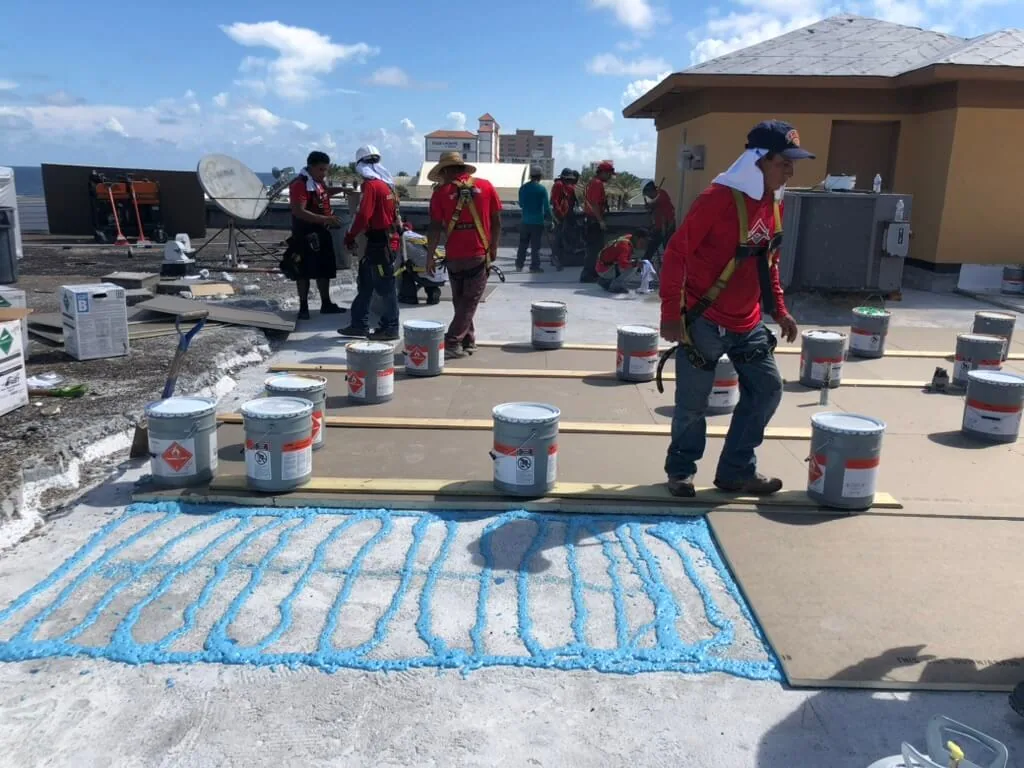
Access planning starts with people and property rules. Confirm who holds keys, whether a roof hatch or ladder is approved, what personal protective equipment or escort procedures apply, and which hours keep the work away from public activity. The site contact should identify loading space, fire lanes, entrances, and any neighboring tenant using a shared lot. A short repair needs a bounded work area and interior protection; a larger reroof needs daily close-in points and a schedule for staged materials. If mechanical equipment is in the repair area, assign responsibility for disconnecting or moving it before work begins. Weather and product installation limits can affect the sequence, so crew timing should be confirmed against current conditions instead of set from a calendar alone. These steps make the scope workable without assuming every property has the same layout.
Record observations for future maintenance
A useful service record includes the address, roof section, observation date, reported symptom, weather context, materials observed, photographs, drainage notes, and limits on access. Mark repairs on a plan or annotated image so another manager can find them without guessing. If the inspection did not open the assembly, say so; if a test was performed, state its location and what it established. For a capital project, retain the final scope, product data, approved changes, close-in images, and warranty documents supplied with the work. A clear record helps the owner compare later findings with the baseline and distinguish new movement or water entry from an old patch. It can also support budget planning across several properties without implying that one building's assembly is identical to another's.
Choose an action with clear assumptions
Owners should make the next decision from a documented boundary. If the roof is dry outside a small defect and the details around it remain secure, targeted work can be evaluated with a follow-up inspection. If several leak paths align with wet insulation, repeated patch failure, or compromised drainage, a larger investigation may be more useful before pricing a replacement. The estimate should name assumptions about deck condition and explain which discoveries would require a change order. A phased plan may protect an occupied building while funding is arranged, but temporary work should identify its purpose and monitoring interval. Before accepting an option, compare the affected square footage, removal requirements, interior risk, service access, and maintenance obligations. A condition report gives the owner a traceable basis for that comparison and for communicating the plan to occupants.
Related roof services near Chino Hills
For a Chino Hills building, the immediate need may be leak control, a maintenance visit, or a replacement evaluation. Review Commercial Roof Inspection and Commercial Roof Repair when the condition is not yet fully scoped. A scheduled renewal can begin with Commercial Roof Replacement, while recurring drain and seam review belongs in Preventive Roof Maintenance. Building owners can compare information for Medical Office Roofing and Hospital Roofing where those uses fit the property. Related geography includes Chino service area and Eastvale service area.
Commercial Roofing Questions
Should roof access be arranged before the first visit?
Yes. Identify a site contact, approved entry point, escort or key process, and any restricted hours. The inspection plan can then focus on safe, authorized areas and note any sections that were not reachable.
Does a roof scan replace a test opening?
No. A scan can help map suspect moisture, but the result depends on roof materials and conditions. If the decision turns on insulation or deck condition, a controlled opening may be needed to verify what is beneath the membrane.
Which roof conditions help a Chino Hills owner weigh repair against renewal?
Compare the observed failure area, condition of adjacent materials, repeat leak history, drainage, scope assumptions, disruption, and cost timing. The recommendation should explain what each option addresses and which concealed conditions could change the work.
How can occupied commercial tenants keep access during a phased roof replacement?
That depends on the scope, access, safety controls, weather protection, and activities below the work. A phased sequence can be planned where practical, but the proposal should identify affected areas and when temporary closures are required.
What records should be kept after a roof project?
Retain the final scope, change approvals, product information, roof plan with repair locations, progress and close-in photos, inspection findings, and warranty documents delivered with the work. Label each building and roof section separately.