Ponding Water Roof Repair in Hesperia, CA
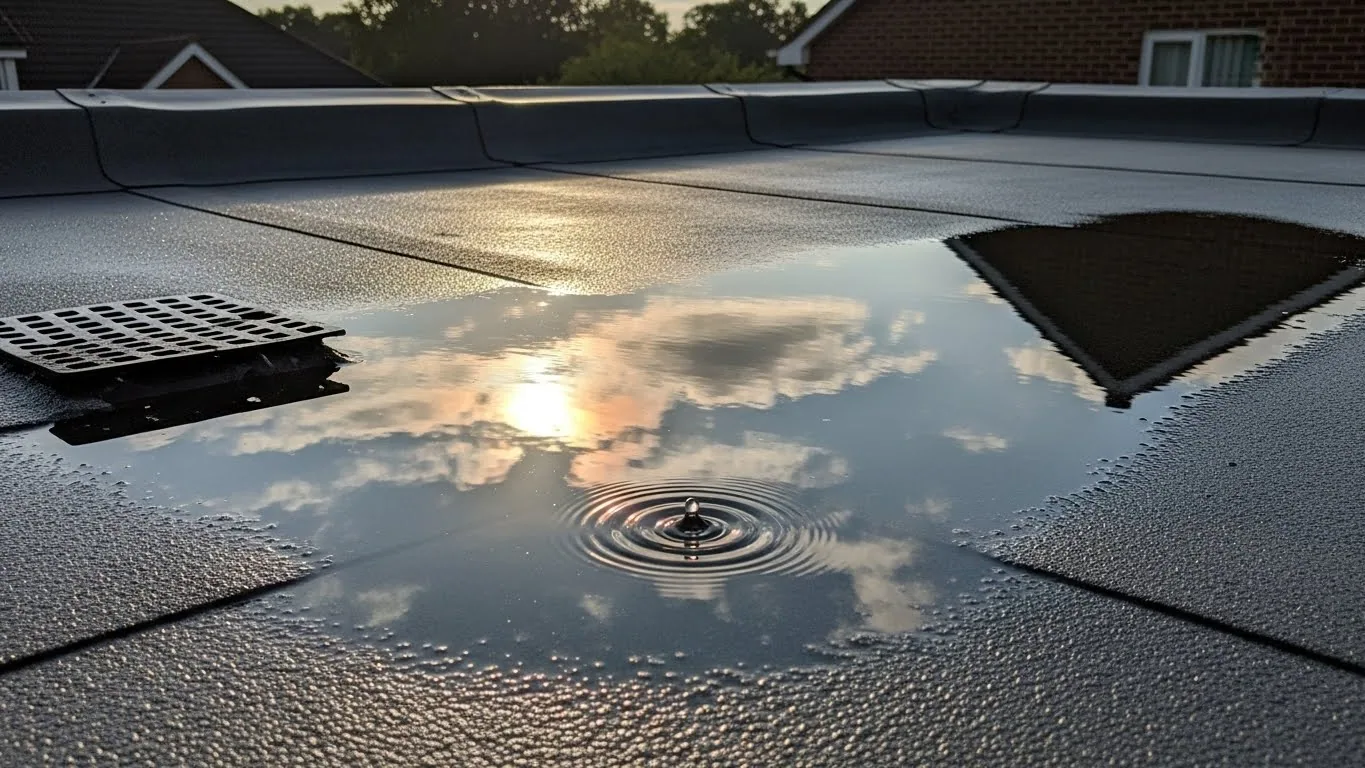
A shallow pool can remain after the surrounding membrane looks dry, and that difference is worth mapping before a repair is chosen. The Hesperia 2 E station’s December normal includes 1.23 inches of precipitation and a 35.2°F normal daily minimum. For a low-slope roof in Hesperia, CA, the question is not whether one puddle exists; it is whether water has a reliable route to a working drain and whether the assembly underneath has changed. We mark the pool boundary, check the drain and nearby seams, and compare current conditions with roof records. That gives the repair a defined area and keeps drainage correction separate from membrane patching.
Mark the water line
We record where water remains, how deep it is, and how the roof surface falls toward drains, scuppers, and overflows. Debris, a blocked strainer, compressed insulation, and a low point can look similar from a doorway but call for different work. The membrane at the pool edge may be sound while a nearby seam or drain flashing is not. We inspect the perimeter of the pond and the downstream path, then note whether the roof can be safely observed after a dry interval. The aim is to identify a cause we can act on, not simply coat the visible outline.
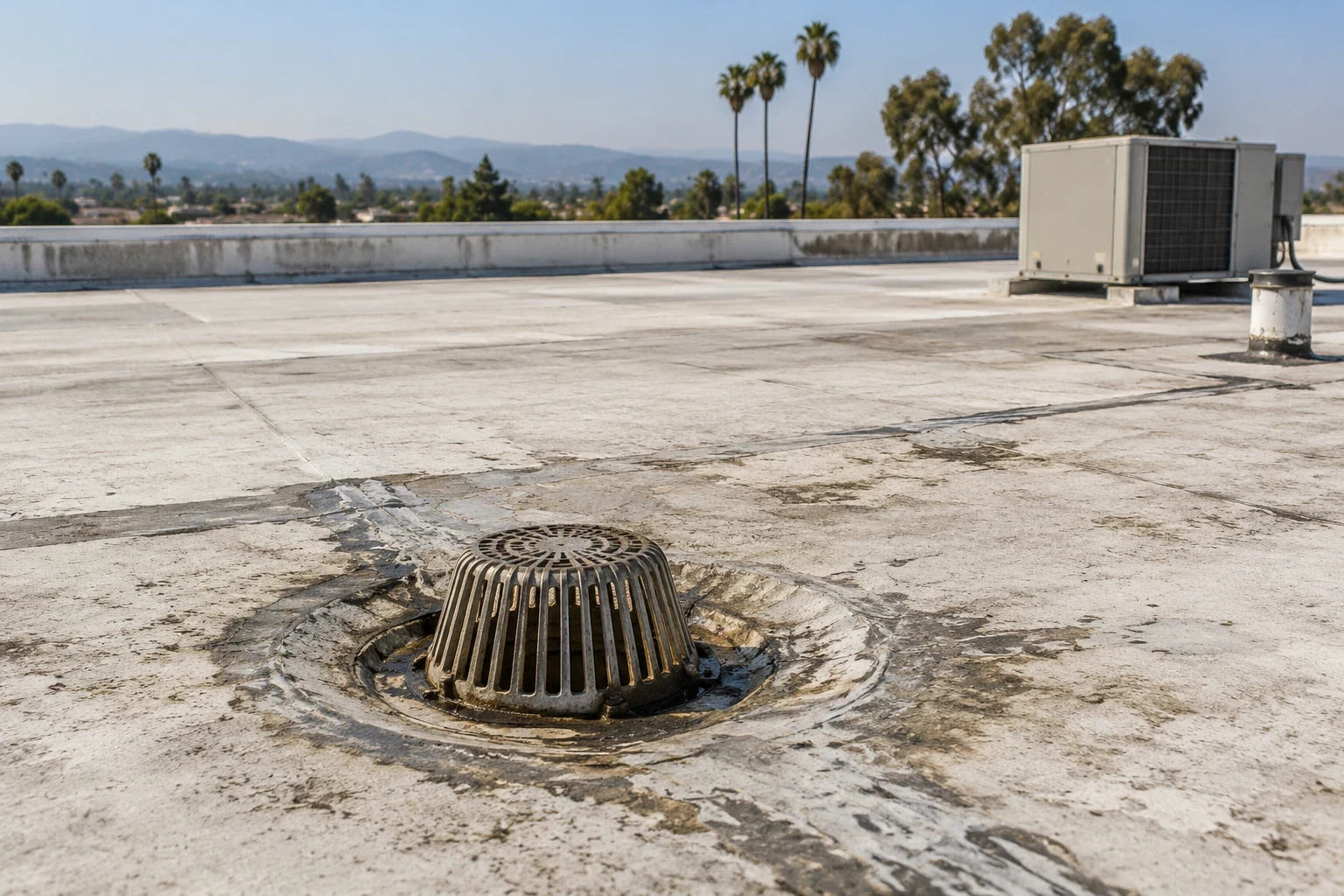
A drain review includes the strainer, bowl, clamping ring, flashing, and overflow path. We remove loose debris only within the agreed scope and note whether the drain opening is clear after the check. If water remains because the surrounding surface is depressed, clearing the strainer is not the final correction. A photograph at the pool boundary and another at the drain give the owner a simple comparison after the next wet period and help determine whether the drainage pattern changed.
Drainage belongs in the access plan
Persistent water should be evaluated by location, depth, drainage path, and the time allowed for runoff after weather. A wide photograph can show the low area, but a roof plan and level reference help distinguish isolated ponding from a broader slope issue. In Hesperia, the site contact should also identify roof access, loading activity, and any restricted work window before a drain or membrane test. The city's industrial, commercial, civic, and residential districts describe land use at a broad level; they do not establish how an individual property drains. We trace the route from inlet to outlet, inspect seams and penetrations exposed to standing water, and record whether the membrane or insulation shows change. A targeted test can clarify whether the correction belongs to drainage, the roof assembly, or both. The Hesperia roof service areas provide regional context, while the inspected property defines the repair boundary.
Hesperia's Main Street-West District and the Highway 395 and I-15 District are broad location references; the roof's slope and outlet need a field check.
Separate ponding from the leak path
Water left on a roof adds weight and keeps seams, patches, and flashings wet longer. A leak may begin at the low point, but it may also enter at a nearby penetration and travel below the membrane. We inspect membrane laps, drain bowls, clamping rings, strainers, overflow details, and any soft area around the pool. Hesperia 2 E’s December normal daily minimum is 35.2°F, and normal December precipitation is 1.23 inches. We inspect drainage and membrane condition before deciding whether ponding requires repair. The repair must match the failure: clear and correct a drain issue, repair a detail, or open a wet assembly.
The roof plan can show whether drains and overflows align with low areas, but the field condition still decides the work. We compare the plan with roof elevations, curb locations, and any changed equipment. If a later addition interrupts a drainage path, we document the obstruction and who controls that equipment work. Drainage correction may involve taper, an additional collection point, or local deck work, so those options need a defined scope and coordination with the building team.
Record the approximate depth and extent only when the measurement method is clear. A dated photograph after drainage can help compare the same low point later, but it does not establish structural capacity. If water persists, the next step may be a controlled survey of slope, outlet, or concealed insulation. State which check would answer the question before proposing more removal.
Repair the system that failed
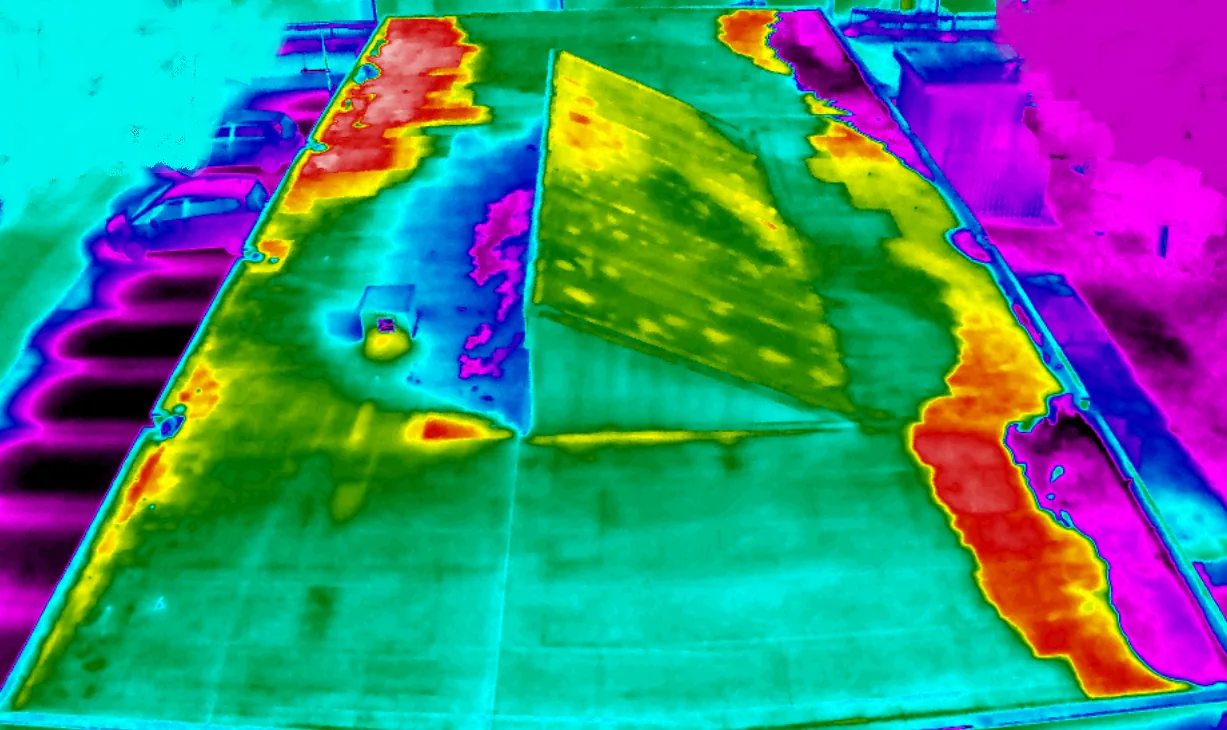
A compatible membrane repair can close a seam or puncture, but it cannot restore slope where insulation has compressed. We verify the roof type and surface condition before selecting a patch, flashing repair, drain work, or a test opening. If moisture extends beyond a small area, removal and replacement may be more appropriate than covering it. Our roof drain and scupper service addresses the collection point, while infrared moisture surveys can help map suspect areas when roof conditions support that method. Each recommendation is tied to observed evidence and the limits of the test.
Where the roof remains occupied below, we coordinate interior protection before opening wet material. We identify the room, ceiling condition, and equipment that could be affected, then agree on containment and debris handling. We inspect the current drain path and roof surface, then compare them with the reported water timing. The schedule follows current conditions, product requirements, and the time needed to leave the opened section watertight at the end of the shift.
Choose the next water-control step
The owner can choose between a maintenance action and a permanent correction after the observed water path is recorded. We note whether the outlet is clear, whether the low area persists after drainage, whether the membrane is sound, and what test would resolve a hidden condition. The preventive roof maintenance plan can track recurring drain checks. If a seam has opened, document the seam separation separately from the ponding. A confirmed membrane puncture also needs its own boundary. When several roof areas are involved, a commercial roof inspection can consolidate the findings without treating all low spots as the same failure. Timing depends on safe access and material compatibility; a temporary clearing does not establish that the roof slope is corrected.
Commercial Roofing Questions
Does every shallow pool require a roof replacement?
No. The first distinction is whether the water is caused by a blocked drain, a local low spot, compressed insulation, or a broader slope issue. We inspect the membrane and drainage path, then define a repair or test area. Replacement enters the discussion when evidence shows the assembly cannot be restored with a limited correction.
How long should water remain after rain?
The roof design, drainage layout, weather, and surface condition affect how quickly it clears. We document the observed area and conditions rather than use a single time threshold as a diagnosis. If water persists, a roof plan and photographs help connect the pool to drains, overflows, and low points.
Can a coating correct a low spot?
A coating adds a protective surface but does not create reliable slope or correct compressed insulation. We first determine why the water sits there and whether the substrate is dry and stable. Drainage correction or tapered material may be needed before a coating is considered.
What information helps price the work accurately?
Provide the address, roof plan if available, where water remains, when it was last observed, and an access contact. Photos of the drain and interior symptoms help us prepare the initial scope. We will identify what can be confirmed from those records and whether the next step is a roof inspection or a test opening.