Commercial Roofing Service Area: Montclair, CA

A commercial roof in Montclair may sit over retail, office, service, or light-industrial space, and each setting brings different access and scheduling questions. Commercial Roofers Hesperia reviews the reported issue and project information to determine whether a site visit is appropriate and what should be checked. Useful starting details include the building address, roof plan, last known system, leak location, previous repair documents, and a contact who can arrange access. A ceiling stain is a symptom, not a roof diagnosis; a coating label does not establish that the surface is dry or compatible. We inspect accessible roof details and record where evidence supports a conclusion, where it does not, and what test may be needed next. The owner can then compare a defined repair with maintenance or renewal options.
Municipal context for owner planning
Montclair’s citywide economic profile includes notable retail activity. Montclair had 37,865 residents in the 2020 count. In 2022, retail sales totaled about $1.461 billion, and transportation and warehousing receipts were about $32.556 million. These numbers provide broad context only. They do not identify a particular property’s tenant, roof type, or maintenance history. For a shopping, office, or service property, the useful local planning questions are practical: when customers or staff are on site, which entrances must stay open, where materials may be staged, and whether interior spaces contain sensitive equipment or inventory. A property manager should share those limits before inspection or repair. If several municipal properties are managed together, note site-specific conditions separately while using a consistent summary format to track condition, urgency, and next review date.
Trace water and roof conditions
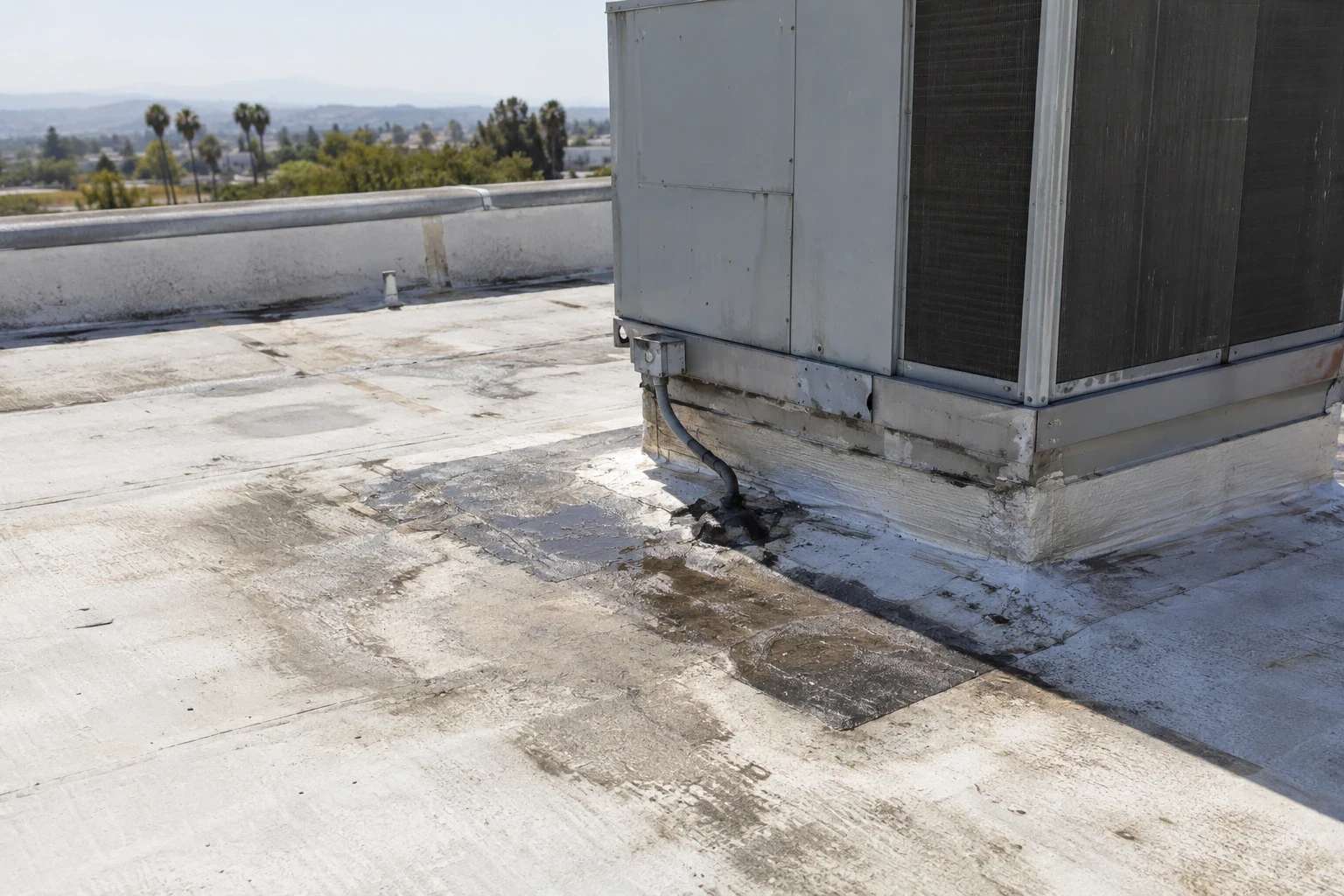
When a tenant reports water, record the exact interior area, time noticed, weather, and any prior leak history. Use a marked plan if available so the building team can distinguish recurring water from a new event. From the roof, check drainage, field membrane, seams, penetrations, parapet and edge transitions, and the areas around earlier repairs. Water can move laterally before it appears inside, so an inspection should test the likely path rather than equate the stain location with the opening. Avoid sending occupants onto a roof or into an unsafe area. If wet insulation, compromised decking, or concealed moisture is possible, describe the visual evidence and identify what an opening or survey would confirm. Temporary water-control work should be labeled as temporary if the full extent has not been verified.
Define the repair or renewal boundary
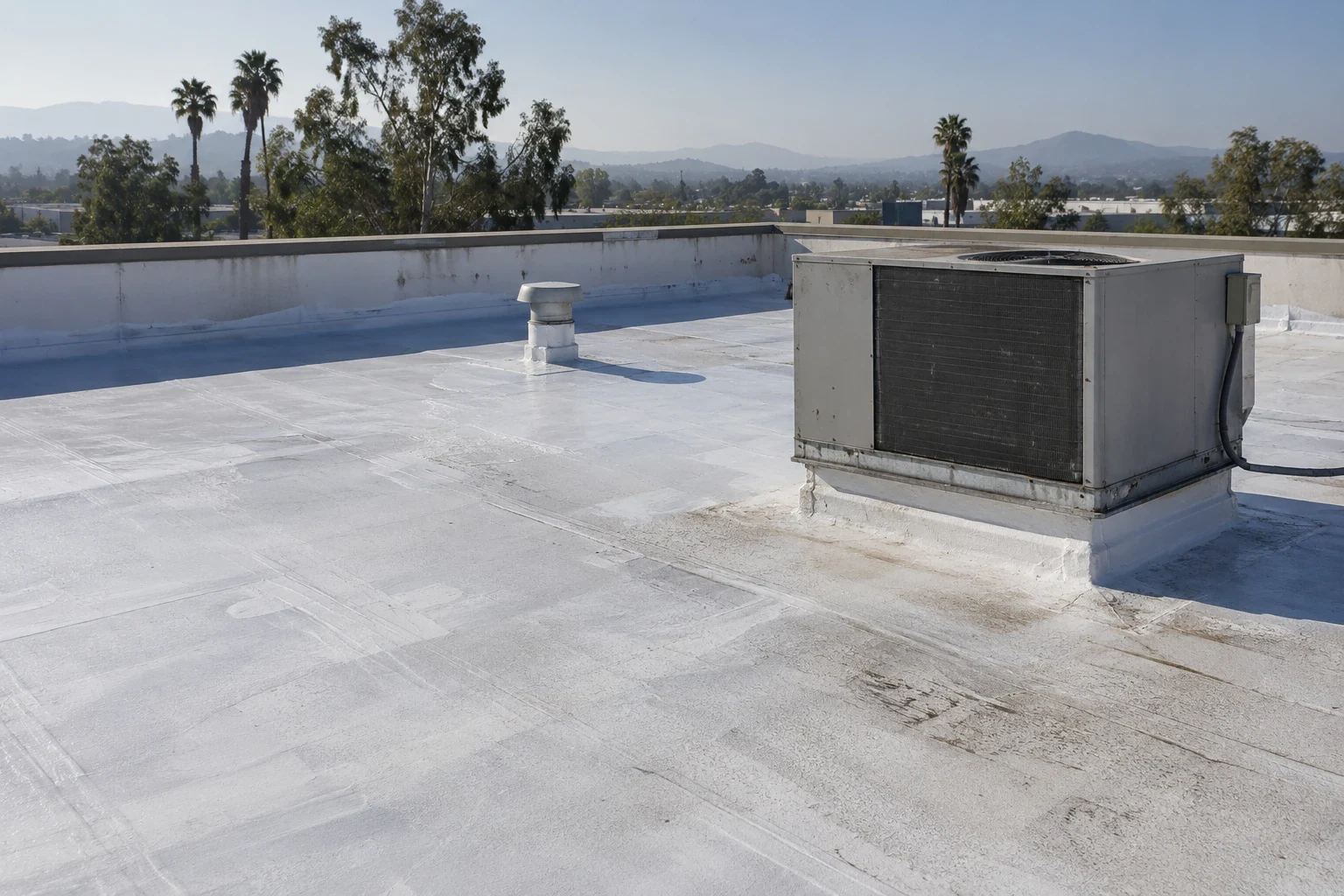
A repair is easier to evaluate when the work description identifies the roof section, preparation, materials, tie-in, and limits. Patching a split or failed flashing may be appropriate when adjacent components are sound; replacing one visible piece is less useful if water has reached the insulation or substrate beyond the repair line. A coating can extend an eligible assembly only when adhesion, moisture, thickness requirements, drainage, and detail conditions are confirmed. Compare recover and replacement only after reviewing system compatibility, wet-area extent, deck condition, and warranty implications. The proposal should show what is included and what remains uncertain, not simply name a system. If opening the roof reveals a different condition, document it with photographs and explain how it changes scope, cost, or schedule before proceeding with added work.
Coordinate access and work sequence
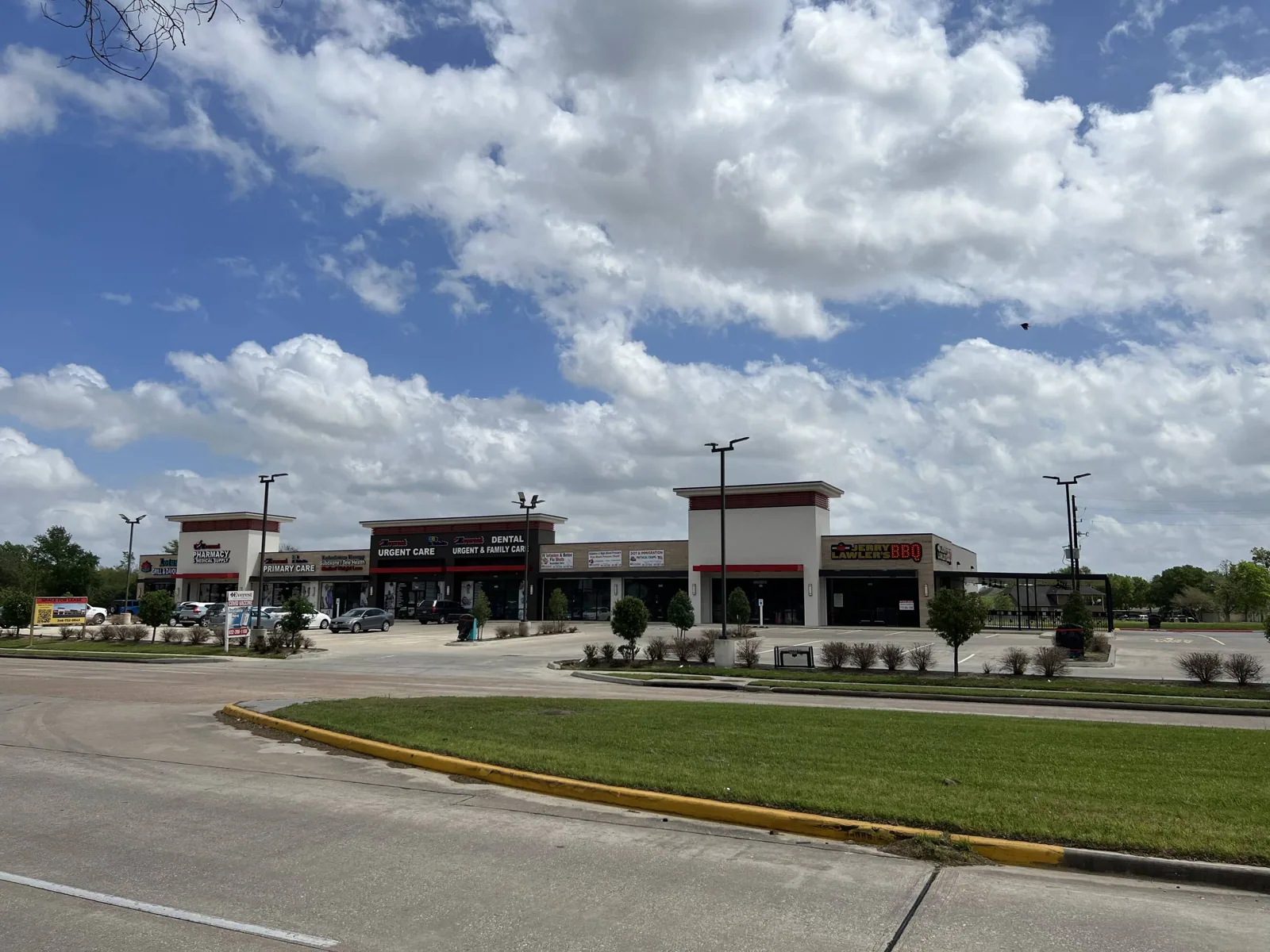
Retail and mixed-use operations require a deliberate work sequence. Identify customer circulation, delivery periods, fire lanes, roof access, staging, noise limits, and how the property will communicate a temporary closure. Confirm whether a tenant contact or owner representative must attend, and whether any rooftop equipment needs protection or shutdown coordination. If work is near an entrance or public area, use a defined safety boundary and keep pedestrian routes clear. Before a site visit, ask for roof hatch or ladder details and note any areas requiring an escort. A repair plan should also state how materials are moved, where debris is contained, and how the work area is left at the end of a shift. These choices depend on actual property operations, so scheduling should follow the site contact’s instructions rather than assume uniform access across Montclair.
Keep the inspection record usable
Maintain a record that links the report to the correct building and roof section. Use dated photographs with a plan reference, note the observation point and weather context, and identify any area not reached. Keep the assembly description qualified unless confirmed through visible layers, a test opening, or reliable project records. Record prior patches, open seams, drain concerns, flashing transitions, and any moisture test or core result separately. For multi-tenant properties, the closeout can list which interior contacts reported symptoms, but the scope should stay specific to the roof location and agreed repair boundary. Store manufacturer or warranty documents with the relevant assembly rather than relying on a product name alone. The next manager should be able to see what was completed, what remains on watch, and who owns each follow-up without reconstructing the project from email.
Select a practical next step
Select a roof action after comparing urgency, evidence, and disruption. If water is entering, protect interiors and address the likely opening safely, then verify whether the issue is isolated. For aging or recurring trouble, a condition report may help distinguish maintenance from a larger capital project. An estimate should explain the cost basis and project assumptions, and should not promise a leak-free result or a precise remaining lifespan without adequate evidence. Consider whether work can be phased around business hours, customer access, and delivery windows. If multiple options are technically supportable, explain the tradeoffs in service interruption, removal, substrate repair, and future documentation. The owner remains responsible for choosing timing and funding. The contractor’s role is to define the observed condition, proposed scope, limitations, and what finding would lead to a different recommendation. Where customer access matters, establish how the work boundary will be marked and who will communicate changes to tenants or occupants. If a drain or scupper is part of the reported issue, document its condition and the nearby membrane termination before deciding that a cleaning alone resolves the concern. For phased repairs, label each area consistently in photos so staff can distinguish completed work from a future allowance. If work requires odor, noise, or temporary access changes, include the expected timing in the project communication plan. The owner can then weigh a repair window against store or office activity without assuming the building can close or clear an entire roof area. The same record should name the person who can answer a condition question while the crew is on site, reducing avoidable delays and unclear approvals.
Related roof planning in Montclair
These Montclair links cover common roof services, system choices, and building types. Match any route to the actual roof evidence and confirm access before work is scheduled.
- Commercial Roof Leak Repair
- Roof Coating Restoration
- Shopping Center Roofing
- Grocery Store Roofing
- Commercial Roof Inspection
- Ontario service area
- Hesperia City Center District
Commercial Roofing Questions
Can a retail entrance stay open during roof repair?
That depends on the repair boundary and site safety plan; identify customer routes before scheduling work.
What details help assess a reported leak over a store?
Record the interior area, time, weather, previous repairs, and any roof plan or photos.
Is a roof coating appropriate for every Montclair property?
No. Substrate condition, moisture, compatibility, drainage, and detail integrity must support that option.
How should a repair area be recorded?
Use dated photos and a marked plan or sketch to show the location, preparation, and completed tie-in.
Do old warranty papers decide current repair coverage?
The actual written terms, assembly, maintenance record, and proposed scope should be reviewed together.