Spray Polyurethane Foam Roofing in Hesperia, CA
A spray foam roof is protected by its coating, so a thin or damaged surface can leave the foam exposed. In Hesperia, CA, we inspect coating thickness and condition, foam adhesion, drainage, penetrations and prior repairs before recommending a recoat or removal. The Hesperia Freeway South District includes regional commercial uses and auto sales. Before spraying at a property, confirm occupied areas, access, and overspray protection with the operator. We map the roof, measure representative coating areas and test adhesion where needed. The next decision depends on whether the foam remains dry and attached beneath the surface.
The coating condition defines the repair
Look for exposed foam, cracks, blisters, erosion at drains, open seams at curbs, impact damage and thin areas where foot traffic repeats. A coating may look sound while water has entered a seam or a patch has pulled away from the foam. We probe suspect areas, check adhesion and identify whether the foam is wet, friable or still bonded. At penetrations, the coating must extend over a stable flashing detail rather than bridge a moving gap. Note where ponding remains after drainage time and whether the foam slope carries water toward an outlet. A recoat can renew a sound assembly; it cannot repair saturated foam or an unstable substrate without correction. Record thickness in representative field areas and at transitions rather than relying on a single reading. Compare the result with the selected coating system's application requirements before setting the recoat quantity.
Moisture moves below the coating
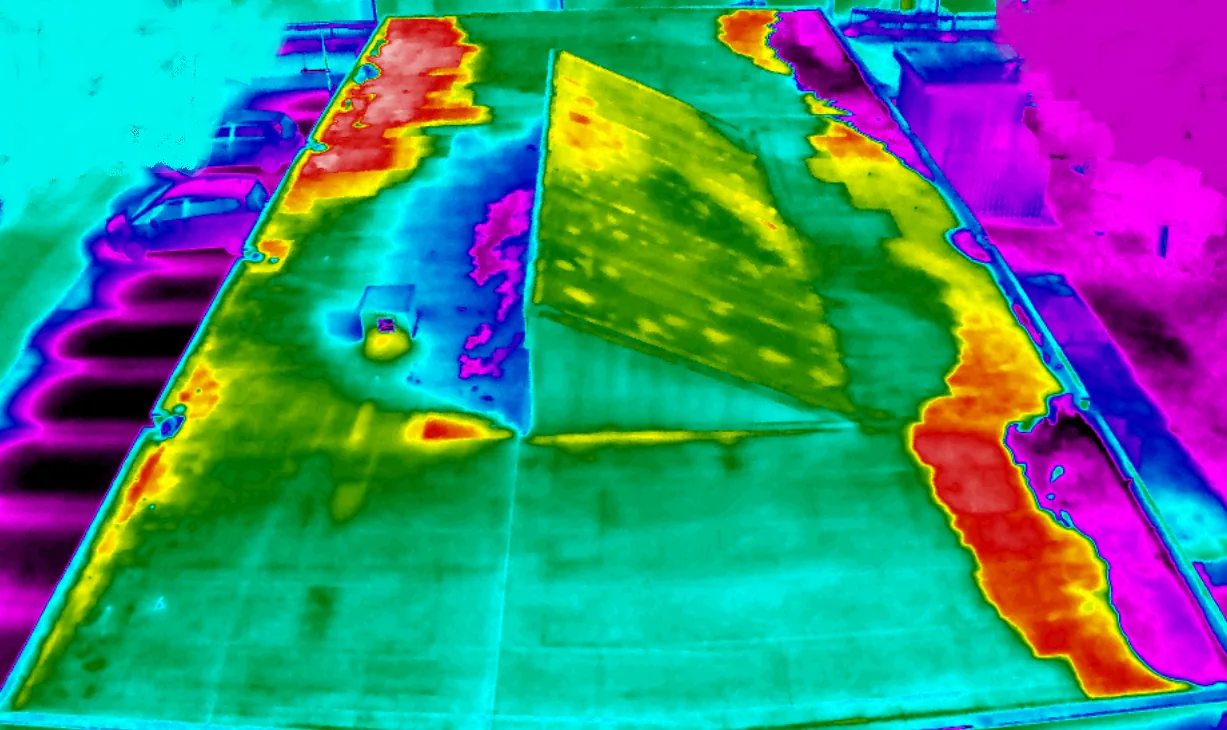
Water under a coating may move through the foam or along the deck before appearing inside. We mark blisters, soft areas, cracked coating and interior reports, then choose an approved test location that will answer whether moisture has reached the foam. Use thermal scans to select a test opening when moisture extent will change the repair quantity. Dry, firmly bonded foam may accept a localized repair and coating tie-in. Widespread wet or deteriorated foam calls for a larger removal boundary. A moisture survey can help map suspect zones, and a roof assessment can record the visible coating condition. Document the test and close the opening with compatible material. A test opening should show the coating, foam depth, and condition of the substrate. Photograph the cut before close-in, mark its location on the roof plan, and use the result to set the removal boundary.
Weather and substrate set the application window
Foam application depends on a dry substrate, wind, temperature, and the selected coating's limits. Set the spray perimeter around occupied ground areas, air intakes, vehicles, equipment, and pedestrian routes. Confirm the delivery gate, hose path, roof access, and masking with the facility contact before mobilizing. For an industrial property in the Hesperia Industrial District, coordinate staging and the work window with the operator. Record surface and weather conditions, coating batch, and work area for each shift. If conditions move outside product limits, stop at a prepared boundary and protect exposed foam before rescheduling. Map adhesion tests and foam depth by roof zone so one result does not set quantities for untested areas. Agree which contact can pause work if wind shifts or a protected area changes, and keep the ground observer at sensitive entrances while spray equipment moves.
The assembly determines recoat fit
A recoat fits when the foam is dry and attached, the existing coating is compatible, and the surface can accept another layer. Identify coating type, thickness, adhesion, and foam repairs before setting the application scope. If foam is saturated or breaking apart, coating over it can preserve the defect rather than fix it. Removal may be necessary where the layer is no longer sound. Compare the retained assembly with a silicone coating option or an acrylic coating system only after testing. Each product has requirements for slope, ponding, adhesion and maintenance. A membrane replacement may be more suitable when the foam boundary or substrate cannot be restored.
Overspray controls protect occupied areas
Before spraying, protect air intakes, vehicles, equipment, and pedestrian areas. Confirm wind, staging, hose routes, fall protection, and access limits with the facility contact. Prepare the surface, repair foam defects, seal transitions, and apply the specified coating build in planned passes. Keep drains open and leave no exposed foam at an unfinished boundary. A phased plan can maintain separation from occupied areas and air handling. Record application zones and locations excluded from the work, then verify that masking remains in place as hoses or equipment move. The facility contact and ground observer should know who can stop work if conditions change.
Measured areas define the scope
Cost changes with coating removal, foam repair, adhesion preparation, thickness, perimeter detailing, ponding correction, overspray protection and access. We measure the roof zones and state what testing found. A recoat proposal should distinguish areas requiring preparation from foam that needs repair or removal. If a test opening reveals moisture beyond the mapped boundary, pause before enlarging the work. Record separate quantities for surface preparation, foam repair, reinforcement, coating passes, and edge transitions so the owner can compare the same scope across bids. Compare recoat cost with a replacement scope using the same drainage and edge work. A maintenance review can track future coating wear. Measure parapets, curbs, drains, and penetrations separately when they require detail work. State whether the estimate includes substrate correction, reinforcement fabric, a finish coat, and cleanup so the owner can compare complete scopes.
Closeout records guide later maintenance
Closeout records should identify the coating product and installed build when confirmed, prepared zones, repairs, and any area excluded from the work. Keep product data, application notes, and warranty documents with the roof plan to distinguish renewed coating from retained surface at future reviews. On a later visit, compare representative areas across the field, drains, curbs, and perimeter for erosion, cracking, blisters, or bond changes. If patching is needed, record how it ties into the existing coating and whether the underlying foam was tested. The owner can then choose a compatible repair or set a new test boundary. Note the maintenance interval and which roof areas should be checked after severe weather or equipment work. A good record makes the next decision about a specific section rather than treating the entire assembly as uniform. For warranty review, retain the product data and installer records requested by the manufacturer, along with owner-approved changes. Note repairs made after closeout so a later inspection can distinguish the original application from subsequent maintenance.
Commercial Roofing Questions
Can a coating fix wet spray foam?
No. Confirm the foam condition and remove or correct wet material before recoating. A surface layer cannot dry a saturated core or restore loose foam.
When can an SPF roof be recoated?
The foam must be attached and dry, and the existing coating must accept preparation and another layer. We test representative areas and detail repairs before setting coverage.
Why does coating thickness matter?
The coating protects the foam from exposure. We measure representative locations and inspect transitions so thin areas are included in a defined scope.
Can spray foam work continue around an occupied building?
It requires controls for overspray, air intakes, access and the work perimeter. We coordinate the sequence with the facility contact and confirm where occupants can remain safely.
What if water ponds on the foam roof?
Map where it remains, check drains and verify whether the foam slope directs water correctly. The repair may require drainage or slope correction before a new coating is applied.