Holcim Elevate Commercial Roofing in Hesperia, CA
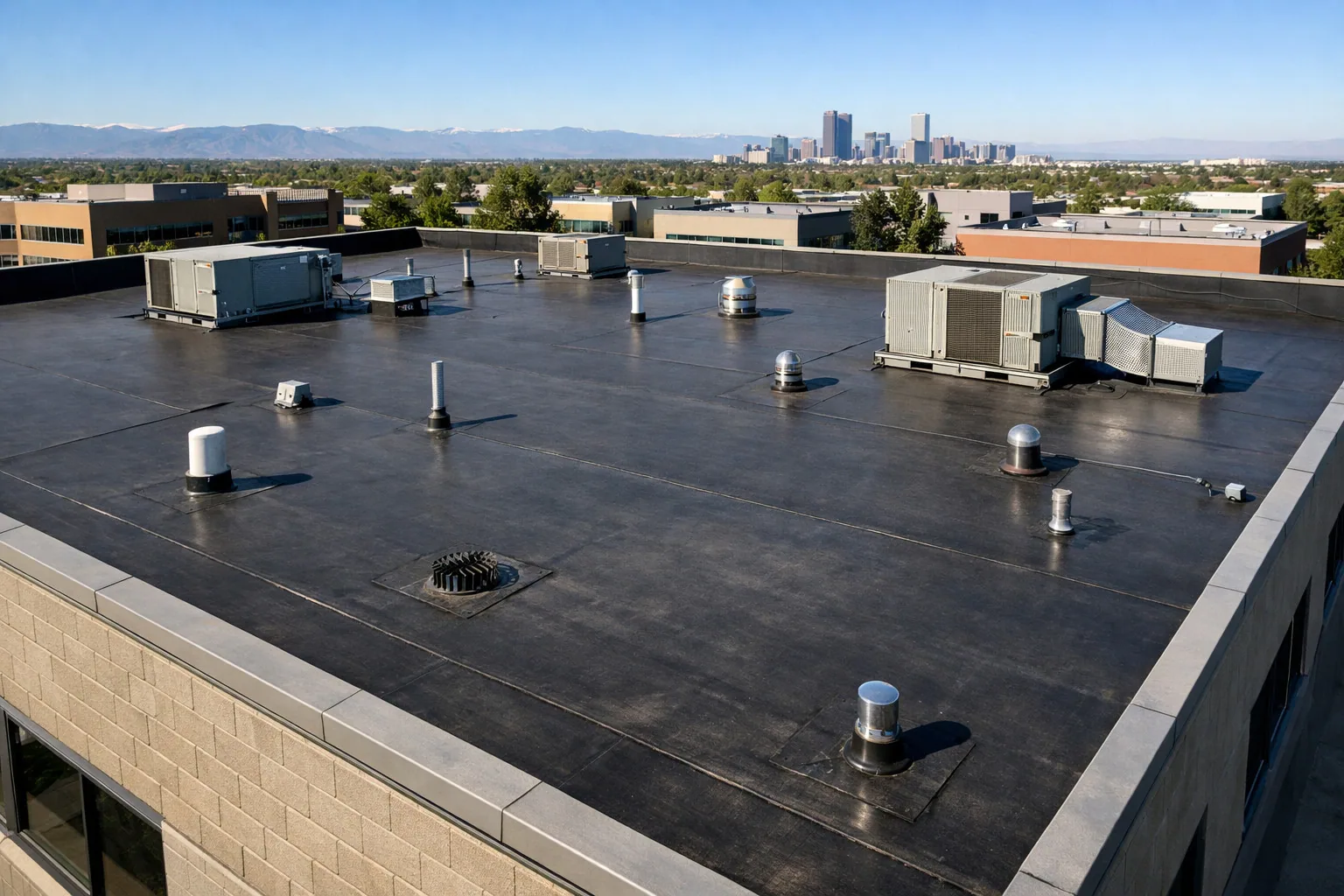
A system name changed on a project record does not change the roof material already in place. The inspected membrane, attachment, and details still govern repair work. Holcim Elevate’s commercial roofing site lists EPDM, TPO, PVC, asphalt, and metal roofing system categories. For a property in Hesperia, CA, we use those categories as a starting point, then confirm the actual assembly and its condition. That distinction is important on buildings with additions, recover layers, or earlier repairs. A roof plan helps, but the field record determines what can be repaired and what needs a test.
Start with the installed system
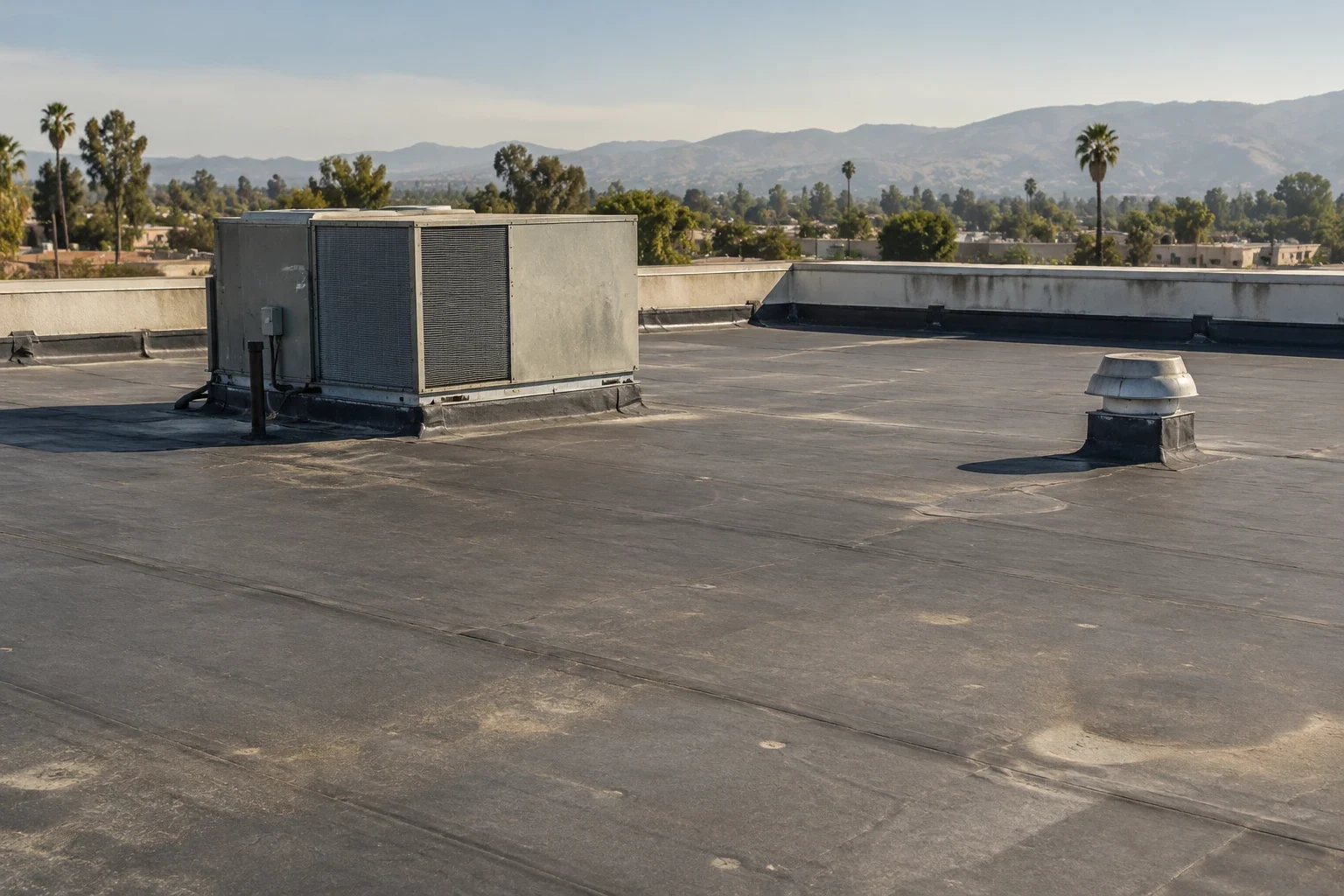
Holcim Elevate’s system categories cover several materials, each with different attachment, seam, flashing, and repair requirements. We begin by identifying the membrane or metal profile and checking the roof record against what is visible. Markings may identify a sheet, but they do not tell us whether the insulation below is dry or whether a later section uses a different system. We note where materials transition and whether a test opening is needed to resolve a concealed layer.
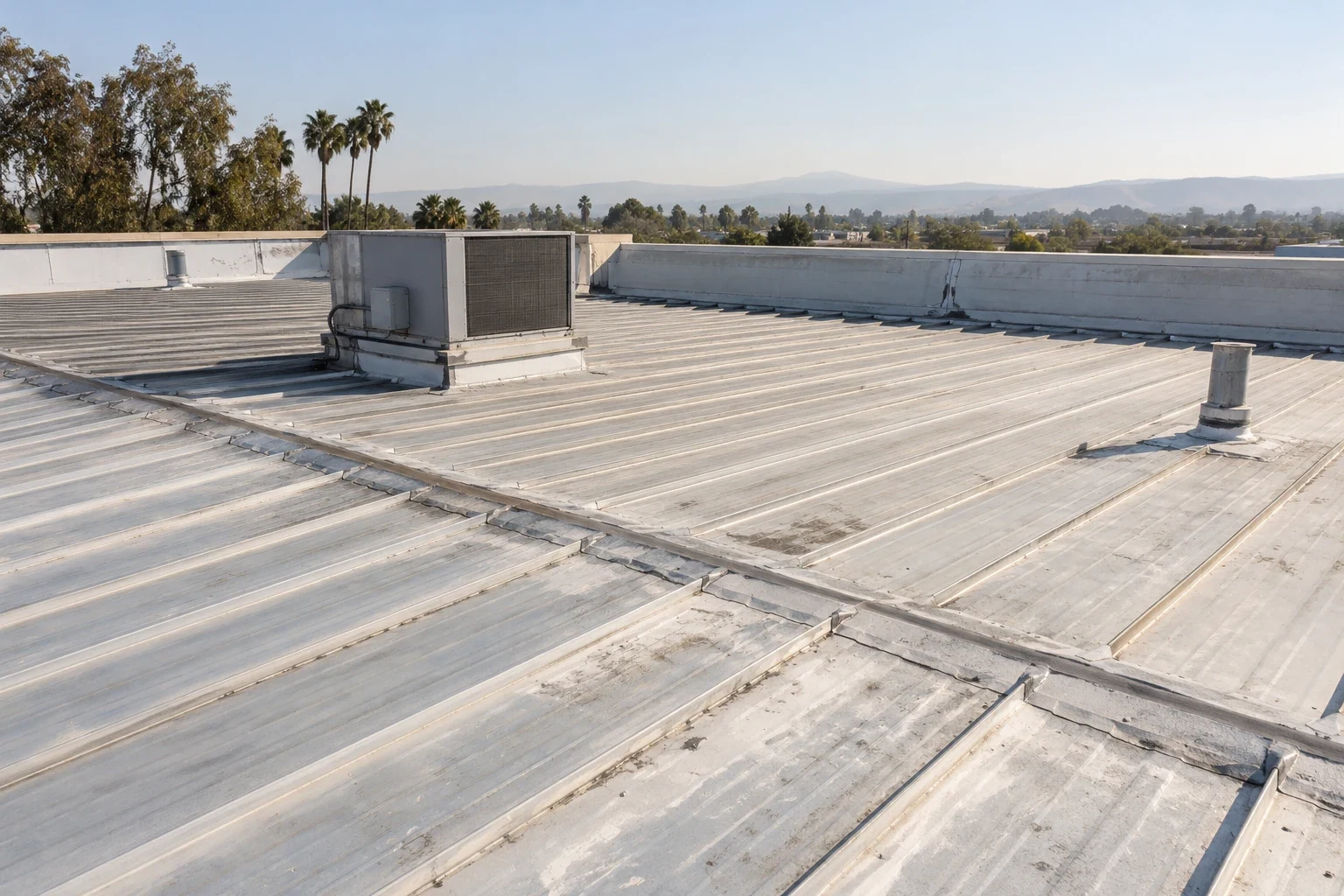
Metal and membrane areas need separate field observations, even where they belong to one building. On metal, we look at fasteners, laps, panel movement, and penetrations. On single-ply, we examine seams, flashings, and attachment. Asphaltic systems require attention to ply condition and surfacing. Identifying each area prevents the repair recommendation from treating every roof section as though it were the same assembly.
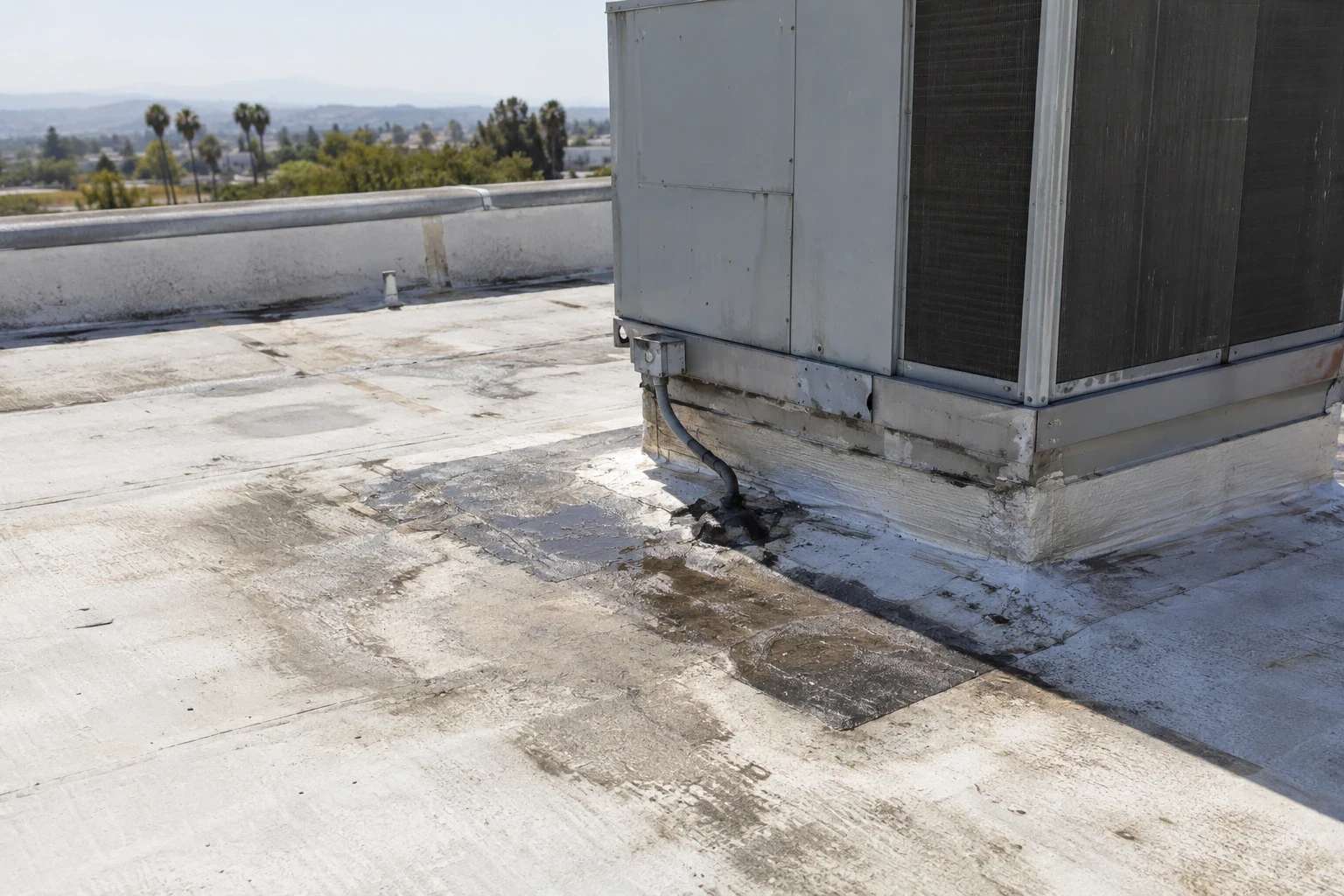
System review includes drainage, roof slope, perimeter attachment, curbs, and penetrations. The membrane can be serviceable while edge metal or a drain connection has failed. We inspect those components separately and show how each relates to the reported water entry. That record supports a repair scope based on the actual failure rather than a broad product label.
Trace the layer stack
EPDM lap work, TPO or PVC heat-welded seams, asphaltic repairs, and metal roof details are not interchangeable. We check the material and condition before selecting a patch, flashing, adhesive, or coating. A recover project also depends on the existing assembly, moisture, and the roof deck’s ability to support the new design. We identify those dependencies before recommending a new layer. A rubber membrane lap needs its own adhesive and flashing review; the EPDM system sets a different repair path. Standing-seam or panel work needs a separate movement and fastening review, like metal roof retrofit.
If an owner is considering a new system, we first establish the condition and capacity of what remains. That can require review of deck, insulation, slope, drainage, and edge attachment. We identify any structural or design question that needs a separate professional review. The result is a bounded roofing scope that states what we observed and what information remains necessary before a system selection can be finalized.
If an owner has system sheets or closeout documents, we use them to confirm the named product and original assembly. We do not infer a system from color alone. A prior coating, repair patch, or equipment installation can conceal the original surface. Where those layers affect compatibility, a test area can establish whether the proposed tie-in is practical.
Schedule for actual conditions
At Hesperia 2 E, the August normal daily maximum is 97.0°F. That climate normal supports attention to heat exposure, but actual surface temperature and product limits determine the work window. We check substrate dryness and application conditions before using adhesives, sealants, or coatings. If conditions are outside the selected product requirements, we protect the roof and schedule the permanent work for a suitable period. The leak repair review maps the entry detail against the interior report. Roofing access near the Highway 395 and I-15 district needs to fit the property delivery route.
Hesperia's freeway corridor includes industrial and business-park districts, with I-15 and U.S. 395 connecting near the city. On an active property, we coordinate access, lift staging, and material handling around loading and tenant operations. A defined work zone and close-in point help keep the roof weather-tight and the ground route available.
Make compatible repairs
A compatible repair begins with clean, sound material. We trace the seam or opening, check adjacent flashing and insulation, and mark the tested area. For an EPDM section, the repair approach differs from a thermoplastic sheet; for metal, panel movement and fastener conditions matter. We use EPDM roofing or metal roof retrofit system considerations when establishing the detail. A commercial roof leak repair inspection records the path and the scope boundary.
A restoration option should follow the same review. We test the existing surface, correct active leaks and loose details, and confirm that the substrate will accept the new work. Coating cannot dry wet insulation or restore a failed attachment pattern. If the assembly is deteriorated beyond a repair boundary, we explain what removal or replacement would include and what additional testing would confirm.
Set the next decision
The decision record separates urgent water control from permanent repair, restoration, or replacement. We list what was observed, where moisture was checked, what was inaccessible, and which tests could change the next scope. For a building with multiple elevations or additions, we identify each section rather than combine different materials under one system name. That allows maintenance staff to track work and plan later phases without treating one repair as proof of whole-roof condition. A mixed roof may have records from several project phases. The family lists from Johns Manville and GAF can help sort paperwork, while the observed assembly dictates the repair tie-in.
A scope should state the roof section, observed family, and evidence behind the repair choice. We list tests and access limits alongside the completed work. This helps a building team track which areas were inspected and which still need review, without treating a manufacturer catalog as a substitute for the conditions on the roof.
A roof section can remain serviceable even when a nearby drain, edge, or curb needs work. We list each condition independently and identify whether the proposed repair changes drainage or attachment. That makes the scope easier to coordinate with a capital plan or an equipment project without implying that every listed system category is a fit for this building.
Send the address, roof plan if available, reported condition, access contact, and any Holcim Elevate or prior-system documents. We can review the material record and prepare a focused inspection. The scope will state the product family only when the evidence supports it and will not imply a manufacturer relationship, authorization, or warranty terms beyond the documents provided.
Commercial Roofing Questions
Does an Holcim Elevate product category confirm what is installed?
No. The category helps frame the review, while roof markings, records, seams, and field conditions identify the assembly. A building may have multiple sections and repair layers that require separate documentation.
What assembly conditions allow a new membrane to cover an older roof?
A recover depends on moisture, attachment, deck condition, drainage, and the existing layers. We inspect and test those conditions before recommending a new assembly. If wet or unstable material is found, the scope must address it before a recover is considered.
Can you repair a roof when the original product is uncertain?
We first identify the material through records and field clues. If that remains uncertain, a controlled test may be needed. We will not select a patch or coating until compatibility with the roof surface is reasonably established.
What details help you evaluate the system?
Send the building address, roof plan, product records, known repairs, reported symptoms, and access contact. Photos can help locate the section. The inspection will identify the assembly observed and any concealed condition needing a test.