Commercial Roofing for Retail and Restaurant Chains in Hesperia, CA
A roof issue above a storefront can interrupt customer entry, receiving, kitchen exhaust, or service access. A repair plan needs those routes on the same map as the membrane defect. Regional-commercial and neighborhood-commercial uses appear along portions of Hesperia’s Main Street and freeway corridor; the district does not identify a specific tenant or building. We confirm each address and roof condition. The Hesperia 2 E August normal high of 97.0°F adds local context for checking seams, exposed curbs, and metal edges.
Protect the Customer Route
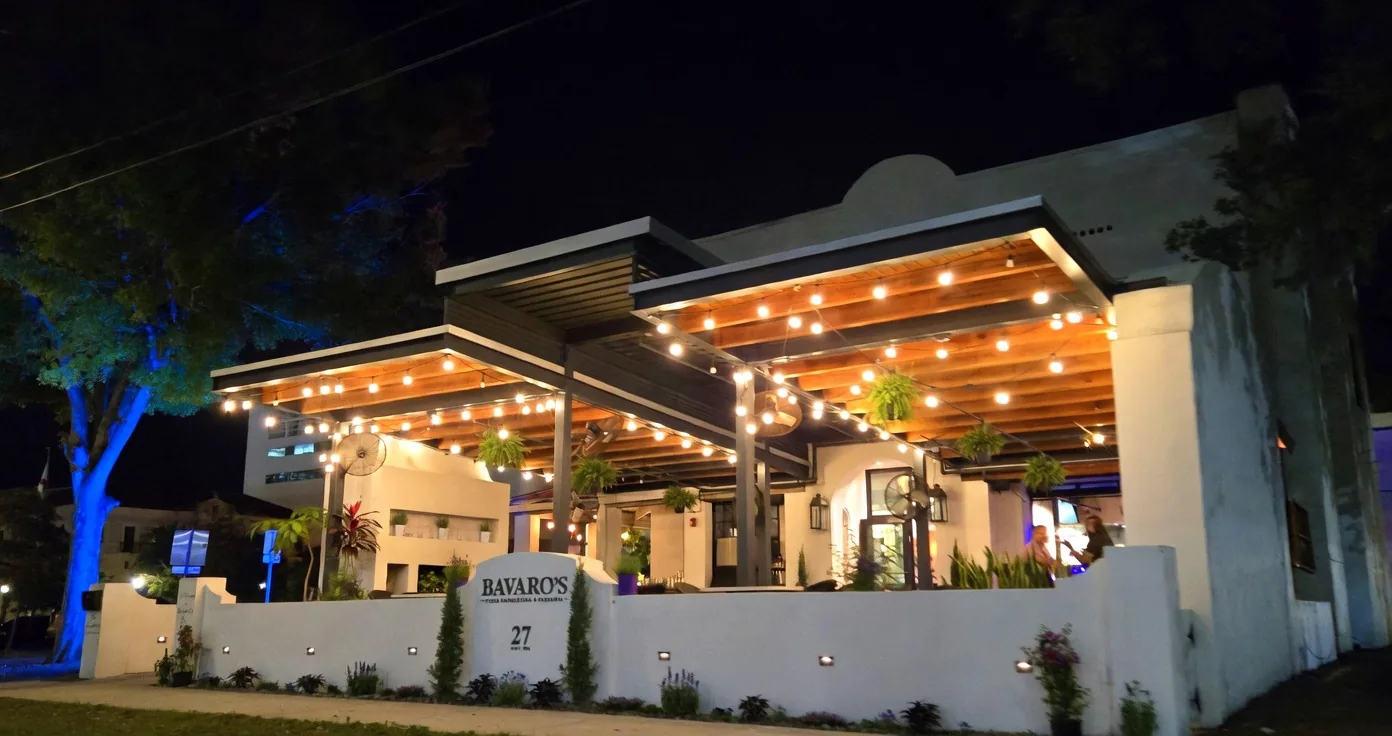
The store manager can mark entrances, accessible paths, delivery doors, patio areas, and operating hours before a crew arrives. We place lifts and debris routes away from those areas where the property allows it. A roof section above a dining room or sales floor may require interior protection and advance notice. The proposal should state which entrance or lane is affected and when it is expected to reopen, rather than assuming that all locations operate on the same schedule.
Regional-commercial uses extend along parts of Hesperia’s Main Street and freeway corridor; each store still needs its own access and roof review. Each store’s lease, property layout, and owner rules determine access. A commercial roof inspection can note curb, seam, and drain conditions; occupied-building reroofing sets a phased sequence around customers and staff.
Check Exhaust and Rooftop Equipment
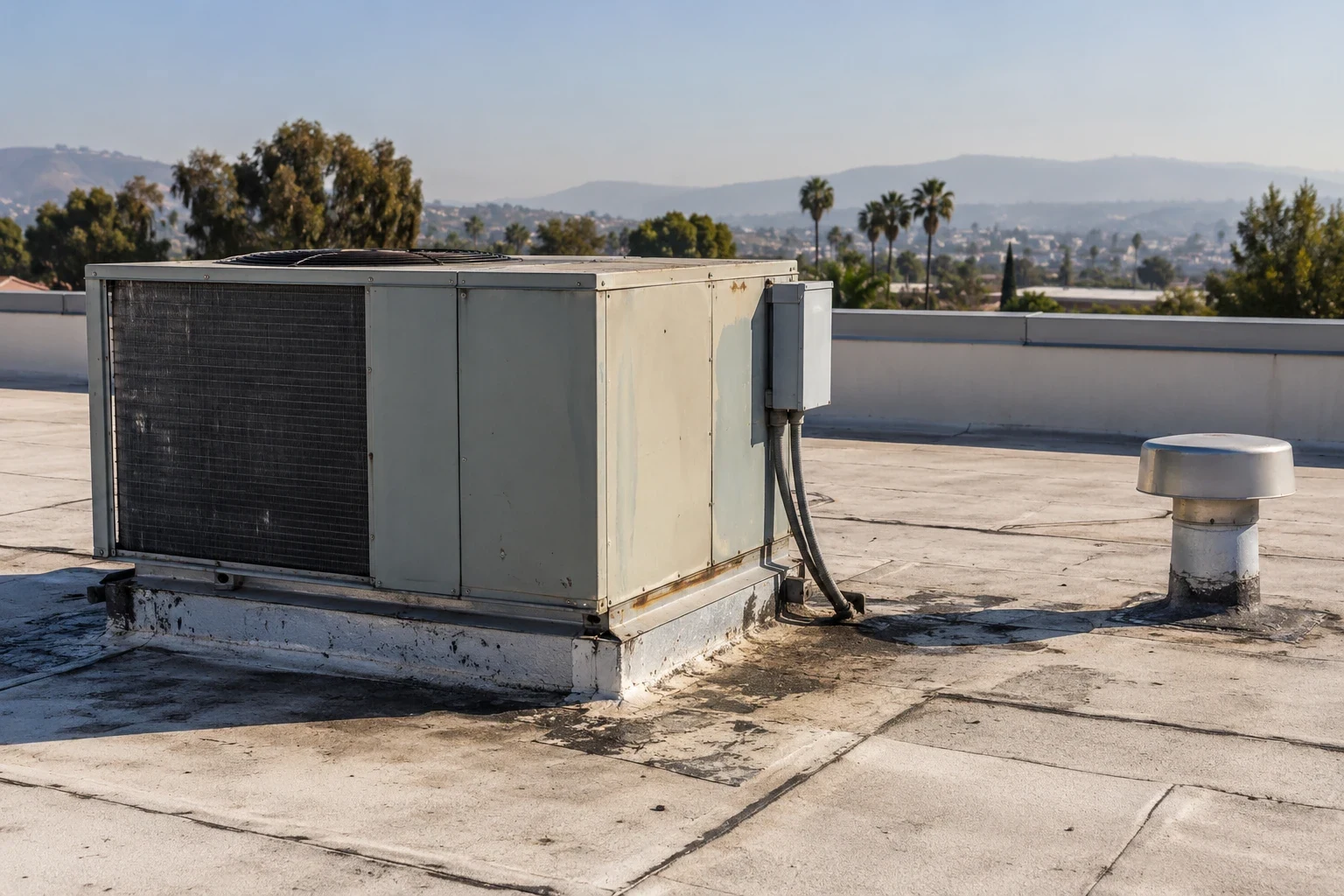
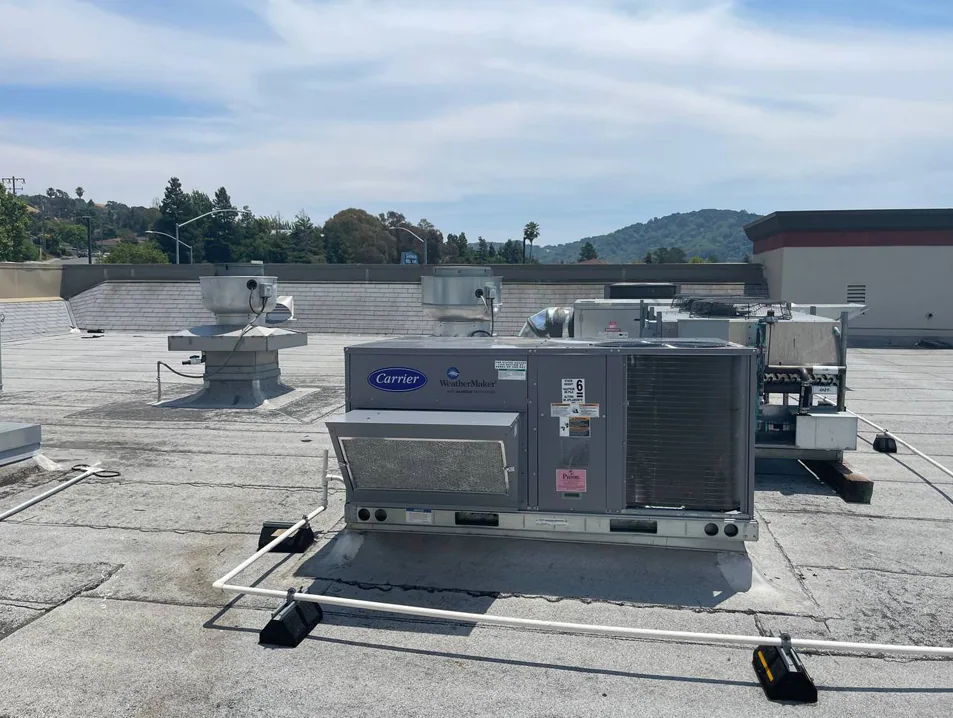
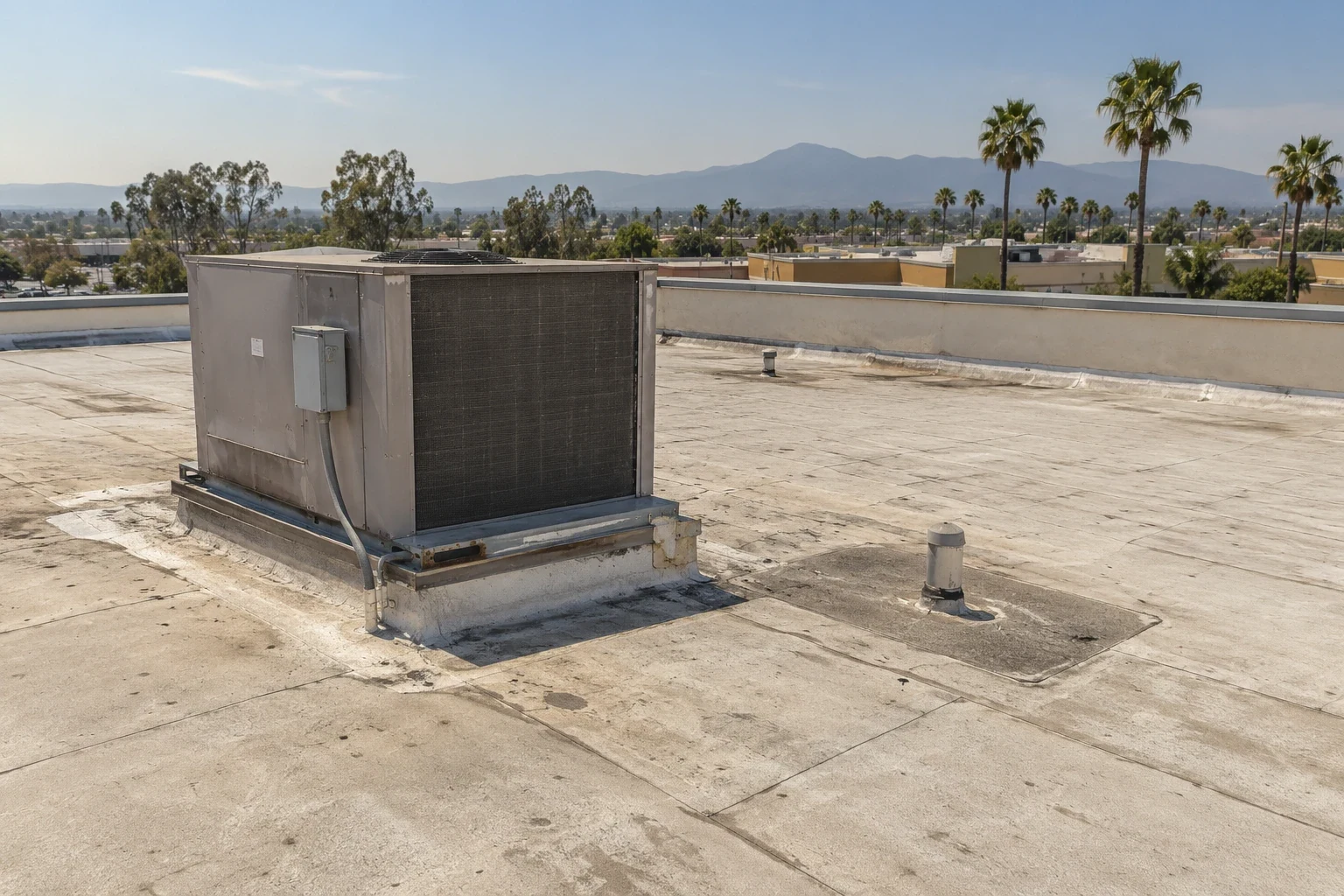
Restaurant exhaust, make-up air, condensers, vents, conduit, and service paths can all intersect the roof membrane. We check the curb corners, flashing, supports, grease or residue exposure, and nearby seams. The facility contact tells us which units must run during business hours and which trade is responsible for disconnects. If a fan base or duct needs work, the proposal should identify the roofing tie-in separately from mechanical work.
The city's truck-route network includes I-15 and U.S. Highway 395, while a store's receiving window is set by its own operation. We confirm where a material truck can stop and how debris leaves. A rooftop equipment curb scope can address those penetrations. A commercial restaurant roof plan also checks exhaust and access details, while retail chain roof records can help managers track work by address.
Match the Interior Report to the Roof
A ceiling stain above a display or dining area may be away from the entry point. Water can travel along a deck, insulation, duct, or earlier patch. We compare the report with seams, drains, curb flashings, and wall edges, then inspect the nearest transitions. If the assembly may be wet beyond the visible opening, a test area sets the removal boundary. The report distinguishes the immediate repair from a condition that needs a capital decision.
Hesperia’s normal August high reaches 97.0°F at the local climate station, so exposed curbs and metal edges merit a close look. That is not a roof measurement. We use the local heat context to check movement at exposed details, then base the recommendation on what is visible or tested. A commercial roof repair scope should identify the material, tie-in, and area closed. If water follows a curb, flashing repair is distinct from a drain correction.
Choose the Right Size of Work
A local seam or flashing failure on dry, secure material may support a targeted repair. If testing finds wet insulation, removal may need to extend past the visible defect. A recover can be considered when existing layers, attachment, deck, and drainage height are suitable. Replacement gives access to more of the assembly but can require broader closure, noise control, and debris handling. We show which findings support each option so the owner can compare cost and business interruption together.
For a low-slope surface, TPO roofing and silicone roof coatings have different requirements; a coating is not a way to hide wet material or an open detail. Existing layers, foot traffic, grease exposure, drainage, and roof access should be reviewed first. A shopping center roof scope can involve shared access, but a standalone store retains its own lease and work constraints.
Schedule by Store Activity
We ask about meal periods, deliveries, cleaning, opening and closing, and any days when a roof area cannot be reached. Material storage and debris handling should not block an exit or a service lane. If several sites are managed centrally, a repeatable reporting format can help, but each store needs its own access contact and work boundary. A phase plan states when the roof is opened, protected, cleaned, and returned to service.
The warehouse pipeline along I-15 and Highway 395 describes freight-area growth, not the roof assembly at a retail or dining address. For a store, local delivery and customer routes are confirmed at the property. A preventive maintenance plan can record drains and curb details between projects. The Main Street-West District is one broad commercial setting, not an individual restaurant or shopping center.
Price the Operating Constraints
Cost depends on removal, wet insulation, deck repairs, drain and perimeter details, rooftop equipment coordination, interior protection, staging, and available work hours. A test opening may change quantities. We list those assumptions clearly and explain who approves an expanded scope. For a chain, the estimate should identify the location, building, roof sections, and terms for repeat work so a manager can compare projects without treating every roof as identical.
For a portfolio review, compare issue type and roof age only after each location has its own inspection record. Similar symptoms can come from different assemblies, drain layouts, or past repairs, so a recurring detail is a question to check, not a reason to copy an earlier scope. Keep the store manager’s access notes with the repair photos so a later shift can tell which entrance or receiving door was affected.
Hesperia’s commercial districts have varied land uses. That local pattern does not establish whether a particular store has shared parking, a loading dock, or restaurant exhaust. The owner or tenant supplies those details. A roof condition report can keep findings and photos with the estimate, while retail and restaurant chain roofing can support program-level communication across distinct sites.
A chain also needs one location record that store staff can update without changing the approved roof scope. Record the entrance affected, receiving door, kitchen or sales area below, and the manager who can release the work zone. At closeout, return the marked plan and photographs to the same property file. This creates a useful comparison when another location reports a similar leak, while keeping each roof diagnosis independent. A recurring detail can justify a portfolio review, but it does not prove that every store has the same membrane, curb layout, or repair history. We keep the recommendation connected to the observed store and roof section.
Commercial Roofing Questions
How can a retail operator keep customer entrances usable during roofing?
Often a project can be divided into controlled areas, but access, interior protection, noise, deliveries, and the repair method decide the phase. We confirm those factors with site management.
Who coordinates restaurant exhaust equipment?
The scope identifies the curb flashing and the mechanical trade boundary. The owner or operator confirms which unit can be isolated and who reconnects or tests it.
Will a coating fix a recurring leak?
Only after the roof surface and assembly are found suitable. Wet insulation, failed flashing, or poor drainage should be addressed before any coating is considered.
What should a chain manager provide for each address?
Share the roof plan, leak history, operating hours, loading rules, landlord contact, and a person who can approve access. Each site requires its own field record.
How do you limit customer disruption?
We plan lifts, staging, and debris routes around approved entrances and operating windows. The phase plan names any temporary restriction and the close-in point.