Commercial Roofing in Corona, CA

A roof leak in a Corona commercial property is best handled by tracing the water path before selecting a repair. A ceiling mark can be several feet from the membrane opening, and a wet insulation area may extend beyond the first visible damage. We first identify the reported room, roof section, access limits, and prior repair history. The field review then records the details that can be inspected safely and the areas that need testing. The owner should receive a concise description of confirmed conditions, uncertainties, and the next action each could support. That creates a more useful choice between a localized repair, added investigation, and a larger capital scope. Share the building address, a roof plan if available, recent leak photos, and the person who can arrange access.
Start with property records and operating needs
Corona had 157,136 residents in the 2020 count. In 2022, retail sales totaled about $4.329 billion, and transportation and warehousing receipts were about $374.315 million. These are citywide measures, not descriptions of an individual parcel. They cannot tell us whether a roof is TPO, built-up, metal, or another assembly, and they do not show how a tenant uses the building. Before inspection, the manager can identify occupied hours, delivery windows, roof access procedures, and any interior equipment that needs protection. For a multi-building owner, distinguish the address and roof plan for each asset instead of combining findings under one portfolio label. The Diligence Notes should connect each symptom to a building and roof section so the eventual scope remains clear to maintenance staff and ownership.
Follow the water rather than the ceiling mark
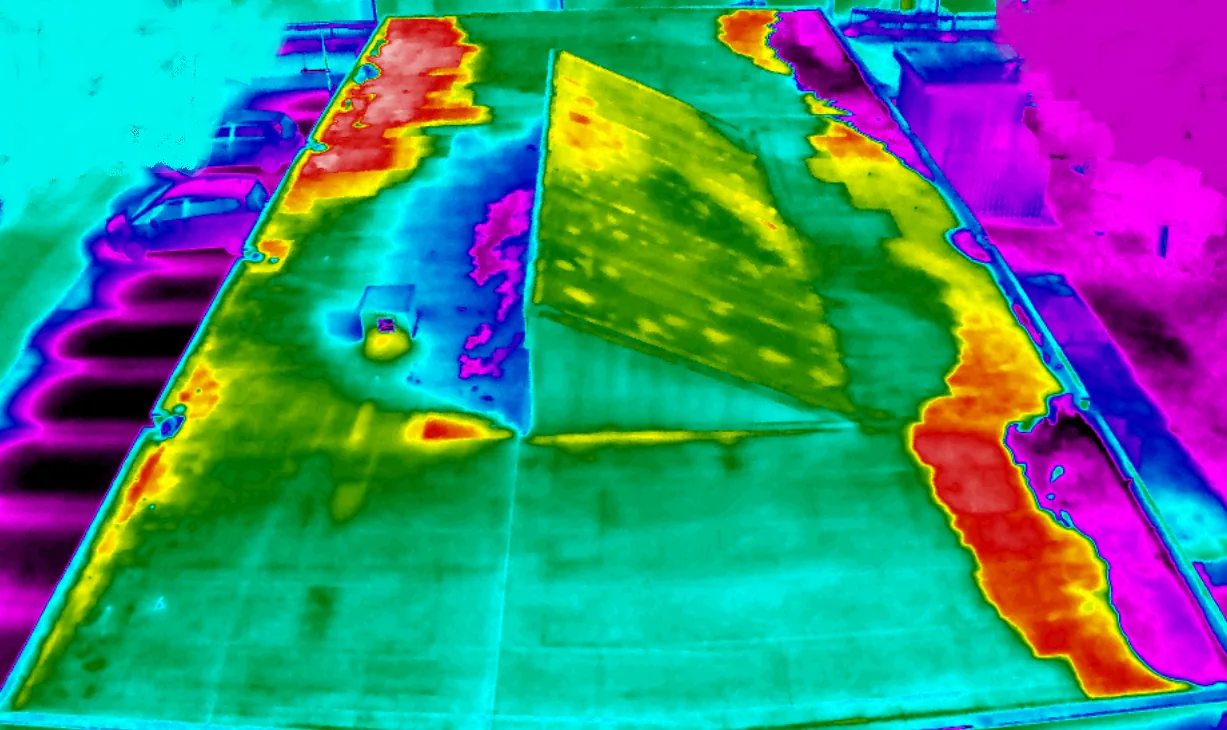
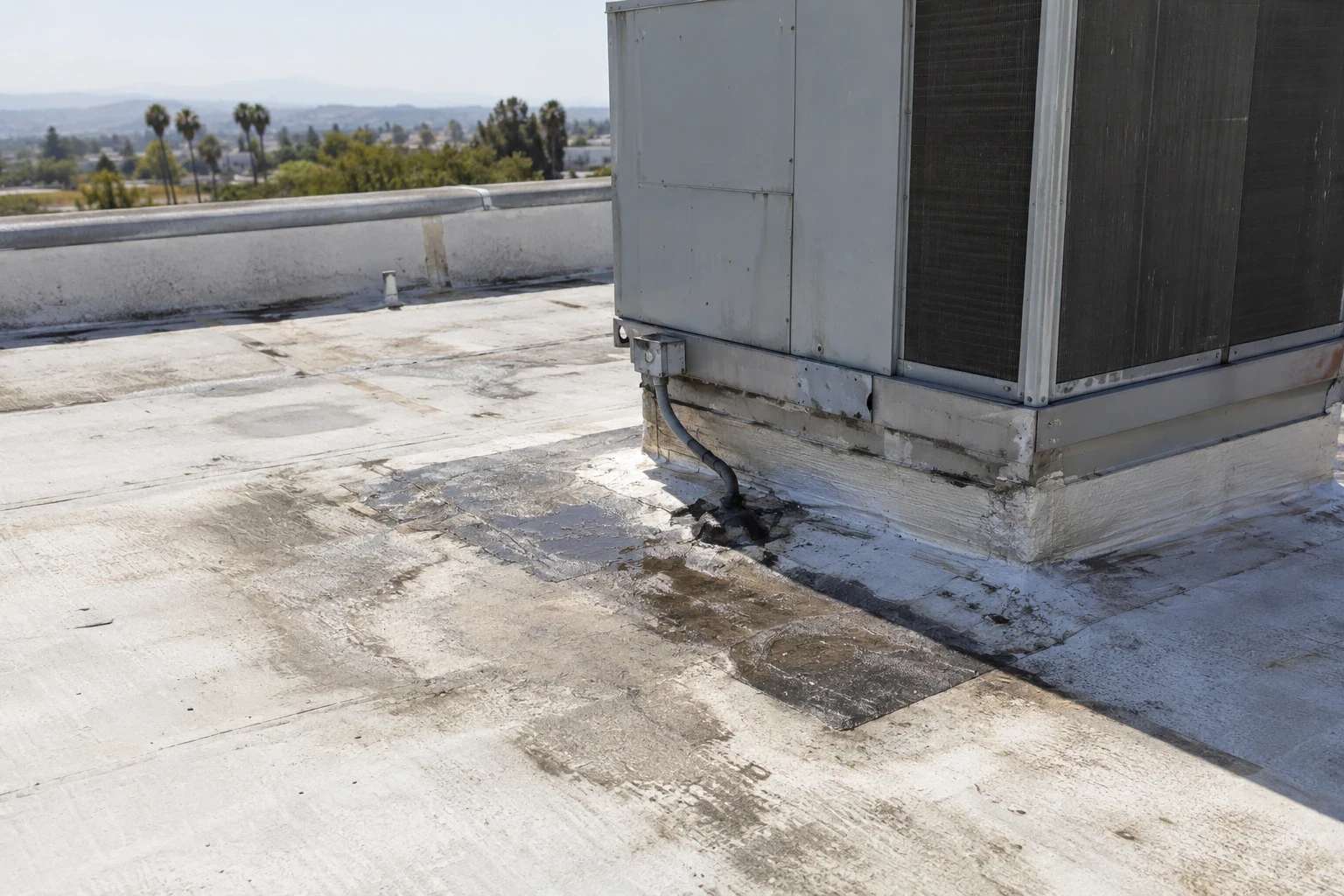
The field review starts with interior evidence: the room affected, the timing of the leak, whether it follows wind-driven rain, and any change after temporary work. On the roof, we examine drainage paths, penetrations, laps, edge metal, parapet transitions, curbs, and prior patches. A drain that appears clear at the surface may still have a blocked leader or a detail problem at the bowl. A seam that looks open may not align with the interior stain. The inspection report should show what was observed and where. If moisture readings or infrared imaging are proposed, map the tested locations and explain how those results would influence the repair boundary. A controlled roof opening can verify insulation and deck condition when a replacement or recover decision depends on hidden layers. No single test substitutes for interpreting the assembly as a whole.
Set a scope around verified damage
A focused repair can make sense when the defect is limited and sound material is available for a durable tie-in. The scope should state the section, removal area, substrate check, material compatibility, and inspection of the finished detail. If wet insulation or damaged deck is uncovered, the owner needs a pause point and a process for approving added work. A recover can be considered only when the existing system is dry, attached, and eligible under the project requirements. Coatings need a suitable surface and cannot correct trapped moisture or failed drainage. A broad replacement may address multiple defects, aging layers, drainage changes, and insulation needs, but it also requires a sequence for tear-off, protection, and weather-tight completion. Compare alternatives by what they repair, what remains, disruption to the building, and assumptions about concealed conditions.
Coordinate work with the people using the site
Corona properties may have different customer, staff, tenant, or delivery patterns, so access should be confirmed with the actual building contact. Mark the roof entry, staging area, vehicle route, restricted zones, and entrances that must remain available. Where a lift or dumpster affects parking, check the property rules before confirming the work date. Identify the person who can authorize a temporary closure or approve a scope change if removal reveals additional damage. For an occupied site, protect the interior below each work zone and provide notice when crews move between roof sections. Larger scopes need daily dry-in boundaries and a sequence for materials, equipment, and inspections. Weather and product limits can change the safe installation window; the schedule should be checked against current conditions rather than promising a fixed duration before the assembly is reviewed.
Keep decisions connected to photographs and measurements
A roof record should make it possible to locate the inspected details months later. Use a labeled roof plan to show drains, curbs, seams, repairs, and test openings. Record the date, weather conditions, reported symptoms, materials observed, and any areas that could not be reached. Separate measurements from interpretation: a moisture reading documents a signal at a location, while the explanation of that signal should account for the roof layers and recent weather. When work is completed, retain photographs of removed material, substrate condition, installed layers, edge details, and close-in points. Keep product data, approved changes, inspection notes, and warranty documents with the same building record. If a property manager changes, a consistent file helps the next contact see what the crew repaired and what still needs monitoring.
Choose the next step with a defined boundary
When only one detail has failed and surrounding material remains stable, a repair with a follow-up check may be the most proportionate choice. If leaks recur at separate points or moisture testing indicates a broader area, expand the investigation before selecting a system. A replacement estimate should explain removal, deck and insulation assumptions, drainage improvements, protection, and any work assigned to other trades. A phased project can fit budget timing, but each stage should state the protection it provides and the condition that triggers the next phase. The owner should also understand what is excluded and how unexpected damage will be handled. Comparing two proposals is meaningful only when they cover the same sections and assumptions. A written decision record gives maintenance staff a basis for monitoring the roof and helps ownership distinguish planned work from an emergency response.
Related roof services and nearby markets
If the water path is not yet clear, consider a documented Infrared Moisture Survey alongside an inspection. A confirmed entry point may call for Commercial Roof Leak Repair, while broader deterioration can lead to a Commercial Roof Replacement review. Regular drain and edge checks can be scheduled through Commercial Roof Maintenance. Owners with distribution space can compare planning considerations in Distribution Center Roofing. Nearby city coverage includes the Norco service area and Eastvale service area. Those pages provide general geographic context; each Corona property's scope still depends on its own inspection, records, and access rules.
Commercial Roofing Questions
What should be ready before a commercial roof inspection in Corona?
Have the property address, available roof plan, recent leak notes or photos, access contact, and any known repair history ready. The inspection can then identify which roof sections and interior areas need attention.
Does an infrared scan identify the exact leak opening?
Not by itself. A scan may map patterns that warrant review, but readings depend on roof construction and conditions. The report should identify tested locations and explain whether a controlled opening is needed to verify the layers.
When should a roof owner request a replacement estimate?
Consider one when inspection shows broad deterioration, repeated failures, wet insulation, or a condition that makes isolated repairs unreliable. The estimate should separate confirmed work from assumptions and allowances for concealed conditions.
How can work be sequenced at an occupied property?
Set a defined work area, protect the space beneath it, maintain agreed entrances, and establish a daily weather-tight stop point. The schedule should account for site hours, delivery access, equipment, and current installation conditions.
What does a useful closeout package include?
Keep the final scope, approved changes, roof plan with completed areas, photographs of concealed and finished work, material information, inspection notes, and any warranty documents supplied for the project.