Auto Dealership Roofing in Hesperia, CA
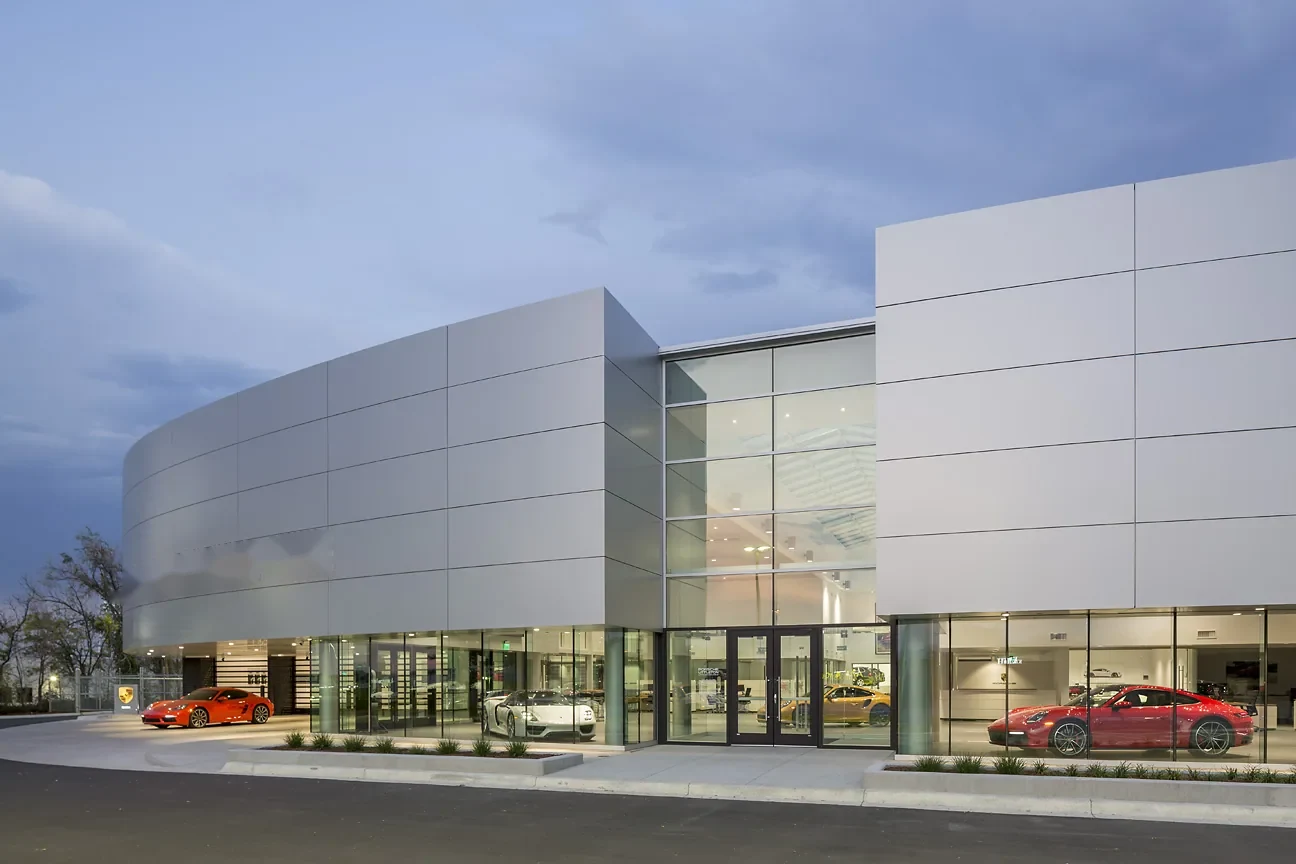
A dealership roof serves more than one kind of space. The showroom may have broad glazing and customer access, while service bays bring exhaust, rooftop equipment, and frequent vehicle movement. A leak or reroof needs a work boundary that accounts for both. Hesperia, CA, has an August normal high of 97 degrees, placing repeated heat cycles on exposed membranes, metal edges, and sealants. We inspect the roof section first, then plan the repair around service lanes, inventory movement, and the close-in point. For a dealership in Hesperia, CA, that sequence keeps the decision grounded in the actual building.
Separate showroom and service roofs
A showroom roof can connect to a service wing, parts area, offices, wash bays, and storage. The surfaces may use different assemblies and details. We note where the roof changes material or height, then inspect wall transitions, skylights, curbs, exhausts, equipment supports, and drainage. The source of a leak above a showroom display may be at the adjoining roof step or a service-bay penetration. A plan labeled by section lets the owner coordinate roof work with departments without treating the full dealership as a single open space.
The site contact can help identify customer traffic, vehicle staging, service doors, and areas where a lift cannot block access. We set the roof access route and protect cars, parts, and interior finishes from debris or water. If work affects a service bay, the owner can move operations to another area when practical or select a different phase. The scope should state expected noise and access impacts before mobilization. A commercial roof inspection gives the facilities contact a starting record for those discussions.
Account for High Desert heat
Hesperia 2 E's normal August high is 97 degrees. The fact describes outdoor air conditions, not the temperature of a dealership roof, but it points to the long hot-season exposure that can age surface materials and open weak transitions. We inspect lap edges, fastener rows, curb flashings, metal coping, and sealant at changes in plane. We also check whether exhaust discharge or rooftop equipment has affected nearby material. If a customer-area leak appears after a summer storm, the inspection still traces the path rather than assuming heat caused the opening.
Hesperia's I-15 and Highway 395 corridors include approved industrial warehouse projects aligned with designated truck routes. That regional freight context is not a description of a dealership roof, but deliveries and lifts for a reroof still need a planned path around the property’s normal vehicle flow. We agree where materials can be staged, how service access stays clear, and when a zone can be released. A Hesperia industrial-district service area is part of the same local market; the layout of each dealership determines the actual work plan.
Find what failed before choosing materials
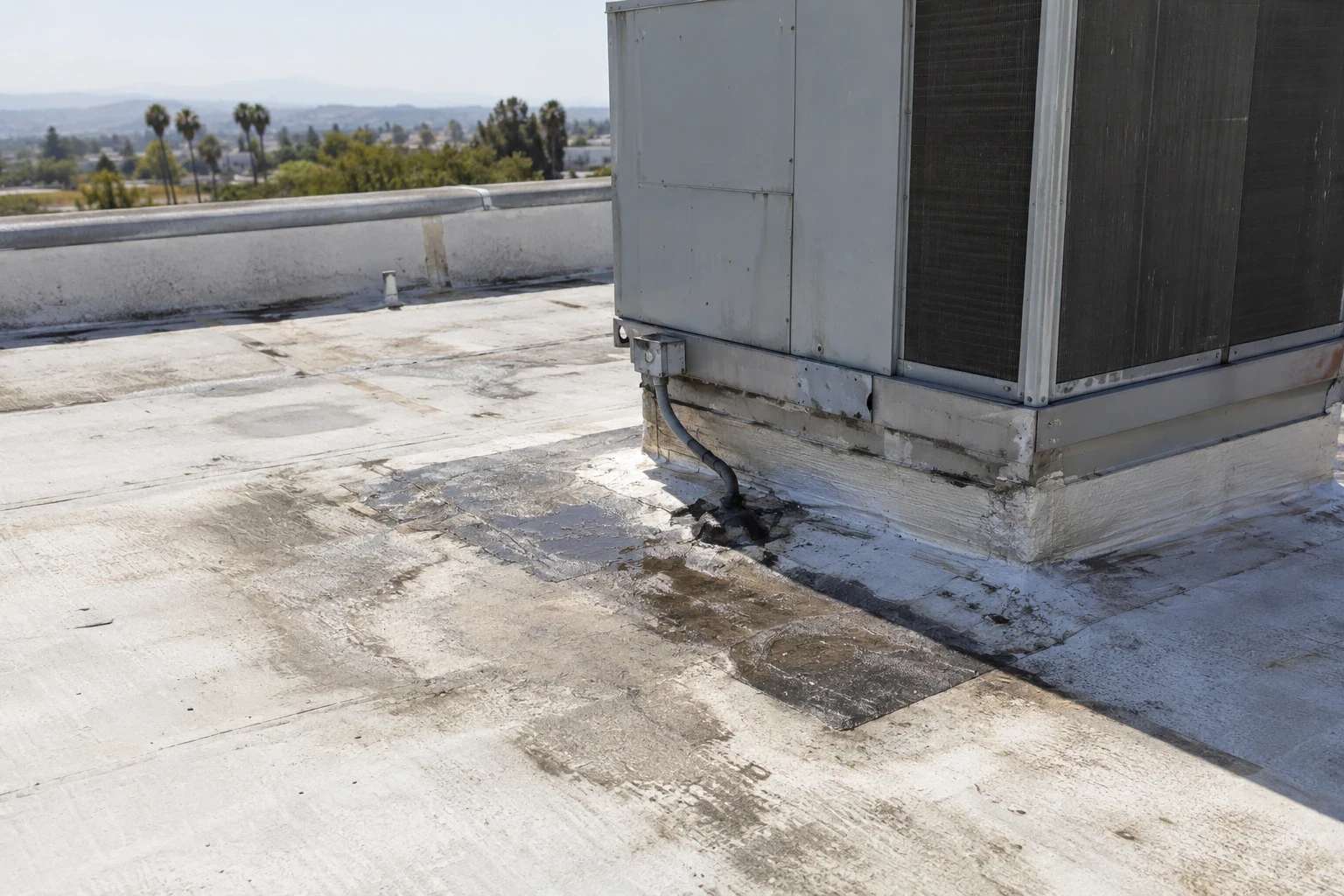
A leak can begin at a seam, penetration, drain, curb, parapet, skylight, or connection between two roof systems. We compare the interior symptom with the roof details above and nearby. If an older patch is present, we inspect its edges and confirm whether it bonds to the existing surface. Where moisture may have traveled beneath the membrane, we map the suspect area and propose a test opening only if the result could change the repair boundary. The report separates confirmed defects from questions that still need investigation.
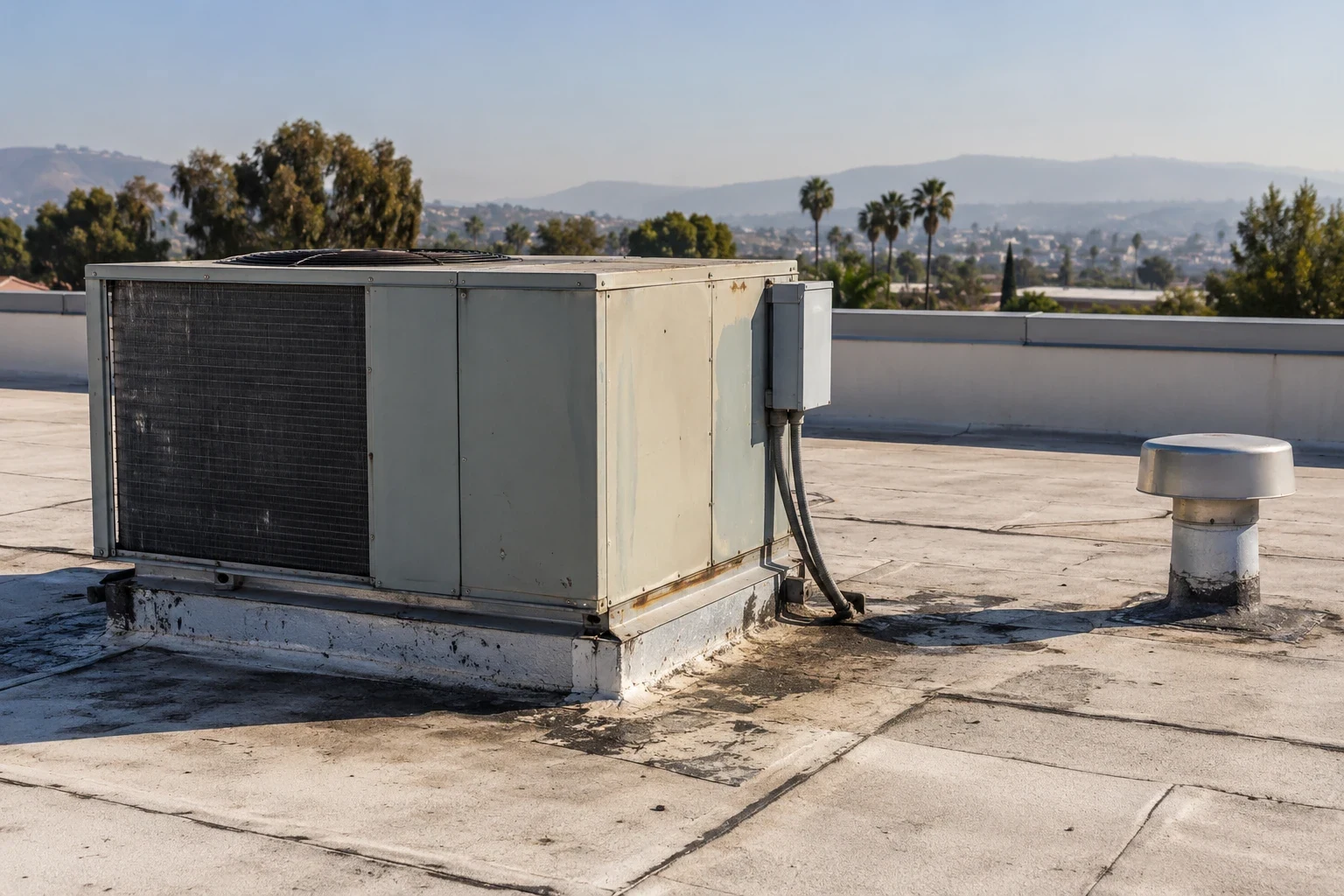
For metal roofs, loose fasteners, panel laps, flashing, and movement at long runs need separate attention. For low-slope membranes, seams and penetrations are common inspection points, but a visible wrinkle does not by itself establish a leak. We assess the substrate, attachment, drainage, and prior layers before recommending repair, recover, coating, or replacement. The owner receives photos, a written condition summary, and next steps. That record supports a planned commercial roof leak repair without assuming that every stain needs a broad tear-off.
Protect the customer route
For a targeted repair, we isolate the work area, cover nearby equipment, remove failed material to a sound boundary, and install compatible membrane or metal repairs. The finished work is checked and photographed. The owner should know when customers or staff may need a temporary alternate route. For a larger project, we can divide the building into sections and keep the open roof area within the crew’s planned close-in window. Each phase includes removal, substrate review, new insulation or cover board if required, installation, and tie-in protection.
A dealership replacement can also involve HVAC coordination, rooftop signs, lighting, skylights, or service-bay equipment. We list these interfaces before work starts so the owner can assign access and shutdown approvals. If concealed deck damage appears, we pause at a weather-tight point and provide the evidence for the additional scope. A commercial roof replacement can be staged around business operations, while TPO roofing or standing-seam metal roofing is considered only when the building and project requirements suit that assembly.
Choose repair, restoration, or replacement
The right option depends on how widespread the failure is and whether the existing assembly can support another layer. A repair may address a limited opening. A coating may extend service where the substrate is dry and compatible and the details are restored first. A recover can reduce tear-off only if attachment, moisture, and code requirements permit it. Replacement addresses the assembly more broadly but requires a larger work zone and a more detailed schedule. We explain which finding supports each option and what condition would change it.
A roof record helps the dealership avoid reopening the same investigation after a future leak. Keep photos, section labels, repair materials, test-opening results, and any equipment interface notes. Hesperia’s freeway corridor sees planned industrial development, while the dealership roof should be evaluated on its own use and construction. We can pair the report with a roof condition management plan and a recurring maintenance program. Send the address, roof plan if available, reported condition, and the person who can coordinate showroom and service access for the first review. For mixed portfolios, we can compare dealership findings with retail property roofs and office buildings while keeping each property’s scope and operating limits separate.
Commercial Roofing Questions
Can showroom operations continue during roof work?
The answer depends on which roof section is open and how the work affects customer doors, display areas, and vehicle routes. We can discuss phasing with the site contact and define temporary barriers before mobilization. The schedule should identify any room or service lane that needs to close during removal or equipment movement.
Do service-bay exhausts create special roof concerns?
They create penetrations and nearby discharge conditions that need inspection. We check the curb or flashing, fasteners, sealant, and material around the exhaust. The inspection also looks for vibration or heat effects where present. Any recommendation follows what we observe at the specific roof section.
Can a metal roof be repaired without replacing full panels?
Sometimes. We inspect panel condition, laps, fasteners, corrosion, edge details, and the substrate beneath the affected area. A limited repair is more likely to work when the surrounding panel is sound and the repair can tie into it. If failures repeat across runs or the assembly has broad deterioration, a larger project may be more reliable.
How do you keep customer vehicles clear?
We agree on staging, lift access, debris control, and temporary work zones with dealership management. The crew should not use customer parking or service lanes without an approved plan. For multi-phase work, we release each area when the roof section is closed in and the site contact confirms the route is safe to reopen.
What records help plan the roof project?
Roof plans, prior repair invoices, leak locations, equipment records, and any existing warranty documents help define the first inspection. Include the site contact for access and the departments affected. The roof review then confirms whether the current condition supports a repair, restoration, or replacement scope.