SOPREMA Commercial Roofing Systems in Hesperia, CA
SOPREMA’s commercial roofing products include SBS-modified bitumen membranes, PMMA/PMA liquid-applied membranes, and single-ply PVC membranes. Those are different system families, with different substrates, seams, and field details. In Hesperia, CA, we first identify which material is installed and whether previous repairs or coatings have changed the surface. A product list cannot tell us if insulation is wet or a flashing has separated. We inspect the roof section, check records against field evidence, and define whether the next step is a repair, adhesion test, or controlled opening.
Separate the system families
SOPREMA’s listed commercial families include multi-ply SBS-modified bitumen, liquid-applied PMMA/PMA, and single-ply PVC. We identify the actual material from markings, surfacing, seams, and project records. For modified bitumen, we inspect laps and granule surfacing; for liquid-applied systems, we check membrane continuity and reinforcement; for PVC, we examine welded seams and flashings. A repair must match the material and its condition. We match each repair method to the SOPREMA product family and assembly identified in that roof section.
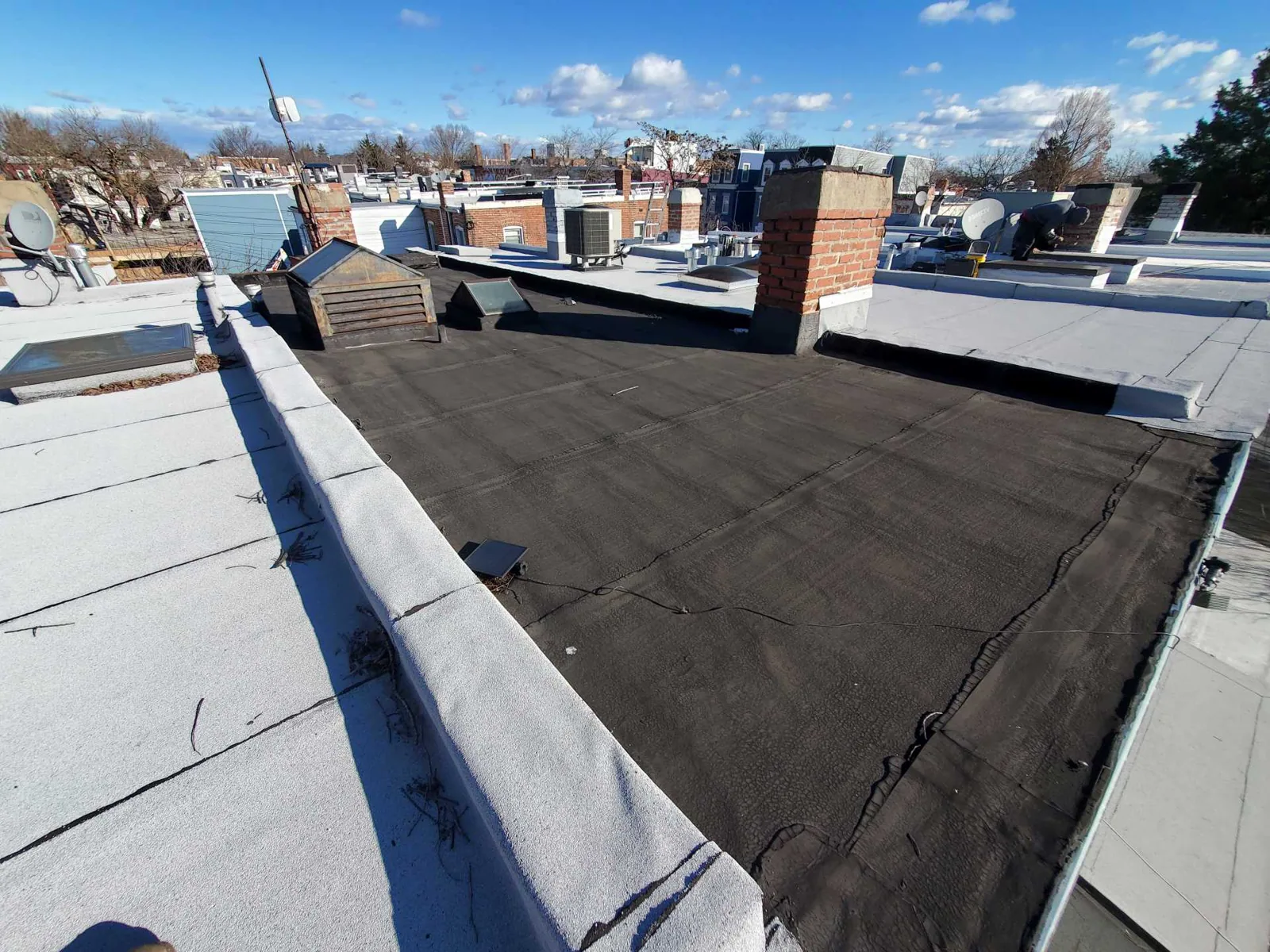
Modified bitumen roofs can include multiple plies, surfacing, and adhesive or asphalt components. We inspect laps, blisters, granule loss, exposed base material, and transitions to metal or single-ply sections. A repair material must match the existing roof and the conditions at the detail. We record whether the work is localized to a cap sheet, extends into lower plies, or requires a test opening to inspect concealed moisture.
A roof’s substrate can matter as much as the top surface. We look at insulation, cover board, deck, slope, drains, penetrations, and edge conditions. Moisture below the membrane can make a surface patch temporary. If a test is needed, we identify the exact question, location, and close-in plan before opening. The owner receives a boundary that separates confirmed repair work from concealed conditions that require further review.
Check layers and transitions
SBS sheets, liquid flashings, and PVC single-ply details each use a different preparation sequence. We check whether the surface is clean, dry, and compatible with the proposed material, and we review the transition where the field meets a curb or wall. Prior asphalt, coating, adhesive, or repair layers can affect adhesion. We record them before removal and avoid treating a new coating as a remedy for a wet or unstable assembly. A multi-ply repair follows a different layer sequence than modified bitumen roofing. A PVC section needs a compatible tie-in to the installed sheet and weld; our PVC system review checks that surface.
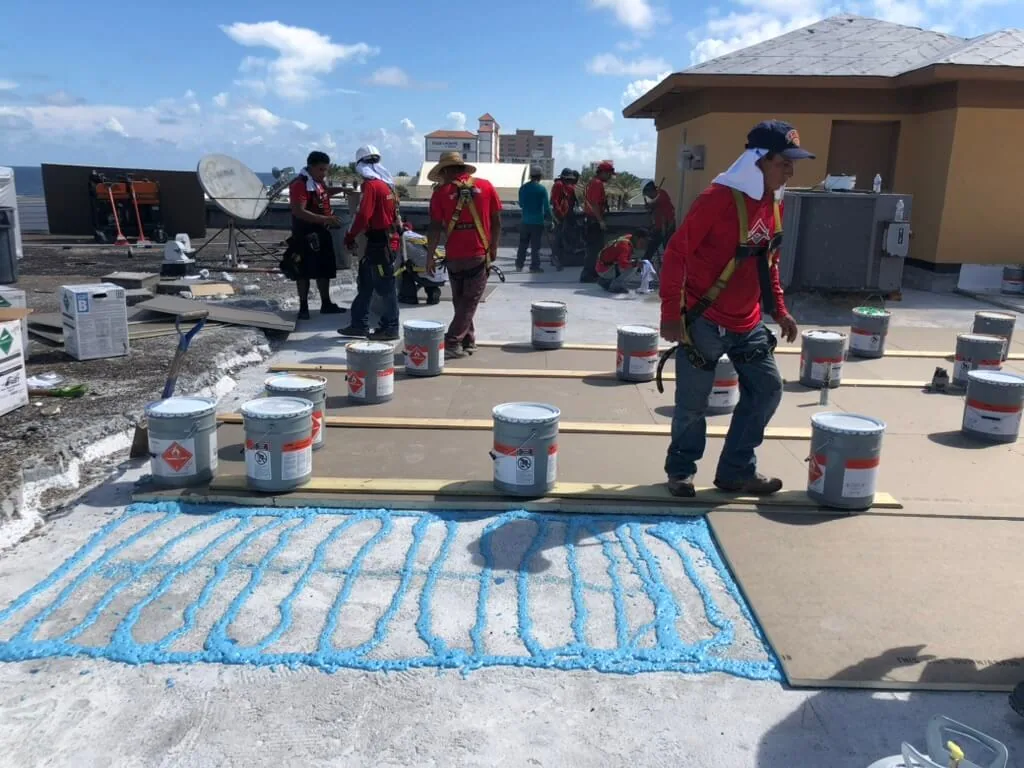
For liquid-applied products, substrate preparation and reinforcement are central to the repair. We check for movement, cracks, old sealant, and standing water at the detail. The proposed system must be appropriate for the substrate and product instructions. A liquid layer cannot correct a loose curb or saturated insulation. We address those underlying conditions before recommending an application.
If a seam or flashing is open, we trace it to its intersections rather than cover the visible mark. We inspect drains, corners, rooftop equipment curbs, and parapet terminations for linked failures. On a multi-layer roof, a test opening can reveal whether water is trapped between plies. The repair scope should name which layer is being restored and how it ties into the material left in place.
Work to the surface conditions
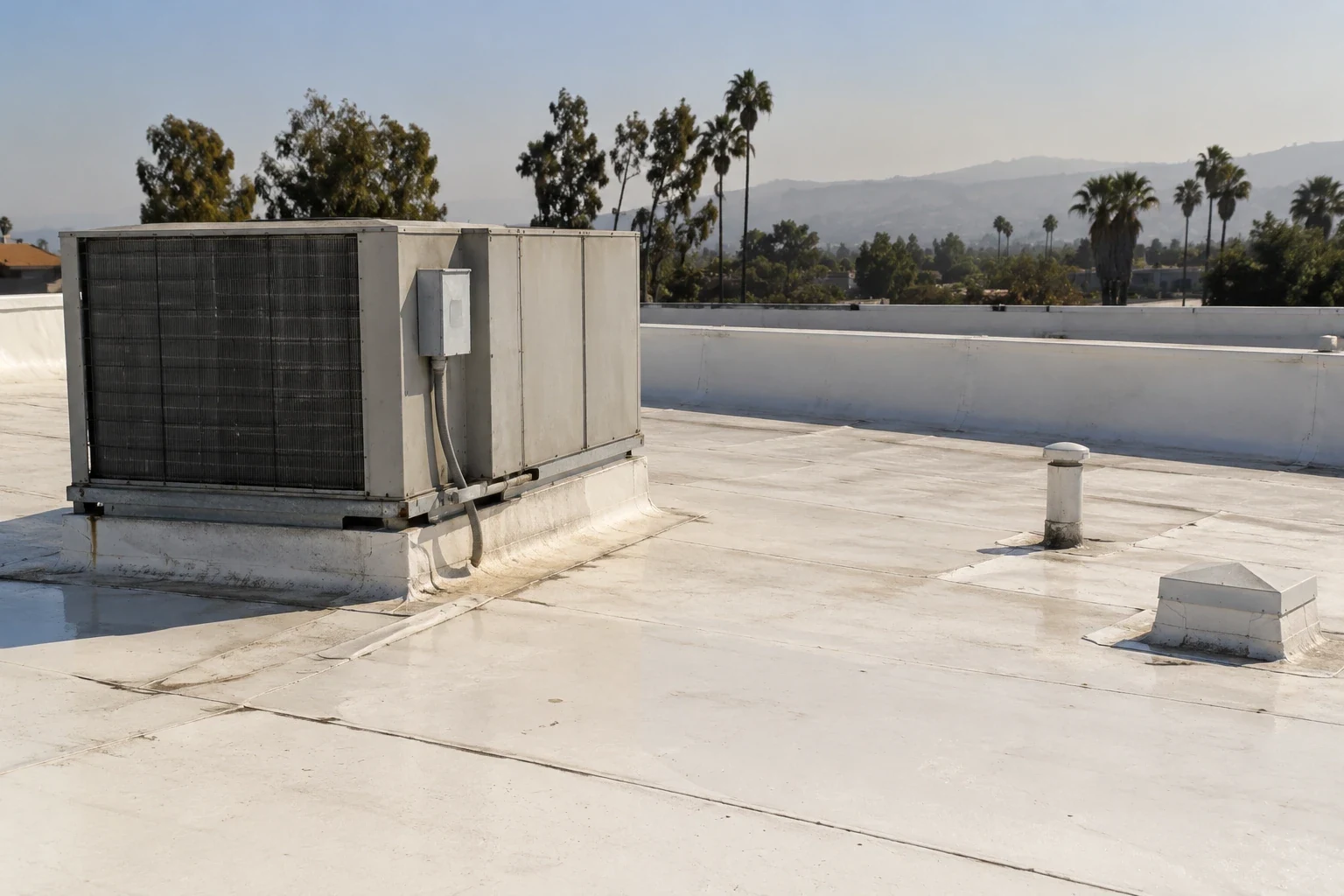
Cold mornings, afternoon heat, and changing surface moisture can affect when a material is prepared or installed. Hesperia's climate normals help frame seasonal planning; the actual roof and the product instructions determine whether work can proceed. Before proposing a repair, verify the substrate, existing membrane, primer compatibility, and cure conditions for the selected system. A commercial roof repair scope should state preparation and close-in requirements. In the Hesperia Industrial District, the site contact can also confirm loading constraints and an acceptable work window. PVC seam welding and bituminous detail work require different preparation, so each roof area needs its own assembly record and repair method.
Main Street-West and the Highway 395 and I-15 District are broad Hesperia references, not indicators of product use at an individual building.
Repair within a sound boundary
The repair process starts with the system family and the boundary of sound material. We document the open seam or detail, inspect adjacent membrane, and decide whether a patch, flashing rebuild, or test opening will answer the reported problem. Modified bitumen roofing differs from PVC roofing, while commercial roof repair can capture the specific work and closeout record.
A liquid-applied repair needs reinforcement and surface preparation appropriate to the product and transition. We check application conditions and the substrate rather than assume a liquid coating can bridge any gap. If a detail is moving or the roof remains wet, we address that cause first. The owner sees the test result, repair boundary, and any condition that still needs inspection.
Compare the documented options
A practical comparison weighs isolated repair, broader restoration, and replacement against moisture, attachment, drainage, and the amount of sound material. We mark each section and explain what evidence supports the recommendation. If the roof has multiple SOPREMA families or a later recover, each layer receives its own record. That creates a usable maintenance history and prevents a broad product name from hiding the condition of the actual roof. A different building section may have records for GAF or Carlisle SynTec; we keep those assemblies separate and base each repair on its actual membrane and substrate.
We keep the inspection scope tied to the observed roof, not a product catalog. If records identify a particular family but field conditions differ, we document that discrepancy and recommend confirmation before ordering material. A sample or test opening can be more useful than extending an uncertain repair over concealed layers.
Send the property address, roof plan, reported condition, access contact, and prior product or repair records. Our first review will mark what the records establish and whether a small test opening can resolve the remaining question. The scope records the product family identified, the assembly condition, and the repair or replacement method supported by the inspection.
Hesperia's Main Street-West District and Highway 395 and I-15 District are useful geographic references, but they do not establish which membrane or product is installed at a property. Confirm the roof plan, material layers, test conditions, and any approval requirements before specifying a compatible system.
A repair decision should identify the specific surface preparation, primer or bonding method, reinforcement where applicable, and cure time required by the chosen product. Record whether the existing layers are dry, stable, and compatible before extending the work. If the substrate or prior coating is uncertain, define a small test area and hold expansion until the result is documented. This keeps product selection tied to observed conditions rather than brand familiarity.
Commercial Roofing Questions
Does SOPREMA make only modified bitumen roofs?
No. Its commercial roofing list also includes PMMA/PMA liquid-applied membranes and single-ply PVC. We inspect the roof to identify which family is present before selecting a repair method.
Can a liquid-applied material fix a failed seam?
It may be suitable for some details when the substrate, reinforcement, and product requirements align. We inspect the opening and surrounding layers first. A coating cannot replace wet insulation or repair a failed attachment.
What should be checked before a roof coating or restoration?
We check moisture, adhesion, existing layers, drains, seams, and flashing. The substrate must be suitable for the selected material, and active leaks must be resolved. The test boundary and limitations belong in the written scope.
What should I send before a SOPREMA roof assessment?
Send the address, available roof plan, reported condition, access contact, and product or maintenance records. Include any prior coating or repair information. We use it to choose inspection points and define what needs confirmation.