Carlisle SynTec Roofing Systems in Hesperia, CA
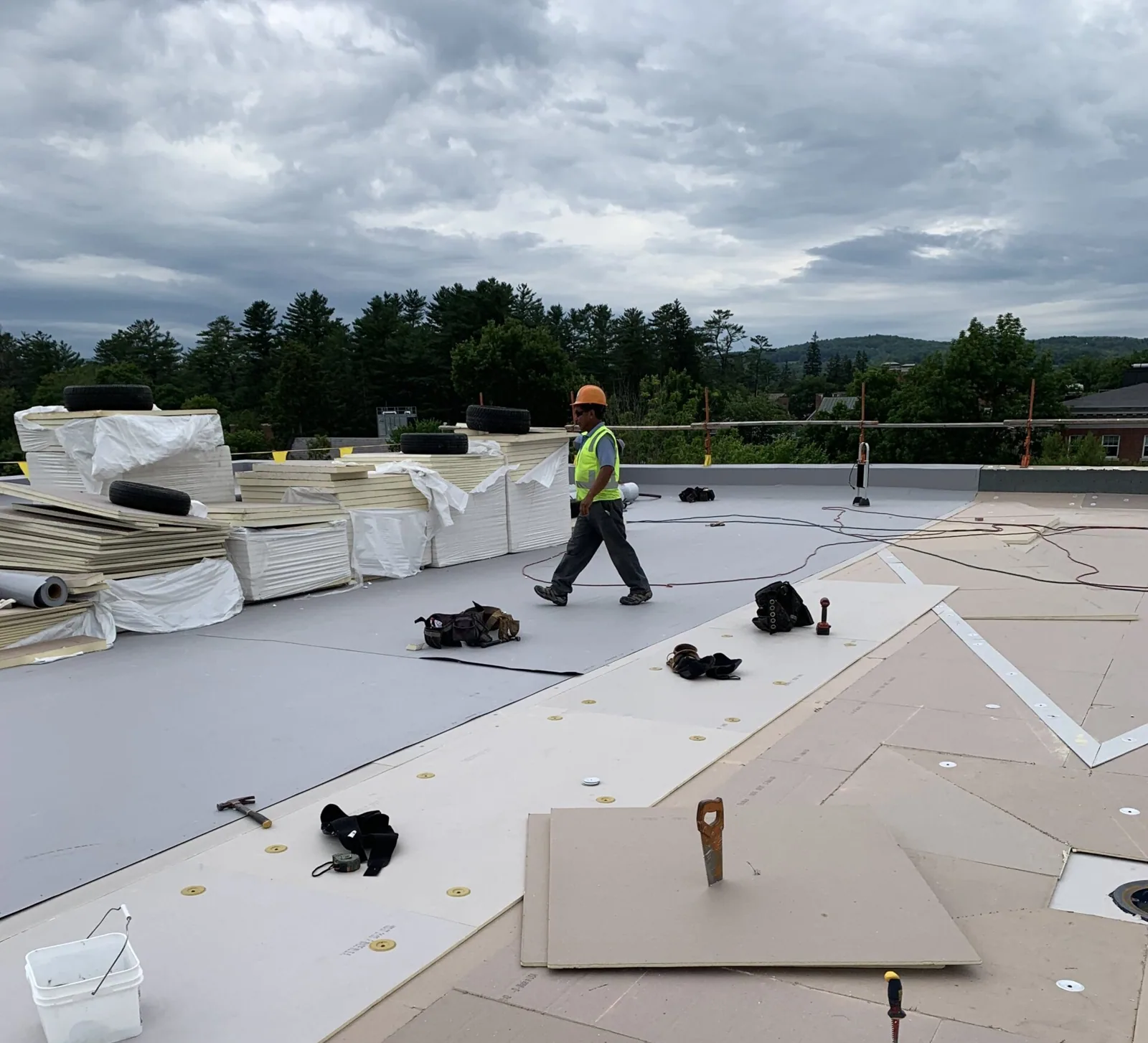
EPDM, TPO, PVC, and fleece-backed sheets each bring a different repair question. Carlisle SynTec lists Sure-Seal EPDM, Sure-Weld TPO, Sure-Flex PVC, and FleeceBACK membranes among its offerings. The building’s existing material still controls preparation, patch selection, and seam repair. In Hesperia, CA, we verify what is installed, how it is attached, and whether the substrate remains sound before proposing a scope. A brand name in a closeout file is helpful, but it does not replace a roof inspection. The first record should identify the actual roof section and the conditions that can change the repair boundary.
Read the system record
Carlisle SynTec’s product offerings cover several commercial membrane families and related components. The first field task is to distinguish the material on the roof: EPDM seam tape and adhesives differ from thermoplastic welding, while fleece-backed sheet changes how a repair ties into the surface. We inspect membrane markings, laps, edge details, and prior patches. If records conflict with what is visible, we document the conflict and identify what sampling or opening would confirm the assembly before materials are selected.
A roof may have Carlisle membrane in one section and another system on an addition. We document each section by its visible material, attachment, and tie-in conditions. Where a transition connects sheets from different families, compatibility becomes a specific repair question. We inspect the overlap, flashing, and substrate at that junction, then identify whether each side can accept the proposed detail.
The roof is a layered system. Deck type, insulation, cover board, fasteners, adhesive, vapor control, and flashing details all matter to performance and repairability. A membrane label cannot establish whether insulation is dry or whether the attachment pattern is appropriate for the building. We record the observed layer stack as far as accessible and separate confirmed facts from unknown concealed conditions. That keeps the specification from outrunning the evidence.
Check the attachment method
EPDM and thermoplastic seams do not use the same field method. We inspect for open laps, shrinking sheets, contaminated surfaces, loose terminations, and movement at curbs. A fleece-backed membrane requires attention to the backing and the compatible adhesive or detail. At each condition, the repair must extend to a bondable surface and address the water path, not just cover the visible mark. We use a controlled test when surface history or prior coating makes adhesion uncertain. For EPDM, we check the lap and patch bond using the detail suited to EPDM roofing. A Carlisle thermoplastic section needs a seam-specific look; our TPO roofing review follows the welded lap and its terminations.
Maintenance records should note the date and location of a repair, the membrane involved, and the test result. Without a clear section record, later staff may apply the wrong cleaner or patch method. We mark the repair on the roof plan if available and photograph the completed edge. The closeout record identifies the work performed, the repair boundary, and any product documentation supplied for the assembly.
Carlisle references include products and accessories beyond membrane sheets. We inspect drains, pitch pockets, pipe penetrations, expansion joints, and edge conditions where a system can be interrupted. If a detail is wrong, a field patch may not correct the transition. A report identifies the failed layer, nearby affected details, and the close-in point so an owner can distinguish a local repair from a larger assembly correction.
Plan around site use
Material deliveries should be planned around the building's own receiving schedule, gate clearance, and hoisting limits. Hesperia's freight corridors provide regional context, but they do not specify access at an individual site. We confirm where a lift can stage, which roof areas remain active, and how the crew will protect space below an open section. A commercial roof repair scope should identify the manufacturer family observed, the field condition that supports the proposed method, and the tie-in boundary. The Highway 395 and I-15 district is a broad planning area; the property map and site contact control the sequence. We do not infer product eligibility or warranty coverage from a nearby project or the brand name alone.
Repair seams and transitions
For a sound membrane, repair preparation begins with a clean, dry, stable surface and a compatible method. A thermoplastic seam may require probe testing and heat welding; an EPDM lap may need tape or adhesive detail; a fleece-backed sheet needs a method that respects its backing. We match the method to the identified product and current condition. EPDM roofing and TPO roofing have different seam paths, while a commercial roof repair scope records the tested boundary.
A repair may expose wet insulation, deteriorated cover board, or a patch that cannot be removed cleanly. We stop at the agreed boundary and show the finding before extending removal. For a roof with multiple Carlisle family types across sections, we label each one independently. That avoids carrying an EPDM repair assumption onto a TPO or PVC area just because the same company name appears in the roof file.
Decide from the roof evidence
The owner can compare targeted repair with recover, coating, or replacement using the same condition map. We record open seams, wet areas, roof drains, and details not accessed. A roof plan helps connect those notes to tenant areas and equipment. If the existing assembly is sound but has isolated defects, the scope can stay limited; if moisture or attachment problems are widespread, we explain what additional testing is needed to size the next step. For a different roof section, the GAF and Johns Manville product families provide separate record references; the membrane actually present controls its repair method.
If two adjoining sections use separate membrane families, we inspect the transition from both sides and identify what material remains sound. We note whether the repair can terminate cleanly on each surface and whether the roof record needs separate product entries. This prevents later maintenance from assuming one method applies across the joint.
Please send the property address, roof plan if available, reported concern, access contact, and any Carlisle system or repair records. We review those details, confirm what the first inspection can establish, and identify whether a test opening is needed. The recommendation identifies the membrane and assembly observed, the repair method that fits, and any test needed to confirm concealed layers.
A manufacturer reference is a starting point for identifying a roof family, not a substitute for confirming the installed material. Keep the product label, field seam observations, test area, and repair method together in the closeout record. This allows the owner to check later work against the same assembly without assuming an endorsement or warranty outcome.
Commercial Roofing Questions
Which Carlisle system does the existing roof documentation identify?
We use roof markings, project records, seam construction, and a field inspection. A product label may be missing or may describe only one section. We note the areas confirmed and flag any section where a test is needed.
Can EPDM and TPO be repaired with the same material?
No. The membrane family determines the surface preparation and seam or patch method. We identify the system first, check the surrounding material, and select a compatible repair detail for the section being worked.
Does fleece backing change the repair?
It can. The repair must account for the membrane backing and the substrate or adhesive layer beneath it. We inspect the surface and test compatibility where previous coatings or repairs make the bond uncertain.
What records help before the inspection?
Send the roof plan, prior repair notes, any Carlisle product documentation, current leak locations, and an access contact. Those records help us identify the sections to inspect and prepare a repair boundary that can be documented.